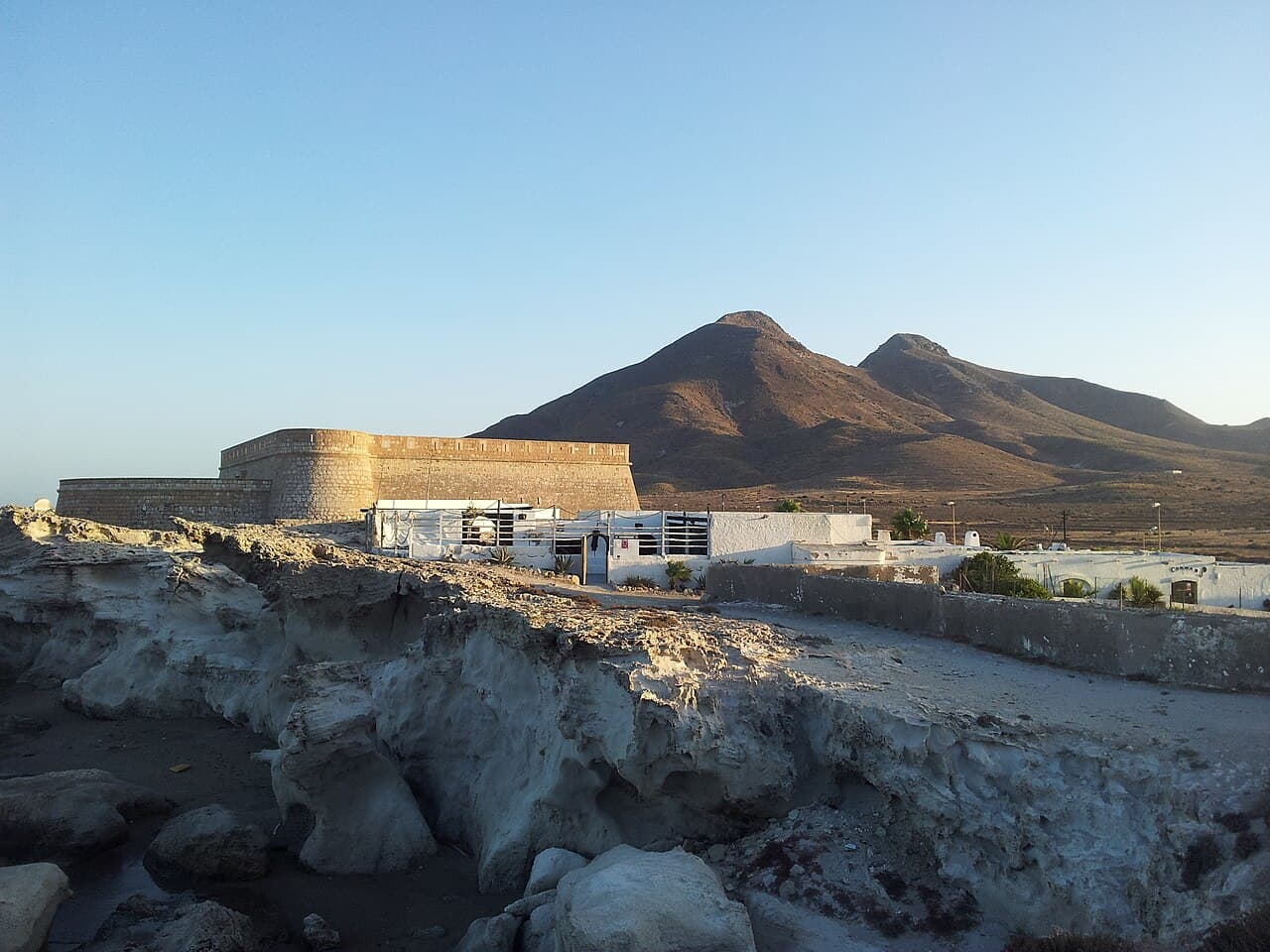
San Felipe Castle
San Felipe Castle, also known locally as Castillo Batería de San Felipe, is a prominent 18th-century coastal fortification located in the hamlet of Los Escullos, within the municipality of Níjar, in the province of Almería, Spain. Perched on the Esparto height, approximately eight meters above sea level, it commands strategic views over the Mediterranean coastline and the surrounding natural landscape of the Cabo de Gata Natural Park. This Neoclassical artillery fort was constructed in 1765 during the reign of King Charles III as part of a broader defensive network designed to protect the southern Spanish Mediterranean coast from frequent attacks by Berber pirates and other maritime threats.
Historical context and construction
During the 18th century, the southern coast of Spain was vulnerable to raids by pirates operating from North Africa, prompting the Spanish Crown to strengthen its coastal defenses. In 1764, King Charles III ordered the construction of nine fortifications along the coast of the Kingdom of Granada. San Felipe Castle was among these, designed by military engineer José Crame. The fort shares architectural similarities with contemporaneous batteries such as San Ramón, Jesús Nazareno, Guardias Viejas, Carchuna, and La Herradura.
The castle was built as a rectangular artillery fort featuring a semicircular counterguard facing the sea to enhance its coastal defense capabilities. It was originally armed with four cannons and included a drawbridge over the main entrance, underscoring its defensive design. The garrison typically consisted of an officer, three corporals, and twenty soldiers, reflecting its role as a modest yet strategically important fortification.
Architectural features and design
San Felipe Castle exemplifies the Neoclassical military architecture of the late Post-Renaissance period, incorporating Enlightenment principles such as geometric precision and mathematical application in fortress design. The fort’s layout is characterized by a strong geometric plan, with stone masonry construction typical of the era’s durable military structures.
The fort’s defensive system includes protruding walls that cover the flanks, enhancing the fort’s ability to repel attacks from both land and sea. The semicircular counterguard was a key feature for coastal artillery defense, allowing the fort to cover a wide arc of fire against enemy vessels approaching from the Mediterranean. The use of a drawbridge at the entrance also reflects traditional defensive measures designed to control access and improve security.
Historical use and military significance
Throughout its history, San Felipe Castle played a vital role in the coastal defense system of southern Spain. It was part of a network of fortifications built to protect the region from pirate incursions and later adapted to evolving military needs. During the Spanish War of Independence (early 19th century), the fort was temporarily disarmed by French forces, reflecting the turbulent geopolitical situation of the era.
By the mid-19th century, the castle was occupied by special forces tasked with littoral surveillance, highlighting its continued military relevance. However, as military technology and strategies evolved, the fort gradually lost its frontline defensive role and was eventually abandoned during the 20th century.
Restoration and current status
Significant restoration efforts were undertaken in 1990-1991 to preserve the structural integrity and historical value of San Felipe Castle. These works helped stabilize the fort and maintain its characteristic features, allowing it to be accessible to the public today. Although the interior areas may sometimes be closed to visitors, the castle remains an important cultural and historical landmark.
Currently, the castle is freely accessible and is managed as part of the cultural heritage of the region. Its location within the Cabo de Gata Natural Park enhances its appeal, combining natural beauty with rich historical significance. The castle serves as a tangible reminder of Spain’s coastal defense efforts during the 18th century and offers visitors panoramic views of the Mediterranean Sea and the surrounding landscape.
Cultural heritage and significance
San Felipe Castle is recognized as one of the most representative examples of the major fortified batteries constructed in Spain during the 18th century. Its design reflects the Enlightenment-era military engineering principles that emphasized rational geometry and scientific approaches to fortification.
The castle’s strategic location and architectural features underscore its importance in safeguarding the southern Spanish coast. Its preservation as a cultural heritage site ensures that this legacy continues to be appreciated by future generations. The fort also contributes to the historical narrative of the Kingdom of Granada and the broader maritime defense strategies of Spain during a period marked by frequent naval conflicts and pirate threats.
Comparison with other coastal fortifications
San Felipe shares design elements with other contemporary forts such as San Ramón and La Herradura, which were similarly constructed to defend against seaborne attacks. These forts typically feature rectangular layouts with semicircular or angular counterguards, designed to maximize artillery coverage and defensive capabilities.
Visitor experience and access
Visitors to San Felipe Castle can explore its exterior fortifications and enjoy scenic views of the Mediterranean coastline. The site is accessible without an entrance fee, making it an attractive destination for those interested in military history, architecture, and natural beauty. While interior access may be limited, the castle’s well-preserved walls and battlements provide ample opportunity for exploration and photography.
The castle’s proximity to a beautiful beach adds to its appeal, offering a combination of cultural heritage and leisure opportunities for tourists and locals alike.
Frequently asked questions (FAQ)
- What is the historical significance of San Felipe Castle?
- San Felipe Castle, built in the late 16th century, was constructed as a defense against pirate attacks along the Mediterranean coast. It played a crucial role in safeguarding the region and has since become a symbol of the local heritage in Níjar, Spain.
- When was San Felipe Castle built?
- Construction of San Felipe Castle began in 1576 and was completed in 1586. The castle was strategically built during a time of heightened threats from naval piracy, reflecting the military architecture of the era.
- What are the opening hours for San Felipe Castle?
- San Felipe Castle is typically open to visitors from 10 AM to 6 PM, although hours may vary seasonally. It is advisable to check the official website or local information before planning your visit to confirm the current schedule.
- Can I purchase tickets in advance for San Felipe Castle?
- Yes, tickets for San Felipe Castle can often be purchased in advance through their official website or at designated ticket outlets. This helps avoid long lines and ensures a smoother entry on the day of your visit.
- Is San Felipe Castle accessible for visitors with mobility challenges?
- San Felipe Castle has made efforts to be accessible to all visitors, with pathways and spaces designed to accommodate those with mobility challenges. However, some areas may still present difficulties due to the castle's historic architecture, so it's recommended to check ahead for specific accessibility options.
- What is the best time to visit San Felipe Castle?
- The best time to visit San Felipe Castle is during the spring and fall months when the weather is mild and pleasant. These seasons typically attract fewer tourists, allowing for a more enjoyable exploration of the castle and its surroundings.
- Are there any nearby attractions to San Felipe Castle?
- Yes, nearby attractions include the stunning beaches of Níjar and the beautiful natural landscapes of the Cabo de Gata-Níjar Natural Park. Visitors can enjoy hiking, birdwatching, and exploring local villages, making for a full day of adventure.
- How do I get to San Felipe Castle?
- San Felipe Castle is easily accessible by car, with parking available nearby. Public transport options may also be available, so check local bus routes for convenient connections to the castle from various locations in Níjar.
- What is the architectural style of San Felipe Castle?
- San Felipe Castle features a Renaissance architectural style, characterized by its robust stone walls and strategic design for defense. Its unique design blends functionality with aesthetic appeal, showcasing the military engineering of its time.
Photo gallery

Information
Website
Visit websiteSources & official resources
Verify the information above using these authoritative references.
Loading map...
Visitor reviews
No reviews yet. Been here? Write the first review and help other travelers!
Write the first reviewVisited this castle? Share your experience
Your review helps other travelers and adds first-hand knowledge to our encyclopedia.



