Sant Nicolau Castle — Spain castle

Sant Nicolau Castle

Sant Nicolau Castle in Spain
Renaissance (15th–17th c.)
Well Preserved

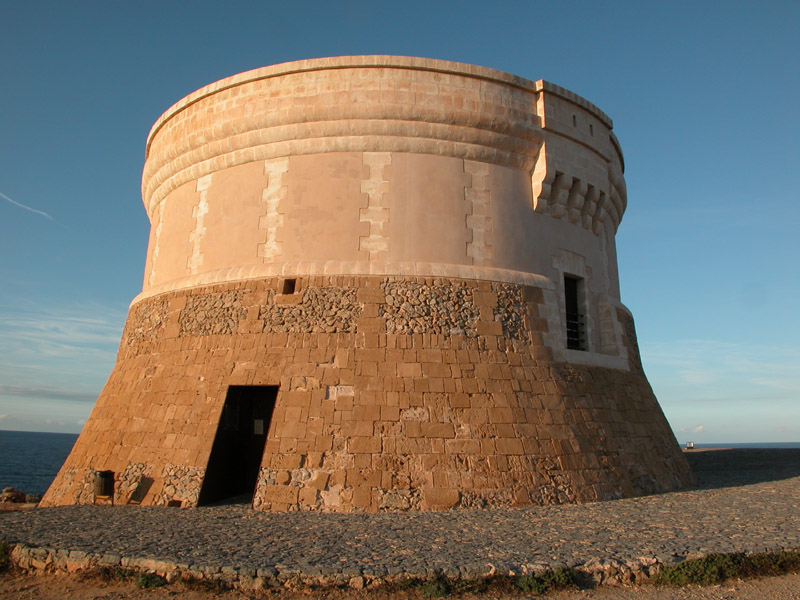
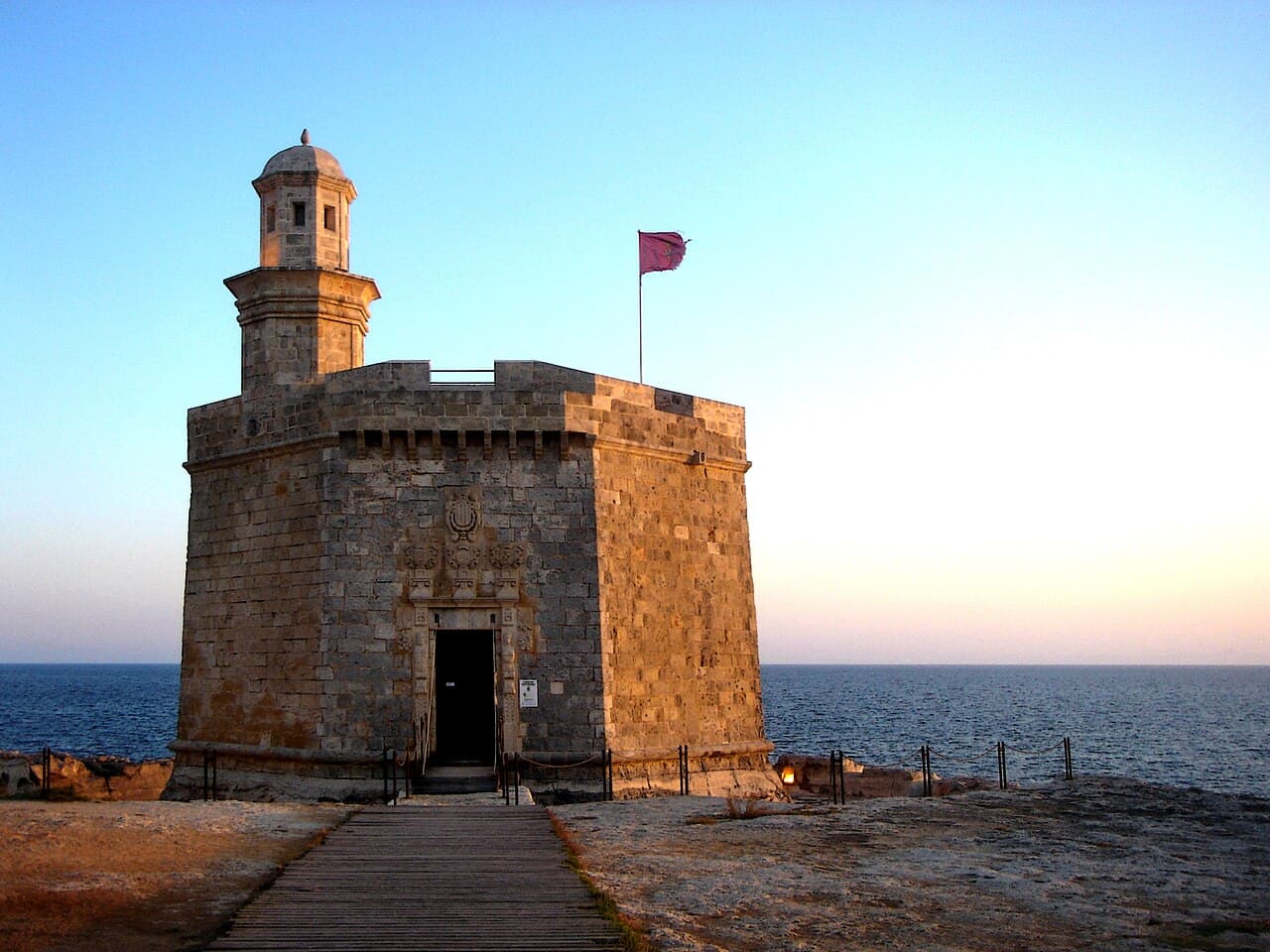
Sant Nicolau Castle is a notable example of a Renaissance hill castle located in Spain. Constructed in the 17th century, this fortress exemplifies the military architectural advances of the period, designed to adapt to the evolving needs of defense during the Renaissance era. The castle's elevated position on a hill provided strategic advantages, allowing surveillance over the surrounding landscape and early warning against potential invaders.

Historical context and significance

The 17th century was a time of significant military and political change in Spain, marked by conflicts such as the Thirty Years' War and various regional disputes. Sant Nicolau Castle was built during this period to reinforce territorial control and protect local populations. Its construction reflects the Renaissance emphasis on symmetry, proportion, and the integration of classical elements into military architecture.

Architectural features and design

The castle's design incorporates typical Renaissance military architecture elements, including thick stone walls capable of withstanding artillery fire, angled bastions for improved defense, and a compact layout optimized for both defense and habitation. The use of stone masonry and the presence of defensive towers highlight the castle's dual role as a fortress and a residence.

Defensive structures

Bastions at the corners of the castle allowed defenders to cover all approaches with overlapping fields of fire. The main entrance was likely fortified with a gatehouse and possibly a drawbridge, features common in hill castles of the period. The castle walls include battlements and arrow slits or embrasures designed for muskets and small artillery.

Residential and functional spaces

Inside the walls, Sant Nicolau Castle would have contained living quarters, storerooms, and possibly a chapel, reflecting its role as a noble residence and military stronghold. The courtyard provided space for daily activities and mustering troops.

Strategic location and landscape

Situated on a hill, the castle commands extensive views of the surrounding countryside. This vantage point was crucial for monitoring movements and signaling allies. The natural elevation also enhanced the castle's defensibility, making direct assaults difficult.

Preservation and current condition

Today, Sant Nicolau Castle is recognized as a well-preserved Renaissance fortress. Its stone structures remain largely intact, allowing visitors to appreciate the architectural and historical significance of the site. Conservation efforts have focused on maintaining the structural integrity of the walls and towers while facilitating public access.

Visiting Sant Nicolau Castle

Visitors to Sant Nicolau Castle can explore the historic defensive walls, climb the towers for panoramic views, and learn about the castle's role in Spain's military history. The site offers a glimpse into the Renaissance period's architectural ingenuity and the strategic importance of hill castles in Spanish history.

Frequently asked questions (FAQ)

How do I get to Sant Nicolau Castle?
Sant Nicolau Castle is located in the scenic region of Spain and is accessible by car or public transport. If you're traveling by car, there are designated parking areas nearby. For those using public transport, check local bus schedules that connect to nearby towns.
What is the historical significance of Sant Nicolau Castle?
Sant Nicolau Castle dates back to the medieval period and has served various purposes throughout history, including a defensive stronghold. Its architectural design reflects the strategic military importance of the region during its time. Today, it stands as a testament to the rich history of Spain and attracts many history enthusiasts.
When was Sant Nicolau Castle built?
The exact date of construction for Sant Nicolau Castle is believed to be in the 12th century, during the height of feudalism in Spain. It has undergone several renovations and restorations over the centuries, preserving its historical integrity. Visitors can explore its ancient walls and learn about its storied past.
Can I take guided tours of Sant Nicolau Castle?
Yes, guided tours of Sant Nicolau Castle are available and highly recommended for a comprehensive understanding of its history and architecture. These tours are led by knowledgeable guides who share fascinating stories and insights. Be sure to check the castle's official website for tour schedules and availability.
Why is Sant Nicolau Castle a popular tourist attraction?
Sant Nicolau Castle is popular due to its stunning architecture, rich history, and picturesque surroundings. Visitors are captivated by its well-preserved structures and breathtaking views of the landscape. Additionally, the castle often hosts cultural events and exhibitions, enhancing its appeal to tourists.
Is it possible to visit Sant Nicolau Castle with children?
Absolutely! Sant Nicolau Castle is family-friendly and offers a great opportunity for children to learn about history in an engaging way. The castle grounds provide space for exploration, and there are often interactive exhibits designed for younger visitors. Be sure to check for any specific family activities or events during your visit.
What are the opening hours of Sant Nicolau Castle?
Sant Nicolau Castle typically opens to visitors from 9 AM to 6 PM, though hours may vary depending on the season or special events. It's best to check the official website for the most current information on opening times before your visit. Remember to plan your visit accordingly to make the most of your time there.
What are the ticket prices for visiting Sant Nicolau Castle?
Ticket prices for Sant Nicolau Castle vary depending on age and group size, typically ranging from €5 to €10. Discounts may be available for students, seniors, or children under a certain age. Be sure to check for any special offers or group rates when planning your visit.
What nearby attractions can I visit while at Sant Nicolau Castle?
While visiting Sant Nicolau Castle, you can explore other nearby attractions such as local museums, beautiful parks, and charming villages. The surrounding area offers numerous hiking trails and scenic viewpoints for nature lovers. Be sure to consult local guides or visitor centers for recommendations on additional sites to enhance your experience.

Photo gallery

Sant Nicolau Castle
Click to view

Photo by Boladevidre•CC BY-SA 2.0

1 photo • Click any image to view in full screen

Information

Hill Castle

Loading map...

Visitor reviews

No reviews yet. Been here? Write the first review and help other travelers!

Write the first review

Visited this castle? Share your experience

Your review helps other travelers and adds first-hand knowledge to our encyclopedia.
Write a review

(5/5)

0/2000 characters

Your review will be visible after admin approval

Nearby castles

15.9 km
Santa Àgueda Castle — Spain castle

Santa Àgueda Castle

Ferreries, Spain

Santa Àgueda Castle stands as a monumental testament to the complex historical tapestry of Menorca, Spain. Perched atop an elongated plateau near the town of Ferreries, this hill castle commands sweeping views of the surrounding landscape, underscoring its strategic importance through the ages. The castle's location has been a focal point of occupation since prehistoric times, evolving through Roman, Muslim, and Christian influences, each leaving indelible marks on its structure and legacy. Ancient origins and roman influence The site of Santa Àgueda Castle reveals a layered history beginning with the prehistoric Talaiot culture during the Iron Age, which first recognized the defensive potential of this elevated terrain. Archaeological findings confirm that the Romans later utilized the location, as evidenced by the discovery of Roman pottery and coins. The construction of an ancient Roman road leading up to the summit suggests the presence of a military camp or fortified outpost, establishing the site as a key strategic point in the Roman period. Muslim fortification and architectural evolution The fortress that largely defines Santa Àgueda today was originally constructed by Muslim rulers during the High Medieval period, likely in the 10th or 11th century. Built upon an earlier Roman castra, the castle's initial design reflected typical Moorish military architecture characterized by a polygonal layout and robust defensive towers. The central section of the castle spans approximately 1.5 hectares and features a distinctive seven-sided plan with sixteen round towers, some measuring between four to six meters in diameter. Over time, some round towers were replaced with square ones, indicating architectural adaptations responsive to evolving military needs. The castle was expanded during the rule of the Almoravid dynasty in the late 11th and 12th centuries, and further enhanced under the Almohads in the 13th century. The latter period saw the addition of the Casa d’Armes, an armory complex occupying about 0.8 hectares with an irregular shape stretching 155 meters in length. This addition underscores the castle's role as a fortified military hub during the turbulent period leading up to the Christian reconquest. Defensive features and water systems Santa Àgueda's fortifications include a prominent central donjon or keep, which served as the last defensive refuge within the castle. The fortress is divided into three main sections: the central polygonal core, a large northwestern wing, and the northeastern armory. The northwestern section, measuring approximately 275 by 80 meters, encloses nearly 2.8 hectares and contains an advanced water supply system with two large cisterns. These cisterns, measuring roughly 28 by 6 meters and 15 by 9 meters respectively, feature remnants of masonry and tiles, illustrating sophisticated medieval engineering to sustain the garrison during sieges. Access to the castle was controlled through the northwestern wing, reached by a winding path that preserves remnants of the original Roman road, highlighting the continuity of strategic access routes over centuries. Christian conquest and subsequent history In 1287, King Alfonso III of Aragon launched a campaign to conquer Menorca, with Santa Àgueda Castle serving as the final bastion of Muslim resistance. The emir Abu Umar ibn Said sought refuge within its walls before surrendering, marking the end of Muslim rule on the island. Following the conquest, Menorca was incorporated into the Crown of Aragon, transforming the castle's political and cultural context. The fortress sustained damage after its capture, particularly from partial demolition ordered around 1343 by King Peter IV of Aragon, Alfonso III's grand-nephew. Despite this, the site retained religious significance when Eleonora of Aragon, Peter IV's daughter, established a chapel dedicated to Saint Agatha of Catania within the ruins. This chapel became the focal point of an annual pilgrimage celebrated every February 5th, cementing the castle's spiritual legacy and influencing its modern name, Santa Àgueda. Architectural remains and cultural significance Today, Santa Àgueda Castle occupies roughly five hectares on its hilltop, divided into the three adjoining sections that reflect its historical phases. Though the castle is in a state of partially preserved ruins, its surviving masonry, towers, cisterns, and segments of the ancient Roman road provide a tangible connection to its layered past. The central polygonal section with its original towers and donjon reveals the castle's Moorish architectural heritage, while the large northwestern wing and northeastern armory illustrate medieval expansions and adaptations. The absence of the chapel today contrasts with its historical role as a religious site, yet the castle remains a cultural landmark on Menorca. Local folklore enriches the castle's mystique, including legends of a hidden golden calf statue beneath its walls, adding a mythical dimension to its historical narrative. The site's recognition as a cultural heritage monument in the late 20th century has ensured its protection and public ownership, allowing visitors to explore its evocative ruins and appreciate its significance in Mediterranean history. Visiting santa àgueda castle Santa Àgueda Castle is accessible by hiking trails that ascend the plateau, offering visitors a chance to experience its commanding views and historic atmosphere firsthand. The preservation of the Roman road path enhances the journey, connecting visitors with the site's ancient origins. Interpretive signage and local guides provide insights into the castle's architectural features and historical episodes, enriching the visitor experience. While the castle remains a ruin, its evocative remains and panoramic vistas make it a compelling destination for those interested in medieval fortifications, Moorish architecture, and the history of the Balearic Islands. The annual pilgrimage to honor Saint Agatha, though no longer centered at the castle, continues to reflect the enduring cultural resonance of this historic site.

High Medieval (11th–13th c.)
Details
27 km
Torre de Fornells — Spain castle

Torre de Fornells

, Spain

Torre de Fornells is a prominent example of a 19th-century bastioned fortress located in Spain, designed primarily for coastal defense during the Modern period. This fortress showcases the military architectural evolution that responded to the advances in artillery and naval warfare of its time. Historical context and strategic importance Constructed in the 19th century, the Torre de Fornells was part of a wider network of fortifications aimed at protecting key maritime points along the Spanish coast. Its location was carefully chosen to oversee and defend important sea routes from potential naval incursions. The fortress played a role in Spain's efforts to modernize its coastal defenses during a time when European powers were enhancing their military infrastructure in response to changing geopolitical threats. Architectural design and features The Torre de Fornells is classified as a bastioned fortress, a style characterized by angular bastions projecting outward from the main walls, which allowed defenders to cover adjacent walls with overlapping fields of fire. This design was particularly effective against artillery bombardment and infantry assaults, reflecting the military engineering principles of the Modern period. The fortress features robust stone walls and bastions that form a star-shaped layout, typical of bastioned fortifications. The walls are thick and angled to deflect cannonballs, and the bastions provide platforms for mounting artillery pieces. The design maximizes defensive capabilities by eliminating blind spots and allowing for crossfire. Additional architectural elements include a moat or ditch surrounding the fortress, enhancing its defensive perimeter. The entrance is typically fortified with a gatehouse and possibly a drawbridge or other defensive mechanisms to control access. Construction and materials The fortress was built using locally sourced stone and masonry, materials chosen for their durability and resistance to artillery fire. The construction techniques reflect the engineering knowledge of the 19th century, combining traditional masonry with adaptations for modern military needs. Current condition and preservation Today, Torre de Fornells remains in a well-preserved state, allowing visitors to appreciate its architectural features and understand its historical role. Preservation efforts have focused on maintaining the integrity of the bastions and walls, ensuring the fortress continues to stand as a significant cultural and historical landmark. Visiting Torre de Fornells The fortress is accessible to the public, offering an opportunity to explore a key example of Modern period military architecture in Spain. Visitors can walk along the bastions, view the strategic vantage points, and learn about the fortress's role in coastal defense through informational displays. Architectural highlights for visitors Star-shaped bastions that demonstrate advanced defensive design. Thick stone walls built to withstand artillery fire. Strategic location overlooking important maritime routes. Defensive moat enhancing the fortress's security. Historical significance Torre de Fornells represents the adaptation of military architecture to new technologies and threats in the 19th century. It is a physical reminder of Spain's efforts to protect its coastline during a period of significant military and political change in Europe. Frequently asked questions When was Torre de Fornells built? It was constructed in the 19th century during the Modern period to strengthen coastal defenses. What type of castle is Torre de Fornells? It is a bastioned fortress designed for artillery defense. Is Torre de Fornells open to visitors? Yes, the fortress is accessible to the public for tours and exploration. What architectural features are notable? The star-shaped bastions, thick walls, and defensive moat are key features. Where is Torre de Fornells located? It is located in Spain, strategically positioned on the coast.

Modern (19th–20th c.)
Details
27.1 km
Sant Antoni Castle — Spain castle

Sant Antoni Castle

Fornells, Spain

The Sant Antoni Castle, also known as Castell de Sant Antoni in Catalan and Castillo de San Antonio in Spanish, is a historically significant 17th-century fortress located in the village of Fornells, within the municipality of Es Mercadal on the island of Menorca, Spain. This hill castle was strategically constructed in the Renaissance period to protect the natural harbor of Fornells, which facilitated maritime activities and fostered the growth of the surrounding settlement. The castle's establishment directly contributed to the birth and development of the town of Fornells, highlighting its importance beyond military defense. Historical context and significance Constructed in the 17th century, Sant Antoni Castle was part of a network of fortifications built during a period marked by frequent conflicts over control of the Balearic Islands, especially between Spanish and British forces. The castle's primary function was to defend the harbor and the northern coast of Menorca from naval threats and pirate incursions. Its location on a hill overlooking the harbor offered commanding views, essential for early warning and defense. Following the British occupation of Menorca in the 18th century, the castle, along with other fortifications such as the nearby St. Philip's Castle, was dismantled by the Spanish authorities after regaining control. This dismantling was part of a broader military strategy to prevent these fortifications from being used again by foreign powers. Consequently, today only ruins remain of Sant Antoni Castle, bearing witness to its historical military role and the turbulent history of the island. Architectural features and layout While much of the original structure of Sant Antoni Castle has been lost, historical records and remaining ruins indicate that it was a typical Renaissance hill castle designed with defensive features suited to the era. The castle likely included thick stone walls, bastions for artillery placement, and a central courtyard that served as the operational heart of the fortress. Its elevated position provided strategic advantages, allowing defenders to monitor and control access to the harbor. Adjacent to the castle is the Fornells Tower, a smaller defensive structure built to complement the castle's defense system. The tower functioned as an early warning post and a protective outpost to guard against enemy approaches, especially from the sea. Together, these fortifications formed an integrated defensive network crucial for the security of Fornells and its harbor. The castle's role in local development The construction of Sant Antoni Castle was a catalyst for the establishment and growth of the village of Fornells. As the fortress secured the harbor, it encouraged maritime trade and fishing activities, which became the economic backbone of the community. The protection offered by the castle allowed the population to settle and expand around this strategic coastal point. Over time, Fornells evolved from a small harbor settlement into a vibrant village with a rich maritime heritage. The castle's presence played a central role in shaping the identity and historical trajectory of this part of Menorca. Present condition and cultural importance Today, Sant Antoni Castle exists primarily as archaeological ruins. The dismantling after the British period left only fragments of the original fortress, but these remains continue to attract visitors interested in the military history and cultural heritage of Menorca. The site offers insights into the island's strategic importance in Mediterranean conflicts during the Renaissance and early modern periods. The proximity of the Fornells Tower enhances the historical landscape, allowing visitors to appreciate the integrated defensive system that once protected the harbor. Both sites are important for understanding the military architecture and regional history of Menorca. Visiting Sant Antoni Castle and surroundings Visitors to Sant Antoni Castle can explore the ruins and enjoy panoramic views of the Fornells harbor and the surrounding landscape. The area is accessible and offers a glimpse into the island's past military strategies and coastal defenses. Nearby, the Fornells Tower provides additional context and a well-preserved example of a coastal watchtower. The castle ruins and tower are part of Menorca's rich cultural tourism offerings, attracting those interested in history, architecture, and Mediterranean maritime heritage.

Renaissance (15th–17th c.)
Details