Sanem Castle
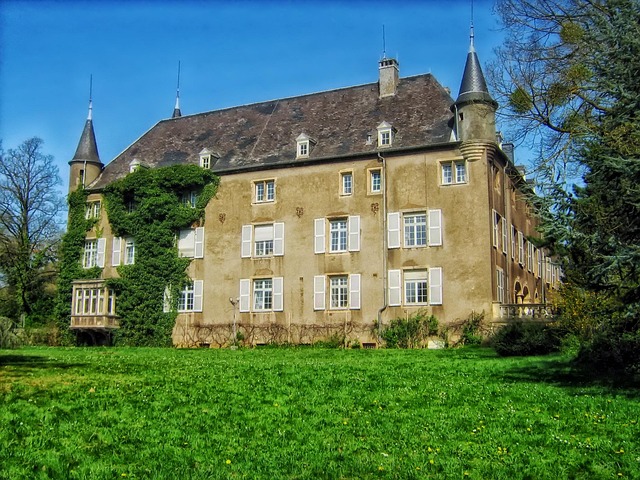
Sanem Castle stands as a remarkable example of Renaissance architecture with deep medieval roots, located in the municipality of Sanem, Luxembourg. Its history dates back to the late 13th century, when it was initially established as a fortified stronghold by European settlers. The castle's evolution from a medieval water castle to a Renaissance residence reflects the complex historical and architectural transformations it has undergone over several centuries.
The earliest known construction on the site was around 1270, when brothers Wilhelm and Johann built the first fortress by transforming an earlier fortified farmhouse into a water castle surrounded by a moat. This original structure featured a large square Gothic tower measuring approximately 12.5 by 12.5 meters, which remains a prominent element of the castle today. The tower's robust form and defensive capabilities highlight the castle's medieval origins and its role as a fortified residence.
The renaissance transformation and architectural features
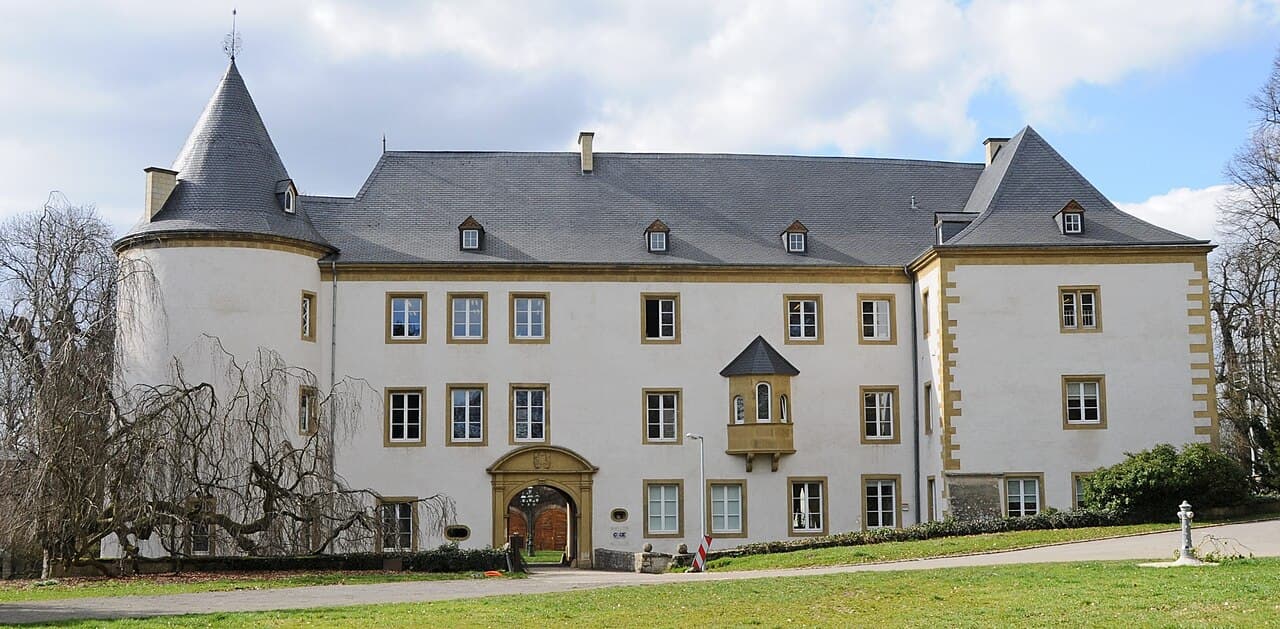
During the 16th century, Sanem Castle experienced significant upheaval. It was heavily damaged by French forces in the 1550s, leading to a major reconstruction around 1567 under the direction of Frédéric de Hagen-Fleckenstein. This rebuilding embraced the Renaissance architectural style, inspired by the Italian models of the late 15th century. The new design introduced a harmonious ensemble of buildings arranged around a large rectangular courtyard, a typical feature of Renaissance residential castles emphasizing symmetry and proportion.
The Renaissance reconstruction preserved the original Gothic square tower, integrating it into the new complex, which combined defensive elements with more comfortable living quarters. The castle's quadrangular layout, surrounded by a ditch reminiscent of its moat, reflects this blend of medieval fortification and Renaissance elegance. The buildings feature characteristic Renaissance elements such as refined stonework, orderly window arrangements, and classical proportions, marking a clear departure from the purely defensive medieval design.
Historical events and ownership through the centuries
Following its Renaissance transformation, Sanem Castle continued to witness turbulent times. In the 17th century, it was burned and subsequently rebuilt again. During this period, it served a military function as it was occupied by Polish troops allied with the imperial army, underscoring its strategic importance in regional conflicts.
In 1753, the castle changed hands when Arnold François de Tornaco, a baron, purchased the property. The Tornaco family maintained ownership for nearly two centuries, during which time the castle was not only a noble residence but also a site connected to Luxembourg's political history. One of its most notable occupants was Victor de Tornaco, who served as the prime minister of Luxembourg from 1860 to 1867, linking the castle to the nation's governance and aristocratic legacy.
20th-century adaptations and modern use
In the 20th century, the castle's role shifted dramatically. In 1950, the Tornaco heirs sold it to the municipality of Esch-sur-Alzette. It was repurposed as a children's home known as the Kannerschlass, serving this social function for nearly fifty years. A pavilion was constructed in 1965 within the castle's park to accommodate the director of the children's home, demonstrating the site's continued adaptation to contemporary needs.
The castle, its surrounding park, and a nearby chapel were declared a national monument in 1971, recognizing their cultural and historical importance. Ownership transferred to the Luxembourg state in 1985, and after the children's home vacated the premises in 1999, the castle underwent extensive renovation to preserve its architectural integrity. Notably, the rear building was excluded from these restorations, maintaining a contrast within the complex.
From 2002 to 2016, Sanem Castle housed the Centre Virtuel de la Connaissance sur l'Europe (CVCE), a research center dedicated to European integration, highlighting the castle's evolving role as a cultural and intellectual hub. The pavilion built in the park has since been used as accommodation for asylum seekers, illustrating the site's ongoing social relevance.
Architectural remains and landscape setting
The castle's current form preserves the essential Renaissance quadrangular layout centered on the spacious rectangular courtyard. This design is a testament to the 16th-century rebuilding that replaced much of the medieval fortress with a residence reflecting Renaissance ideals of symmetry and order.
The surviving Gothic square tower remains a key architectural feature, linking the castle's medieval past with its Renaissance present. The moat and defensive walls that once fully surrounded the castle are no longer intact, but the ditch encircling the complex recalls its fortified origins.
Sanem Castle is set within an 18th-century landscaped park featuring mature linden, beech, oak, and ash trees. This park extends along Escher road (CR110) and contributes to the castle's historic atmosphere. The 1965 pavilion within this park continues to serve residential purposes, maintaining the site's tradition of adaptation and reuse.
Preservation and heritage status
Designated as a classified national monument since 1971, Sanem Castle benefits from legal protection that ensures its preservation and maintenance. The renovations carried out in the late 1990s restored much of the castle's fabric, safeguarding its architectural and historical significance for future generations. The exclusion of the rear building from these works leaves a visible reminder of the castle's layered history and ongoing evolution.
Today, Sanem Castle stands not only as a monument to Luxembourg's rich medieval and Renaissance heritage but also as a living institution serving social and cultural purposes. Its history of transformation, resilience, and adaptation makes it a fascinating subject for visitors interested in European castle architecture and history.
Frequently asked questions (FAQ)
- How do I get to Sanem Castle?
- Sanem Castle is located in the village of Sanem, Luxembourg, easily accessible by car and public transportation. If you're driving, there is parking available nearby. For those using public transport, local buses connect Sanem to major cities like Luxembourg City.
- What is the historical significance of Sanem Castle?
- Sanem Castle, dating back to the 13th century, is a significant medieval structure that reflects the architectural styles of the time. It served as a noble residence and has witnessed various historical events throughout its existence, making it a key part of Luxembourg's heritage.
- When was Sanem Castle built?
- Sanem Castle was originally constructed in the 13th century, with subsequent renovations that showcase different architectural styles. The castle has undergone several transformations, particularly in the 18th century, which contributed to its current appearance.
- Can I take guided tours of Sanem Castle?
- Yes, guided tours of Sanem Castle are available and provide an in-depth look at its history and architecture. These tours are typically offered during the peak tourist season, ensuring visitors have a comprehensive understanding of the castle's significance.
- Why is Sanem Castle a popular tourist attraction?
- Sanem Castle is popular for its striking architecture, picturesque setting, and rich history. Visitors are drawn to its beautifully preserved structures and the serene landscape surrounding the castle, making it an ideal spot for photography and exploration.
- Is it possible to host events at Sanem Castle?
- Yes, Sanem Castle can be rented for various events, including weddings, corporate meetings, and private gatherings. The stunning backdrop and unique atmosphere make it a desirable location for memorable events.
- What are the opening hours for Sanem Castle?
- Sanem Castle is typically open to visitors from April to October, with specific hours varying by day. It is advisable to check the official website for the most current information on opening hours before your visit.
- What are the ticket prices for visiting Sanem Castle?
- Ticket prices for Sanem Castle are generally affordable, with discounts available for students and seniors. Children under a certain age may enter for free, making it a great family-friendly destination.
- What is the best time to visit Sanem Castle?
- The best time to visit Sanem Castle is during the spring and summer months when the weather is pleasant and the gardens are in full bloom. This period also coincides with the castle's extended opening hours and special events, enhancing the overall visitor experience.
- Are there any nearby attractions to Sanem Castle?
- Yes, there are several nearby attractions to explore, including the charming village of Sanem itself and the scenic nature trails in the surrounding area. Additionally, visitors can discover other historic sites and local museums, making for a full day of sightseeing.
Photo gallery

Information
Website
Visit websiteSources & official resources
Verify the information above using these authoritative references.
Loading map...
Visitor reviews
No reviews yet. Been here? Write the first review and help other travelers!
Write the first reviewVisited this castle? Share your experience
Your review helps other travelers and adds first-hand knowledge to our encyclopedia.