Differdange Castle
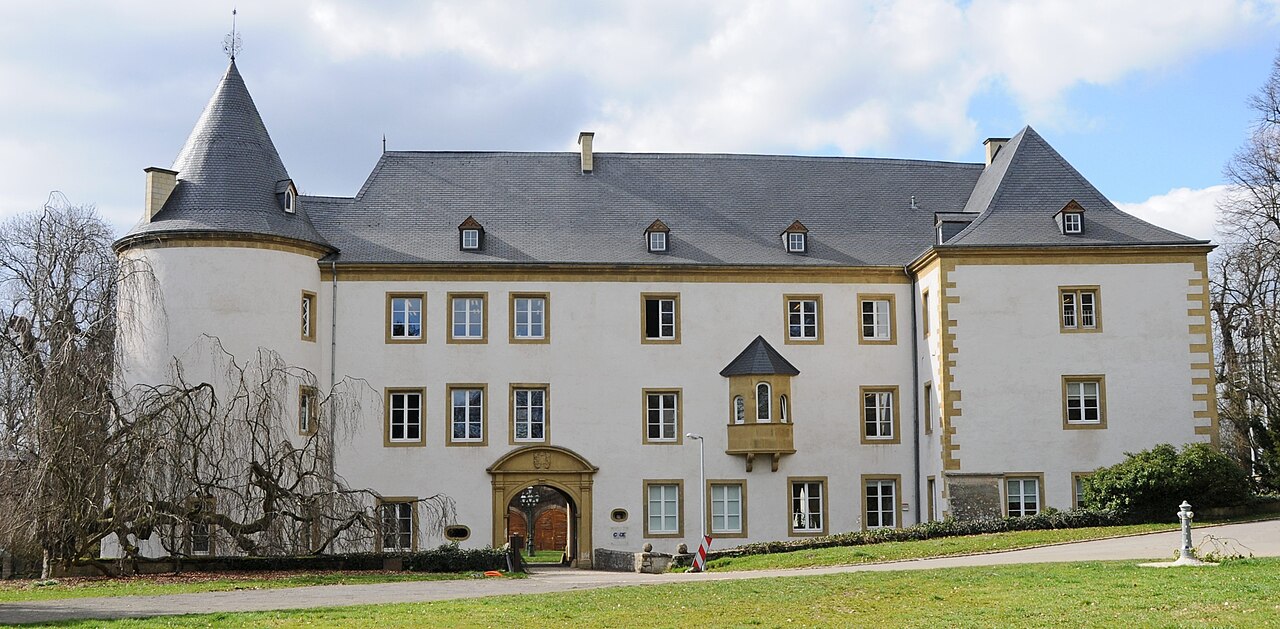
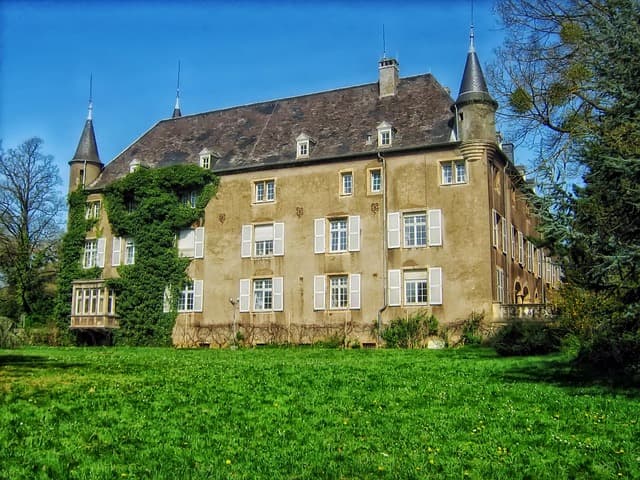
Differdange Castle stands prominently on a hill in the center of Differdange, a town in southern Luxembourg. This castle is a remarkable example of Renaissance architecture in the region, with its origins dating back to 1577. However, the site itself has a longer history, as an earlier fortified castle existed here around 1310. Over the centuries, the castle has evolved from a medieval stronghold to a Renaissance residential chateau, reflecting the changing architectural styles and social functions of such estates.
Historical background and early origins
The first known fortified castle at Differdange was owned by Wilhelm, brother of the Lord of Soleuvre, mentioned in documents from 1310. This medieval fortress served as a defensive residence for the local lords, but the lineage of the lords of Differdange ended around 1400 with the death of Wilhelm's grandson. The original castle likely featured typical medieval defensive elements, although few details survive today.
In 1552, Soleuvre Castle, the seat of the related noble family, was destroyed by fire. Rather than restore Soleuvre, Anna von Insenburg, the then-owner, chose to construct a new residence at Differdange. This decision marked a significant shift in architectural style and purpose, as the new castle was designed as a Renaissance chateau, combining both residential comfort and defensive features.
Architecture and design of the Renaissance castle
Constructed in 1577, Differdange Castle is considered one of the earliest examples in Luxembourg of a château built entirely in the Renaissance style. The design reflects the Renaissance ideals of symmetry, proportion, and harmony, particularly evident in the use of the square as a geometric principle. The castle's layout consists of three buildings arranged around a central square courtyard, a typical Renaissance architectural feature that facilitates both aesthetic appeal and practical use.
The castle originally included a moat and a drawbridge, defensive elements that have since been removed. Loop-holes for firearms are integrated into the walls, indicating the dual residential and defensive nature of the structure. The outer walls and courtyard maintain a strict square plan, emphasizing the Renaissance preference for geometric clarity.
Characteristic rectangular cross-framed windows punctuate the facades, providing ample light and ventilation while maintaining the castle's fortified appearance. The octagonal towers, slightly taller than the main building, create a vertical counterbalance to the horizontal lines of the walls. These towers not only enhanced the castle’s defensive capabilities but also contributed to its elegant silhouette.
Materials and construction techniques
The castle was built using local stone and masonry techniques common in the 16th century. The quality of the stonework and the precision of the geometric design reflect the skilled craftsmanship of the period. The roofs were traditionally steep and covered with tiles, consistent with regional architectural norms.
Later history and modern use
In the early 20th century, Differdange Castle entered a new phase when it was acquired by the local steel industry, now part of ArcelorMittal. The castle was repurposed as a hotel and restaurant for company staff, demonstrating adaptive reuse of historic buildings in industrial contexts. This period helped preserve the castle’s structure, although some original features like the moat and drawbridge were lost.
Since 1997, the castle has been leased to Miami University, which operates the Miami University Dolibois European Center on the premises. This academic use has brought renewed attention to the castle, combining historical preservation with educational activities. The castle’s interiors have been adapted to accommodate classrooms and offices while respecting its architectural heritage.
Significance in Luxembourg's architectural heritage
Differdange Castle holds a special place in Luxembourg’s architectural history as a prime example of Renaissance residential design. Its preservation allows visitors and scholars to study the transition from medieval fortifications to Renaissance chateaux, illustrating broader European cultural and architectural trends of the 16th century.
The castle’s geometric plan, Renaissance stylistic elements, and combination of defensive and residential functions make it an important case study in castle architecture. It also reflects the social history of the region, from medieval lordship through industrial transformation to modern educational use.
Visiting and cultural importance
While primarily serving as an academic center today, Differdange Castle remains a notable landmark in the town of Differdange. Its location on a hill offers scenic views and a tangible connection to the past. The castle’s architecture and history attract visitors interested in Renaissance art, European history, and castle architecture.
Efforts to maintain and preserve the castle ensure that it continues to contribute to Luxembourg’s cultural landscape. It stands as a testament to the enduring legacy of Renaissance architecture and the adaptive reuse of historic buildings in contemporary contexts.
Frequently asked questions (FAQ)
- What is the historical significance of Differdange Castle?
- Differdange Castle, dating back to the 11th century, is a remarkable example of medieval architecture in Luxembourg. It played a crucial role in the region's defense and served as a residence for various noble families, reflecting the rich history of the area.
- When was Differdange Castle built?
- Differdange Castle was originally constructed in the early 11th century, with significant renovations and expansions taking place in subsequent centuries. The castle's architecture showcases a blend of medieval and modern styles due to these changes over time.
- Can I visit Differdange Castle?
- Yes, Differdange Castle is open to visitors who wish to explore its historical grounds. Guided tours are available, allowing guests to learn more about the castle's history and architecture.
- What are the opening hours for Differdange Castle?
- Differdange Castle is typically open to visitors from 10 AM to 6 PM, Wednesday through Sunday. It's advisable to check the official website for any seasonal changes or special events that may affect visiting hours.
- Is it possible to access Differdange Castle by public transport?
- Yes, Differdange Castle is accessible via public transport, with several bus routes serving the area. Visitors can also take a short walk from the nearest train station to reach the castle.
- What is the best time to visit Differdange Castle?
- The best time to visit Differdange Castle is during the spring and early autumn when the weather is pleasant and the gardens are in full bloom. Additionally, the castle often hosts events during these seasons, enhancing the visitor experience.
- Are there any nearby attractions to visit while in Differdange?
- Yes, while visiting Differdange Castle, you can also explore the nearby Differdange Park and the local museum. These attractions offer additional insights into the region's history and natural beauty.
- How much do tickets cost for Differdange Castle?
- Tickets for Differdange Castle are reasonably priced, with discounts available for students and seniors. It's best to check the official website for the latest pricing and any special offers.
Photo gallery

Photo by 12019
Information
Website
Visit websiteSources & official resources
Verify the information above using these authoritative references.
Loading map...
Visitor reviews
No reviews yet. Been here? Write the first review and help other travelers!
Write the first reviewVisited this castle? Share your experience
Your review helps other travelers and adds first-hand knowledge to our encyclopedia.