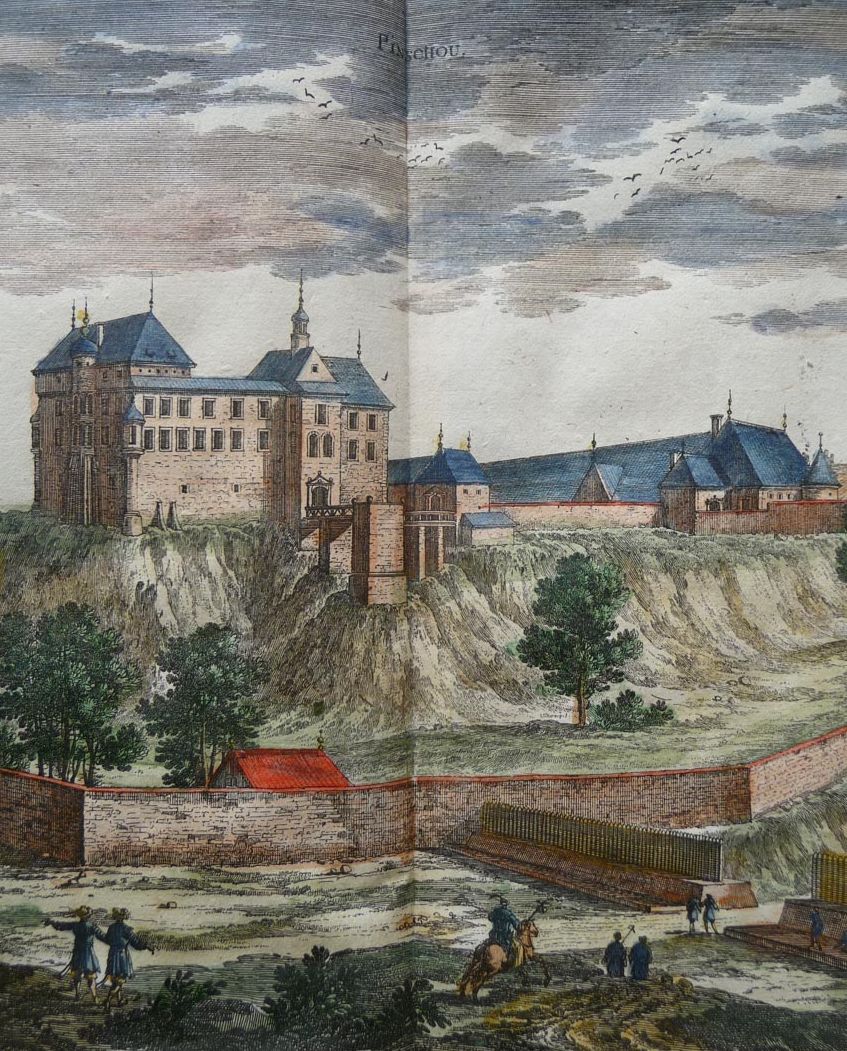
Sancygniów
Sancygniów castle, located in the village of Sancygniów in Poland, is a remarkable example of a late medieval bastioned fortress that evolved through centuries of architectural and historical transformations. The site first appears in historical records in 1376 under the name Sadzignew and was associated with the noble Secygniowski family bearing the Jelita coat of arms. The castle's origins likely date back to the turn of the 14th and 15th centuries when Piotr Secygniowski is believed to have erected the initial defensive residence, marking the beginning of the site's fortified legacy.
The origins and early fortifications
The earliest phase of Sancygniów castle probably consisted of a fortified manor or small stronghold constructed by the Secygniowski family. While the exact location of this initial medieval residence remains uncertain, it is hypothesized that remnants may be embedded within the current palace structure or possibly situated in the northeastern corner of the surrounding park. Definitive confirmation of these early fortifications awaits archaeological investigation, which could shed light on the castle's foundational layout and construction techniques during the late medieval period.
Renaissance transformation and defensive features
In the second half of the 16th century, the last members of the Secygniowski lineage undertook significant construction to build a Renaissance defensive manor on the site. This manor was strategically positioned along a small river, with natural water defenses enhanced by man-made fortifications. The eastern and northern sides were protected by a robust wall, while to the south, a pond served as a natural moat, reinforcing the manor's defenses against potential attackers. A notable architectural feature from this period is the Renaissance gate located at the northeastern corner, crowned with a distinctive attica featuring three key embrasures, which exemplify the military architectural style of the time.
Architectural elements of the Renaissance manor
Aside from the gate, other surviving elements from the Renaissance defensive manor include a former lamus building situated deeper within the estate. This structure, constructed of stone on a square plan and rising three stories high, has been subject to varied interpretations. Some sources suggest it served as an Arian congregation house, a residential building, or an armory. After 1917, it was repurposed as a museum, indicating its significance within the estate's layout. Adjacent to the gate stands a 17th-century gatehouse building, also made of stone with a nearly square plan and topped with a hip roof, further illustrating the castle's evolving defensive and residential architecture.
Ownership changes and decline
Following the extinction of the Secygniowski family in the early 17th century, the estate entered a period of decline and changed hands multiple times. It passed through the ownership of several noble families, including the Firlej, Opaliński, Męciński, Tarło, and Dembowski families. During this era, the castle's function shifted from a noble residence to a manor farmstead, reflecting broader socio-economic changes in the region. The property's defensive importance diminished, and maintenance of the fortifications waned, contributing to its gradual deterioration.
19th-century revival and neorenaissance palace construction
In 1835, the village and estate were purchased by Józef Deskur, a French émigré who settled in Poland following the French Revolution. Later, in 1882, his descendant Andrzej Deskur replaced the old manor with a Neo-Renaissance palace, marking a significant architectural renewal of the site. This new palace reflected the 19th-century romantic historicism trend, blending Renaissance revival elements with contemporary design. The estate remained in good condition until the upheavals of World War II.
20th-century challenges and current state
After World War II, the estate was nationalized and repurposed as a rehabilitation center, which unfortunately led to the palace's deterioration due to inadequate maintenance and alterations unsuited to the historic fabric. Today, the property is privately owned and remains in a state of ruin, with the Renaissance gate and lamus building among the most significant surviving architectural elements. The site stands as a testament to the layered history of Polish noble residences, reflecting medieval fortifications, Renaissance defensive architecture, and 19th-century revivalist styles.
Architectural significance and heritage value
Sancygniów castle exemplifies the transition from medieval fortifications to Renaissance manor houses that combined residential comfort with defensive features. The presence of bastioned elements and water defenses highlights the strategic use of natural and constructed barriers typical of late medieval and Renaissance fortresses in Poland. The Neo-Renaissance palace adds a layer of cultural heritage, illustrating the 19th-century fascination with historic styles and the adaptation of aristocratic estates to modern tastes.
Preservation and archaeological potential
While the castle currently exists as ruins, its archaeological potential remains significant. Excavations could reveal foundational structures of the original medieval residence and provide insights into the construction methods and daily life of its inhabitants across centuries. Preservation efforts would benefit from a detailed study of the surviving Renaissance gate and lamus, which are key to understanding the site's defensive and residential evolution.
Visiting Sancygniów castle
The castle is situated in a picturesque rural setting in the Świętokrzyskie region of Poland. Although the site is privately owned and not fully restored, visitors interested in Polish medieval and Renaissance architecture can appreciate the ruins and the landscape that shaped the castle's history. The surrounding park and water features contribute to the site's charm, offering an evocative glimpse into Poland's noble past.
Frequently asked questions (FAQ)
- How do I get to Castle Sancygniów?
- Castle Sancygniów is located in the picturesque village of Sancygniów, Poland, easily accessible by car or public transport. If you're traveling by train, the nearest station is in the city of Piotrków Trybunalski, from where you can take a local bus or taxi to reach the castle.
- What is the historical significance of Castle Sancygniów?
- Castle Sancygniów dates back to the 14th century and has played a vital role in the region's history, serving as a defensive stronghold. It is considered an important example of medieval architecture in Poland and reflects the rich heritage of the area.
- When was Castle Sancygniów built?
- Construction of Castle Sancygniów began in the late 1300s, during the reign of the Polish king Casimir III the Great. Over the centuries, it has undergone numerous renovations, preserving its historical essence while adapting to modern needs.
- Can I take guided tours of Castle Sancygniów?
- Yes, guided tours are available at Castle Sancygniów, providing visitors with insights into its history, architecture, and legends. These tours are led by knowledgeable guides who enhance the experience through storytelling and detailed explanations.
- Why is the architecture of Castle Sancygniów unique?
- The architecture of Castle Sancygniów is unique due to its combination of Gothic and Renaissance styles, which reflects the various periods of construction and renovation. Its imposing towers, thick stone walls, and intricate details make it a fascinating study for architecture enthusiasts.
- Is it possible to host events at Castle Sancygniów?
- Yes, Castle Sancygniów offers facilities for hosting various events, including weddings, conferences, and cultural gatherings. The castle's stunning backdrop and historical ambiance make it a popular venue for such occasions.
- What are the opening hours for Castle Sancygniów?
- Castle Sancygniów is typically open to visitors from 10 AM to 6 PM during the peak tourist season from April to October. However, it is advisable to check the official website for any seasonal changes or special events that may affect opening hours.
- What are the ticket prices for visiting Castle Sancygniów?
- Ticket prices for Castle Sancygniów vary, with discounts available for students, seniors, and groups. General admission is affordable, making it accessible for families and history enthusiasts alike.
- When is the best time to visit Castle Sancygniów?
- The best time to visit Castle Sancygniów is during the late spring and early autumn months when the weather is pleasant, and the surrounding landscape is at its most beautiful. Additionally, visiting during special events can enhance your experience with unique activities and exhibitions.
- Are there any nearby attractions to visit along with Castle Sancygniów?
- Yes, there are several nearby attractions, including beautiful natural parks and historical sites that showcase the region's rich culture. The town of Piotrków Trybunalski, with its charming old town and museums, is also just a short drive away, making it a great addition to your visit.
Information
Current owner
Private owner
Loading map...
Visitor reviews
No reviews yet. Been here? Write the first review and help other travelers!
Write the first reviewVisited this castle? Share your experience
Your review helps other travelers and adds first-hand knowledge to our encyclopedia.