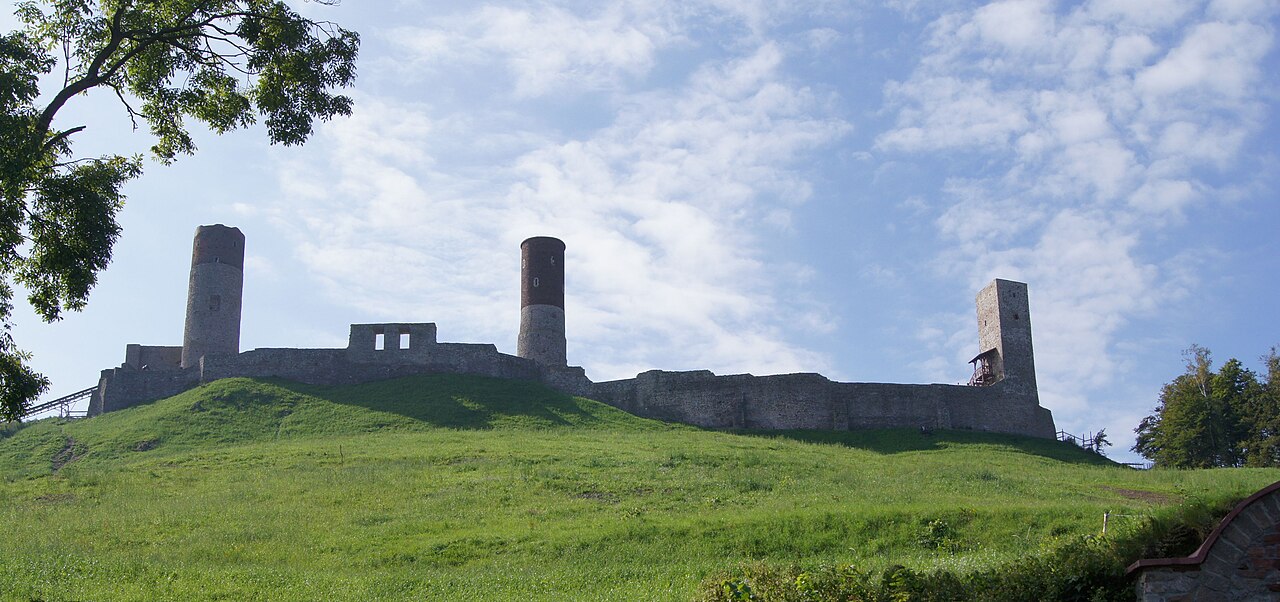
The Mokrsko Castle ruins stand amid the wetlands of the Nida River in Poland, offering a glimpse into the region's medieval and Renaissance heritage. Originally constructed in the late 14th century, this large knightly castle was founded by Klemens of Mokrsko, the castellan of Radom, and his son Florian, members of the noble Jelitczyk family. Strategically positioned on an artificial island formed by a bend in the river, the castle was surrounded by a defensive moat, emphasizing its initial military purpose.
Medieval origins and early architecture
The original appearance of Mokrsko Castle remains uncertain due to extensive later renovations that obscured its initial form. Built as a fortified residence, it likely featured typical late medieval defensive elements such as thick stone walls, battlements, and a moat, capitalizing on the natural protection offered by the river's wetlands. The castle's location on an artificial island was a deliberate defensive measure, common in medieval fortifications, to deter attackers and control access via water.
Renaissance transformation under piotr kmita
The castle underwent its first significant reconstruction between 1519 and 1526 under the direction of Piotr Kmita, the Grand Marshal of the Crown. This renovation marked a shift from a primarily defensive fortress to an elegant Renaissance residence. The design was adapted to a rectangular plan, featuring a residential building along the western side and a southern gate tower. The courtyard was enclosed by a defensive wall equipped with arrow slits and a guard's gallery, blending fortification with comfort.
Despite these defensive features, the castle's military role became secondary to its function as a noble residence. The Renaissance architectural elements, including stone window frames with characteristic detailing, highlighted the castle's elevated status and aesthetic refinement during this period.
Further modifications and decline
Throughout the 16th century, additional modifications continued to transform Mokrsko Castle into more of a palatial complex than a fortress. These changes reflected broader European trends where castles evolved into stately homes emphasizing luxury over defense.
By the turn of the 18th and 19th centuries, the castle had fallen into disrepair due to a lack of restoration efforts. The once-grand residence rapidly deteriorated, leading to its current state as ruins. Today, significant portions of the walls remain, some rising up to the height of the second floor, featuring the distinctive Renaissance stonework on window openings.
Architectural features and surviving elements
The surviving ruins of Mokrsko Castle provide valuable insight into its architectural evolution. The remains of the defensive walls with their arrow slits and the gate tower illustrate the castle's medieval military origins. Meanwhile, the Renaissance stone window frames and the layout of the residential buildings reflect the castle's transformation into a noble residence.
The castle's position on an artificial island surrounded by a moat remains a notable characteristic, emphasizing its strategic design. The blend of late medieval fortification and Renaissance residential architecture offers a unique example of castle evolution in Poland.
Historical significance and cultural heritage
Mokrsko Castle is an important cultural landmark that encapsulates the transition from medieval fortresses to Renaissance palaces in Poland. Its connection to prominent historical figures such as Klemens of Mokrsko and Piotr Kmita underscores its role in regional politics and society during the Late Middle Ages and Renaissance.
Despite its ruined state, the castle remains a site of historical interest, attracting visitors and scholars interested in Polish medieval and Renaissance architecture. Its ruins stand as a testament to the architectural and social changes that shaped noble residences in Central Europe.
Visiting mokrsko castle ruins
Today, the ruins of Mokrsko Castle are accessible to the public, offering a fascinating destination for those interested in history and architecture. Visitors can explore the remnants of the walls, gate tower, and residential structures, gaining insight into the castle's past grandeur and strategic importance.
The castle's location in the wetlands of the Nida River provides a scenic backdrop, enhancing the visitor experience. While the site is in ruins, its preservation allows for educational opportunities and cultural appreciation of Poland's medieval and Renaissance heritage.
Frequently asked questions (FAQ)
- When was Mokrsko Castle originally built?
- Mokrsko Castle was originally constructed in the late 14th century by Klemens of Mokrsko and his son Florian, members of the Jelitczyk family.
- What architectural styles are visible at Mokrsko Castle?
- The castle exhibits a blend of late medieval defensive architecture and Renaissance residential features, including stone window frames and a rectangular layout.
- Can visitors explore the ruins of Mokrsko Castle?
- Yes, the ruins of Mokrsko Castle are accessible to the public, allowing visitors to see the remaining walls, gate tower, and residential structures amid the scenic wetlands of the Nida River.
- Why is Mokrsko Castle significant historically?
- Mokrsko Castle illustrates the transition from medieval fortresses to Renaissance palaces in Poland and is linked to notable historical figures such as Klemens of Mokrsko and Piotr Kmita.
- What caused the decline of Mokrsko Castle?
- The castle fell into ruin by the late 18th and early 19th centuries due to a lack of restoration and maintenance, leading to its current ruined condition.
Information
Loading map...
Visitor reviews
No reviews yet. Been here? Write the first review and help other travelers!
Write the first reviewVisited this castle? Share your experience
Your review helps other travelers and adds first-hand knowledge to our encyclopedia.