San Giusto Castle
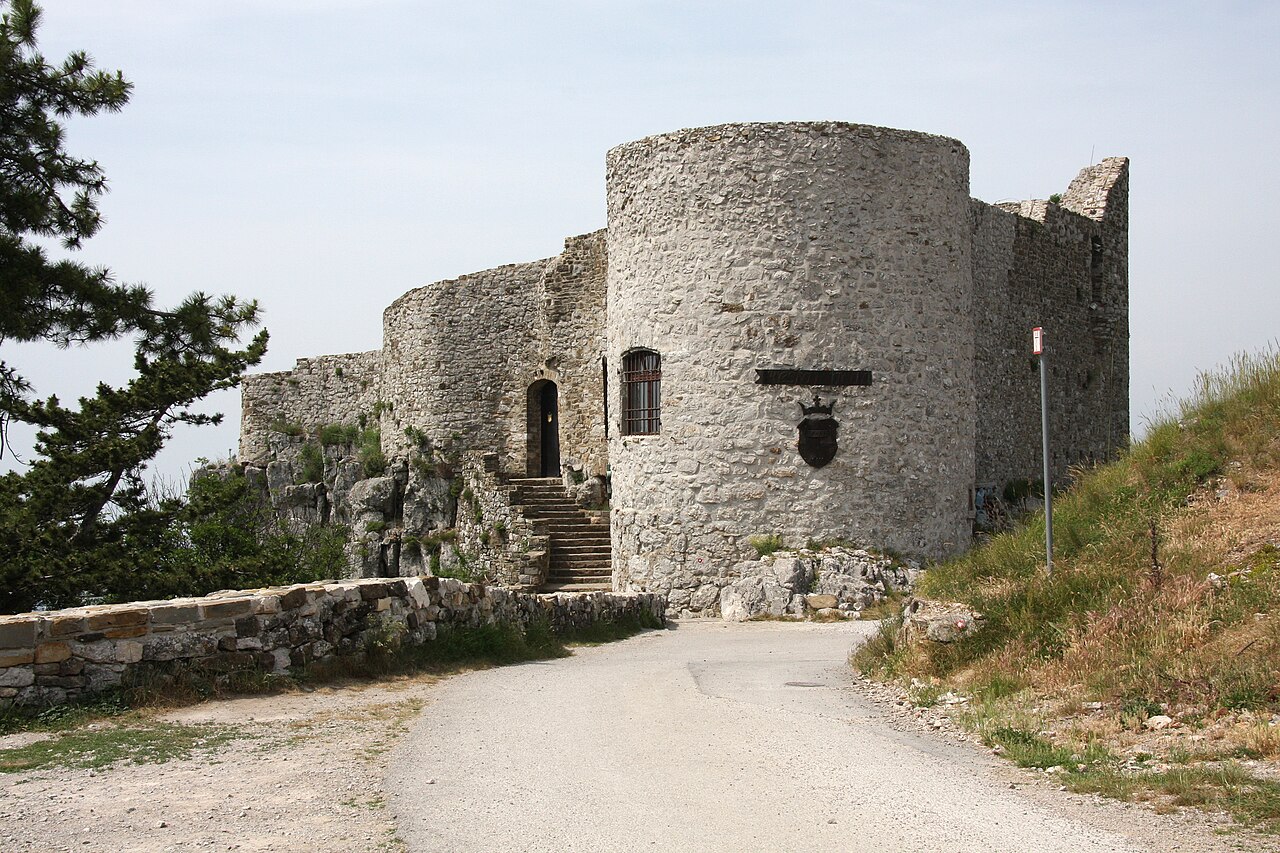
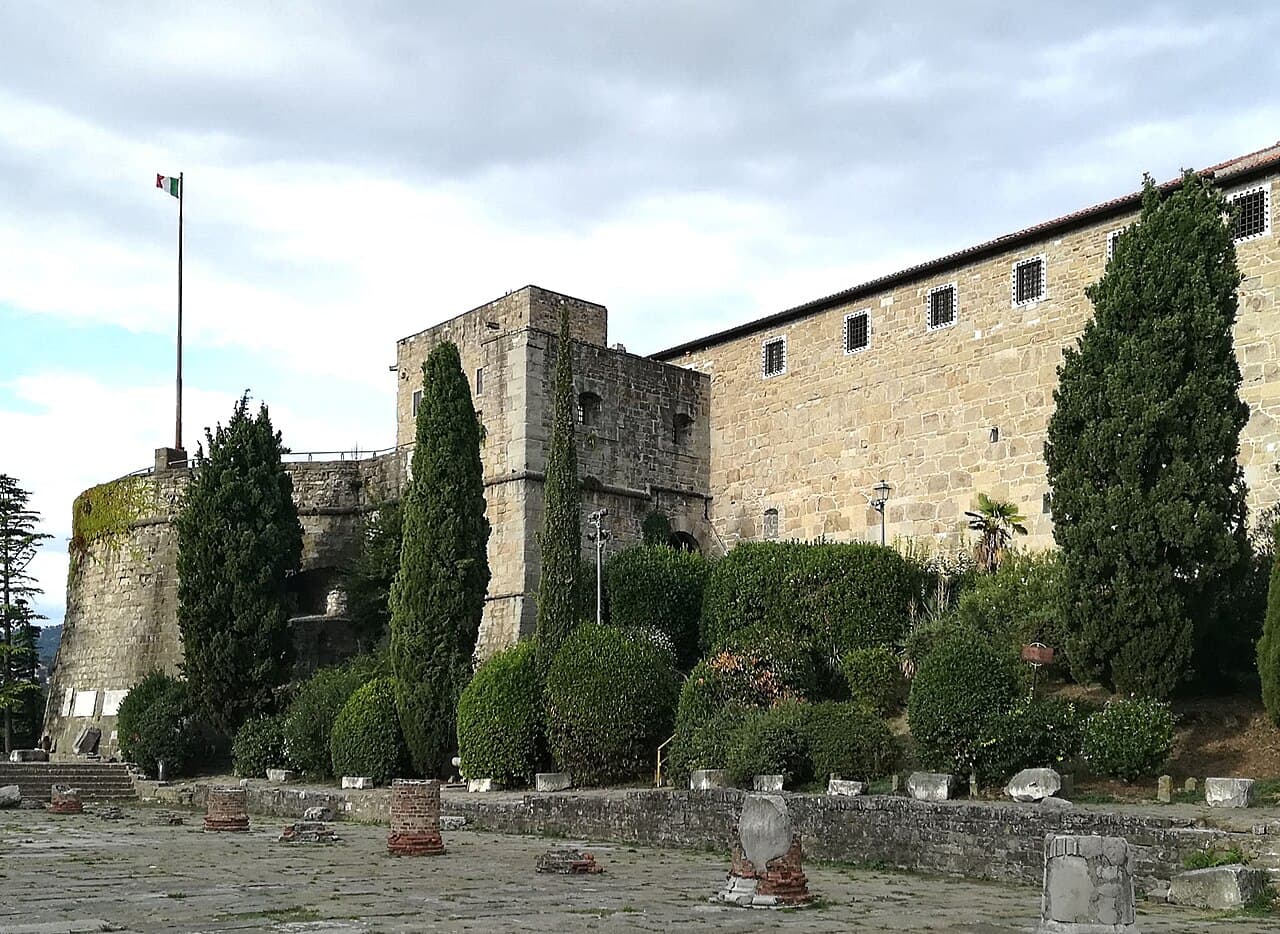
San Giusto Castle stands prominently on San Giusto hill overlooking the city of Trieste, Italy. This late medieval fortress encapsulates a remarkable continuum of human settlement and military architecture spanning over three millennia. From its origins as a prehistoric castelliere around 2000 BCE, to its role as a Roman urban center, and later a key Habsburg stronghold, the castle embodies layers of historical and architectural significance.
The hill itself was originally occupied by a fortified prehistoric settlement, known locally as a castelliere, which highlights the strategic importance of this elevated site since ancient times. During the Roman Empire, the hill was home to a basilica and other urban structures, marking it as a vital urban and religious center. The Roman legacy remains visible today through the extensive collection of stone artifacts displayed in the castle’s Lapidario Tergestino, which includes inscriptions, funerary monuments, and mosaics from the late Roman Republic and Imperial periods.
The medieval fortress and Habsburg construction
The castle as it stands today largely dates from the late medieval period, with construction initiated in 1470 under the orders of Emperor Frederick III of Habsburg. This followed a period of Venetian and Patriarchal control, during which earlier fortifications were built and then demolished. The fortress was rebuilt to consolidate Habsburg authority over Trieste, which had become a vital port and administrative center. The initial construction included the square tower and a two-storey captain’s house, which now houses the Castle Museum.
Throughout the 16th and early 17th centuries, the castle’s defenses were significantly enhanced. Under the renewed Venetian rule in the early 1500s, and later Austrian control, the fortress was expanded with the addition of ramparts, bastions, and curtain walls. Notably, the Bastione Rotondo was constructed in 1508 during Venetian domination, while the Lalio Bastion (1553–1561) was designed by the architect Domenico dell’Allio. The final bastion, the Bastione Pomis or Fiorito, was completed in 1630 under the supervision of Giovanni Pietro de Pomis. These additions reflect the evolution of military architecture, adapting to the use of artillery and the need for stronger, angled bastions to withstand cannon fire.
Architectural features and layout
The fortress has a distinctive triangular plan with a bastion at each corner. The main entrance is reached via a wooden drawbridge spanning a narrow moat, leading to a cross-vaulted hall and then to the Piazzale delle Milizie (Square of the Troops). From here, visitors can access the ramparts via stairs and walkways, offering commanding views over Trieste and the Adriatic Sea.
Inside the captain’s house, the San Giorgio chapel stands out as a fine example of Gothic architecture with its ribbed vault supported on sculpted consoles bearing the coat of arms of Emperor Frederick III. The atrium features a remarkable stone acroterion known as the “Melon,” likely dating back to Roman times, underscoring the site’s deep historical layers.
The large inner courtyard once served as a parade ground and is now used for cultural events. It is surrounded by the fortress’s defensive walls and bastions and provides access to the Lapidario Tergestino, a unique museum collection of Roman stone artifacts, and a hall displaying historical artillery pieces.
Historical significance and military use
San Giusto Castle served as the official residence of the imperial captain-governor of Trieste until around 1750, after which it transitioned to purely military functions, including use as a garrison and prison. Despite its strategic importance, the fortress saw military action on only two recorded occasions: during the Napoleonic Wars in 1813, when French forces defended it against Austrian troops, and in 1945 during World War II, when German soldiers used it as a last refuge before surrendering.
Plans to expand the fortress extensively in the 17th century were halted after a French bombardment in 1702 demonstrated the vulnerability of the site to modern artillery, leading to a shift in military strategy away from hilltop fortifications.
Modern restoration and cultural role
In 1936, ownership of the castle passed to the Municipality of Trieste, which undertook restoration efforts to preserve the structure and adapt it for public use. Today, San Giusto Castle operates as a museum and cultural venue hosting exhibitions, concerts, and events. The Lapidario Tergestino, opened in 2001 within the Lalio Bastion, showcases nearly 130 Roman stone monuments, including inscriptions to ancient deities and mosaics from a luxurious Roman villa discovered nearby.
Visitors can explore the castle’s extensive collection of weaponry, Venetian Renaissance and Baroque furniture, and artworks such as the late 17th-century painting Il Trionfo di Venezia by Andrea Celesti’s workshop. The castle’s underground tunnels and chambers, some still under investigation, add an element of mystery and historical intrigue.
San Giusto Castle remains a powerful symbol of Trieste’s rich history, blending prehistoric, Roman, medieval, Renaissance, and modern elements into a singular architectural and cultural monument. Its commanding presence atop San Giusto hill continues to offer visitors a tangible connection to the city’s multifaceted past and its strategic importance in the Adriatic region.
Visiting experience
Visitors enter via the drawbridge and cross-vaulted hall, then explore the bastions and ramparts offering panoramic views. The museum’s collections provide insight into the military, social, and artistic history of Trieste. The castle’s courtyard hosts cultural events, creating a vibrant link between past and present.
Overall, San Giusto Castle is an exceptional example of a hill castle that evolved over centuries, reflecting the changing military technologies and political powers in the region. Its preservation and adaptive reuse as a museum and cultural center ensure its continued relevance and accessibility for future generations.
Frequently asked questions (FAQ)
- What is the historical significance of San Giusto Castle?
- San Giusto Castle, built in the 15th century, played a crucial role in the defense of Trieste against various invasions. It stands as a testament to the city's military architecture and heritage, showcasing the strategic importance of Trieste throughout history.
- When was San Giusto Castle built?
- Construction of San Giusto Castle began in 1470 and was completed in the early 17th century. The castle was designed to enhance the city's defenses during a time of frequent military conflicts in the region.
- How do I get to San Giusto Castle?
- San Giusto Castle is easily accessible by public transport, with several bus lines servicing the area. Additionally, it is a short walk from the city center, making it convenient for visitors to explore on foot.
- What are the opening hours for San Giusto Castle?
- San Giusto Castle is open to visitors daily, with hours varying by season. Typically, it opens at 9:00 AM and closes at 7:00 PM during the summer months, while winter hours may be shorter.
- Can I purchase tickets in advance for San Giusto Castle?
- Yes, tickets for San Giusto Castle can be purchased in advance online or at the ticket office on-site. This can help you avoid long lines, especially during peak tourist seasons.
- Is it possible to explore the castle grounds with a guide?
- Yes, guided tours are available for those who wish to learn more about the history and architecture of San Giusto Castle. These tours provide a deeper insight into the castle's significance and the surrounding area.
- What is the best time to visit San Giusto Castle?
- The best time to visit San Giusto Castle is during the spring and fall when the weather is mild and the crowds are smaller. This allows for a more enjoyable experience as you explore the castle and its breathtaking views of Trieste.
- Are there any nearby attractions to visit after San Giusto Castle?
- Yes, after visiting San Giusto Castle, you can explore nearby attractions such as the Cathedral of San Giusto and the Roman Theatre. These sites offer additional insights into the rich history and culture of Trieste.
- Is San Giusto Castle accessible for visitors with disabilities?
- Yes, San Giusto Castle has made efforts to be accessible for visitors with disabilities, including ramps and designated pathways. However, some areas may still be challenging due to the castle's historical nature, so it's best to check in advance for specific accessibility options.
Photo gallery

Information
Website
Visit websiteSources & official resources
Verify the information above using these authoritative references.
Loading map...
Visitor reviews
No reviews yet. Been here? Write the first review and help other travelers!
Write the first reviewVisited this castle? Share your experience
Your review helps other travelers and adds first-hand knowledge to our encyclopedia.