Muggia Castle
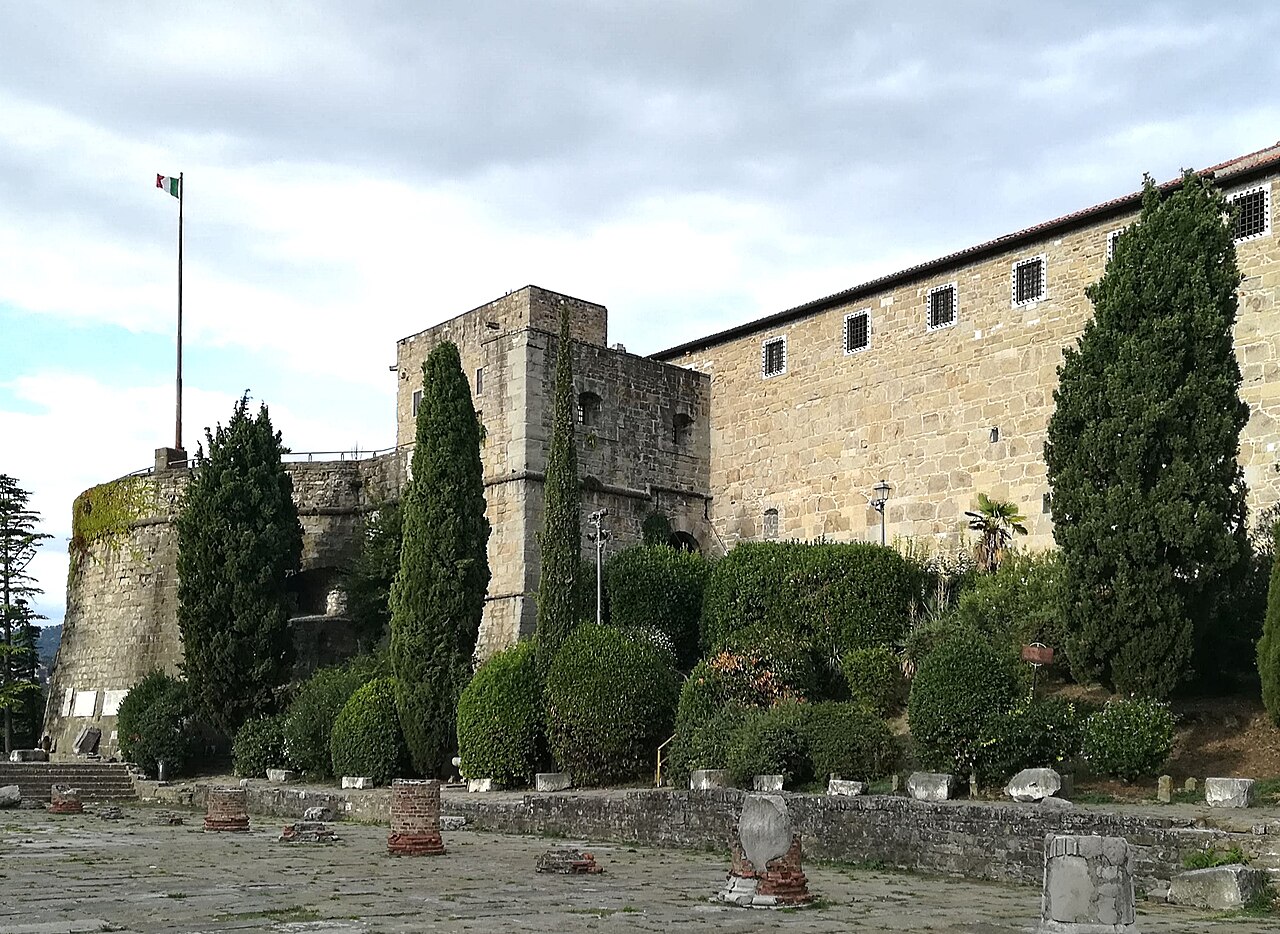
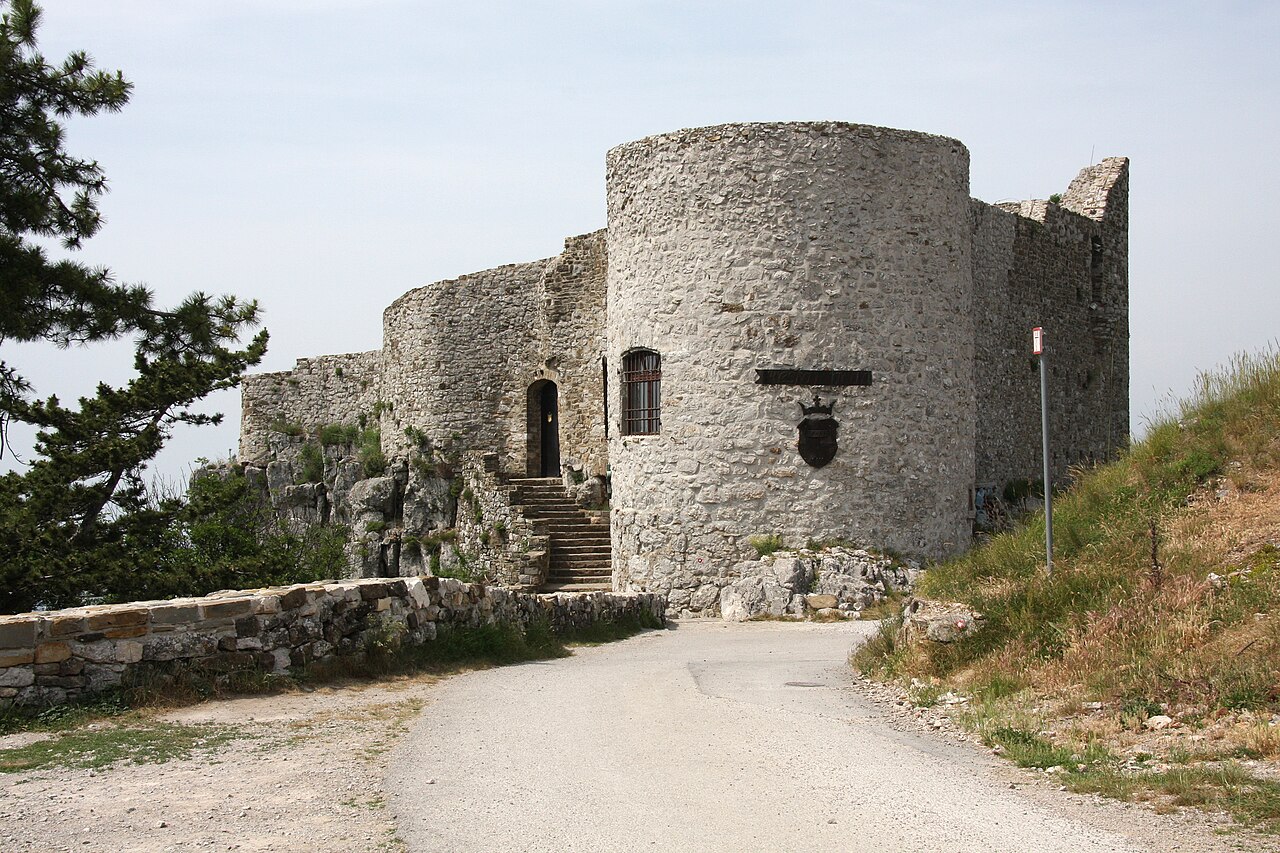
Muggia Castle, situated in the municipality of Muggia in northeastern Italy, stands as a significant example of a hill castle built during the late medieval period. Constructed primarily in the 14th century, this fortress was commissioned by the Patriarchate of Aquileia to assert control over the strategically important town of Muggia, which had been a contested site amid the shifting political powers of the region.
Historical context and construction
The castle's foundation was laid in 1374 under the direction of Marquard I of Randeck, the Patriarch of Aquileia, following a rebellion in 1372 by factions within Muggia that aligned themselves with the Republic of Venice. This uprising underscored the volatile political landscape of the time, with Muggia caught between the influence of the Patriarchate and the maritime power of Venice. The fortress was designed to reinforce patriarchal authority and deter future insurrections.
Construction extended over several decades, concluding around 1399. The original core of the castle was a tower featuring flat guelf-type battlements, a defensive architectural style characterized by squared merlons typical of medieval Italian fortifications. This tower overlooked the harbor area of Muggia, emphasizing the castle's strategic maritime importance.
Surrounding the tower, a four-sided curtain wall was erected, enclosing the castle grounds and supplemented by additional defensive towers. These towers were designed to accommodate a military garrison, enhancing the fortress's capacity to withstand sieges and attacks. The walls were constructed using local stone and masonry techniques prevalent in the period, ensuring durability against military assaults.
Military role and historical significance
Throughout its history, Muggia Castle played a pivotal role in regional conflicts. In 1413, it was briefly occupied by Hungarian forces under King Sigismund, reflecting the castle's importance in broader northern Italian power struggles. Later, during the early 16th century, the fortress resisted an assault by troops loyal to Archduke Maximilian I in 1511, who aimed to expand Habsburg influence in the region.
Despite these military pressures, the castle remained under local control for centuries, serving as a symbol of regional resilience. However, by the 18th century, its strategic military value diminished, coinciding with changes in warfare and political dominance in the area.
Architectural features and modifications
The castle's defensive architecture is notable for its flat guelf battlements on the main tower, a hallmark of Italian medieval military design. The curtain walls and towers formed a robust perimeter defense, with two prominent towers reinforcing key points along the walls. These features allowed the garrison to monitor and defend the harbor and surrounding territory effectively.
Between 1701 and 1735, under the administration of Count Giovanni Polcenigo and the Venetian Republic, the castle underwent significant renovations. These modifications aimed to maintain and enhance the fortress's defensive capabilities, adapting to evolving military technologies and threats. The renovations preserved much of the castle's medieval character while introducing improvements to its fortifications.
Transition to residential and cultural use
By the late 19th century, the castle had lost its military importance and began to fall into disrepair. In 1900, Dr. Giacomo Derossi converted the interior into a private residence, marking a shift from fortress to domestic use. This adaptation preserved the structure and introduced new functions within the historic walls.
In 1991, the castle was acquired by the sculptor Villi Bossi and his wife Gabriella, who undertook a comprehensive restoration. Their efforts not only stabilized and preserved the castle but also integrated contemporary art into the historic setting. The inner garden now features a permanent exhibition of Bossi's sculptures, blending the medieval architecture with modern artistic expression.
Current condition and public access
Today, Muggia Castle is well preserved thanks to these restoration efforts. While it remains privately owned and is not regularly open to the public, the castle occasionally hosts cultural events, linking its historical legacy with contemporary creativity. The visible remains of the curtain walls, towers, and battlements offer insight into the castle's original defensive design and its evolution over time.
The castle's location overlooking the harbor continues to highlight its historical role in regional defense and control. Visitors can appreciate the blend of medieval military architecture and modern artistic installations, which together tell the story of Muggia's complex past and ongoing cultural significance.
Frequently asked questions (FAQ)
- When was Muggia Castle built and by whom?
- Muggia Castle was built starting in 1374 by the Patriarchate of Aquileia under Marquard I of Randeck to assert control over the rebellious town of Muggia.
- What architectural style characterizes Muggia Castle?
- The castle features Gothic architectural elements, including flat guelf-type battlements typical of medieval Italian fortifications.
- Is Muggia Castle open to the public?
- Muggia Castle is privately owned and not regularly open to the public, but it occasionally hosts cultural events and exhibitions.
- What role did Muggia Castle play in regional conflicts?
- The castle was a strategic fortress involved in conflicts such as the 1413 Hungarian occupation and the 1511 attack by forces loyal to Archduke Maximilian I.
- Who restored Muggia Castle in the late 20th century?
- Sculptor Villi Bossi and his wife Gabriella acquired and restored the castle in 1991, integrating contemporary art within its historic structure.
Information
Current owner
Private owner
Loading map...
Visitor reviews
No reviews yet. Been here? Write the first review and help other travelers!
Write the first reviewVisited this castle? Share your experience
Your review helps other travelers and adds first-hand knowledge to our encyclopedia.