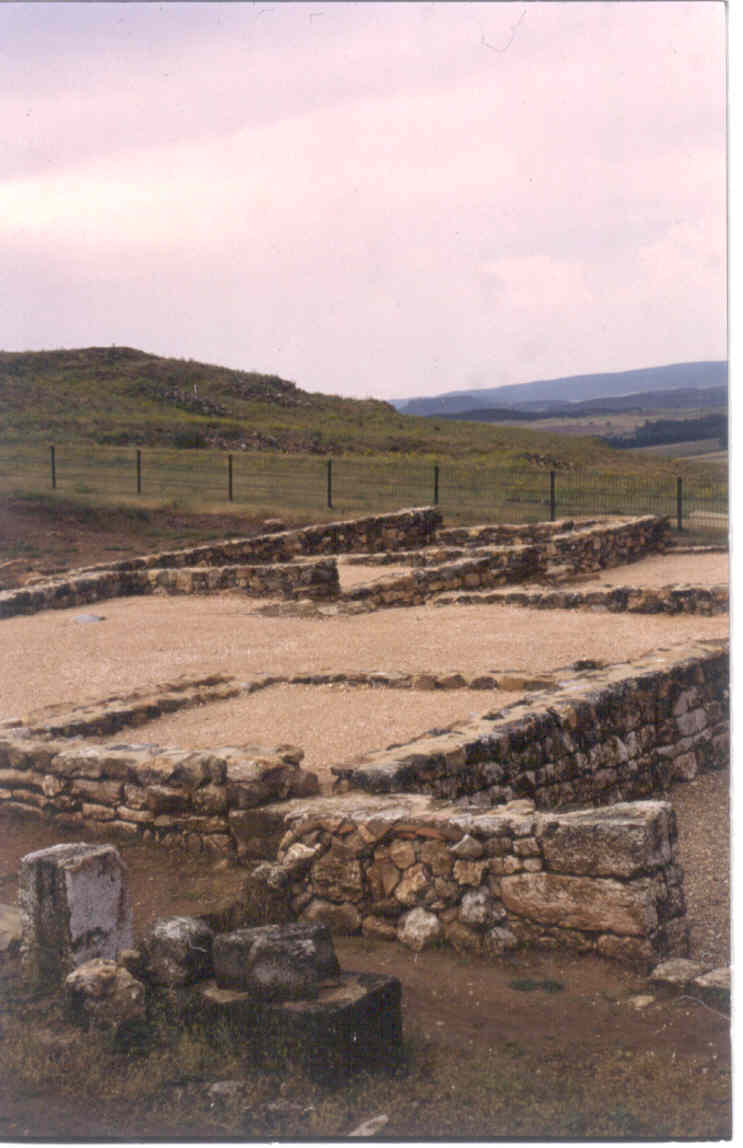
San Esteban de Gormaz Castle
San Esteban de Gormaz castle stands as a significant medieval fortress located in the town of San Esteban de Gormaz in Spain. This castle played a crucial role during the turbulent 10th and 11th centuries, a period marked by frequent conflicts and territorial changes between Muslim and Christian forces on the Iberian Peninsula. Its strategic position overlooking the Douro River allowed control over important transit routes and served as a defensive stronghold in the region.
The historical context and strategic importance
The castle's origins trace back to the 10th century, a time when the frontier between the Christian kingdoms and Muslim territories was highly contested. Initially under Muslim control, the fortress changed hands multiple times before finally coming under Christian rule. During the reign of King García I of León, the castle was reinforced to strengthen the Christian hold over the region. This reinforcement coincided with the repopulation efforts in the town, which was part of a broader strategy to consolidate Christian territories along the Duero frontier.
From its elevated position, the castle's garrison could effectively monitor and control movement along the river and protect the vital bridge crossing the Douro River. This control was essential for securing supply lines and military movements, making San Esteban de Gormaz a linchpin in the defense system of the Kingdom of León.
Architectural features and construction
The castle is characterized by a narrow and elongated layout, adapted to the natural topography of its hilltop site. The remaining fortifications include a substantial wall approximately two metres thick, constructed primarily of ashlar stonework. This stonework is notable for its quality and may incorporate materials of Roman origin, suggesting the reuse of earlier masonry in the castle's construction.
Near the castle's entrance, there is a notable feature known as the Pozo Lairón, a large opening in the ground. While its exact purpose remains uncertain, it is speculated to have served as a cistern, storage pit, or possibly a defensive feature. Inside the castle grounds, remnants of water pools and underground structures have been identified, indicating the presence of facilities for water storage and possibly shelter during sieges.
Defensive elements and layout
The fortress's design reflects typical early medieval military architecture with thick defensive walls intended to withstand assaults. The elongated shape allowed defenders to maximize surveillance and control along the ridge. The castle's vantage point provides extensive views of the surrounding landscape, including the nearby castle of Gormaz, another important fortress in the region. This visual connection between fortifications was likely part of a coordinated defensive network.
Current condition and preservation
Today, San Esteban de Gormaz castle is in a state of partial preservation. While much of the original structure has deteriorated over the centuries, significant portions of the defensive wall remain intact, offering valuable insights into the castle's original scale and construction techniques. The site is recognized for its historical and archaeological importance, attracting visitors interested in medieval military architecture and the history of the Reconquista.
The castle's ruins provide a tangible link to the complex history of the borderlands between Christian and Muslim Spain. Its commanding location and surviving structures continue to illustrate the strategic considerations that shaped medieval fortifications in this region.
San Esteban de Gormaz in the broader medieval landscape
The castle's history is intertwined with the broader narrative of the Reconquista, the centuries-long series of campaigns by Christian kingdoms to reclaim territory from Muslim rule. As part of the Kingdom of León's defensive frontier, San Esteban de Gormaz played a role in securing newly conquered lands and facilitating the repopulation and economic development of the area.
Its proximity to the castle of Gormaz, one of the largest and most formidable fortresses of the time, underscores the military significance of this corridor along the Duero River. Together, these castles formed a defensive belt that helped shape the political and cultural landscape of medieval Spain.
Frequently asked questions (FAQ)
- What is the historical significance of San Esteban de Gormaz Castle?
- San Esteban de Gormaz Castle is a key historical site that dates back to the 10th century, showcasing the rich Moorish influence in Spanish architecture. It served as a strategic military fortress during the Reconquista, playing a vital role in the defense against invasions and demonstrating the region's turbulent history.
- When was San Esteban de Gormaz Castle built?
- The castle was constructed in the 10th century, likely during the height of the Moorish rule in the Iberian Peninsula. Its design reflects the military architecture of the time, with features adapted for defense and surveillance.
- Can I visit San Esteban de Gormaz Castle?
- Yes, San Esteban de Gormaz Castle is open to visitors. Exploring the castle allows you to appreciate its historical architecture and enjoy stunning views of the surrounding countryside.
- What are the opening hours for San Esteban de Gormaz Castle?
- The castle is generally open to the public throughout the week, with varying hours depending on the season. It is advisable to check the official website or local tourism information for the most current opening hours before your visit.
- Is it possible to access San Esteban de Gormaz Castle with limited mobility?
- Access to San Esteban de Gormaz Castle may be challenging for those with limited mobility due to uneven terrain and steep pathways. Visitors are encouraged to prepare accordingly and consult local resources for accessibility options.
- What is the best time to visit San Esteban de Gormaz Castle?
- The best time to visit is during the spring (April to June) and fall (September to October) when the weather is mild and pleasant. These seasons also attract fewer crowds, allowing for a more enjoyable experience.
- Are there nearby attractions to visit when at San Esteban de Gormaz Castle?
- Yes, nearby attractions include the picturesque town of San Esteban de Gormaz, known for its charming streets and local cuisine. Additionally, you can explore the surrounding natural parks, perfect for hiking and enjoying the scenery.
- What are the ticket prices for San Esteban de Gormaz Castle?
- Ticket prices for San Esteban de Gormaz Castle are generally affordable, making it accessible for all visitors. Discounts may be available for students, seniors, and groups, so it's worth checking for any available promotions before your visit.
Loading map...
Visitor reviews
No reviews yet. Been here? Write the first review and help other travelers!
Write the first reviewVisited this castle? Share your experience
Your review helps other travelers and adds first-hand knowledge to our encyclopedia.