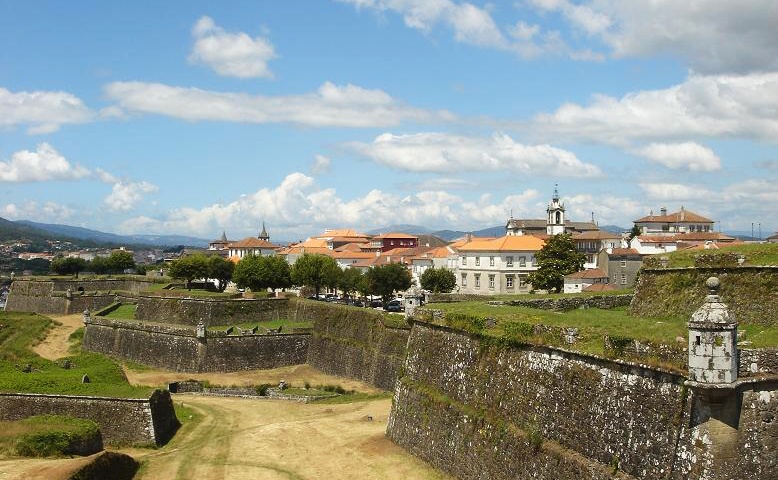
Salvatierra de Miño Fortress
Salvatierra de Miño fortress occupies a strategic position beside the Miño River in northwestern Spain, underscoring its longstanding military importance. Although the original 12th-century medieval walls that once protected the site have largely vanished, the 17th-century fortress that replaced them remains a prominent feature of the town's defensive heritage. Refurbished in 2008, the fortress complex offers a glimpse into the region's Renaissance military architecture and subsequent historical developments.
The strategic significance of Salvatierra de Miño
Located at a border zone near Portugal, Salvatierra de Miño's position on the Miño River made it a crucial defensive point during various conflicts. The river itself served as a natural boundary and a vital route for trade and military movements. This strategic importance is reflected in the castle's evolution from its original medieval fortifications to the more modern Renaissance fortress built in the 17th century.
Architectural features of the fortress
Fortification walls and sentry boxes
The fortress retains many of its defensive walls and numerous sentry boxes or guard turrets that were integral to surveillance and protection. These architectural elements exemplify the military engineering techniques of the Renaissance period in Spain, designed to withstand artillery and siege warfare common in the 17th century.
Baroque chapel of La Virgen da Oliveira
Within the fortress grounds stands the Baroque chapel of La Virgen da Oliveira, dating to the 17th century. This chapel reflects the religious and cultural dimensions of the fortress complex, combining spiritual functions with the martial environment. Its Baroque style is characterized by decorative elements and a focus on dramatic, expressive forms.
Casa del Conde and Doña Urraca caves
The Casa del Conde house, also from the 17th century, is part of the fortress ensemble. Nearby are the Doña Urraca caves, featuring a double room connected by a spiral staircase. These caves add an intriguing subterranean aspect to the site, possibly serving as storage, refuge, or secret passages during times of conflict.
Historical layers and notable figures
Inside the fortress, visitors can explore remains of streets, houses, and gravestones, which provide insight into the community life that once thrived within the walls. The site includes the palace or manor house of Doña Urraca, named after Queen Urraca I of León (reigned 1109–1126). This connection ties the fortress to early medieval Iberian history and to the power struggles involving the Countess Teresa of Portugal.
The palace of Doña Urraca
The palace is notable for its historical association with Queen Urraca during a period of conflict with the Countess Teresa. This adds a layer of political and dynastic significance to the fortress, linking it to broader narratives of medieval Iberian kingdoms and border disputes.
Preservation and modern significance
The fortress's refurbishment in 2008 has helped preserve its Renaissance military architecture and associated structures, making it accessible for study and tourism. Although much of the original medieval fortifications are lost, the surviving elements and later additions provide a valuable record of the site's continuous military and residential use over several centuries.
Today, Salvatierra de Miño fortress stands as a testament to the complex history of border defense in the Galicia region, illustrating the evolution of fortification design from medieval to early modern periods. Its combination of military, residential, and religious buildings offers a multifaceted view of life in a frontier fortress town.
Frequently asked questions (FAQ)
- What is the historical significance of Salvatierra de Miño Fortress?
- Salvatierra de Miño Fortress, built in the late 17th century, played a crucial role in the defense of the region against invasions. It is a testament to the military architecture of the time and reflects the strategic importance of the area in the historical conflicts between Portugal and Spain.
- When was Salvatierra de Miño Fortress constructed?
- The fortress was constructed between 1665 and 1680, during a period of heightened tension between the Spanish and Portuguese territories. Its design incorporates elements typical of military fortifications from that era, showcasing the engineering capabilities of the time.
- Can I visit Salvatierra de Miño Fortress?
- Yes, the fortress is open to visitors, allowing you to explore its impressive architecture and learn about its history. Guided tours are often available, providing deeper insight into the fortress's role in local history.
- What are the opening hours for Salvatierra de Miño Fortress?
- The fortress is generally open to visitors from 10 AM to 6 PM, but hours may vary seasonally or due to special events. It is recommended to check their official website or contact local tourism offices for the most current information before your visit.
- Is it possible to access Salvatierra de Miño Fortress with limited mobility?
- Access to the fortress may present challenges for visitors with limited mobility due to its historic nature and terrain. However, certain areas may be accessible, and it is advisable to contact local tourism services for specific accessibility information and assistance.
- What is the best time to visit Salvatierra de Miño Fortress?
- The best time to visit is during the spring and fall when the weather is mild and pleasant for exploring. Additionally, these seasons often feature fewer crowds, allowing for a more enjoyable experience while touring the fortress and its surroundings.
- Are there nearby attractions to visit after exploring Salvatierra de Miño Fortress?
- Yes, nearby attractions include the beautiful Miño River and the charming village of Salvatierra de Miño, where visitors can enjoy local cuisine and culture. Additionally, the region offers picturesque hiking trails and scenic views that are perfect for outdoor enthusiasts.
- What are the ticket prices for visiting Salvatierra de Miño Fortress?
- Ticket prices are typically affordable, with discounts available for children, seniors, and groups. It is advisable to check the fortress's official website for the latest pricing and any special promotions that may be available during your visit.
Information
Loading map...
Visitor reviews
No reviews yet. Been here? Write the first review and help other travelers!
Write the first reviewVisited this castle? Share your experience
Your review helps other travelers and adds first-hand knowledge to our encyclopedia.