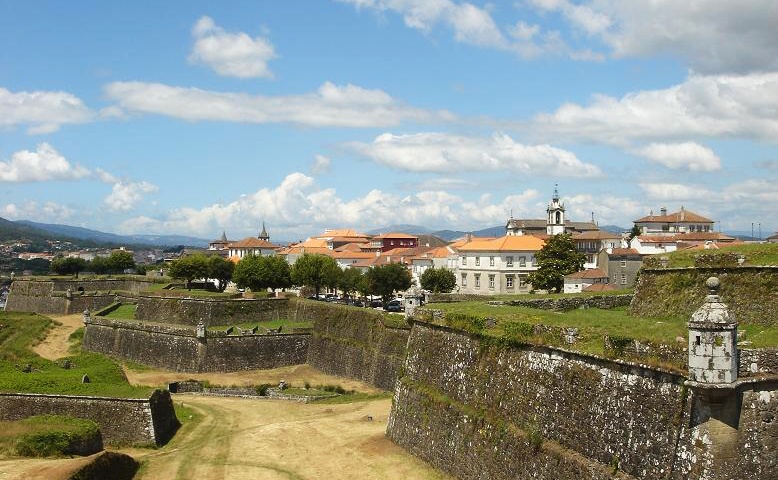
Lapela Keep
The Lapela Keep, also known locally as Torre de Lapela, is a significant medieval fortification located in the village of Lapela, within the Alto Minho region of northern Portugal. Perched strategically on the left bank of the Minho River, which today forms the natural border between Portugal and Spain, this keep is the sole surviving structure of a once extensive castle complex. Its imposing presence dominates the landscape, standing approximately 35 meters tall atop a granite outcrop.
The origins of the castle date back to the early 12th century, around 1130, when Lourenço Gonçalves de Abreu is traditionally credited with founding the fortress under the orders of King Afonso Henriques, the first king of Portugal. This early construction was part of the Christian reconquest efforts, following the retreat of Muslim forces from the region. However, much of the surviving architecture, including the keep itself, is attributed to the 14th century, with some historians suggesting significant rebuilding or enhancement under the reigns of Kings Afonso III, Denis, or Ferdinand. The presence of the royal coat of arms of King Ferdinand above the entrance strongly indicates his involvement in the castle's later development, likely placing major construction between 1238 and 1383.
Architectural features and design
The Lapela Keep is a classic example of a late medieval fortified tower, designed primarily for defense and surveillance along this sensitive border region. The tower has a roughly rectangular footprint, measuring about 11 meters on each side, with walls approximately 2 meters thick, constructed from durable local granite. Its height and position on a granite outcrop provided a commanding view over the surrounding territory and the Minho River, allowing defenders to monitor movement and potential threats effectively.
Access to the keep was originally via a round-arched entrance situated about 8 meters above ground level, which would have been reached by a removable wooden staircase or ladder, a common defensive feature to prevent easy access by attackers. Inside, the tower is divided into three levels, connected by steep internal stairs, with narrow arrow slits incorporated into the walls to allow archers to defend the position while minimizing exposure.
Historical illustrations from the early 16th century, notably from the Livro das Fortalezas by Duarte de Armas, depict the castle as a more extensive fortified complex. This included an enclosed courtyard with a rectangular plan, fortified gates flanked by towers, a barbican for added defense, and small posterns for discreet access or escape. These features highlight the castle's role as a military stronghold rather than a residence.
Historical significance and military role
Throughout its history, Lapela Castle played a crucial role in the defense of the Portuguese border against Spanish incursions. Its location on the Minho River made it a frontline fortress during various conflicts, including the Portuguese Restoration War in the 17th century. In the mid-1600s, the castle was besieged and captured by Spanish forces led by the Marquis of Viana. The siege involved heavy artillery bombardment, which inflicted significant damage on the fortifications.
Following the siege, the castle fell into disrepair. In the first half of the 18th century, during the reign of King John V, much of the remaining structure was deliberately dismantled. Stones from the castle were repurposed to reinforce the nearby Monção fortress, reflecting shifting military priorities and the reduced strategic importance of Lapela Castle in the evolving defense system of the region.
Current condition and visitor experience
Today, the Lapela Keep stands as a partially preserved monument to Portugal's medieval military architecture. Despite the loss of much of the original castle complex, the keep itself remains remarkably intact. Its robust granite walls and towering height continue to impress visitors, offering panoramic views over the village of Lapela and the scenic Minho River valley.
The keep now houses a small museum that provides insights into the castle's history, architecture, and the broader context of the region's border conflicts. Admission is free, making it an accessible destination for those interested in medieval fortifications and Portuguese history. Visitors can explore the interior levels connected by the steep stairs and observe the defensive features such as arrow slits and the elevated entrance.
Architectural legacy and cultural importance
Lapela Keep exemplifies the late medieval military architecture typical of border fortifications in the Iberian Peninsula. Its design reflects defensive priorities of the time, including elevated entrances, thick stone walls, and limited access points. The tower's survival offers valuable insights into construction techniques and strategic planning during the medieval period.
As a cultural landmark, the keep is part of the heritage of the Alto Minho region, contributing to local identity and historical awareness. Its preservation allows contemporary audiences to connect with Portugal's formative centuries and the complex history of border defense against neighboring kingdoms.
Frequently asked questions (FAQ)
- What is the historical significance of Lapela Keep?
- Lapela Keep is a remarkable example of medieval military architecture in Portugal, dating back to the 11th century. It served as a strategic fortification during the Reconquista, showcasing the region's importance in historical conflicts.
- When was Lapela Keep built?
- Lapela Keep was constructed in the late 11th century, around the time when many fortifications were erected to defend against invasions. Its architecture reflects the defensive needs of that era, making it a crucial part of Portugal's history.
- What are the opening hours of Lapela Keep?
- Lapela Keep is open to visitors from Tuesday to Sunday, from 10 AM to 5 PM. It is closed on Mondays and public holidays, so plan your visit accordingly to avoid disappointment.
- Is it possible to access Lapela Keep with a wheelchair?
- The accessibility of Lapela Keep can be challenging due to its historical structure and terrain. While some areas may be accessible, it is advisable to contact the site in advance for specific accessibility options.
- Can I buy tickets in advance for Lapela Keep?
- Yes, tickets for Lapela Keep can be purchased online in advance, which is highly recommended during peak tourist seasons. This allows you to secure your spot and avoid long waiting times at the entrance.
- When is the best time to visit Lapela Keep?
- The best time to visit Lapela Keep is during the spring and fall months when the weather is mild and pleasant. This allows for a more enjoyable experience while exploring the castle and its surroundings.
- What nearby attractions can I visit while at Lapela Keep?
- While visiting Lapela Keep, you can explore the charming village of Lapela, as well as nearby historical sites such as the Church of São João and scenic hiking trails in the region. These attractions enhance your experience and provide a deeper understanding of the local culture.
Loading map...
Visitor reviews
No reviews yet. Been here? Write the first review and help other travelers!
Write the first reviewVisited this castle? Share your experience
Your review helps other travelers and adds first-hand knowledge to our encyclopedia.