Salgo
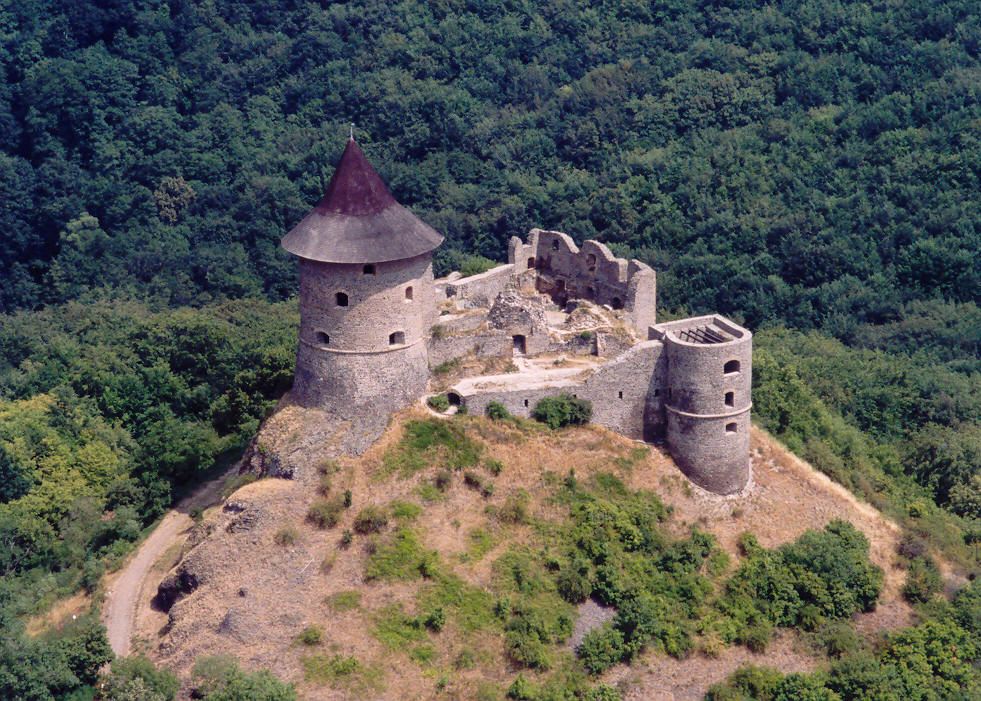
Salgo Castle stands as a remarkable example of a medieval bastioned fortress perched atop a basalt hill in the Zala region of Hungary. Its origins trace back to the 13th century, a period marked by significant military and political upheaval following the devastating Mongol invasions of 1241-42. In response to these incursions, King Béla IV of Hungary initiated a widespread castle-building program to fortify the kingdom's defenses. Salgo Castle was among the fortifications erected during this era, strategically positioned to oversee and protect the surrounding landscape.
The earliest construction on the site was a stone tower built from local basalt, measuring approximately 7.5 by 9.5 meters. This tower, located at the eastern end of the hilltop, likely served dual purposes as both a defensive stronghold and a residential space. Due to later destruction, the exact number of floors it originally had remains uncertain. By the late 13th century, the castle was associated with the noble Kacsics family, with the first documented mention of the castle dating to 1331. Historical records attribute the castle's construction at the end of the 13th century to a figure named Miklós.
Architectural layout and defensive features
From the corners of the original tower, defensive walls extended westward, enclosing a narrow, elongated courtyard. The northern section of these walls contained the main entrance, accessed by wooden stairs leading to a portal. Within the courtyard, a cistern was constructed to collect and store water, a vital feature for withstanding sieges.
During the 15th and early 16th centuries, the castle underwent significant expansions and fortifications. In 1460, the castle was seized by Hussite forces under the command of Jan Jiskra, but was soon recaptured by King Matthias Corvinus and granted to the influential Zápolya family. By 1470, ownership had passed to notable palatines including László Cseha Lévai, Mihály Országha Gúthi, and later János Szapolyai.
15th-century expansions
The castle's entrance was fortified with a small, walled courtyard approximately 10 by 6 meters, featuring rounded corners. A new water reservoir was added within this space. The upper courtyard was roofed over to create a residential building, enhancing the castle's habitability and defensive capabilities.
16th-century fortifications and lower castle
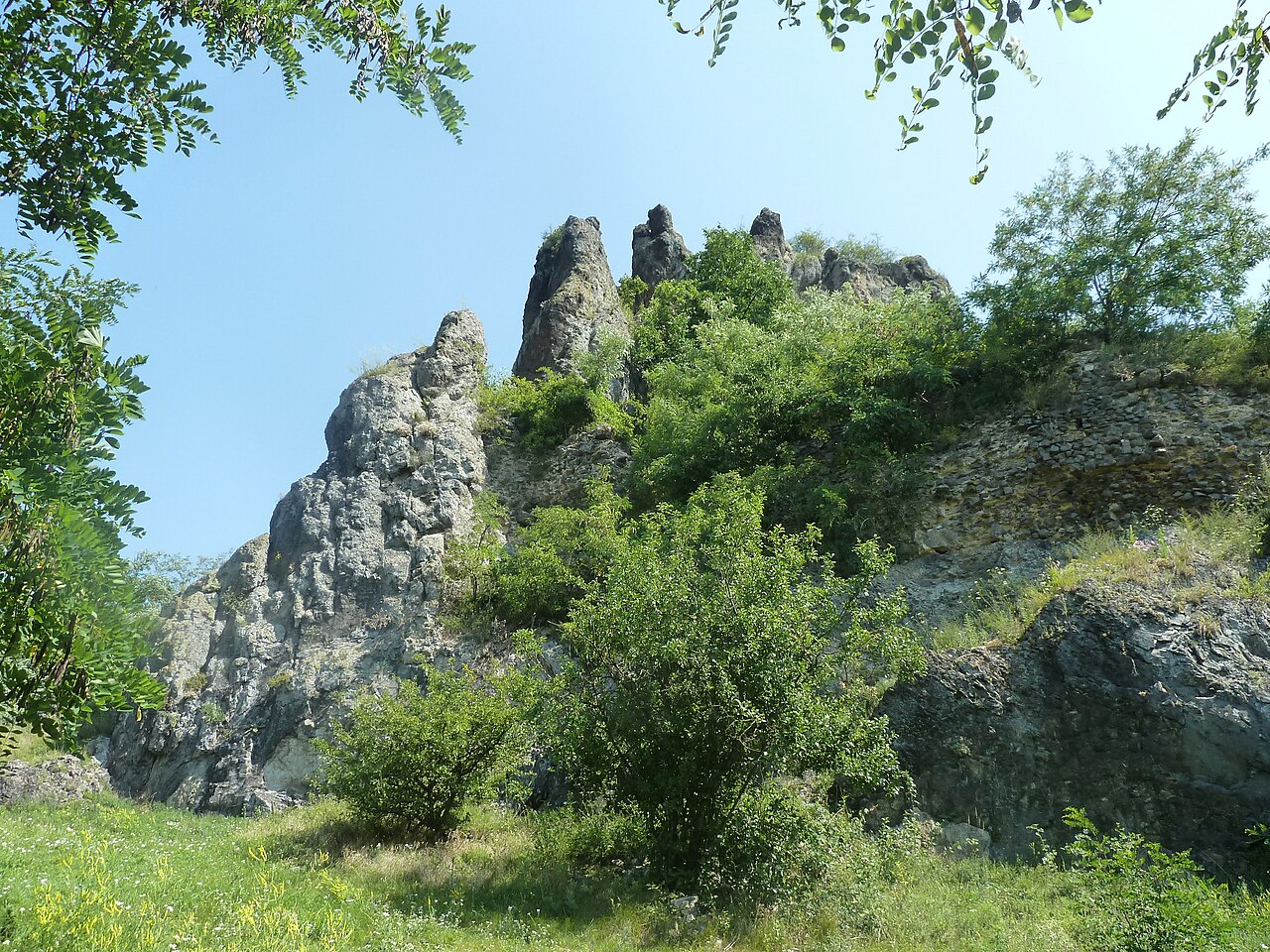
Around 1530, a robust defensive wall about 1 meter thick was built on the northern and western slopes of the castle hill, supported by buttresses. This construction created a new courtyard known as the lower castle, which served primarily economic and logistical functions. The main gate was located on the southwest side, reinforced by a quadrangular gatehouse connected to a watchtower built on a nearby rock formation.
The northern wall featured a distinctive horseshoe-shaped tower projecting outward and open on the courtyard side, providing enhanced defensive coverage.
Turkish occupation and bastion construction
In 1542, the castle came under the ownership of Ferenc Bebek through inheritance, who subsequently sold it in 1548 to Farkas Derencsényi with royal consent. Facing the growing threat of the Ottoman Turks, Derencsényi commissioned the construction of a five-sided bastion on the eastern side of the castle hill, measuring approximately 14 by 15 meters. This bastion was strategically designed to control the approach road to the castle, enhancing its defensive posture.
Despite these improvements, the castle fell to the Turks in 1554, who occupied it for four decades. The Ottoman garrison eventually withdrew in December 1593 after sustained artillery bombardment destroyed the main tower. The defenders initially resisted but abandoned the fortress without further combat.
Decline and present condition
Following the Turkish withdrawal, Salgo Castle lost its military significance and was gradually abandoned. The lack of maintenance led to its deterioration, and today it remains as ruins with well-preserved wall layouts reaching several meters in height in places.
Visitors can explore the lower castle ruins, including the base of the defensive walls supported by buttresses, remnants of the gatehouse, and tower foundations. On the eastern slope, the remains of the 16th-century bastion are still visible. The upper castle area reveals traces of the water cistern and the division of rooms within the residential building. The highest eastern part of the hill features the remains of the main tower, which has been covered with a roof and now serves as a scenic viewpoint.
The vantage point offers stunning views over the Cserhát Mountains and the surrounding landscape, including the nearby Somoskő Castle located just across the border in Slovakia. Salgo Castle's ruins thus not only embody centuries of Hungarian medieval military architecture but also provide a captivating historical and cultural experience for visitors.
Historical significance and cultural heritage
Salgo Castle represents a significant chapter in Hungary's high medieval fortification history, reflecting the evolution of defensive architecture from a simple stone tower to a complex bastioned fortress. Its strategic location and robust design illustrate the kingdom's efforts to withstand invasions and internal conflicts during turbulent centuries. The castle's association with prominent Hungarian noble families and its role during the Ottoman wars further underscore its importance.
Today, the castle ruins are a protected cultural monument, attracting historians, architects, and tourists interested in medieval fortifications and Hungarian history. The site offers valuable insights into construction techniques, defensive strategies, and the lifestyle of the nobility during the 13th to 16th centuries.
Frequently asked questions (FAQ)
- How do I get to Salgo Castle?
- Salgo Castle is located near the village of Salgo in Hungary. You can reach it by car or public transport, with the nearest major city being Budapest, around 100 km away. There are local buses that connect to the nearby areas, making it accessible for visitors.
- What is the historical significance of Salgo Castle?
- Salgo Castle dates back to the 13th century and played a crucial role during the medieval period in Hungary. It was built to protect the region and served as a residence for noble families. The castle's rich history reflects the architectural styles and defense strategies of its time.
- When was Salgo Castle last restored?
- Salgo Castle underwent significant restoration efforts in the late 20th century to preserve its historical architecture. Ongoing maintenance is carried out to ensure the site remains safe and accessible for visitors. The restoration has helped highlight its medieval charm and historical importance.
- Can I visit Salgo Castle all year round?
- Yes, Salgo Castle is open to visitors throughout the year, although the best time to visit is during the spring and summer months. During these seasons, guided tours and special events are often available, enhancing the visitor experience. However, it's advisable to check for any seasonal opening hours or events before planning your visit.
- Why is Salgo Castle considered an architectural gem?
- Salgo Castle features a unique blend of Gothic and Renaissance architectural styles, showcasing the evolution of castle design over the centuries. Its well-preserved ruins include impressive towers and walls that offer stunning views of the surrounding landscape. The castle's design reflects the strategic military considerations of its time, making it an interesting study for architecture enthusiasts.
- Is it possible to take guided tours of Salgo Castle?
- Yes, guided tours are available at Salgo Castle, allowing visitors to learn about its history and architecture in depth. Tours typically include access to the main areas of the castle and insights from knowledgeable guides. It's recommended to book in advance, especially during peak tourist seasons.
- What are the ticket prices for Salgo Castle?
- Ticket prices for Salgo Castle are generally affordable, making it accessible for most visitors. Discounts may be available for students and seniors, and children often enter for free. It's best to check the official website or local information for the most current pricing.
- What are the opening hours of Salgo Castle?
- Salgo Castle usually opens to visitors from 10 AM to 6 PM during the tourist season, but hours may vary during off-peak months. It's advisable to verify the exact opening hours closer to your visit date. Special events may also affect regular hours, so checking in advance is recommended.
- Are there any nearby attractions to visit while at Salgo Castle?
- Yes, the area surrounding Salgo Castle offers several attractions, including scenic hiking trails and other historic sites. Nearby villages feature charming architecture and local culture, enhancing your visit. Exploring the larger region of Hungary can also unveil more castles and natural beauty to enjoy.
Information
Loading map...
Visitor reviews
No reviews yet. Been here? Write the first review and help other travelers!
Write the first reviewVisited this castle? Share your experience
Your review helps other travelers and adds first-hand knowledge to our encyclopedia.