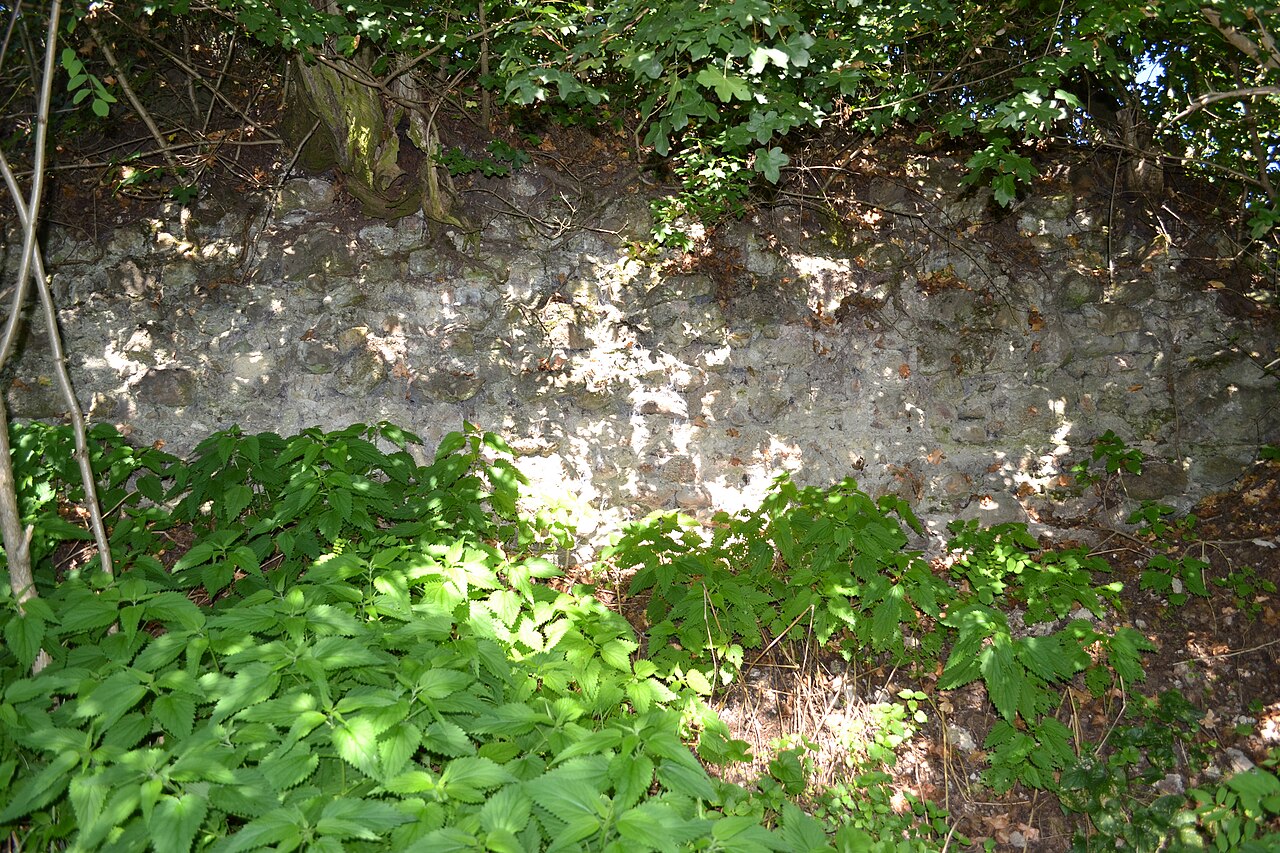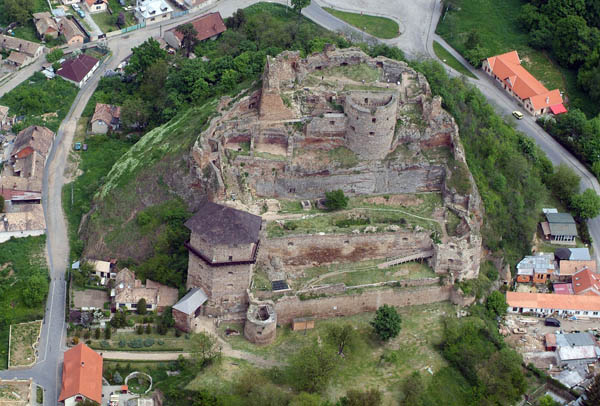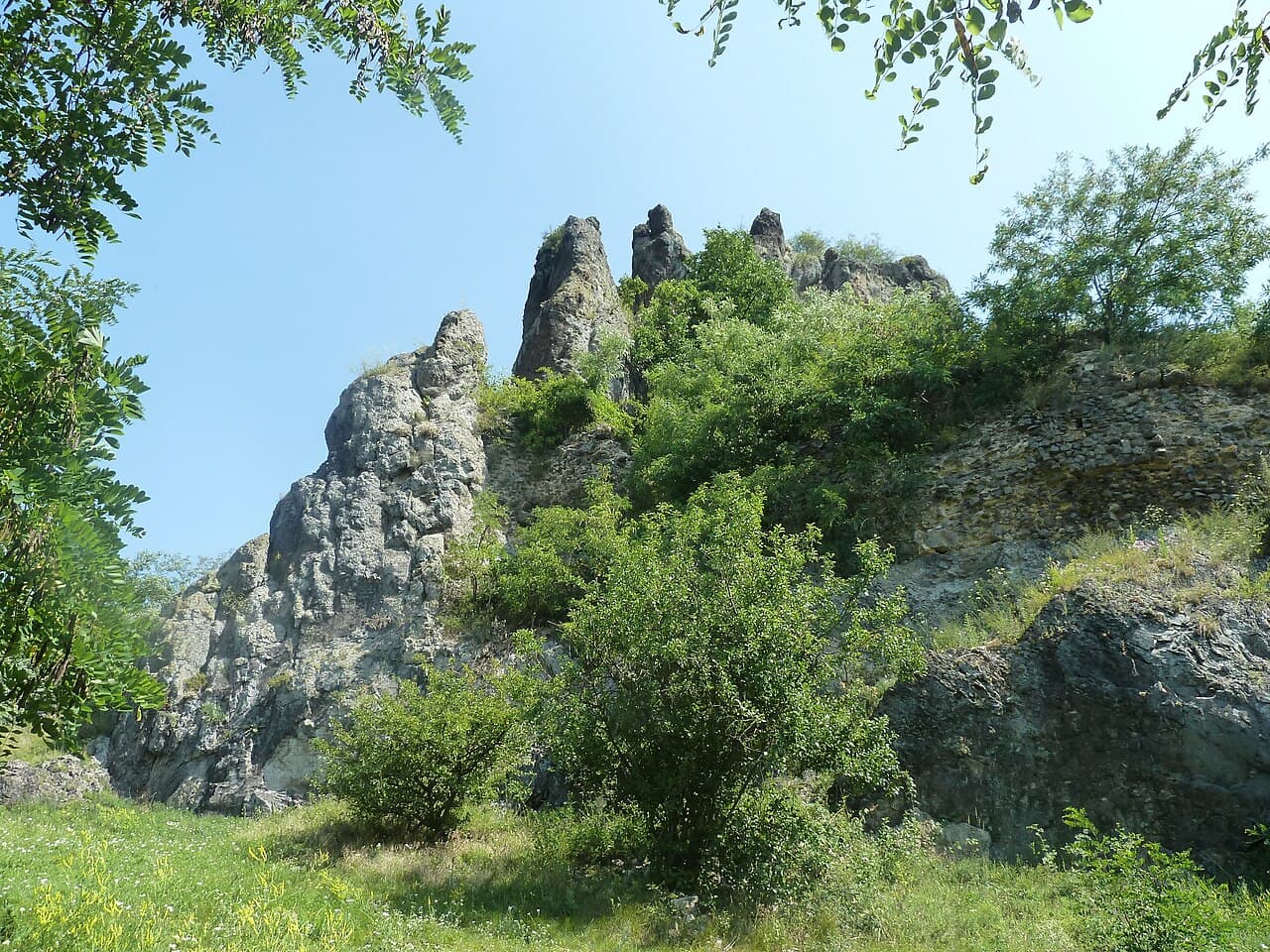
Hajnácka Castle Ruins — Slovakia castle

Hajnácka Castle Ruins

Hajnácka castle ruins in Slovakia
Hajnácka, Slovakia
High Medieval (11th–13th c.)
Ruins

Hajnácka Castle ruins are a remarkable example of medieval Gothic military architecture located above the village of Hajnácka in southern Slovakia. Perched on a strategic basalt rock formation, the castle was originally constructed in the 13th century as a defensive refuge against the devastating Mongol invasion of 1241-1242. Over the centuries, it evolved into a significant fortress within the Kingdom of Hungary, playing a pivotal role in the region's turbulent history marked by Ottoman incursions and shifting political powers.

Origins and early construction

The castle's initial fortifications were erected by local Hungarian vassals loyal to Beckov Castle, utilizing the natural basalt outcrop known as Darmskó hill. This early stronghold was primarily designed as a place of refuge and defense during the Mongol invasion, a catastrophic event that exposed the vulnerability of the Kingdom of Hungary's frontier defenses. The choice of basalt rock as the foundation not only provided a naturally defensible position but also influenced the castle's architectural development, with builders integrating the volcanic rock directly into the fortifications.

Architectural development and Gothic style

By the mid-15th century, Hajnácka Castle was completed in the Gothic style prevalent in Central Europe during the High Medieval period. The fortress featured two concentric rings of defensive walls, a horseshoe-shaped bastion, and a small palace building at the highest point. The castle's design reflects typical Gothic military architecture, emphasizing verticality, robust stone walls, and strategic defensive elements such as bastions and fortified gates. A notable architectural feature is the staircase hewn directly into the basalt rock, demonstrating the sophisticated adaptation of natural terrain to enhance defense and accessibility within the castle complex.

Historical significance and military role

Throughout its history, Hajnácka Castle was a seat of powerful feudal lords and played a vital role in regional defense. In the mid-16th century, the fortress faced significant challenges during the expansion of the Ottoman Empire into Central Europe. The castle was besieged and briefly occupied by Ottoman forces in 1545 and again in 1645. These occupations, though short-lived, underscored the castle's strategic importance along the anti-Turkish defensive line established in the late 16th and early 17th centuries to resist Ottoman advances.

Despite these efforts, by the 17th century, the castle's military relevance waned, and it became only partially inhabited. The castle was under the command of notable figures such as Alexander Vécsey in 1685. However, its decline was accelerated when a devastating fire in 1703 destroyed much of the structure. Following this event, Hajnácka Castle was abandoned and never restored, marking the end of its active use as a fortress.

Ruins and present condition

Today, the remains of Hajnácka Castle stand as evocative ruins atop the basalt hill, accessible only by a challenging ascent. The surviving stone walls, including parts of the palace and the horseshoe bastion, blend seamlessly with the natural volcanic rock, creating a unique architectural and geological ensemble. The castle's ruins are an important cultural heritage site, offering insights into medieval fortification techniques and the historical conflicts that shaped the region.

The site has been documented since the early 19th century, though no major modern archaeological excavations have been reported. Visitors to the ruins can appreciate the castle's strategic location, the integration of natural and man-made defenses, and the enduring legacy of its Gothic architecture.

Geological foundation and architectural adaptation

The basalt rock formation on which Hajnácka Castle is built originated from the last phase of tertiary volcanism in the Western Carpathians. This geological feature provided a solid and defensible foundation, influencing the castle's layout and construction methods. The builders skillfully incorporated the rock into the castle's defenses, carving staircases and foundations directly into the basalt, which enhanced both the fortress's strength and its natural camouflage.

Access and visitor experience

While the castle ruins are not extensively developed for tourism, adventurous visitors can reach the site by hiking up the hill. The rugged terrain and the castle's partially preserved walls offer a glimpse into medieval military architecture and the historical significance of the site. The panoramic views from the hilltop also provide a scenic perspective of the surrounding Slovak countryside.

Frequently asked questions (FAQ)

How do I get to Hajnácka Castle Ruins?
Hajnácka Castle Ruins is accessible by car or public transport from nearby towns. There are local bus services that connect to Hajnácka, and parking is available near the site for those driving.
When was Hajnácka Castle built?
Hajnácka Castle was constructed in the 13th century, with its historical significance linked to the defense of the region. The castle has witnessed various events throughout history, contributing to its rich heritage.
What is the best time to visit Hajnácka Castle Ruins?
The best time to visit Hajnácka Castle Ruins is during spring and early autumn when the weather is mild and the surrounding nature is vibrant. This allows for a more enjoyable exploration of the ruins and the picturesque landscape.
Is there an entrance fee to visit the castle ruins?
Currently, access to Hajnácka Castle Ruins is free, making it an attractive option for visitors interested in history and architecture. Be sure to check for any special events that might have associated fees.
Can I explore the ruins on my own?
Yes, visitors can explore Hajnácka Castle Ruins independently, allowing for a personal experience of its historical significance and architecture. However, guided tours may also be available during peak season for those seeking more in-depth information.
What are the opening hours for Hajnácka Castle Ruins?
Hajnácka Castle Ruins are open year-round, allowing visitors to enjoy the site at their convenience. However, it's advisable to visit during daylight hours to fully appreciate the ruins and the surrounding scenery.
Are there any nearby attractions to visit?
Yes, there are several nearby attractions worth visiting, including the picturesque village of Hajnácka and the scenic landscapes of the Slovak countryside. Additionally, local hiking trails provide opportunities to explore the beautiful nature surrounding the castle.
Why is Hajnácka Castle significant in Slovak history?
Hajnácka Castle holds historical importance as a defensive structure during the medieval period, reflecting the architectural styles and strategic military importance of its time. Its ruins serve as a testament to Slovakia's rich cultural and historical heritage.
Is it possible to host events at Hajnácka Castle Ruins?
While the primary focus of the site is historical exploration, some events such as educational tours or cultural activities may be organized. It's best to contact local authorities or tourism offices for more information on hosting events at the ruins.

Photo gallery

Hajnácka Castle Ruins
Click to view

Photo by Peko•CC BY 3.0

1 photo • Click any image to view in full screen

Information

Hill Castle

Loading map...

Visitor reviews

No reviews yet. Been here? Write the first review and help other travelers!

Write the first review

Visited this castle? Share your experience

Your review helps other travelers and adds first-hand knowledge to our encyclopedia.
Write a review

(5/5)

0/2000 characters

Your review will be visible after admin approval

Nearby castles

8.9 km
Somoskő — Slovakia castle

Somoskő

Somoskő, Slovakia

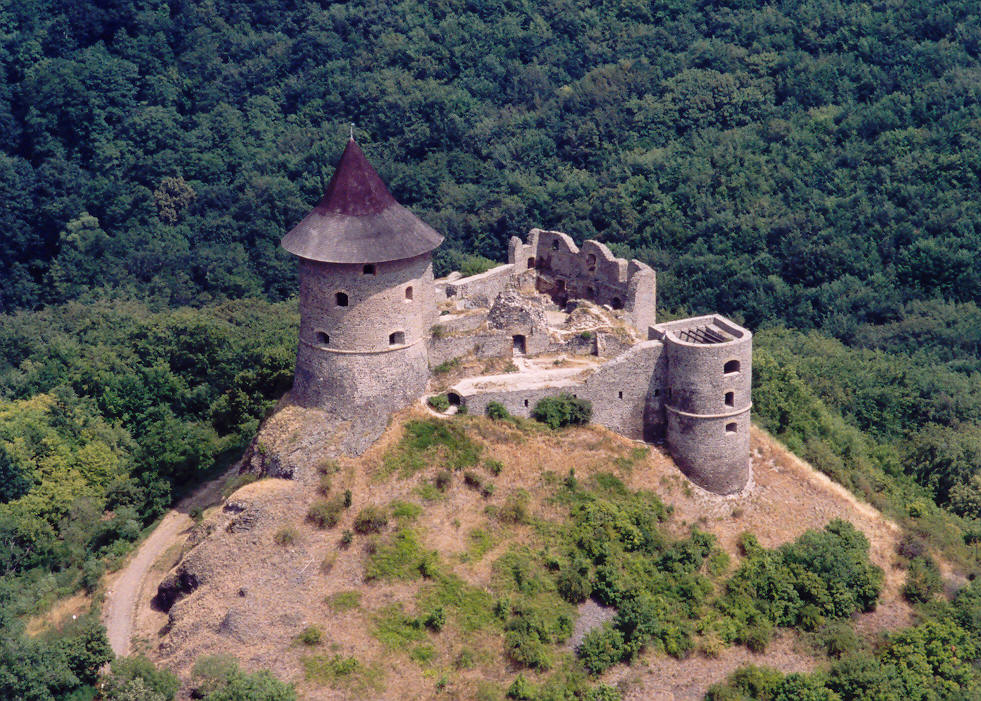
Somoskő Castle stands as a remarkable example of late medieval hill castles in Central Europe, uniquely constructed using the region's distinctive hexagonal basalt columns. Situated on a basalt hill near the village of Somoskő in present-day Slovakia, this fortress offers a vivid glimpse into medieval military architecture adapted to challenging volcanic terrain. Its strategic location on the border between Slovakia and Hungary underscores its historical importance as a defensive stronghold through centuries of regional conflict. Early origins and medieval construction The castle's origins trace back to the late 13th and early 14th centuries when the noble Kachy family established the initial fortification. Originally, the castle consisted primarily of a triangular curtain wall enclosing the summit of the basalt hill. This simple enclosure was designed to take advantage of the natural defensive qualities of the volcanic rock formation. Around 1323, ownership passed to Tamás Szécsényi, a prominent Hungarian noble, marking the beginning of significant expansions. The Szécsényi family held the castle until the mid-15th century, after which it transferred to the Losonczy family in 1461. Under the Losonczy, the fortress underwent substantial fortification enhancements to meet evolving military needs. Architectural evolution and defensive upgrades During the 15th century, the castle's defenses were considerably strengthened. The original triangular walls were reinforced with two oval towers positioned at two corners, enhancing the castle's ability to repel attackers. The third corner was fortified with a barbican, a fortified outwork protecting the main gate and controlling access to the interior. Along the perimeter walls, various residential and utility buildings were constructed, including a principal representative palace attached to the eastern curtain wall. The castle's courtyard featured two water cisterns carved directly into the basalt rock, ensuring a reliable water supply during sieges. In the 16th century, as artillery warfare became more prevalent, further modifications were made. A bastion was added on the northeast side, projecting outward to provide enhanced fields of fire. The oval towers were interconnected by a vaulted corridor containing artillery casemates, allowing defenders to operate cannons under cover. Historical significance and military engagements Somoskő Castle played a vital role in the turbulent military history of the region. Despite its relatively small size, it successfully resisted two Ottoman Turkish sieges during the mid-16th century, capitulating only in 1575. The castle was subsequently reclaimed by the Losonczy family in 1593 after the withdrawal of Ottoman forces. The early 17th century saw the fortress embroiled in the anti-Habsburg uprisings. It was occupied by forces loyal to István Bocskai in 1605 and later by Gabriel Bethlen between 1619 and 1626. These events highlight the castle's strategic importance as a military asset during periods of political upheaval. Following the participation of Simon Forgách in the anti-Habsburg rebellion of Francis II Rákóczi, the castle was confiscated by imperial authorities in 1709. Subsequently abandoned, it fell into disrepair and suffered further damage when lightning struck, causing a devastating fire in 1826. Geological uniqueness and construction materials One of Somoskő's most distinctive features is its construction from local basalt stone, quarried from the nearby natural basalt formation known as the "stone waterfall." These columnar basalt pillars are pentagonal and hexagonal in shape, formed by volcanic activity millions of years ago. The medieval builders skillfully incorporated these natural columns into the castle's walls and defensive structures, lending the fortress a unique aesthetic and structural strength uncommon among Slovak castles. Modern restoration and visitor experience Today, Somoskő Castle exists as a partially restored ruin, with significant sections of its walls, the barbican, and one of its towers preserved or reconstructed. The second tower has been rebuilt and serves as a prominent symbol of the castle. Visitors can explore the ruins and appreciate the castle’s integration with the volcanic landscape. The castle's location straddles the Slovak-Hungarian border, with the site officially within Slovak territory. However, access is often easier from the Hungarian side, making it a popular destination for tourists interested in medieval history and geology. The proximity of Salgó Castle on an adjacent volcanic hill further enriches the historical landscape of this border region. Architectural layout and defensive features Somoskő Castle's layout is characterized by its compact triangular courtyard, optimized for the limited space atop the basalt hill. The curtain walls, constructed from basalt blocks, form a robust perimeter enclosing the inner buildings. The oval towers at two corners provided vantage points for surveillance and defense, while the barbican guarded the main entrance with layered fortifications. The vaulted corridor connecting the towers, equipped with artillery casemates, exemplifies the adaptation of the castle to gunpowder weaponry. The bastion projecting to the northeast further enhanced the castle's artillery capabilities, reflecting the evolving nature of warfare in the 16th and 17th centuries. Cultural and historical legacy Somoskő Castle embodies the complex history of Central Europe, reflecting the shifting political powers and military conflicts from the medieval period through the early modern era. Its survival through Ottoman sieges, anti-Habsburg uprisings, and eventual decline illustrates the resilience and strategic significance of hilltop fortresses in this region. The castle's unique basalt construction connects it intimately to the natural landscape, symbolizing the interplay between geology and human fortification. As a partially restored monument, it serves as an educational site and cultural landmark, attracting historians, architects, and tourists alike.

Late Medieval (14th–15th c.)
Details
9.2 km
Hodejov Castle Ruins — Slovakia castle

Hodejov Castle Ruins

Hodejov, Slovakia

Hodejov Castle, located in the village of Hodejov in southern Slovakia, is a notable example of a 13th-century hill castle that played a significant role during the medieval period. Constructed during the High Medieval era, this fortress was strategically positioned on a hill to oversee and control the surrounding landscape, a common defensive tactic of the time. The castle's elevated location provided natural protection, making it a formidable stronghold against invaders. Historical background and significance The castle was originally built in the 13th century, a period marked by the expansion of feudal domains and the need for fortified residences for nobility and military commanders. Hodejov Castle served as a local center of power and defense in the region. Its history is closely tied to the turbulent events of Central Europe, particularly the conflicts involving the expanding Ottoman Empire. In 1571, the castle was destroyed during an Ottoman military campaign. The Ottoman incursions into Hungarian and Slovak territories were part of their broader push into Central Europe, and many castles like Hodejov were targeted and razed to prevent their use by opposing forces. The destruction of Hodejov Castle marked the end of its military and residential use. Architectural features and layout As a hill castle, Hodejov was built to utilize the natural topography for defense. The castle likely featured a combination of stone walls, towers, and a central keep or donjon, although detailed architectural records are scarce due to its ruinous state. The elevated position would have allowed defenders to spot approaching enemies from a distance and provided a tactical advantage during sieges. The castle's layout would have included defensive walls with battlements, a gatehouse to control access, and possibly a moat or ditch carved into the hillside to enhance security. Within the walls, there would have been living quarters, storage rooms, and possibly a chapel, reflecting the multifaceted role of castles as military, administrative, and residential centers. Current condition and preservation Today, Hodejov Castle exists only as ruins. The passage of time, combined with its destruction in the 16th century, has left only fragments of the original structure. Visitors to the site can observe remnants of the stone walls and foundations that hint at the castle's former scale and design. Despite its ruined state, the castle remains an important cultural and historical landmark in Slovakia. Efforts to preserve the site focus on preventing further deterioration and promoting awareness of its historical significance. The ruins offer valuable insights into medieval fortification techniques and the region's history during the Ottoman wars. Visiting the ruins The castle ruins are accessible to the public, though facilities and detailed visitor information may be limited due to the site's condition. Visitors interested in medieval history and architecture can explore the remains while enjoying panoramic views of the surrounding countryside. The site provides a tangible connection to the past and the complex history of Central Europe. Nearby attractions Hodejov village and the surrounding region offer additional historical and natural attractions, including traditional Slovak architecture and hiking opportunities in the nearby hills. The area is suitable for visitors seeking a combination of cultural heritage and outdoor activities. Legacy and cultural importance Although Hodejov Castle no longer stands as a complete fortress, its ruins symbolize the historical struggles and shifting powers in Central Europe during the medieval and early modern periods. The castle's story reflects the impact of the Ottoman expansion and the defensive efforts of local nobility. Preserving such sites contributes to understanding the architectural evolution of hill castles and the broader historical context of Slovakia. Hodejov Castle remains a subject of interest for historians, archaeologists, and visitors fascinated by medieval fortifications and their role in European history.

High Medieval (11th–13th c.)
Details
11.3 km
Fil'akovo Castle Ruins — Slovakia castle

Fil'akovo Castle Ruins

Fiľakovo, Slovakia

Fiľakovo Castle ruins stand as a significant medieval fortress located above the town of Fiľakovo in southern Slovakia. Dating back to the 13th century, the castle played a crucial role in regional defense and administration through the High Medieval period and beyond. Its strategic position allowed it to withstand the Mongol invasions of 1242, marking its importance in protecting the surrounding settlements. The early history and medieval significance The first documented mention of both the town of Fiľakovo and its castle appears in 1242, a year notable for the Mongol incursions into Central Europe. The castle's fortifications successfully resisted these invasions, underscoring its defensive capabilities. By 1423, the town of Fiľakovo was granted municipal privileges, reflecting its growing importance as a local center of governance and commerce, with the castle serving as a focal point of authority. Architectural features and castle layout Originally constructed in the High Medieval period, Fiľakovo Castle was built as a typical hilltop fortress, designed to exploit the natural elevation for defense. The castle complex included stone walls, towers, and a keep that provided a stronghold against attackers. Over time, it underwent several modifications to adapt to evolving military technologies and threats, including the addition of bastions and artillery fortifications during the Ottoman period. Defensive structures The castle's defensive system was enhanced with thick curtain walls and strategically placed towers that allowed defenders to cover all approaches. The location on a rocky hilltop provided natural protection on several sides, while man-made fortifications secured the more accessible areas. A moat or ditch likely surrounded parts of the castle to hinder enemy advances. Residential and administrative areas Within the walls, the castle housed residential quarters for the nobility and garrison, as well as administrative buildings. The layout included a courtyard, halls, and chambers used for governance and daily life. The castle functioned as a seat of local power, especially during Ottoman rule when it served as the center of a sanjak (district). Turkish occupation and military history In 1553, Fiľakovo Castle fell to the Ottoman Turks, who incorporated it into their empire as the seat of a sanjak. This period saw significant military and administrative use of the castle, with adaptations to accommodate Ottoman garrisons and governance structures. The castle remained under Turkish control until 1593, when Imperial Habsburg forces recaptured it during the Long Turkish War. The castle changed hands again in 1662, falling once more to the Turks. It suffered considerable damage during this turbulent period, culminating in its burning in 1682 by the forces of Imre Thököly, a Hungarian noble and rebel leader opposing Habsburg rule. Following this destruction, the castle was taken by Austrian forces in 1686, marking the end of Ottoman influence in the region. Later history and current status After the Treaty of Trianon in 1920, Fiľakovo and its castle became part of Czechoslovakia. The castle's strategic importance declined, and it gradually fell into ruin. Between 1938 and 1945, the area was returned to Hungary following the First Vienna Award, but the castle remained in a ruined state. Today, Fiľakovo Castle is classified as archaeological ruins, with remnants of walls, towers, and foundations visible to visitors. The site offers insight into medieval fortification techniques and the complex history of border conflicts in Central Europe. It is a popular destination for tourists interested in medieval architecture and history. Visiting Fiľakovo Castle ruins The castle ruins are accessible to the public and provide panoramic views of the surrounding landscape. Visitors can explore the remains of the fortifications and imagine the castle's former prominence. Interpretive signage and local guides help explain the site's historical context and architectural features. Preservation and archaeological efforts Conservation work has been undertaken to stabilize the ruins and prevent further deterioration. Archaeological excavations have revealed artifacts and structural details that contribute to understanding the castle's development and usage over centuries. Frequently asked questions When was Fiľakovo Castle built? The castle was constructed in the 13th century during the High Medieval period. What is the condition of Fiľakovo Castle today? It exists as archaeological ruins with partially preserved walls and towers. Can visitors enter the castle? Yes, the ruins are open to the public and can be explored on foot. What historical events is Fiľakovo Castle known for? It is noted for resisting the Mongol invasions in 1242 and its role during Ottoman occupation. Is there an entrance fee? Typically, access to the ruins is free, but local tourist offices can provide current information. What architectural style is the castle? The castle primarily reflects High Medieval military architecture with later Ottoman modifications.

High Medieval (11th–13th c.)
Details