Šaľa Castle — Slovakia castle

Šaľa Castle

Šaľa Castle in Slovakia
Šaľa, Slovakia
High Medieval (11th–13th c.)
Partially Preserved

Šaľa Castle is a notable historic fortress located in Slovakia, classified as a hill castle due to its strategic elevated position. This castle played a significant role in the region's medieval defense system, serving as a stronghold that controlled important trade routes and local territories.

Historical context and significance

Constructed during the High Medieval period, Šaľa Castle reflects the typical military architecture of the era. Its establishment was primarily motivated by the need to secure the surrounding lands and protect against invasions. Over the centuries, the castle witnessed various historical events and changes in ownership, which influenced its architectural evolution and strategic importance.

Architectural features and layout

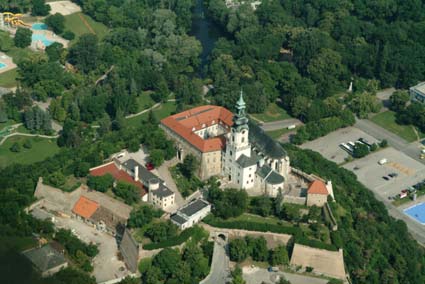
The castle's design incorporates key elements characteristic of hill castles, including thick defensive walls, a fortified gatehouse, and watchtowers positioned to maximize visibility over the surrounding landscape. The elevated location provided natural defense advantages, complemented by man-made fortifications.

Inside the castle grounds, there were residential quarters, storage facilities, and a chapel, which were essential for sustaining the garrison during sieges. The castle's layout was planned to facilitate both defense and daily life, with courtyards and connecting passages allowing movement within the complex.

Defensive structures

The castle's walls were constructed using local stone, designed to withstand attacks and sieges common in the medieval period. Battlements and arrow slits allowed defenders to repel attackers effectively. The gatehouse was likely equipped with a portcullis and murder holes, enhancing its defensive capabilities.

Later history and current condition

Over time, Šaľa Castle experienced periods of decline, particularly as military technology advanced and the strategic value of hill castles diminished. It may have suffered damage during regional conflicts and was eventually abandoned or repurposed. Today, the castle remains as partially preserved ruins, with some sections of walls and foundations still visible to visitors.

Preservation efforts aim to maintain the site as a cultural heritage location, attracting tourists and scholars interested in medieval architecture and Slovak history.

Visiting Šaľa Castle

The castle is accessible to visitors interested in exploring medieval fortifications and Slovak history. While facilities may be limited due to its ruinous state, the site offers panoramic views and an authentic glimpse into the region's past.

Frequently asked questions

  • When was Šaľa Castle built? Šaľa Castle dates back to the High Medieval period, reflecting the military needs of that era.
  • What type of castle is Šaľa Castle? It is classified as a hill castle, strategically positioned on elevated terrain.
  • Is Šaľa Castle open to the public? Yes, visitors can explore the castle ruins, though facilities may be basic.
  • What remains of Šaľa Castle today? The site features partially preserved walls and foundations, offering insight into medieval fortifications.
  • Are there guided tours available? Information on guided tours varies; local tourism offices may provide current details.

Frequently asked questions (FAQ)

When was Šaľa Castle built?
Šaľa Castle dates back to the High Medieval period, reflecting the military needs of that era.
What type of castle is Šaľa Castle?
It is classified as a hill castle, strategically positioned on elevated terrain.
Is Šaľa Castle open to the public?
Yes, visitors can explore the castle ruins, though facilities may be basic.
What remains of Šaľa Castle today?
The site features partially preserved walls and foundations, offering insight into medieval fortifications.
Are there guided tours available?
Information on guided tours varies; local tourism offices may provide current details.

Photo gallery

Šaľa Castle
Click to view

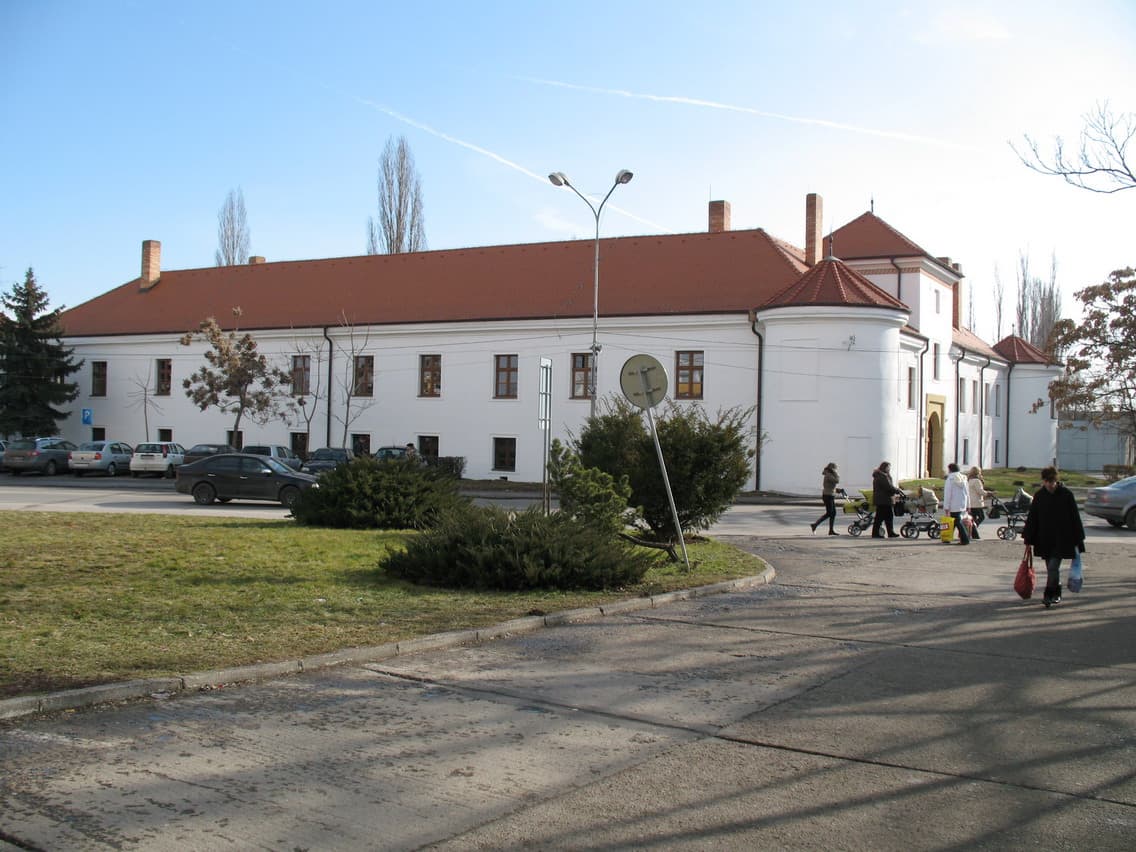
Photo by Taz•Public domain

1 photo • Click any image to view in full screen

Information

Hill Castle

Loading map...

Visitor reviews

No reviews yet. Been here? Write the first review and help other travelers!

Write the first review

Visited this castle? Share your experience

Your review helps other travelers and adds first-hand knowledge to our encyclopedia.
Write a review

(5/5)

0/2000 characters

Your review will be visible after admin approval

Nearby castles

20.3 km
Branč — Slovakia castle

Branč

, Slovakia

Branč Castle is a notable hill castle ruin located in Slovakia, recognized for its strategic position and medieval heritage. Perched on a hill, the castle was originally constructed to oversee and control important trade routes and to serve as a defensive stronghold in the region. Historical background and significance The castle dates back to the 13th century, placing its origins in the high medieval period. It was established during a time when fortifications were essential for territorial control and protection against invasions. Branč Castle played a crucial role in the defense network of the Kingdom of Hungary, to which Slovakia belonged during the medieval era. Throughout its history, Branč Castle witnessed various ownership changes and conflicts, reflecting the turbulent political landscape of medieval Central Europe. The castle's location made it a valuable asset for controlling the surrounding lands and trade routes. Architectural features and layout The castle's design follows typical medieval hill castle characteristics, featuring stone defensive walls adapted to the contours of the hill. The remains include sections of the curtain walls, foundations of towers, and traces of a gatehouse. The elevated position provided natural defense advantages, augmented by man-made fortifications. Branč Castle's layout was likely compact, optimized for defense rather than comfort, with a central courtyard and residential buildings within the walls. The use of local stone materials reflects the construction practices of the time. Current condition and preservation Today, Branč Castle stands as ruins, with only partial remains visible. The site is accessible to visitors interested in medieval history and castle architecture. Preservation efforts focus on stabilizing the ruins to prevent further deterioration while allowing public access. Visiting branč castle Branč Castle is a popular destination for hikers and history enthusiasts. The hilltop location offers scenic views of the surrounding Slovak countryside. Visitors can explore the ruins and imagine the castle's former strategic importance. Access and facilities The castle is reachable by marked hiking trails. There are no extensive visitor facilities on-site, so visitors should prepare accordingly. The natural setting and the historical ambiance make it a rewarding visit for those interested in medieval fortifications. Best time to visit Spring through early autumn is the most suitable period for visiting Branč Castle due to favorable weather conditions. Winter visits are possible but may be challenging due to snow and limited accessibility. Cultural and heritage importance Branč Castle is part of Slovakia's rich medieval heritage. Although in ruins, it contributes to the understanding of regional defensive architecture and medieval settlement patterns. The castle is a symbol of the area's historical significance within the Kingdom of Hungary and later Slovak history.

High Medieval (11th–13th c.)
Details
24.6 km
Nitra Castle — Slovakia castle

Nitra Castle

Nitra, Slovakia

Nitra Castle stands prominently on a hill overlooking the city of Nitra in Slovakia, a site with a rich history dating back to the High Medieval period. Constructed initially in the 11th century on the foundations of an earlier fortification, the castle complex has evolved over centuries, reflecting the region's shifting political, military, and religious landscape. It remains a significant cultural monument, combining architectural styles from Romanesque to Baroque, and serving historically as a fortress, episcopal seat, and administrative center. Early history and strategic importance The site of Nitra Castle was first fortified in the late 8th century as part of a Slavic principality, making it one of the earliest centers of power in the region. The hill, rising approximately 220 meters above sea level and naturally defended on three sides by the Nitra River, provided an ideal location for defense and control. During the 9th century, under the influence of Great Moravia, the fortress was expanded and strengthened to serve as a princely seat, marking its importance in early medieval politics. The earliest written records mention a basilica dedicated to Saint Emeram (also known as Jimram), which is part of the current castle complex and dates back to the 11th century. This church, built in the Romanesque style, is the oldest surviving structure within the castle grounds and symbolizes the early Christianization of the region. Medieval development and architectural evolution Throughout the High Medieval period, Nitra Castle underwent significant transformations. The original Romanesque church was complemented in the 14th century by the construction of the Upper Gothic Church, showcasing the transition to Gothic architectural elements such as pointed arches and ribbed vaults. The castle's fortifications were reinforced during this era, including the erection of Vazil's Tower, a key defensive structure associated with local legends. The castle's defenses were tested during the 13th century, surviving the Mongol invasion of 1241 with limited damage. However, in 1271, the fortress was besieged and largely damaged by forces under Prěmysl Otakar II, leading to the burning of Saint Emeram's church and destruction of parts of the defensive walls. Subsequent restoration efforts rebuilt the church and strengthened the fortifications. From the 14th to 16th centuries, the castle was influenced by prominent rulers such as Matúš Čak Trenčiansky, Sigismund of Luxembourg, and Matthias Corvinus. The castle suffered heavy damage in 1465 during conflicts involving Corvinus's troops but was rebuilt, reflecting the ongoing military and administrative importance of the site. Renaissance and baroque modifications In response to the rising threat of the Ottoman Turks during the 16th century, Nitra Castle's defenses were further reinforced. New fortifications, including an inner gate and a Renaissance-style palace, were constructed to enhance the castle's military capabilities while providing improved residential and administrative facilities. Despite robust defenses, the castle was briefly occupied by Turkish forces in 1663, after which extensive reconstruction of the defensive system took place. The 17th and 18th centuries saw the addition of the Lower Church and the transformation of the Bishop's Palace from its original Gothic form into a Late Baroque style building, reflecting changing tastes and the castle's ecclesiastical function. Architectural highlights and surviving structures The castle complex today showcases a blend of architectural styles and historical layers. The Romanesque Church of St. Emmeram remains the oldest part of the complex, notable for its robust stone construction and early medieval design. The Upper Gothic Church, with its characteristic pointed arches and ribbed vaults, highlights the castle's evolution during the 14th century. Vazil's Tower stands as a surviving medieval fortification element, linked to local legends of imprisonment within its dungeons. The Bishop's Palace, remodeled in the 18th century, exhibits the elegant forms of Late Baroque architecture, serving as a residence and administrative center for the bishopric. Fortification walls from various periods survive, including medieval stone walls with projecting bastions and later Renaissance defensive structures designed to counter artillery threats. The inner gate from the 16th century remains intact, illustrating the castle's adaptation to changing military technologies. Cultural significance and current status Nitra Castle has served as the seat of the Nitra bishopric since 1296, following a royal grant by King Andrew III to Bishop Pascház, who also undertook repairs after earlier conflicts. This long-standing ecclesiastical role has shaped much of the castle's architectural and cultural development. Today, the castle is a well-preserved hill castle and a dominant landmark in the city of Nitra. It attracts visitors interested in medieval history, architecture, and Slovak cultural heritage. The ongoing remodeling of the church and preservation efforts aim to maintain the castle's historical integrity while enhancing its accessibility and educational value. The castle's layered history, combining military, religious, and administrative functions, offers a rich narrative of Central European history from the early medieval period through the Baroque era. Its architectural diversity and strategic location continue to make Nitra Castle a significant monument in Slovakia's cultural landscape.

High Medieval (11th–13th c.)
Details
28.5 km
Uyvar Kalesi — Slovakia castle

Uyvar Kalesi

, Slovakia

Uyvar Kalesi is a historic hill castle located in Slovakia, notable for its strategic position and medieval fortifications. Although the exact city location is not well-documented, the castle's name and type suggest it was built to oversee and control the surrounding landscape, a typical feature of hill castles designed for defense and surveillance. Historical context and significance The castle's origins likely date back to the high medieval period, a time when many hill castles were constructed across Central Europe to secure borders and trade routes. Hill castles such as Uyvar Kalesi were typically built on elevated terrain to maximize defensive advantages, allowing occupants to monitor approaching enemies from afar and defend against sieges effectively. While specific historical records about Uyvar Kalesi are scarce, castles of this type in Slovakia often played important roles in regional power struggles, serving as military strongholds and administrative centers. The castle would have been a focal point for local governance and defense, reflecting the feudal system's need for fortified residences. Architectural features and construction As a hill castle, Uyvar Kalesi would have been strategically positioned on a natural elevation, utilizing the terrain to enhance its defenses. Typical architectural features likely included thick stone walls, battlements, and possibly a keep or donjon serving as the last line of defense. The castle's layout would have been adapted to the contours of the hill, with terraced courtyards and defensive walls following the natural topography. Entrances to hill castles were often heavily fortified with gatehouses and drawbridges, designed to impede attackers. Defensive towers would have been placed at key points along the curtain walls to provide overlapping fields of fire. The castle's construction materials were likely sourced locally, with stone masonry forming the primary structural elements. Preservation and current condition The current condition of Uyvar Kalesi is not well documented, but many hill castles in Slovakia exist today as ruins or partially preserved sites. Such ruins often retain portions of walls, towers, and foundations, offering valuable insights into medieval military architecture and the region's history. Preservation efforts, if any, would focus on stabilizing remaining structures and making the site accessible to visitors interested in medieval history and architecture. The castle's location on a hill may present challenges for conservation but also provides a scenic vantage point for visitors. Cultural and touristic importance Uyvar Kalesi, like many historic castles in Slovakia, contributes to the cultural heritage of the region. It represents the medieval era's architectural and military ingenuity and offers educational opportunities for those interested in history and archaeology. Although it may not be a major tourist destination due to limited information and accessibility, the castle's ruins can attract enthusiasts of medieval fortifications and hiking tourists who appreciate historical sites in natural settings.

Details