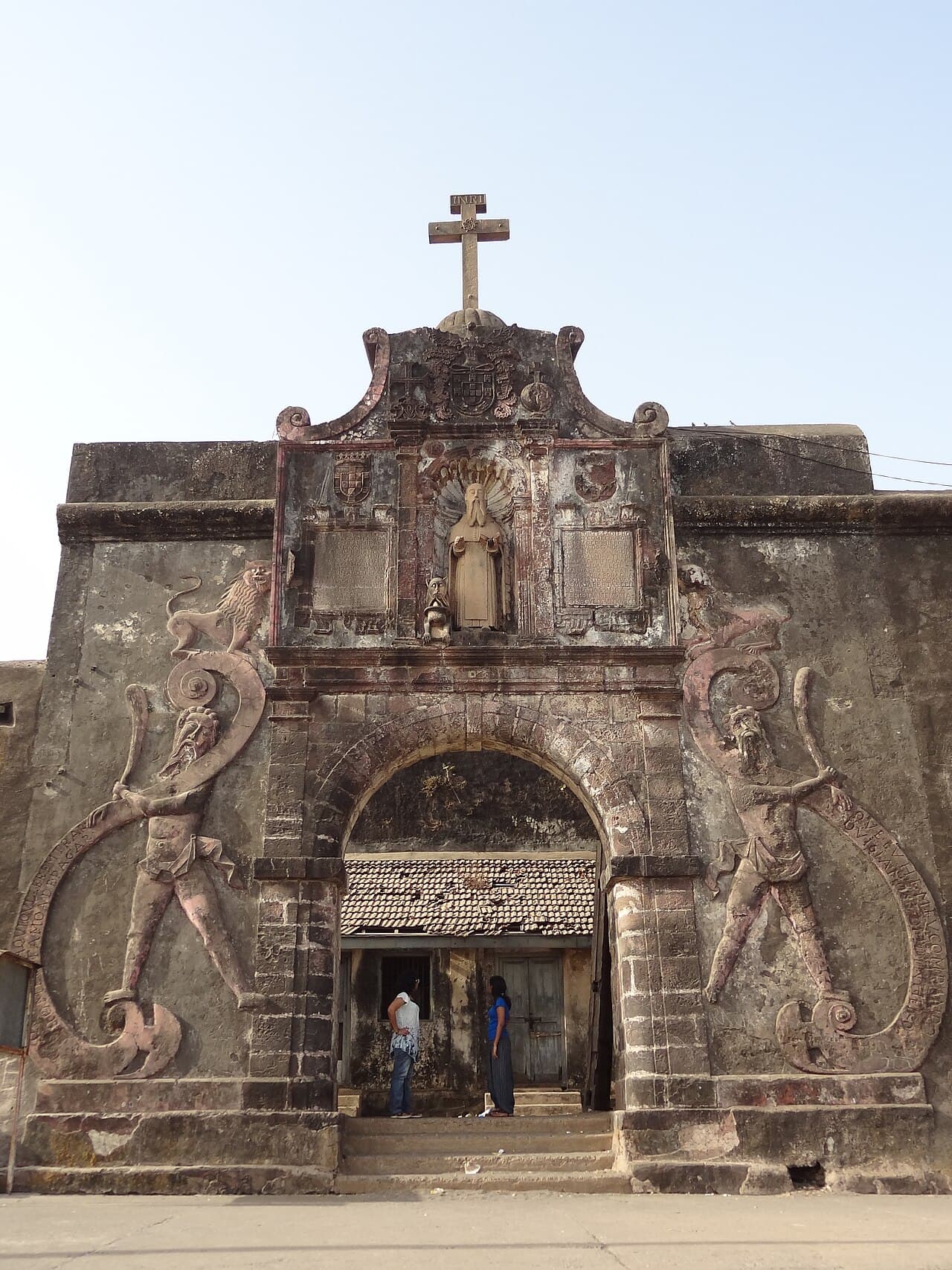
Saint Jeronimo's Fort — India castle

Saint Jeronimo's Fort

Saint Jeronimo's Fort in India
Post-Renaissance (17th–18th c.)

Saint Jeronimo's Fort is a notable example of a bastioned fortress located in India, reflecting the military architectural advancements during the period of European colonial expansion in the region. Though the exact city of its location remains undocumented in available records, the fort's design and construction are indicative of strategic defensive needs prevalent in coastal or contested areas during the colonial era.

Architectural features and design

The fort is characterized by its bastioned defensive system, which includes angular bastions projecting from the curtain walls. These bastions were designed to provide overlapping fields of fire, a significant improvement over earlier medieval fortifications. The walls are typically thick and robust, constructed to withstand artillery bombardment, a common threat in the era of gunpowder warfare.

Within the fort's perimeter, there would have been essential military structures such as armories, barracks, and powder magazines. The layout likely includes a central courtyard facilitating troop movement and logistics. The entrance would be fortified with a gatehouse, possibly featuring a drawbridge or heavy wooden doors reinforced with iron.

Historical context and significance

Saint Jeronimo's Fort was constructed during a period when European powers, particularly the Portuguese, were establishing fortified positions along the Indian coastline to secure trade routes and assert territorial control. The fort's name suggests a connection to Portuguese influence, as Saint Jerome (São Jerônimo) is a figure revered in Portuguese culture. These forts served both as military bastions and administrative centers.

The bastioned fortress design reflects the transition from medieval fortifications to early modern military architecture, adapting to the challenges posed by artillery and naval warfare. The fort likely played a role in regional conflicts and the protection of colonial interests against rival European powers and local kingdoms.

Construction period and architectural style

The fort's construction can be broadly placed in the post-medieval period, specifically between the 16th and 18th centuries, coinciding with the height of Portuguese colonial activity in India. The architectural style is primarily military Renaissance, emphasizing functionality, geometric precision, and the use of bastions for improved defense.

Current condition and preservation

The current state of Saint Jeronimo's Fort is not extensively documented, but like many colonial forts in India, it may range from partially preserved to ruins. Preservation efforts, if any, would focus on maintaining the structural integrity of the bastions and walls, as well as protecting any remaining historical artifacts within the site.

Importance for cultural heritage and tourism

Saint Jeronimo's Fort represents a significant chapter in the history of colonial military architecture in India. Its bastioned design offers insights into the evolution of fortifications in response to changing warfare technologies. The fort has potential as a cultural heritage site, attracting visitors interested in colonial history, military architecture, and the Portuguese influence in India.

Frequently asked questions (FAQ)

What is the historical significance of Saint Jeronimo's Fort?
Saint Jeronimo's Fort is significant as a bastioned fortress reflecting Portuguese colonial military architecture in India during the post-medieval period.
Can I visit Saint Jeronimo's Fort?
Visiting information for Saint Jeronimo's Fort is limited due to its undocumented location and preservation status. It's advisable to check local sources for access details.
What architectural features define Saint Jeronimo's Fort?
The fort features bastions designed for artillery defense, thick curtain walls, a central courtyard, and fortified gatehouses typical of post-medieval military design.

Photo gallery

Saint Jeronimo's Fort
Click to view

Photo by Rachna 13•CC BY-SA 3.0

1 photo • Click any image to view in full screen

Information

Bastioned Fortress

Loading map...

Visitor reviews

No reviews yet. Been here? Write the first review and help other travelers!

Write the first review

Visited this castle? Share your experience

Your review helps other travelers and adds first-hand knowledge to our encyclopedia.
Write a review

(5/5)

0/2000 characters

Your review will be visible after admin approval

Nearby castles

0.7 km
Moti Daman Fort — India castle

Moti Daman Fort

Daman, India

Moti Daman Fort is a prominent bastioned fortress located in the Union Territory of Daman and Diu, India. This fortification stands as a significant example of military architecture developed during the period of Portuguese colonial rule in India. Constructed primarily in the 16th century, Moti Daman Fort was designed to protect the strategic coastal town of Daman from naval attacks and to serve as a stronghold for the Portuguese administration. Historical background and strategic importance The fort was built by the Portuguese soon after they established their presence in the region in the early 1500s. Its construction reflects the military and administrative priorities of the Portuguese Empire in securing its trading routes along the western coast of India. Moti Daman Fort played a key role in defending the territory from rival European powers as well as local challenges during its active use. Throughout the centuries, the fort witnessed various military engagements and served as a center of governance. Its location near the Arabian Sea allowed it to control maritime traffic and protect the nearby harbor, which was vital for trade and military logistics. Architectural features and design Bastioned fortifications and walls Moti Daman Fort is characterized by its massive bastioned walls constructed from laterite stone and brick, which were typical materials used in Portuguese fortifications of the period. The bastions are angular and robust, designed to withstand artillery fire and provide overlapping fields of defensive fire. The fort's walls are punctuated by several cannon embrasures and gun ports, allowing defenders to repel attackers effectively. The thick walls and bastions form a polygonal layout that maximizes defensive coverage. Gates, moats, and internal structures The main entrance to the fort is through a large gateway featuring traditional Portuguese architectural elements, including a decorative arch and carved stonework. Surrounding the fort is a dry moat that further enhanced its defensive capabilities by restricting enemy approach. Inside the fort, there are remains of military barracks, armories, and storehouses. The fort also housed administrative buildings and a chapel, reflecting the dual military and religious functions typical of Portuguese colonial forts. Preservation and current condition Today, Moti Daman Fort is well preserved and serves as a historical monument open to visitors. Efforts have been made to maintain its structural integrity and highlight its architectural and historical significance. The fort is a popular tourist destination and an important cultural heritage site in the region. Visiting Moti Daman Fort Visitors to Moti Daman Fort can explore its extensive ramparts, bastions, and internal ruins. The site offers insights into the military strategies of the Portuguese colonial era and the architectural techniques used in fort construction. The fort's location near the coast provides scenic views of the Arabian Sea and the surrounding landscape. Tourist facilities include guided tours, informational plaques, and nearby amenities. The fort is accessible year-round, with the best time to visit being during the cooler months from November to February. Frequently asked questions about Moti Daman Fort When was Moti Daman Fort built? The fort was constructed in the 16th century during the Portuguese colonial period in India. What is the architectural style of the fort? It features Portuguese colonial military architecture with bastioned fortifications typical of the era. Can visitors explore inside the fort? Yes, the fort is open to the public and visitors can walk along the walls and explore the internal structures. Is there an entrance fee? The fort is generally open to visitors free of charge, but local regulations may apply. What is the best time to visit Moti Daman Fort? The cooler months from November to February are ideal for visiting due to pleasant weather. How do I reach Moti Daman Fort? The fort is located in the town of Daman, accessible by road from major cities like Mumbai and Surat. Are there guided tours available? Guided tours are often available and recommended to gain deeper historical context.

High Medieval (11th–13th c.)
Details
66.6 km
Asheri Fort — India castle

Asheri Fort

, India

Asheri Fort is a significant bastioned fortress located in the Palghar district of Maharashtra, India. Situated approximately 102 km from Mumbai and 88 km from Thane, it occupies a strategic position on the hills near Mendhavan Khind along the Mumbai-Ahmedabad highway. The fort overlooks the surrounding landscape, providing a commanding view that was essential for military defense in its time. Historical background and strategic importance The fort has played an important role in the regional history of Maharashtra, especially during the Maratha period and earlier phases of Indian history. Its location on a hilltop made it a key defensive structure against invasions and local conflicts. The fort’s bastions and walls were designed to withstand artillery attacks, reflecting the military architectural advancements of the period. Asheri Fort was part of a network of forts that secured the western coast of India, controlling trade routes and offering protection to local rulers. Its proximity to major cities like Mumbai and Thane added to its strategic value. Architectural features and fortifications The fort is classified as a bastioned fortress, characterized by its robust defensive walls and bastions designed to mount cannons and other artillery. The fort’s walls are made of stone and mortar, typical of the military constructions in the region. The bastions are positioned to provide overlapping fields of fire, enhancing the fort’s defensive capabilities. The entrance to the fort is fortified with a strong gate, often featuring guard rooms and defensive loopholes. Inside, the fort contains remnants of various structures including residential quarters, storage rooms, and water cisterns essential for sustaining a garrison during sieges. The fort’s location on a hill not only provided military advantages but also required careful engineering to manage water supply and access. Several water tanks and cisterns carved into the rock helped collect and store rainwater, ensuring the fort’s occupants could survive extended periods without external supplies. Current condition and restoration efforts Today, Asheri Fort is partially preserved, with many of its original walls and bastions still standing, though some areas are in ruins. The fort has undergone restoration efforts led primarily by the local villagers of the nearby base village, Khodkona, a small tribal community. These restoration activities have helped stabilize the fort’s structure and maintain its accessibility for visitors. The fort is accessible via trekking routes from Khodkona, offering visitors a chance to explore its historic ruins and enjoy panoramic views of the surrounding landscape. The restoration work by locals reflects the cultural importance of the fort to the community and their commitment to preserving their heritage. Visiting Asheri Fort Asheri Fort is a popular destination for history enthusiasts and trekkers. The trek to the fort is moderately challenging, passing through scenic hills and forests. Visitors can explore the fort’s bastions, gates, and water tanks, gaining insight into the military architecture of the region. The best time to visit is during the cooler months from October to February, when the weather is pleasant for trekking. Visitors should carry adequate water and wear suitable footwear for the rocky terrain. Nearby attractions The fort’s location near the Mumbai-Ahmedabad highway makes it accessible for travelers interested in exploring other historical sites and natural attractions in the Palghar district. Nearby sites include other hill forts and tribal villages that offer a glimpse into the local culture and history.

Late Medieval (14th–15th c.)
Details
87.5 km
Harihar Fort — India castle

Harihar Fort

, India

Harihar Fort, also known as Harshagad, is a historic hillfort situated in the Nashik district of Maharashtra, India. Located approximately 40 kilometres from Nashik, 48 kilometres from Igatpuri, and 40 kilometres from Ghoti Budruk, this fort is perched atop a steep hill and is renowned for its distinctive rock-cut steps that attract numerous visitors and trekkers each year. Geographical setting and strategic importance The fort occupies a commanding position on a hill, providing extensive views over the surrounding landscape of the Western Ghats. Its elevated location was strategically chosen to monitor and control the trade routes and movements through the region. The rugged terrain and natural defenses made it a formidable stronghold in its time. Architectural features and construction Harihar Fort is classified as a hillfort and is primarily constructed from local stone. One of its most remarkable features is the series of rock-cut steps carved directly into the hillside, which are both a practical means of ascent and a unique architectural element. These steps are steep and uneven, reflecting the fort's ancient origins and the challenges of its terrain. The fort's remains include sections of stone walls, gateways, and bastions, though much of the structure is in ruins today. The fortifications were designed to exploit the natural topography, enhancing defense capabilities against invaders. Historical context and significance While detailed historical records about Harihar Fort are limited, it is known to have been an important military outpost in the region. The fort likely dates back to the medieval period, serving various rulers who controlled the Nashik area. Its strategic location made it a valuable asset in controlling local territories and trade routes. Over time, the fort fell into disuse and was abandoned, leading to its current state as archaeological ruins. Despite this, Harihar Fort remains a significant cultural and historical landmark, reflecting the martial architecture and defensive strategies of its era. Visiting Harihar Fort Today, Harihar Fort is a popular destination for hikers and history enthusiasts. The trek to the summit via the rock-cut steps offers both a physical challenge and scenic views of the surrounding hills and valleys. Visitors can explore the remnants of the fort's walls and bastions while enjoying the natural beauty of the Western Ghats. Due to its rugged terrain and partial preservation, visitors are advised to wear appropriate footwear and exercise caution. The fort is accessible year-round, with the cooler months being the most comfortable for trekking. Preservation and cultural importance As a site of archaeological ruins, Harihar Fort is part of the region's cultural heritage. Efforts to preserve the fort focus on maintaining its structural remains and promoting awareness of its historical value. The fort contributes to the understanding of medieval military architecture in Maharashtra and serves as a tangible link to the area's past.

Details