Sabiote Castle
Sabiote Castle stands as a remarkable example of Renaissance military architecture in the province of Jaén, Spain. Perched atop La Loma hill, the castle commands sweeping views over the Guadalimar Valley and the distant Sierra Morena and Sierra Mágina mountain ranges. This strategic location has been of military significance since ancient times, with fortifications dating back to the Bronze Age. The castle represents the oldest surviving example of the Renaissance castle/bastion model on the Iberian Peninsula, showcasing a fusion of defensive innovation and palatial elegance.
Early history and strategic importance
The site of Sabiote Castle was originally fortified by Muslim builders in the 13th century, taking advantage of the natural defensive advantage offered by the hill. During the Christian Reconquista, the castle changed hands and underwent significant modifications to suit the needs of its new rulers. In the 13th century, Juan de Zúñiga led extensive reconstruction efforts, transforming the former Muslim alcázar into a fortified residence that asserted Christian noble dominance over the surrounding territory. The castle's proximity to the Castle of Canena highlights its role within a network of fortifications securing the region.
Renaissance transformation under andrés de vandelvira
Between 1538 and 1549, the castle underwent a profound transformation under the direction of the renowned architect Andrés de Vandelvira. Commissioned by Don Francisco de los Cobos, a powerful secretary to emperors Charles V and Philip II, the castle was redesigned in the Renaissance style inspired by contemporary Italian military architecture. This renovation introduced a palace-fortress layout featuring bastioned angular towers designed to withstand artillery attacks, a cutting-edge defensive innovation of the period.
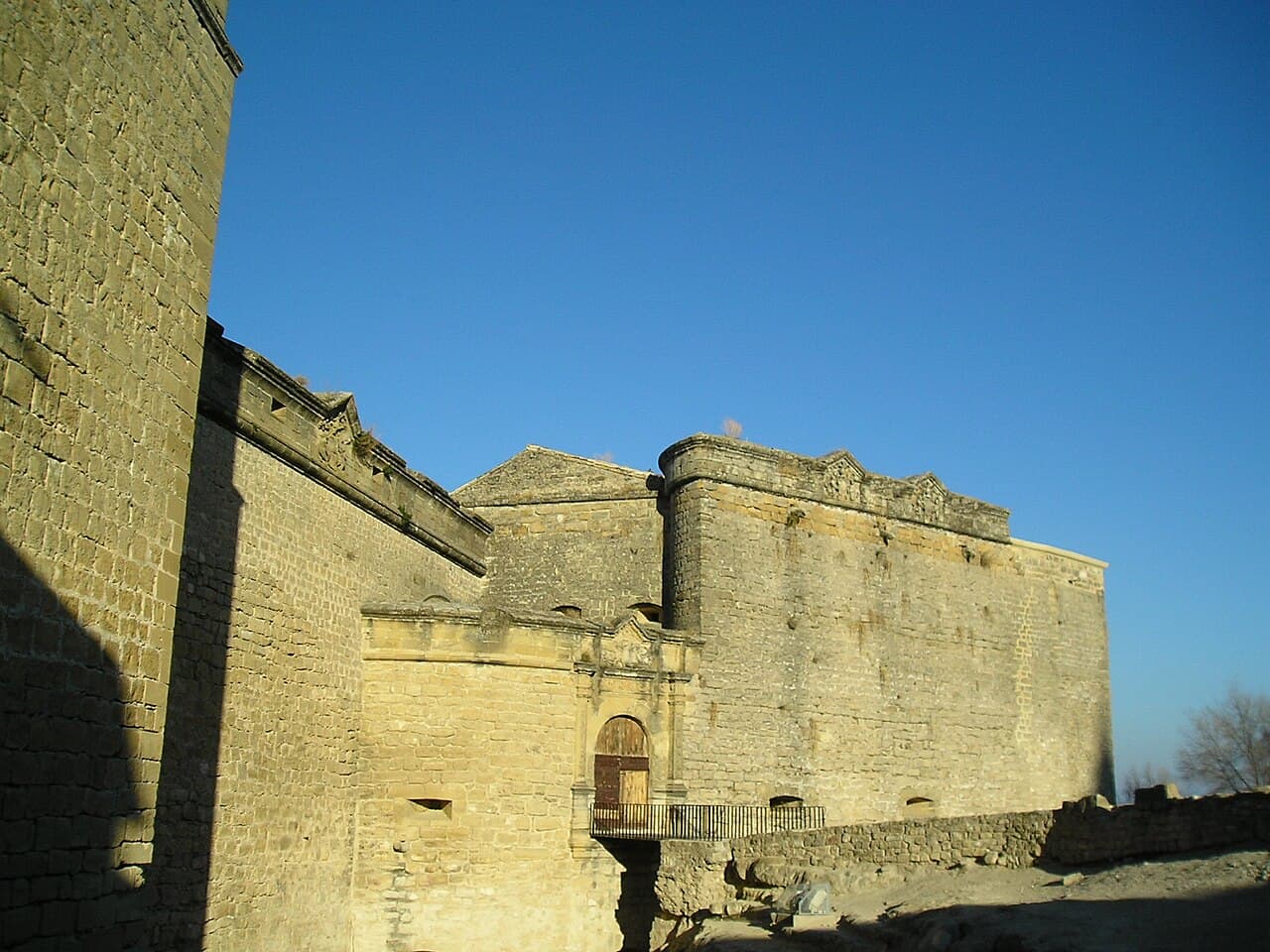
The fortress walls were equipped with embrasures (troneras) for cannon fire and narrow arrow slits (saeteras) for archers, crowned by distinctive merlons and ear-shaped battlements (orejeras). The exterior facade combines finely cut ashlar stone with traditional masonry, adorned with the coats of arms of Don Francisco de los Cobos and Doña María Mendoza, patrons of the castle's Renaissance reconstruction. The main gate, characterized by a semicircular arch and originally featuring a drawbridge, bears intricate Plateresque decorations including pilasters and heraldic reliefs.
Architectural features and defensive innovations
The castle exemplifies the principles of Italian Renaissance military engineering, particularly influenced by the treatises of Francesco di Giorgio. The bastioned system with angular towers was designed to eliminate blind spots and provide overlapping fields of fire, a significant advancement over medieval fortifications. The fortress's five-sided towers allowed defenders to cover the walls effectively against siege artillery.
Inside, the castle balances military functionality with residential comfort. The interior is organized around several courtyards framed by elegant Renaissance architecture, reflecting the dual role of the castle as both a fortress and a noble residence. Decorative elements include a frieze with grotesque figures on the entablature and a Plateresque classical portal prominently displaying the founders' heraldry.
Historical events and cultural significance
During the Napoleonic Wars in the early 19th century, Sabiote Castle suffered significant damage inflicted by French occupying forces, resulting in the loss of many artistic and architectural details. Despite this, the castle's historical and cultural value was recognized early, leading to its designation as a Historic-Artistic Monument in 1931. Further protections followed, including the declaration of the castle's walled enclosure as a historic-artistic complex in 1972 and special recognition by the Andalusian government in 1993.
The castle also holds artistic significance, having once housed the sculpture known as San Juanito de Úbeda, attributed to Michelangelo, before its relocation to the Sacra Capilla del Salvador in Úbeda. Historical documents reference the fortress in medieval geography texts by the scholar al-Hamawi, emphasizing its longstanding role in regional defense and territorial organization.
Remnants and preservation
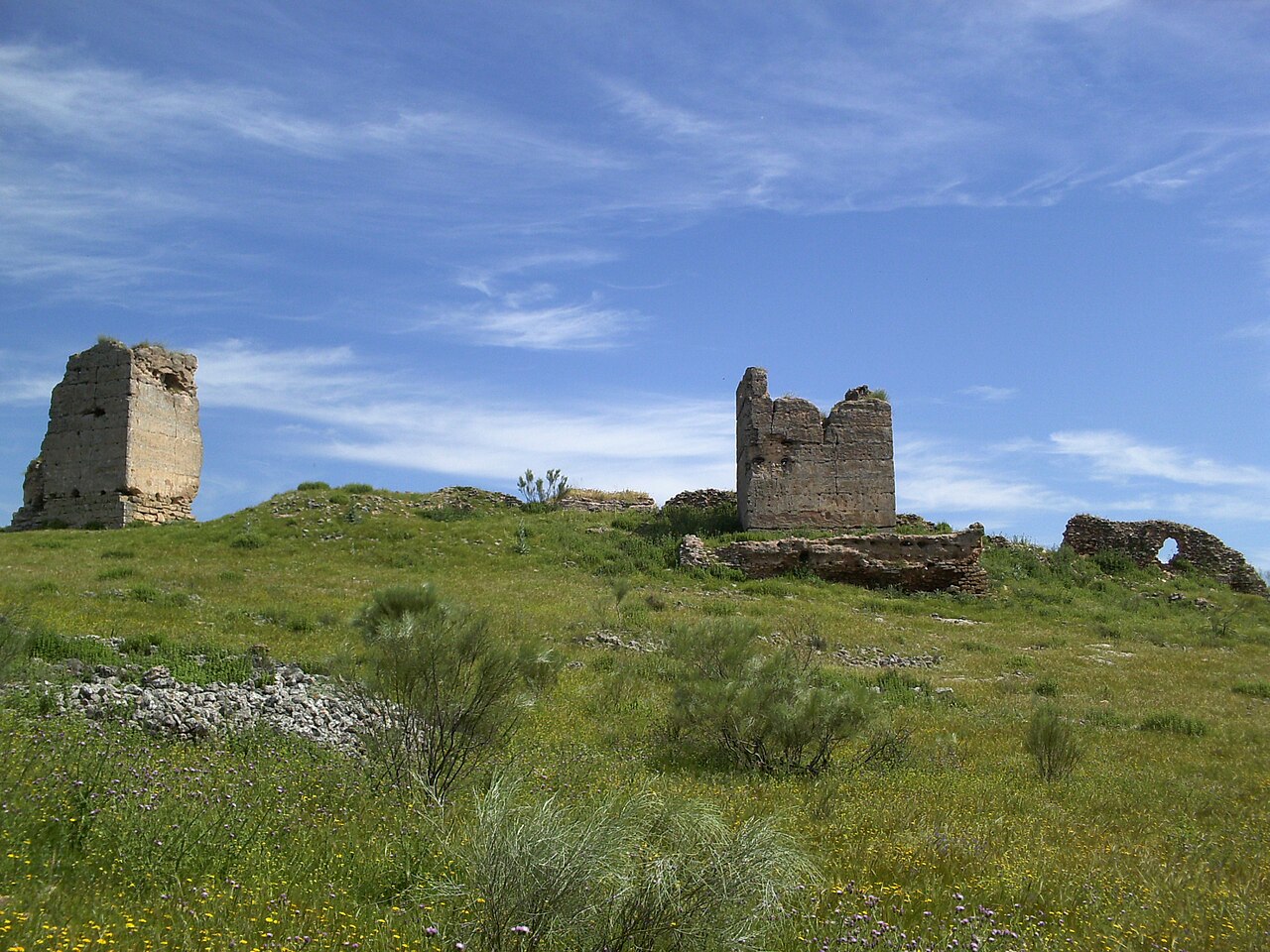
Today, Sabiote Castle remains a prominent feature overlooking the village of Sabiote. The original defensive walls that once enclosed the castle and village survive in parts, including several of the original six gates such as the Chirigote, Pelotero, San Bartolomé, and the Moorish Granada gate. Sections of semicircular masonry towers and wall fragments remain near the sites of former gates, including the now-lost southern Puerta de la Villa and the partially preserved Puerta del Tejar or Pilarillo gate.
The castle is accessed via a main gate protected by a moat, with the facade showcasing the sober strength typical of Renaissance military architecture. Restoration and conservation efforts are ongoing under the management of local municipal authorities, ensuring the preservation of this unique Renaissance bastioned fortress for future generations.
Visiting and cultural heritage
Sabiote Castle is a significant cultural landmark that offers visitors insight into the evolution of military architecture from medieval to Renaissance styles. Its commanding position and well-preserved features provide a tangible connection to the region's turbulent history and noble heritage. The castle's blend of defensive innovation and artistic refinement makes it a vital destination for those interested in Spain's architectural and historical legacy.
Frequently asked questions (FAQ)
- How do I get to Sabiote Castle?
- Sabiote Castle is located on La Loma hill in the town of Sabiote, Jaén, Spain. It is accessible by car or local transport from nearby cities such as Úbeda and Jaén. Visitors can reach the castle by walking up from the town center.
- What are the opening hours of Sabiote Castle?
- The castle is generally open to visitors during daytime hours, often from 10:00 to 18:00, but it is recommended to check locally for seasonal variations and special closures before planning your visit.
- Is there an entrance fee to visit Sabiote Castle?
- Entrance fees may apply depending on the time of year and special events. Typically, there is a modest fee for adults, with discounts for children, seniors, and groups. Some days may offer free entry.
- What architectural style is Sabiote Castle built in?
- Sabiote Castle is built primarily in the Renaissance style, featuring a bastioned fortress design influenced by Italian military architecture and Plateresque decorative elements.
- Can visitors explore the interior courtyards of the castle?
- Yes, visitors can explore several interior courtyards that showcase Renaissance palatial architecture, offering insight into the castle's dual military and residential functions.
- Why is Sabiote Castle historically significant?
- The castle is historically significant as the oldest surviving example of a Renaissance bastioned fortress in the province of Jaén, reflecting the evolution of military architecture and noble patronage during the 16th century.
Photo gallery

Photo by Er conde•Public domain
Information
Sources & official resources
Verify the information above using these authoritative references.
Loading map...
Visitor reviews
No reviews yet. Been here? Write the first review and help other travelers!
Write the first reviewVisited this castle? Share your experience
Your review helps other travelers and adds first-hand knowledge to our encyclopedia.