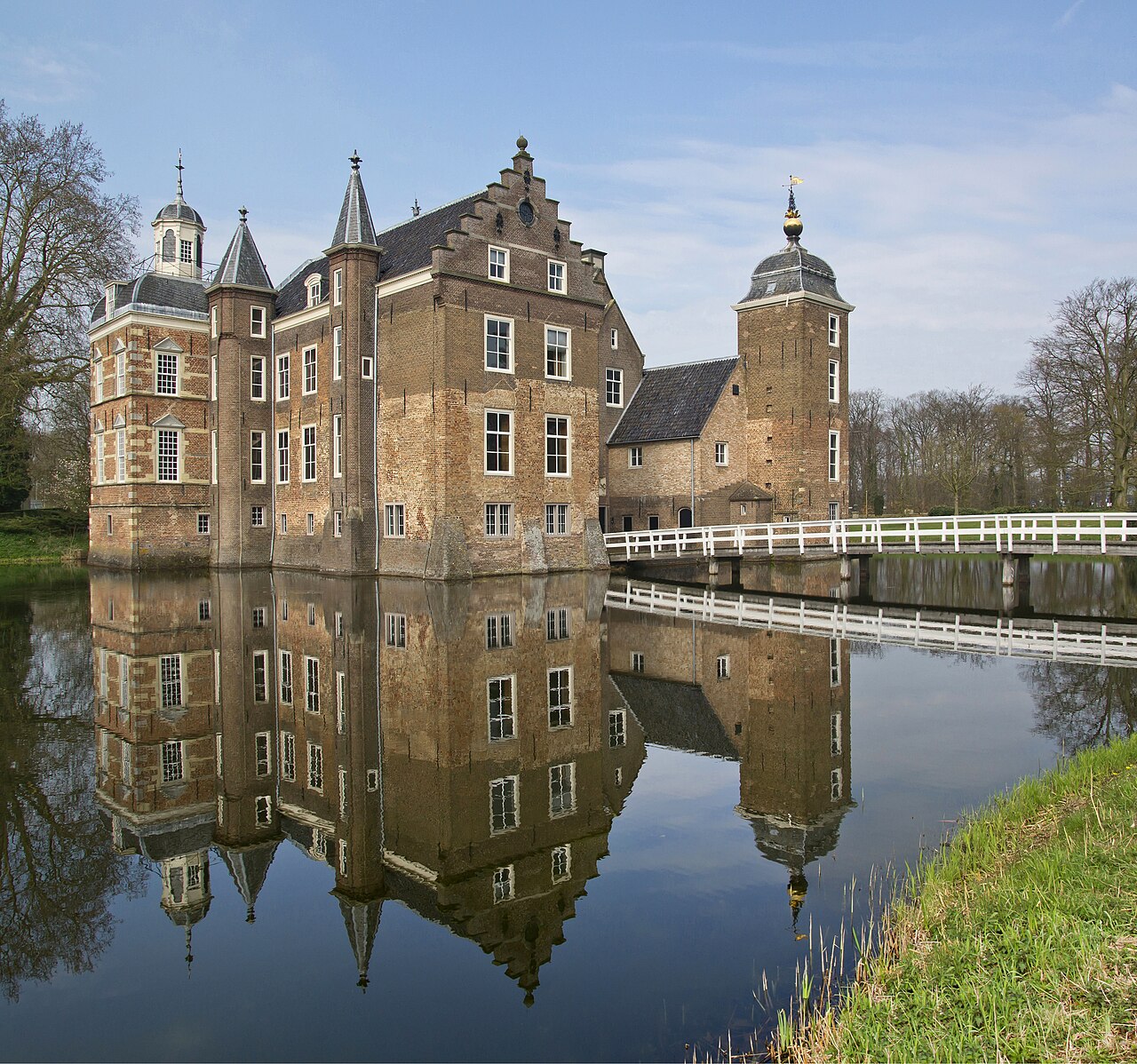
Ruurlo Castle
Ruurlo Castle stands as a remarkable example of a late medieval hill castle in the province of Gelderland, eastern Netherlands. Its origins date back to the 14th century, with the earliest records from 1326. The castle is historically tied to the noble Van Heeckeren family, who managed the estate from the early 15th century until 1977, shaping much of its architectural and cultural heritage. Since 2012, thanks to the patronage of local businessman Hans Melchers, the castle has been revitalized as a museum, showcasing fine art and the rich history of the estate.
Early history and noble ownership
The castle first appeared in archives as a fief under Count Reinoud I of Guelders in the 14th century. Initially owned by the Van Holthuizen family and inhabited by figures such as Steven Roderlojski, it came under the possession of the Van Heeckeren family in the 15th century. This family was instrumental in the castle's development and prominence, establishing their lineage as a distinguished noble and knightly house.
Jacob van Heeckeren acquired the castle in the early 1400s, marking the start of over five centuries of family stewardship. The Van Heeckerens were influential, with members such as William van Heeckeren van Kell (1814–1914), who served as director of the King's Cabinet and Minister of Foreign Affairs, highlighting the family's political significance.
Architectural evolution and features
Medieval foundations and towers
Ruurlo Castle is built on an artificial island, a typical defensive feature of hill castles in the region, surrounded by moats fed by natural water sources. The castle's layout is roughly square, originally fortified with towers at each corner. The most prominent is the large square tower shaped by 1572, reflecting the castle's late medieval military architecture. An additional tower was added in the early 17th century, indicating ongoing enhancements to its defensive and residential functions.
The structure primarily uses brick and stone masonry, with medieval construction techniques still evident, especially in the cellars and lower walls. The southern wing preserves significant 16th-century fabric, highlighting the castle's layered architectural history.
Interior design and later stylistic influences
The interiors of Ruurlo Castle exhibit a blend of styles, predominantly Baroque and Rococo elements from the 18th century. Decorative features such as ceiling paintings and carved wooden beams survive in the upper floors, many of which were relocated from the nearby De Voorst estate in the 19th century. A notable addition is the clock installed in the tower facade in 1760, later enhanced in 1874 by the Parisian firm Borrel.
Historical events and notable residents
Throughout its history, Ruurlo Castle has witnessed significant events and hosted prominent figures. It endured at least two major fires that necessitated extensive renovations. In the late 17th century, Arnold van Keppel, a notable military commander, resided there. The 18th century saw Theodor von Neuhoff, who famously declared himself king of Corsica, use the castle as a residence before his expedition.
During World War II, the castle was requisitioned by German forces as the headquarters of the German General Staff. Following liberation, Canadian troops occupied it briefly. Post-war, the castle transitioned to civic use, serving as the town hall of Ruurlo from 1984 until 2005, when municipal reorganization led to its vacancy.
The estate and landscape features
The castle is set within a magnificent estate featuring an English-style landscaped garden developed and modified during the 19th century by notable landscape architects including J.P. Posth, Jan David Zocher Jr., and Louis Paul Zocher. The estate also includes a historic orangery built in 1879, which was severely damaged during the war but rebuilt in 2002. It now serves as a popular venue for weddings and events.
A particularly famous feature of the grounds is the maze created by Lady Sophie van Heeckeren in 1890. This maze was recognized by the Guinness Book of Records in 1996 as the world's largest, adding to the estate's unique attractions.
Restoration and current use
In 2012, the castle was acquired by Dutch billionaire Hans Melchers for €1 million. He undertook a comprehensive restoration of the castle and its surrounding park, including the replacement of the historic drawbridge with a new bridge during the 2013 renovation. Since 2017, Ruurlo Castle has functioned as a branch of the MORE Museum, hosting exhibitions, particularly showcasing works by Carel Willink, a master of magical realism. These paintings come from the collection of Dirk Scheringa, former owner of DSB Bank.
Today, Ruurlo Castle stands as a well-preserved cultural landmark combining medieval architecture with later Baroque and Rococo influences, set within a historically significant landscape. It offers visitors a rich experience of Dutch noble history, architectural evolution, and artistic heritage.
Frequently asked questions (FAQ)
- How do I get to Ruurlo Castle?
- Ruurlo Castle is located in the picturesque village of Ruurlo, Netherlands. You can reach it by car, with parking available nearby, or by taking public transportation via train to the nearest station and then a short bus ride or walk to the castle.
- What is the historical significance of Ruurlo Castle?
- Ruurlo Castle dates back to the 14th century and is an excellent example of medieval architecture in the Netherlands. It has played a significant role in the region's history, serving as a residence for noble families and a strategic stronghold over the centuries.
- When was Ruurlo Castle built?
- The original construction of Ruurlo Castle began in the 14th century, with major renovations and expansions occurring in the following centuries. The castle as we see it today reflects various architectural styles, showcasing its long and varied history.
- Can I take a guided tour of Ruurlo Castle?
- Yes, guided tours of Ruurlo Castle are available, providing visitors with in-depth knowledge about its history and architecture. Tours are typically offered in multiple languages, and it is advisable to check the schedule in advance.
- Why is Ruurlo Castle a popular tourist destination?
- Ruurlo Castle is popular due to its stunning architecture, beautiful gardens, and rich history. Visitors appreciate the serene surroundings and the opportunity to explore the castle's interior, which is often filled with art exhibitions and historical displays.
- Is it possible to host events at Ruurlo Castle?
- Yes, Ruurlo Castle offers facilities for hosting various events, including weddings and corporate gatherings. Interested parties should contact the castle's administration for more details on availability and services.
- What are the opening hours of Ruurlo Castle?
- Ruurlo Castle is typically open to visitors from Tuesday to Sunday, with specific hours that may vary seasonally. It is recommended to check the castle's official website for the most current opening times before your visit.
- What are the ticket prices for visiting Ruurlo Castle?
- Ticket prices for Ruurlo Castle are generally affordable, with discounts available for students and seniors. Children may enter for free or at a reduced rate, so it's best to verify the rates on the official website prior to your visit.
- When is the best time to visit Ruurlo Castle?
- The best time to visit Ruurlo Castle is during the spring and early autumn when the weather is pleasant, and the gardens are in full bloom. Additionally, consider visiting during special events or exhibitions that may enhance your experience.
- Are there any nearby attractions to Ruurlo Castle?
- Yes, there are several attractions near Ruurlo Castle, including the picturesque village of Ruurlo itself and nearby nature reserves. Visitors can also explore local museums and enjoy hiking or biking trails in the surrounding area.
Information
Website
Visit websiteSources & official resources
Verify the information above using these authoritative references.
Loading map...
Visitor reviews
No reviews yet. Been here? Write the first review and help other travelers!
Write the first reviewVisited this castle? Share your experience
Your review helps other travelers and adds first-hand knowledge to our encyclopedia.