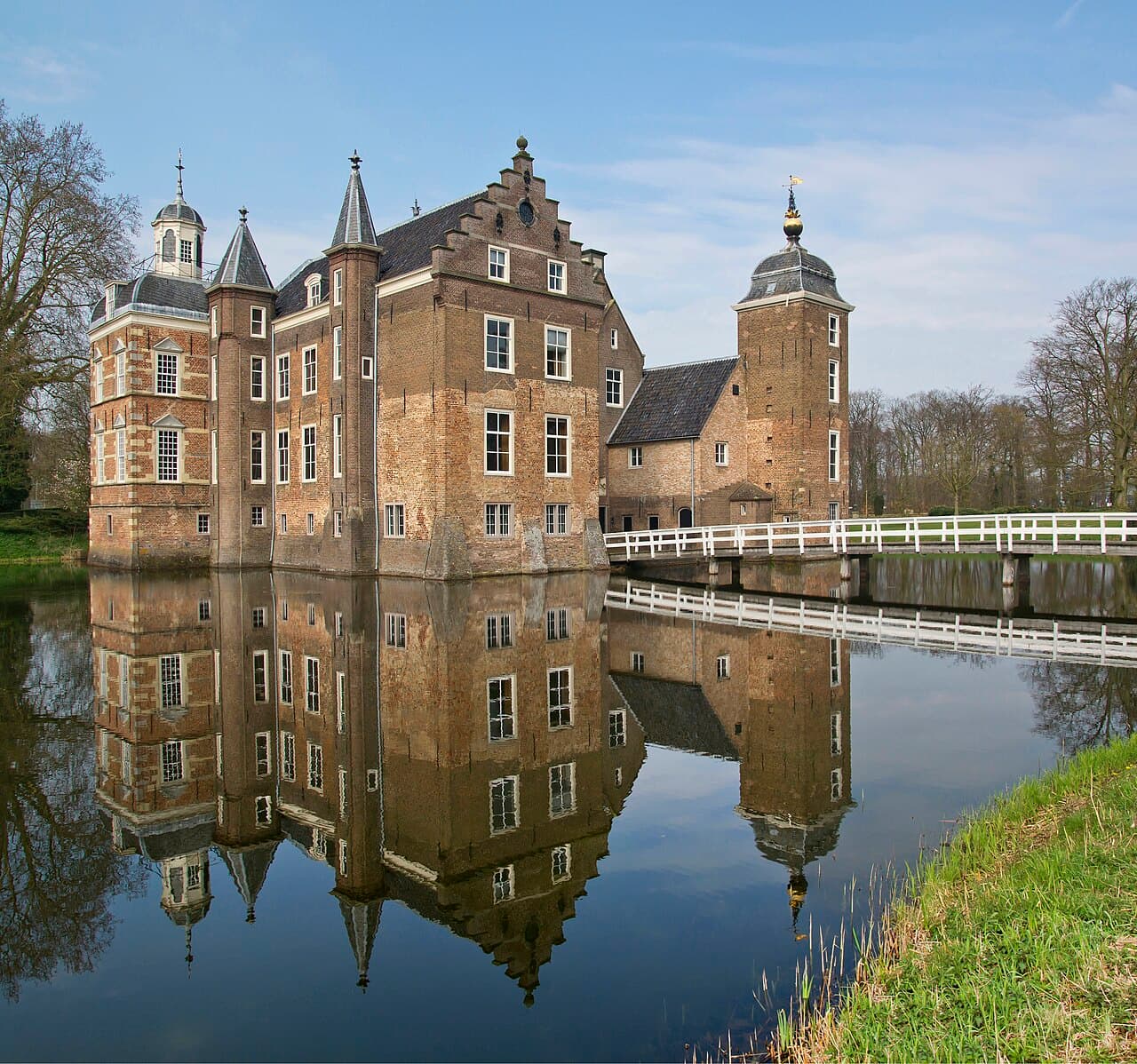
Kasteel Huize Ruurlo — Netherlands castle

Kasteel Huize Ruurlo

Kasteel huize ruurlo
Ruurlo, Gelderland, Netherlands
Late Medieval (14th–15th c.)
Well Preserved

Kasteel Huize Ruurlo is a late medieval hill castle located in the town of Ruurlo, within the province of Gelderland, in the Netherlands. The castle's history dates back to at least 1326, when it was first mentioned in historical records. It has been a significant residence for centuries, notably remaining in the possession of the noble Van Heeckeren family since the 15th century.

Historical background and ownership

The castle is first documented in the early 14th century, establishing its origins firmly within the late medieval period. Over the centuries, Kasteel Huize Ruurlo has witnessed the shifts in power and architectural trends typical of Dutch noble estates. The Van Heeckeren family, an influential noble lineage in the region, acquired the castle in the 1400s and have maintained ownership ever since, marking it as a hereditary seat and symbol of their status.

Architectural features and layout

As a hill castle, Kasteel Huize Ruurlo is situated on elevated ground, a strategic choice common in medieval castle construction to provide natural defense advantages. The castle's structure has evolved over the centuries, with the core dating back to the 14th century. While detailed architectural plans are limited, the castle traditionally features fortified walls, towers, and a surrounding moat, elements typical of medieval Dutch castles designed for both defense and residence.

Defensive elements

The castle's elevated position on a hill allowed for enhanced visibility and defense against potential attackers. It likely included curtain walls and gatehouses to control access. Defensive features such as battlements and arrow slits would have been incorporated into the design to provide protection for the inhabitants during conflicts.

Residential and interior aspects

Inside, the castle would have contained living quarters, halls, and service rooms necessary for the noble family and their retainers. Over time, renovations and expansions may have introduced Renaissance or later stylistic elements, reflecting changing tastes and functional needs, although the primary style remains rooted in the medieval tradition.

Cultural significance and preservation

Kasteel Huize Ruurlo holds cultural and historical importance as a longstanding noble residence in the Gelderland region. Its continuous ownership by the Van Heeckeren family contributes to its heritage value, representing centuries of Dutch aristocratic life. The castle is part of the local identity and attracts interest for its historical associations and architectural character.

The castle is currently well-preserved, maintaining much of its historical fabric. It serves as a private residence and is not generally open to the public, which has helped protect its condition. However, its exterior and surroundings can be appreciated by visitors to Ruurlo, offering a glimpse into the region's medieval past.

Location and surroundings

Located in Ruurlo, a town in the eastern part of the Netherlands, the castle is set within a landscape typical of Gelderland, featuring gentle hills and waterways. The setting enhances the castle's defensive advantages and provides a picturesque environment that complements its historical stature.

Nearby attractions

Visitors to the area can explore other historical sites in Gelderland, including various castles, estates, and natural reserves. The town of Ruurlo itself offers cultural experiences and local heritage museums that contextualize the castle within the broader history of the region.

Frequently asked questions (FAQ)

What is the history of Kasteel Huize Ruurlo?
Kasteel Huize Ruurlo dates back to the 14th century and has a rich history intertwined with the local nobility. Originally built as a defensive structure, it has evolved into a stunning example of Dutch architecture, reflecting various styles over the centuries.
When is the best time to visit Kasteel Huize Ruurlo?
The best time to visit Kasteel Huize Ruurlo is during the spring and summer months, from April to September, when the gardens are in full bloom and the weather is pleasant. Special events and guided tours are frequently held during this period, enhancing the visitor experience.
Can I access Kasteel Huize Ruurlo with a wheelchair?
Yes, Kasteel Huize Ruurlo is accessible to visitors with mobility challenges. The castle has made efforts to accommodate all guests, including ramps and accessible facilities to ensure everyone can enjoy the historical site.
What are the opening hours of Kasteel Huize Ruurlo?
Kasteel Huize Ruurlo is open to visitors from Tuesday to Sunday, typically from 10 AM to 5 PM. It is advisable to check the official website for any seasonal changes in opening hours or special closures.
Is it possible to take guided tours of the castle?
Yes, guided tours of Kasteel Huize Ruurlo are available, offering visitors in-depth insight into the castle's history and architecture. Tours are usually conducted in multiple languages and can be booked in advance for convenience.
What are the ticket prices for Kasteel Huize Ruurlo?
Ticket prices for Kasteel Huize Ruurlo vary depending on age and group size, with discounts available for children and seniors. Visitors can purchase tickets at the entrance or online for a more streamlined experience.
Are there any nearby attractions to visit after Kasteel Huize Ruurlo?
Yes, after visiting Kasteel Huize Ruurlo, you can explore several nearby attractions, including the picturesque village of Ruurlo and the surrounding natural parks. Many visitors also enjoy the local museums and walking trails that showcase the beauty of the region.

Photo gallery

Kasteel Huize Ruurlo
Click to view

Photo by Bert Kaufmann from Roermond, Netherlands•CC BY-SA 2.0

1 photo • Click any image to view in full screen

Information

Hill Castle

Loading map...

Visitor reviews

No reviews yet. Been here? Write the first review and help other travelers!

Write the first review

Visited this castle? Share your experience

Your review helps other travelers and adds first-hand knowledge to our encyclopedia.

Write a review

(5/5)

0/2000 characters

Your review will be visible after admin approval

Nearby castles

0 km

Ruurlo Castle

Gelderland, Poland

Ruurlo Castle is a distinguished historic estate located in the municipality of Berkelland, just south of the village of Ruurlo, in the Dutch province of Gelderland. This castle stands as a testament to centuries of architectural evolution and noble heritage, forming part of a state-protected Historical Buitenplaats complex registered since 2010. Its rich history and diverse architectural styles make it a significant cultural landmark in the region. Early history and noble ownership The earliest known mention of Ruurlo Castle dates back to 1326, marking it as a medieval stronghold with deep roots in Dutch history. Since the 15th century, the castle has been under the stewardship of the noble Van Heeckeren family, a lineage that played a prominent role in the local governance and cultural development of the area. The castle not only served as a residence but also as a symbol of feudal authority and social status. Architectural evolution and renovations Medieval foundations and 16th-century expansions The castle's structure reflects a complex layering of architectural periods due to continuous occupation and modifications over the centuries. Significant portions of the medieval wall work remain intact, particularly in the basement, offering valuable insights into early construction techniques. The left wing of the castle primarily dates from the 16th century, featuring robust masonry and design elements typical of that era. A notable feature from this period is the large square tower, which assumed its current form in 1572. This tower exemplifies the defensive and residential functions of Renaissance-era castles, combining fortification with domestic comfort. 17th-century additions and 19th-century modifications At the beginning of the 17th century, a distinctive "loose" tower was added to the rear of the castle, enhancing its defensive capabilities and aesthetic complexity. During the 19th century, this tower's walls were further embellished with new gables, reflecting the period's architectural tastes and the ongoing evolution of the estate's appearance. Additionally, important interior elements were incorporated from Huis De Voorst, a nearby historic house built by Arnold Joost van Keppel. These interior features, transferred in the 19th century, contribute to the castle's unique blend of styles and historical narratives. Modern history and restoration In the late 20th century, specifically from the 1980s, Ruurlo Castle served as the town hall for the locality of Ruurlo. This civic function continued until the municipal merger in 2005, which integrated Ruurlo into a larger administrative entity, leading to the castle's change in use. In 2013, the castle and its surrounding landscape park were purchased by Hans Melchers, who undertook a comprehensive restoration project. This restoration respected the castle's historical fabric while adapting it for modern use. A new bridge was constructed to provide access across the water to the castle's entrance, enhancing visitor experience and accessibility. The restoration also focused on interior details, including the conservation of original beam paintings on the top floor and the installation of wooden floors that complement the castle's ceiling paintings. These efforts have preserved the castle's artistic heritage while ensuring structural stability. Cultural significance and visitor experience Ruurlo Castle holds a prominent place in local culture and tourism. It gained popular recognition as the filming location for the television series "De Zevensprong", based on the book by Tonke Dragt, shortly before its 1980s restoration. This connection has inspired themed bicycle tours organized by the local VVV, allowing visitors to explore the village and castle grounds with a literary and historical perspective. Another notable attraction is the "Jonker Joostpad", a walking and cycling route that highlights the heritage of Joost van Heeckeren, a 16th-century lord of the castle. This trail offers an engaging way to learn about the castle's history and its role in the region. The castle is also a sought-after venue for weddings and special events, enhanced by the presence of a reconstructed orangery dating from 1879. This orangery, rebuilt in 2003, now functions as a tea house and event space, adding to the estate's charm and utility. Architectural features and estate landscape The castle complex is characterized by a mixture of architectural styles resulting from centuries of continuous building activity. The combination of medieval masonry, 16th-century towers, 17th-century additions, and 19th-century gables creates a visually rich and historically layered structure. The surrounding landscape park complements the castle's architectural grandeur, providing a scenic setting that enhances its historical ambiance. The park's restoration alongside the castle ensures the preservation of this cultural landscape for future generations.

Late Medieval (14th–15th c.)
Details
1 km

Ruurlo Castle

Ruurlo, Netherlands

Ruurlo Castle stands as a remarkable example of a late medieval hill castle in the province of Gelderland, eastern Netherlands. Its origins date back to the 14th century, with the earliest records from 1326. The castle is historically tied to the noble Van Heeckeren family, who managed the estate from the early 15th century until 1977, shaping much of its architectural and cultural heritage. Since 2012, thanks to the patronage of local businessman Hans Melchers, the castle has been revitalized as a museum, showcasing fine art and the rich history of the estate. Early history and noble ownership The castle first appeared in archives as a fief under Count Reinoud I of Guelders in the 14th century. Initially owned by the Van Holthuizen family and inhabited by figures such as Steven Roderlojski, it came under the possession of the Van Heeckeren family in the 15th century. This family was instrumental in the castle's development and prominence, establishing their lineage as a distinguished noble and knightly house. Jacob van Heeckeren acquired the castle in the early 1400s, marking the start of over five centuries of family stewardship. The Van Heeckerens were influential, with members such as William van Heeckeren van Kell (1814–1914), who served as director of the King's Cabinet and Minister of Foreign Affairs, highlighting the family's political significance. Architectural evolution and features Medieval foundations and towers Ruurlo Castle is built on an artificial island, a typical defensive feature of hill castles in the region, surrounded by moats fed by natural water sources. The castle's layout is roughly square, originally fortified with towers at each corner. The most prominent is the large square tower shaped by 1572, reflecting the castle's late medieval military architecture. An additional tower was added in the early 17th century, indicating ongoing enhancements to its defensive and residential functions. The structure primarily uses brick and stone masonry, with medieval construction techniques still evident, especially in the cellars and lower walls. The southern wing preserves significant 16th-century fabric, highlighting the castle's layered architectural history. Interior design and later stylistic influences The interiors of Ruurlo Castle exhibit a blend of styles, predominantly Baroque and Rococo elements from the 18th century. Decorative features such as ceiling paintings and carved wooden beams survive in the upper floors, many of which were relocated from the nearby De Voorst estate in the 19th century. A notable addition is the clock installed in the tower facade in 1760, later enhanced in 1874 by the Parisian firm Borrel. Historical events and notable residents Throughout its history, Ruurlo Castle has witnessed significant events and hosted prominent figures. It endured at least two major fires that necessitated extensive renovations. In the late 17th century, Arnold van Keppel, a notable military commander, resided there. The 18th century saw Theodor von Neuhoff, who famously declared himself king of Corsica, use the castle as a residence before his expedition. During World War II, the castle was requisitioned by German forces as the headquarters of the German General Staff. Following liberation, Canadian troops occupied it briefly. Post-war, the castle transitioned to civic use, serving as the town hall of Ruurlo from 1984 until 2005, when municipal reorganization led to its vacancy. The estate and landscape features The castle is set within a magnificent estate featuring an English-style landscaped garden developed and modified during the 19th century by notable landscape architects including J.P. Posth, Jan David Zocher Jr., and Louis Paul Zocher. The estate also includes a historic orangery built in 1879, which was severely damaged during the war but rebuilt in 2002. It now serves as a popular venue for weddings and events. A particularly famous feature of the grounds is the maze created by Lady Sophie van Heeckeren in 1890. This maze was recognized by the Guinness Book of Records in 1996 as the world's largest, adding to the estate's unique attractions. Restoration and current use In 2012, the castle was acquired by Dutch billionaire Hans Melchers for €1 million. He undertook a comprehensive restoration of the castle and its surrounding park, including the replacement of the historic drawbridge with a new bridge during the 2013 renovation. Since 2017, Ruurlo Castle has functioned as a branch of the MORE Museum, hosting exhibitions, particularly showcasing works by Carel Willink, a master of magical realism. These paintings come from the collection of Dirk Scheringa, former owner of DSB Bank. Today, Ruurlo Castle stands as a well-preserved cultural landmark combining medieval architecture with later Baroque and Rococo influences, set within a historically significant landscape. It offers visitors a rich experience of Dutch noble history, architectural evolution, and artistic heritage.

Late Medieval (14th–15th c.)
Details
6.7 km

Borculo Castle

Borculo, Netherlands

Borculo Castle was a medieval fortress located near the town of Borculo in the province of Gelderland, Netherlands. Constructed in the 12th century, it served as the seat of the Lords of Borculo, a noble family first mentioned in historical records during that century. The castle played a central role in the development of the adjacent settlement, which was first documented in 1337. As a typical high medieval stronghold, Borculo Castle featured a rectangular layout with round corner towers, one of which likely functioned as a keep, a fortified tower serving as a last line of defense and residence. Medieval origins and architectural features The original castle was built in the high medieval period as a fortified residence and defensive structure. Its design included a rectangular plan surrounded by a moat, of which remnants survive today as a ditch on three sides of the site. The round towers at the corners were characteristic of the period's military architecture, providing vantage points for defense and surveillance. The keep tower was probably the strongest part of the castle, designed to withstand sieges and protect the lord and his retinue. Historical significance and ownership disputes During the 16th century, Borculo Castle came under the control of the Counts of Limburg-Bronckhorst. The last count's death in 1553 sparked a dispute over ownership, contested by Christoph Bernhard von Galen, the Prince-Bishop of Münster. This conflict culminated in a ruling by the Court of Gelderland in 1615, which awarded ownership to the heirs of the last count. The decision was enforced militarily in 1616 when troops from the nearby town of Zutphen seized the castle after brief combat. Following this, the castle underwent repairs and expansions around 1640, reflecting its ongoing strategic and residential importance. Decline and transformation in the early modern period By the early 18th century, Borculo Castle's fortunes waned. It was sold in 1727 and soon fell into disuse and disrepair. By 1743, it was described as dilapidated and partly ruined. Between 1760 and 1764, the medieval structure was demolished and replaced by a smaller L-shaped building. This new building was repurposed by William V, Prince of Orange, who acquired the lordship of Borculo in 1777, into a stud farm. The stud farm operated through the French era and beyond until 1852, after which it too was demolished in 1870. Current site and archaeological remains Today, no visible structures of Borculo Castle remain above ground. The site is partially occupied by a library, a cultural center, and a private residence. The original castle's footprint is still discernible through the surviving moat ditch on three sides. Archaeological investigations have revealed 16th-century vaulted cellars, fragments of outer walls, and the foundations of the keep beneath the modern buildings. These underground remains provide valuable insights into the castle's original layout and construction techniques. Architectural and cultural legacy Borculo Castle exemplifies the evolution of a medieval fortress through centuries of political change, conflict, and adaptation. Its transformation from a high medieval stronghold to a stud farm reflects broader shifts in Dutch society and land use. Although no above-ground structures survive, the castle's historical footprint and archaeological remnants contribute to the cultural heritage of Gelderland and the Netherlands. The title of 'Lord of Borculo' remains with the Dutch monarchy, linking the site to the nation's royal history.

High Medieval (11th–13th c.)
Details

