Ruthin Castle
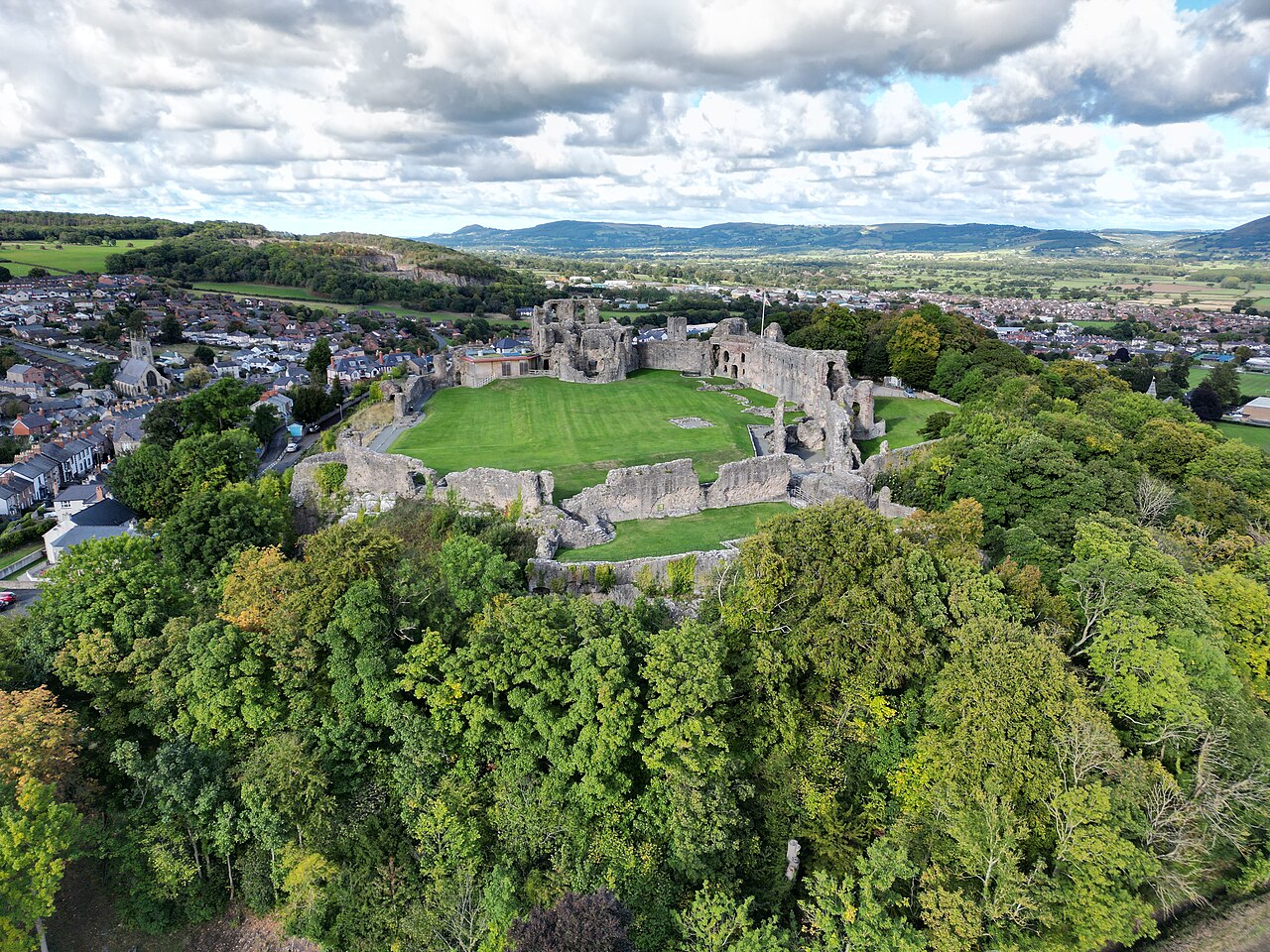
Ruthin Castle stands as a significant medieval hill castle in the historic county of Denbighshire, Wales, overlooking the picturesque Vale of Clwyd. Constructed in the late 13th century by Dafydd ap Gruffydd, brother to the Welsh prince Llywelyn ap Gruffudd, this fortress occupies a strategic position on a prominent red sandstone ridge. Its location was chosen for its natural defensive advantages, overseeing the valley below and controlling key routes in the region.
The site of Ruthin Castle has a history predating the medieval fortress; it was originally an Iron Age fort, indicating long-term strategic importance. The castle's construction followed the 1277 campaign of Edward I of England in North Wales. In recognition of Dafydd ap Gruffydd's support during this invasion, Edward granted him the land, though it remains uncertain whether Dafydd built the castle anew or adapted an existing fortification.
Architectural features and medieval fortifications
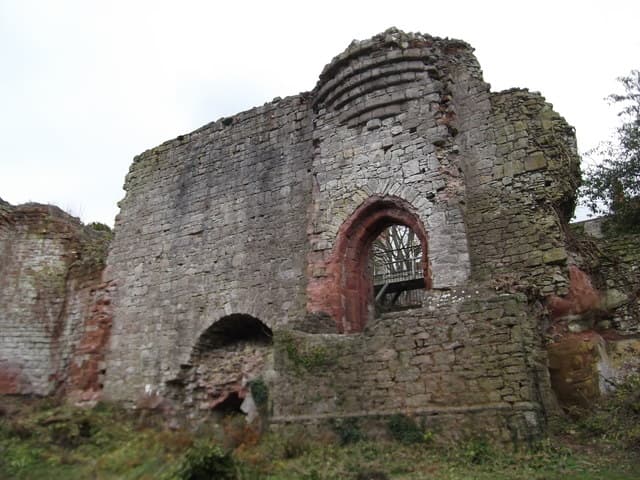
Ruthin Castle was built primarily from the local red sandstone, a material that gave the castle its distinctive appearance and durability. The castle's design reflects typical high medieval military architecture with strong defensive walls, a keep, and fortified gatehouses. While much of the original structure was destroyed, sections of the ancient curtain walls still survive and have been incorporated into the modern hotel complex.
The castle's layout included a central courtyard surrounded by defensive walls and towers, providing a secure enclosure for the garrison and residents. The keep served as the last stronghold during sieges, and the walls were equipped with battlements and arrow slits for defense. The elevated position on the ridge enhanced visibility and defense against attackers.
Historical significance and notable events
Ruthin Castle's history is marked by both military and cultural significance. In the late 16th century, the castle was used as a prison and site of torture for Richard Gwyn, a Welsh Catholic poet and schoolmaster. Gwyn was imprisoned here between 1579 and 1580 for his recusant beliefs during the Protestant Reformation. He was later executed in 1584 and canonized in 1970 as one of the Forty Martyrs of England and Wales.
During the English Civil War in the mid-17th century, Ruthin Castle was in a state of disrepair but was hastily repaired to withstand attacks. It endured an eleven-week siege in 1646 by Parliamentary forces before surrendering when the attackers threatened to undermine the walls with mines. Following the siege, Oliver Cromwell's forces ordered the castle to be slighted, a deliberate process of demolition to prevent further military use.
Post-medieval transformations and modern usage
After its military importance waned, Ruthin Castle entered a period of decline. In the early 20th century, it was repurposed as Britain's first private hospital specializing in the investigation and treatment of obscure internal diseases, operating from 1923 until around 1950. This phase marked a significant shift from fortress to healthcare facility.
Since the 1960s, the castle ruins have been incorporated into the Ruthin Castle Hotel. The hotel preserves and showcases the castle's historic walls and architectural elements, allowing visitors to experience the medieval atmosphere alongside modern amenities. The integration of the castle's remains into the hotel structure provides a unique blend of heritage and hospitality.
Cultural heritage and visitor experience
Today, Ruthin Castle is a prominent cultural landmark in Wales. Its historic walls and medieval architecture attract visitors interested in Welsh history and castle architecture. The hotel offers a distinctive opportunity to stay within a historic fortress, surrounded by the scenic beauty of the Vale of Clwyd.
Visitors can explore the surviving sections of the castle, appreciate the red sandstone construction, and learn about the castle's role in Welsh history, including its connection to notable figures like Dafydd ap Gruffydd and Richard Gwyn. The site also serves as a reminder of the turbulent history of Wales during the medieval and early modern periods.
Frequently asked questions (FAQ)
- How do I visit Ruthin Castle today?
- Ruthin Castle is now part of a hotel complex, so visitors can stay overnight or dine there to experience the historic atmosphere. Public access to the castle grounds may be limited, so it is advisable to check with the hotel for visiting options and availability.
- What is the historical significance of Ruthin Castle?
- Ruthin Castle played an important role in medieval Welsh history, built in the late 13th century by Dafydd ap Gruffydd. It was involved in the English Civil War and was the prison of the Welsh martyr Richard Gwyn.
- When was Ruthin Castle originally built?
- The castle was constructed in the late 13th century, with its origins linked to an earlier Iron Age fort on the site.
- Is Ruthin Castle accessible for people with disabilities?
- As Ruthin Castle is now part of a historic hotel with preserved medieval structures, accessibility may vary. Visitors should contact the hotel directly to inquire about specific accommodations for disabilities.
- Can I learn about the castle's architecture during a visit?
- While the castle is integrated into a hotel, visitors can observe the surviving medieval walls and architectural features. The hotel and local heritage organizations may provide information on the castle's history and architecture.
Photo gallery

Information
Current owner
Private owner
Loading map...
Visitor reviews
No reviews yet. Been here? Write the first review and help other travelers!
Write the first reviewVisited this castle? Share your experience
Your review helps other travelers and adds first-hand knowledge to our encyclopedia.