Denbigh Castle Ruins
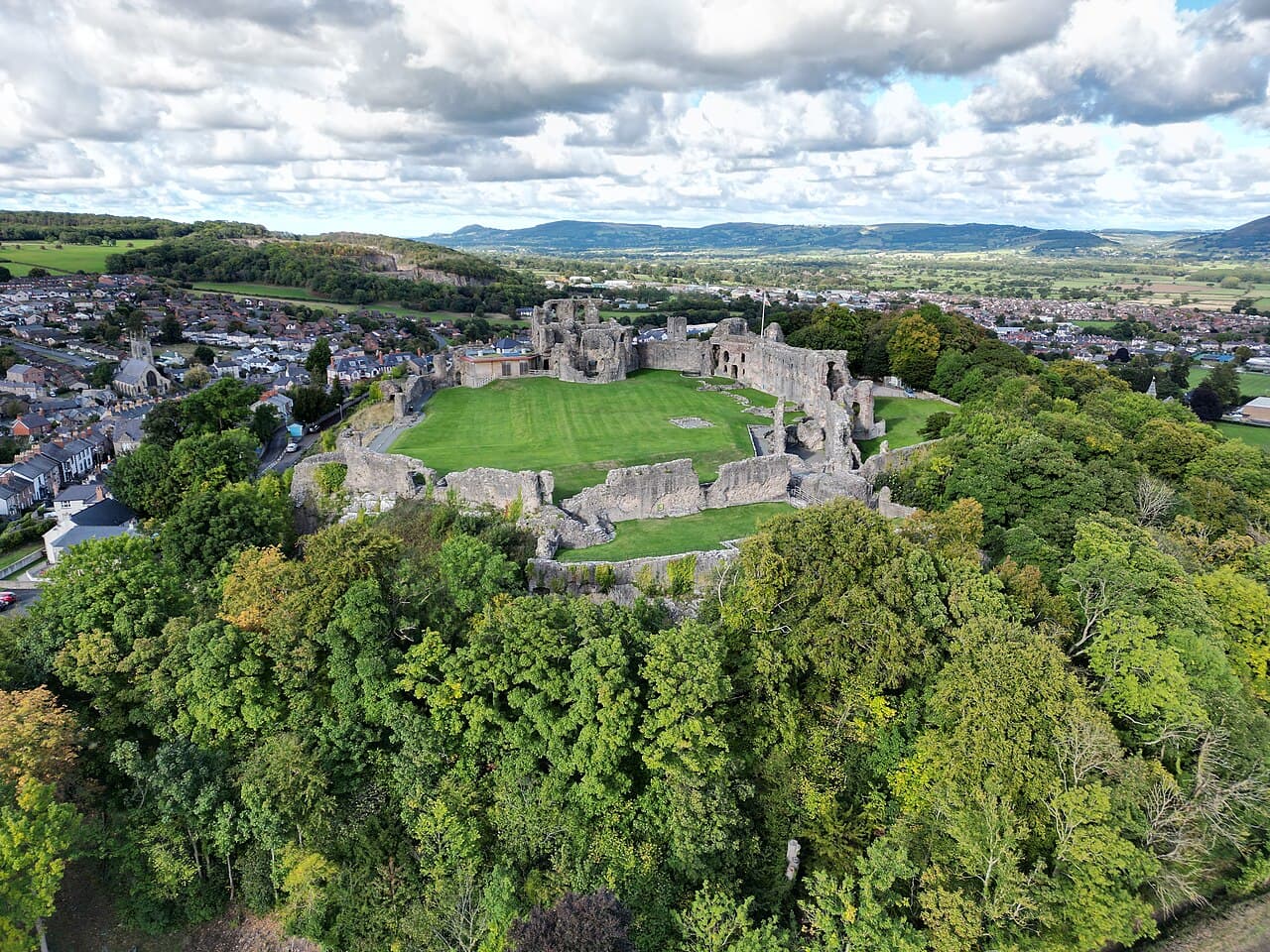
Denbigh Castle stands as a commanding ruin on a hilltop overlooking the Vale of Clwyd in Denbigh, Wales. Constructed between 1282 and 1294 following the conquest of Wales by Edward I, it was part of a strategic network of fortifications designed to assert English control over the region known as Perfeddwlad. The castle was built on the site of a former Welsh royal residence, or llys, and was accompanied by the establishment of a new walled town intended for English settlers. This ambitious project was led by Henry de Lacy, Earl of Lincoln, who employed the renowned architect James of St George, responsible for other significant Welsh castles such as Harlech and Conwy.
Though the castle was never fully completed, partly due to the death of Henry de Lacy and subsequent changes in ownership, it became a formidable stronghold. Its defenses were tested during multiple conflicts, including the Madog ap Llywelyn revolt of 1294, when Welsh forces briefly captured the castle, and the Glyndŵr Rising in the early 15th century, during which the castle remained secure despite raids on the surrounding town. The castle also played a role in the Wars of the Roses and the English Civil War, enduring sieges and damage, notably from Cromwell's Parliamentarian forces, who besieged it for four months in 1646 before its surrender.
Architectural design and fortifications
Castle layout and materials
The castle's design reflects the advanced military architecture of the high medieval period. It occupies a roughly triangular inner ward approximately 350 by 260 feet, enclosed by a robust curtain wall fortified with eight large towers. The walls and towers were constructed primarily from locally quarried limestone, sandstone, and a distinctive greenish stone known as Gwespyr, used especially in the finely finished chambers.
The great gatehouse
The most remarkable feature is the three-towered Great Gatehouse, a triangular arrangement of three octagonal towers—the Porter’s Lodge, Prison Tower, and Badnes Tower—surrounding a central octagonal hall. This complex entrance is protected by a deep ditch about 30 feet wide and a barbican, a fortified outwork designed to shield the gate. Defensive elements include a drawbridge, murder holes, and a portcullis. The gatehouse walls are adorned with contrasting bands of masonry symbolizing royal authority, and a statue, likely of Edward II, once stood above the entrance.
Additional defensive structures
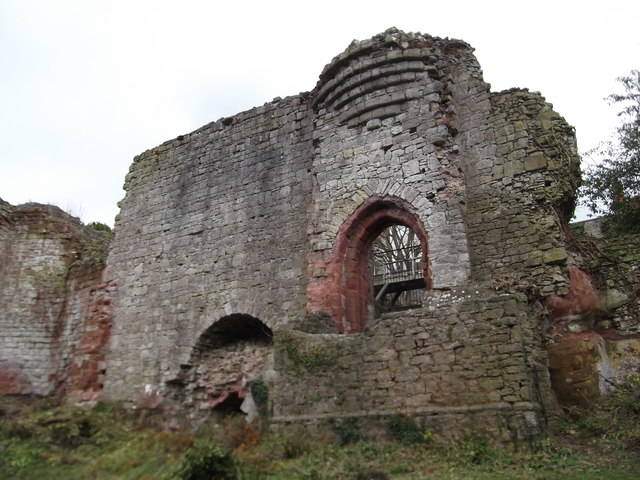
The curtain wall is punctuated by specialized towers such as the Great Kitchen Tower (also called the King’s Tower), the White Chamber Tower (damaged during the Civil War), and the Pitcher House Tower, thought to have been used for water storage. The Green Chambers contained basement storerooms for meat and wine and well-appointed upper rooms. A Postern Tower provided a discreet passage linking the castle to the town walls. The Treasure House Tower and adjacent Tower-next-Treasure House formed part of the castle’s secure storage. The Bishop’s Tower featured a sally port for sudden sorties. The Red Tower, constructed from red sandstone, adds architectural variety.
Fortifications and mantlets
To the south and east, the castle’s fortifications include terraces and internal walls called mantlets designed to protect the bases of towers and prevent undermining by attackers. Within the southwestern enclosure were outbuildings such as stables, a blacksmith’s workshop, and stores, underscoring the castle’s role as a self-sufficient stronghold. Archaeological remains of the Queen’s Chapel survive near the gatehouse, along with a well over 50 feet deep.
The medieval walled town and burgess gate
The castle is closely linked to the medieval walled town of Denbigh, whose walls stretch approximately 1,100 meters around the old town and remain largely intact. Originally, the walls included four defensive towers and two gatehouses; today, only the Burgess Gate survives. This Grade I listed gatehouse is flanked by two circular towers guarding a vaulted entrance passage and features a sloping talus base for added defense. Constructed from white limestone and yellow sandstone arranged in a chequered pattern, the gatehouse was a symbol of civic pride and royal authority and may have reached up to 60 feet in height in the medieval period.
Other surviving towers include the North-Eastern Tower, a two-story structure; the Countess Tower with twin towers; the hexagonal Goblin Tower, which protected a deep well over 50 feet underground that was crucial during dry summers; and the Bastion Tower, once three stories tall and decorated with the same chequered stonework as the Burgess Gate.
Historical significance and later history
Denbigh Castle was central to English efforts to control northern Wales following the conquest. Its construction marked the beginning of a new English settlement alongside the castle, with the walled town intended to house English colonists. The castle’s strategic importance is highlighted by its repeated involvement in conflicts such as the Madog ap Llywelyn revolt, the Glyndŵr Rising, the Wars of the Roses, and the English Civil War.
During the Civil War, the castle was held by Royalist forces under Colonel William Salesbury but fell to Parliamentarian troops after a prolonged siege in 1646. Following this, the castle was deliberately slighted on the orders of General George Monck in 1659 to prevent its future military use, leading to significant damage and decline. Over subsequent centuries, much of the stone was repurposed locally, and the site fell into ruin.
Restoration efforts began in the 19th century, with a local committee managing the ruins and later government bodies assuming responsibility. Today, the castle is a scheduled ancient monument under the care of Cadw, the Welsh historic environment service, and remains a prominent heritage site reflecting the complex history of medieval Wales and English conquest.
Frequently asked questions (FAQ)
- How do I get to Denbigh Castle Ruins?
- Denbigh Castle Ruins are located in Denbigh, United Kingdom. You can reach the castle by car, with ample parking available nearby. Public transportation options include buses that connect to Denbigh from major cities in North Wales.
- What is the historical significance of Denbigh Castle Ruins?
- Denbigh Castle, built in the late 13th century, played a crucial role in the defense against Welsh uprisings. It was part of the strategic fortifications commissioned by Edward I during the conquest of Wales. The ruins today reflect its historical importance and are a testament to medieval architecture.
- When was Denbigh Castle constructed?
- Construction of Denbigh Castle began in 1282 and was completed in 1295. The castle was built under the orders of Edward I, following his campaign to subdue Wales. Its impressive walls and towers were designed to withstand sieges and attacks.
- Can I enter the castle ruins?
- Yes, visitors can explore the ruins of Denbigh Castle, which offers an intriguing glimpse into medieval life. Walking through the remains allows you to appreciate the castle's architecture and its historical context. However, please check for any specific access restrictions or guided tour availability.
- Why is Denbigh Castle a popular tourist attraction?
- Denbigh Castle is popular due to its rich history, stunning architecture, and panoramic views of the surrounding countryside. It is an excellent example of a medieval fortress and attracts history enthusiasts and photographers alike. The castle's dramatic ruins make it a picturesque location for visitors.
- Is it possible to visit Denbigh Castle Ruins year-round?
- Yes, Denbigh Castle Ruins are open to visitors throughout the year. However, it is advisable to check the specific opening hours, as they may vary seasonally. Visiting in spring and summer can enhance your experience with vibrant landscapes and favorable weather.
- What are the ticket prices for Denbigh Castle?
- Ticket prices for Denbigh Castle are generally affordable, with discounts available for children, students, and seniors. Family tickets are also offered at a reduced rate. It is best to check the official website for the most up-to-date pricing and any special events that may affect entry fees.
- What are the opening hours for Denbigh Castle Ruins?
- Denbigh Castle typically opens from 10 AM to 5 PM during the peak season, but hours may vary in the off-peak months. It is recommended to visit the official website or contact the visitor center for the latest information on opening times. Early visits are encouraged to avoid crowds and enhance your exploration experience.
- Are there any nearby attractions to visit?
- Yes, there are several attractions near Denbigh Castle, including the historic market town of Denbigh itself and the beautiful countryside of the Clwydian Range. Visitors can also explore nearby St. Hilary's Church and the picturesque landscapes of North Wales. These nearby sites complement your visit to the castle and offer more insights into the region's history.
Photo gallery

Information
Website
Visit websiteSources & official resources
Verify the information above using these authoritative references.
Loading map...
Visitor reviews
No reviews yet. Been here? Write the first review and help other travelers!
Write the first reviewVisited this castle? Share your experience
Your review helps other travelers and adds first-hand knowledge to our encyclopedia.