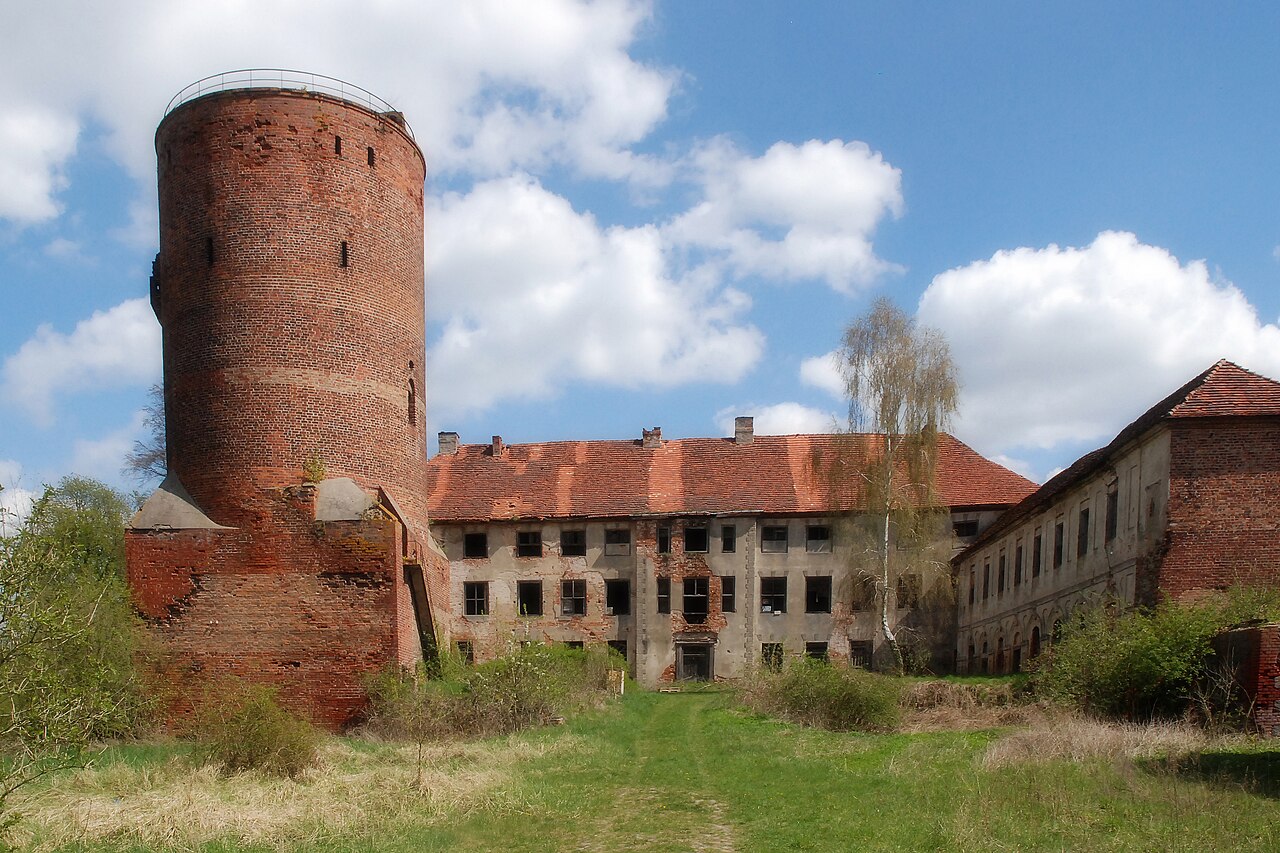
Rurka
Rurka Castle stands as a significant historical site in Poland, deeply connected to the legacy of the Knights Templar and their presence in the region during the High Medieval period. Founded around 1235 when Duke Barnim I granted the Templars land in the Bańska area, the castle was established as a commandery on a small hill surrounded by marshes near the Rurzyca River. This strategic yet modest location was chosen for its natural defenses and economic utility rather than for military dominance.
The castle's original structure was likely a castle-farm complex composed of separate buildings scattered over a relatively large area, enclosed by a low stone perimeter wall. The main entrance was accessible via a causeway from the northeast, crossing the surrounding wetlands. The modest fortifications reflected the economic character of the site and the special status of the Templar order, which enjoyed protection from both popes and feudal rulers.
The templar era and conflicts
Following Duke Barnim I's death in 1278, his son Bogusław IV initiated hostilities against the Templars. The knights, under pressure, appealed to Pope Nicholas IV, who responded by placing Bogusław under a papal curse. This period highlights the tense relationship between regional rulers and religious military orders.
The Templars' growing wealth and influence across Europe eventually led to their downfall. King Philip IV of France accused the order of heresy, blasphemy, and improper relations, leading to Pope Clement V's bull on May 2, 1312, which dissolved the order. Their properties in Pomerania, including Rurka, were transferred to the Knights Hospitaller.
Joannite ownership and destruction
Under the Hospitallers, Rurka remained an important commandery. However, internal conflicts arose, notably with the Wedel noble family. These disputes culminated in a raid in 1373 by knights and townsfolk from Chojnice, who captured and burned the castle. By 1377, the Hospitallers received permission from the Dukes of Szczecin to establish a new commandery seat in Swobnica, marking the end of Rurka's military role.
Post-medieval transformations
After its destruction, the site of Rurka Castle was repurposed as a secular farmstead. The only surviving medieval structure is the castle's chapel, which remained in use until 1490 when a new church was built in the village. The chapel was then leased and served various functions over the centuries.
In the early 19th century, a distillery was established on the castle grounds. This facility was later operated by the local state agricultural enterprise (PGR) after World War II, reflecting the site's continued agricultural importance.
Architectural significance of the chapel
The chapel is the sole architectural relic of the Templar castle and is currently undergoing restoration. It is an excellent example of late Romanesque architecture, with a shape reminiscent of single-nave churches featuring a distinct rectangular chancel. The chapel's walls, over a meter thick, are constructed entirely of granite blocks, showcasing the robust masonry techniques of the period.
Despite centuries of wear, the chapel retains characteristic Romanesque windows and a prominent rose window on its western facade, which are rare and valuable features in the region. This makes the chapel not only a monument of religious and military history but also an important piece of architectural heritage worth preserving.
Geographical and cultural context
Located in the village of Rurka in Poland, the castle's position on a hill surrounded by wetlands provided natural protection and influenced its design. The site reflects the complex interplay between military, economic, and religious functions typical of Templar commanderies. Its history is intertwined with the broader political and religious dynamics of medieval Pomerania and the Baltic region.
Current status and preservation efforts
Today, Rurka Castle exists primarily as an archaeological site with the chapel as its best-preserved element. Restoration efforts focus on maintaining the chapel's structural integrity and highlighting its unique architectural features. The site offers valuable insights into the Templar presence in Poland and the region's medieval history.
Visitors to Rurka can explore the chapel ruins and appreciate the castle's historical significance within the broader narrative of medieval military orders and their impact on European history.
Frequently asked questions (FAQ)
- When was Rurka Castle founded and by whom?
- Rurka Castle was founded around 1235 when Duke Barnim I granted land to the Knights Templar, who established a commandery there.
- What architectural style characterizes the remaining chapel at Rurka Castle?
- The chapel is a rare example of late Romanesque architecture, featuring thick granite walls, Romanesque windows, and a distinctive rose window.
- What led to the destruction of Rurka Castle?
- The castle was captured and burned in 1373 during a conflict between the Knights Hospitaller and the Wedel noble family, supported by Chojnice townsfolk.
- Can visitors access the chapel ruins today?
- Yes, the chapel ruins are accessible and currently undergoing restoration, allowing visitors to appreciate this unique medieval structure.
- What was the function of Rurka Castle during the Templar period?
- Rurka Castle served primarily as an economic and administrative center rather than a heavily fortified military fortress.
Information
Current owner
Municipality
Loading map...
Visitor reviews
No reviews yet. Been here? Write the first review and help other travelers!
Write the first reviewVisited this castle? Share your experience
Your review helps other travelers and adds first-hand knowledge to our encyclopedia.