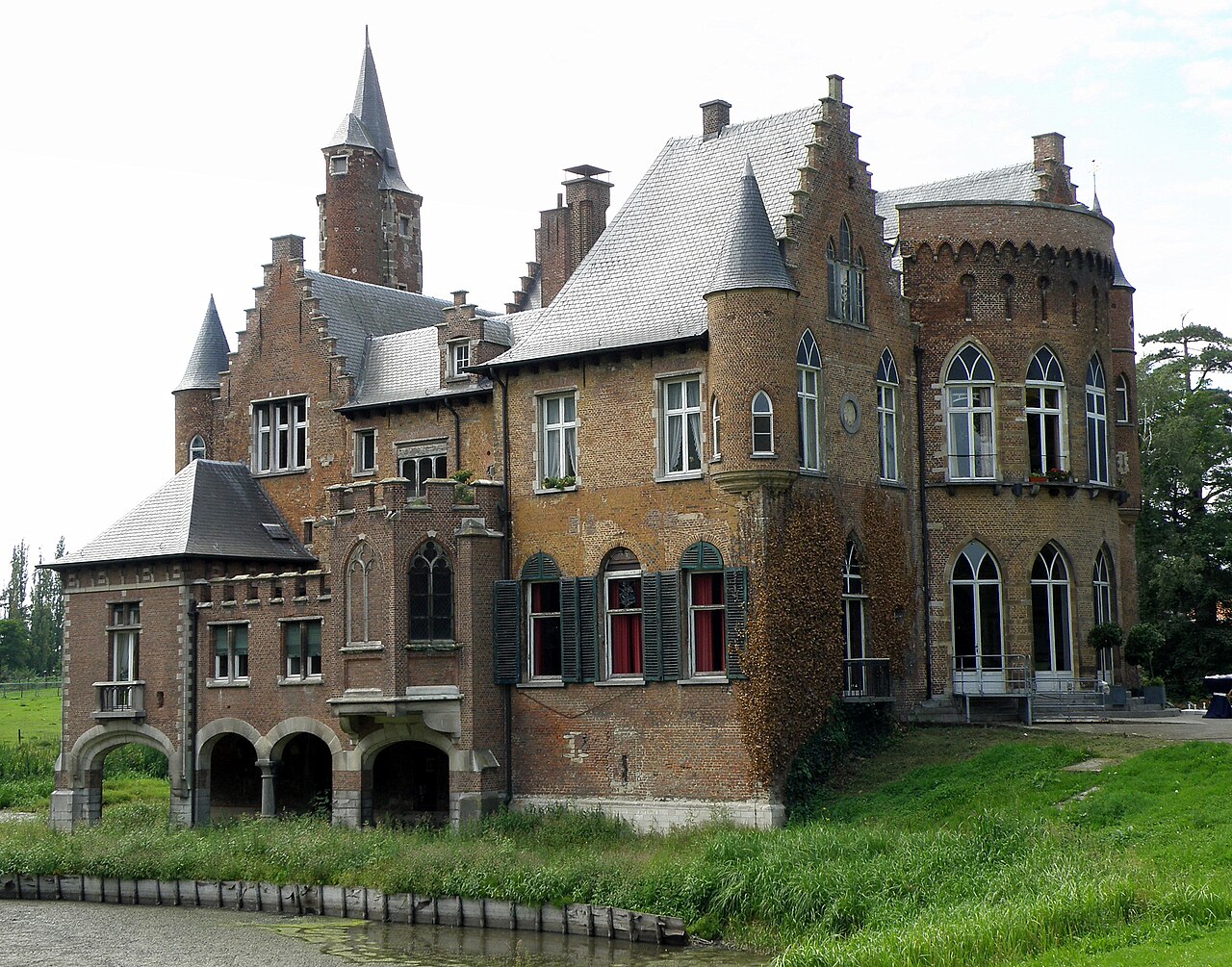
Rupelmonde Castle
Rupelmonde Castle, also known as the Graventoren (Count's Tower) or the Mercatortoren, is a historically significant fortress located in the village of Rupelmonde, in the province of Antwerp, within the Flemish region of Belgium. Constructed in the 12th century by the Counts of Flanders, this castle was strategically positioned on the left bank of the Scheldt River, directly opposite the mouth of the Rupel River. Its primary purpose was to defend these vital waterways, which were crucial for commerce and transport during the medieval period.
Medieval origins and architectural significance
The original Rupelmonde Castle was an imposing hill castle featuring a large fortress complex with 17 towers encircled by a protective moat. This robust defensive design was typical of the high medieval period, reflecting the military and economic importance of controlling river access. The castle's position allowed the Counts of Flanders to levy tolls on passing ships, underscoring its role not only as a military stronghold but also as a center of regional economic power.
Expansion and renovations
In 1254, under the direction of Margaret of Flanders, Rupelmonde Castle underwent significant expansion. This development enhanced its defensive capabilities and established the castle as the secure repository for the archives of the County of Flanders. These archives contained critical legal documents and privileges, emphasizing the castle's administrative importance. Throughout the 14th century, the fortress saw ongoing renovations, including extensive refurbishments between 1379 and 1385 during the turbulent times of the Flemish Revolt. These works helped shape the castle's appearance well into the 17th century.
The castle as a state prison and its historical role
Rupelmonde Castle's function evolved to include use as a state prison, which played a significant role in the region's history. It housed several notable prisoners over the centuries. For example, Robert III, Count of Flanders, imprisoned his eldest son, Louis of Nevers, accused of high treason. In 1338, Zeger van Kortrijk, an ally of Guy of Dampierre, was executed here. The castle also detained Frank van Borssele, husband of Jacqueline, Countess of Hainaut, under the orders of Philip the Good, Duke of Burgundy.
One of the most famous prisoners was the renowned cartographer Gerardus Mercator, who was confined for seven months in 1544 on charges of heresy. Additionally, in 1538, an alleged witch named Kathelyne Duerincx was imprisoned and tortured here before being executed by burning at the stake in nearby Sint-Niklaas.
Conflicts and destruction
The castle endured significant damage during the late 17th century conflicts. In 1678, amid hostilities involving Spanish, Dutch, and French troops, Rupelmonde Castle was destroyed. The fortress was never rebuilt, and over time its stones were repurposed by locals as cheap building materials, including for the nearby Church of Our Lady of the Visitation. Despite its destruction, the castle remained a military stronghold until 1748, after which its defensive role ceased.
19th-century transformation and current state
By 1817, the remaining ruins of Rupelmonde Castle were demolished except for the base of one tower and some connecting wall fragments. On this foundation, Baron Guillaume de Feltz constructed a new tower using red Tournai limestone. This structure served as a hunting pavilion and represents a fusion of medieval foundations with 19th-century architecture.
Today, the tower houses a small museum dedicated to local history. Visitors can explore the tower without an entrance fee during office hours. The museum features a detailed scale model of the original fortress, exhibits on the castle's history, and access to a subterranean tunnel with prison cells beneath the tower. The climb to the top offers panoramic views of Rupelmonde and the Scheldt River, providing insight into the castle's strategic location.
Architectural remnants and heritage significance
The surviving base of the original 12th-century tower is constructed from durable blocks of Tournai limestone, a material prized in medieval construction for its strength and availability in the region. This base is the most tangible remnant of the once expansive fortress, which featured extensive defensive ramparts connected to the Scheldt River's banks.
The later brick hunting pavilion built atop the medieval foundation exemplifies the site's layered history, blending medieval and post-medieval architectural elements. The castle's proximity to a historic tidal mill further enriches its heritage context, linking its defensive past to the local economy and waterways.
Rupelmonde Castle stands as a monument to the medieval military architecture and the complex history of the County of Flanders. Its evolution from a formidable fortress to a state prison, and later to a cultural museum, reflects the dynamic historical narratives embedded in the site. The castle's remains offer valuable insights into the strategic importance of river control in medieval Europe and the region's turbulent political history.
Frequently asked questions (FAQ)
- How do I get to Rupelmonde Castle?
- Rupelmonde Castle is easily accessible by car and public transport. If traveling by train, the nearest station is in the nearby town of Bornem, from which you can take a short bus ride or taxi to the castle. Additionally, there is adequate parking available for those who prefer to drive.
- What is the historical significance of Rupelmonde Castle?
- Rupelmonde Castle dates back to the 14th century and played a crucial role in the defense of the region against invasions. It is a prime example of medieval military architecture and has witnessed numerous historical events, including conflicts during the Burgundian and Spanish periods. The castle is not only a monument of architectural beauty but also a testament to Belgium's rich history.
- When was Rupelmonde Castle built?
- Construction of Rupelmonde Castle began in the early 14th century, specifically around 1340. Over the years, it underwent various renovations and expansions, reflecting the architectural styles of different periods. The castle's enduring presence highlights its importance in the historical landscape of Belgium.
- Can I visit Rupelmonde Castle?
- Yes, Rupelmonde Castle is open to visitors, allowing them to explore its beautiful grounds and learn about its history. Guided tours are often available, providing insight into the castle's architecture and its role in regional history. Be sure to check the official website for any seasonal events or special tours.
- Why is Rupelmonde Castle a popular tourist attraction?
- Rupelmonde Castle attracts visitors due to its stunning architecture, rich history, and picturesque setting along the banks of the Rupel River. The castle offers a unique glimpse into medieval life and is a perfect spot for photography enthusiasts. Additionally, its proximity to other attractions in the area makes it a convenient stop for tourists.
- Is it possible to host events at Rupelmonde Castle?
- Yes, Rupelmonde Castle offers facilities for hosting various events, including weddings, corporate gatherings, and private parties. The unique ambiance and historical backdrop make it an enchanting venue. Interested parties are encouraged to contact the castle's administration for more details regarding bookings and arrangements.
- What are the opening hours for Rupelmonde Castle?
- Rupelmonde Castle typically opens to visitors from 10 AM to 6 PM, but hours may vary seasonally or during special events. It is advisable to check the official website for the most accurate and up-to-date information. Plan your visit accordingly to ensure you have ample time to explore the castle and its surroundings.
- What are the ticket prices for visiting Rupelmonde Castle?
- Ticket prices for Rupelmonde Castle are generally affordable, with discounts available for students and seniors. Children under a certain age may enter for free or at a reduced rate. For the latest pricing information, including any special offers, please refer to the castle's official website before your visit.
- What nearby attractions should I visit while in Rupelmonde?
- While visiting Rupelmonde Castle, you can also explore the charming village of Rupelmonde, known for its scenic river views and quaint streets. Nearby attractions include the historic town of Bornem and the beautiful nature reserves along the Rupel River. These sites provide additional opportunities for sightseeing and enjoying the local culture.
Information
Website
Visit websiteSources & official resources
Verify the information above using these authoritative references.
Loading map...
Visitor reviews
No reviews yet. Been here? Write the first review and help other travelers!
Write the first reviewVisited this castle? Share your experience
Your review helps other travelers and adds first-hand knowledge to our encyclopedia.