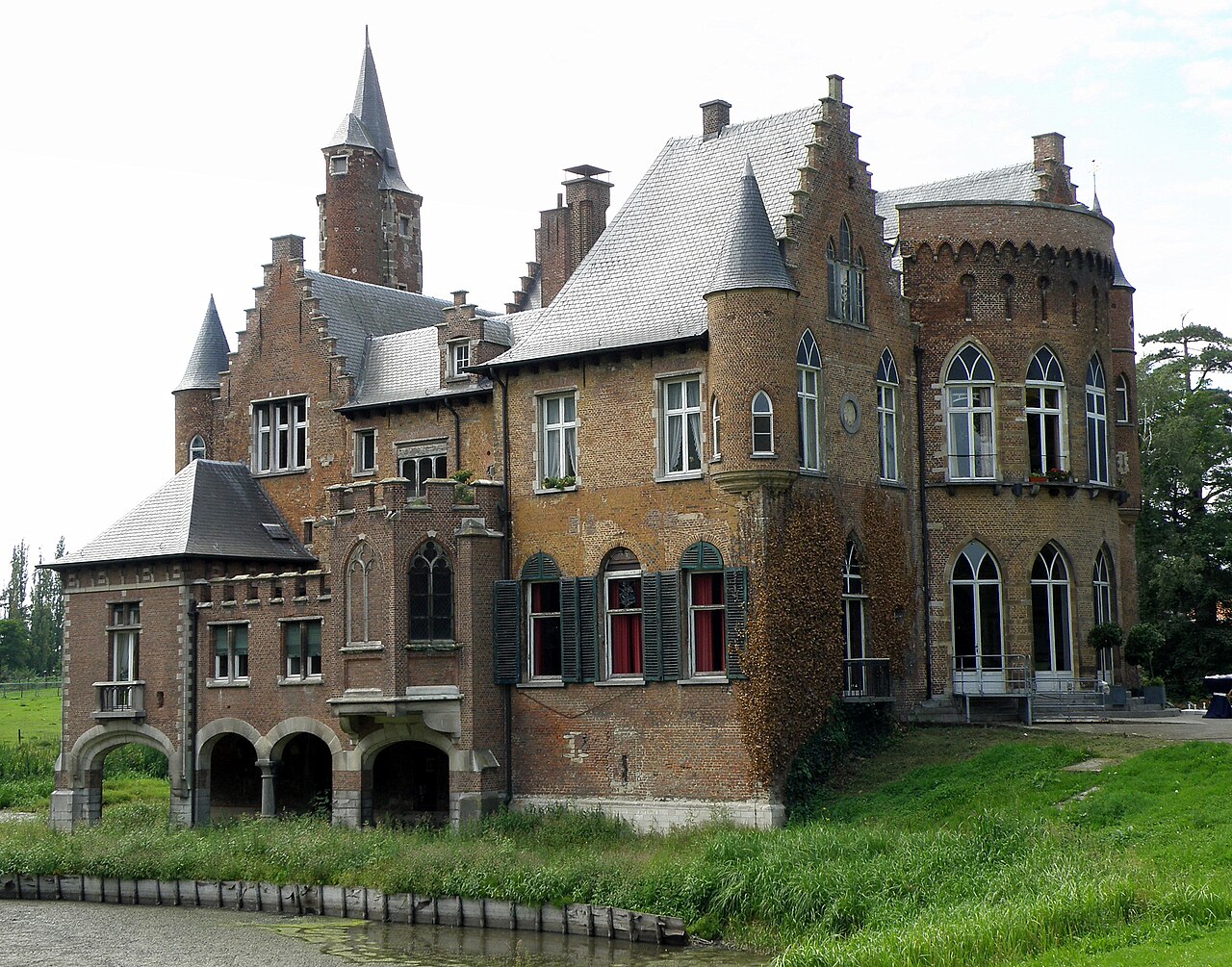
Fort Steendorp
Fort Steendorp is located in the town of Temse, within the province of East Flanders, in the Flemish region of Belgium. It stands as the largest of the Brialmont forts constructed as part of Antwerp's defensive network in the late 19th century. This modern fortification was built between 1882 and 1892 to bolster the city's defenses amid evolving military technology and geopolitical tensions in Europe.
Historical context and strategic importance
Following Belgium's independence in 1830, the young nation faced persistent concerns about potential invasions, particularly from neighboring the Netherlands and France. Lacking significant natural defensive barriers, Belgium adopted the concept of a National Redoubt, a fortified stronghold designed to protect the country’s core military and political assets. Antwerp was selected as the site for this redoubt due to its strategic location and economic significance.
In 1859, under the guidance of military engineer Captain Henri Alexis Brialmont, the Belgian government initiated the construction of a comprehensive defensive ring around Antwerp. This included a 15-kilometer-long earthen rampart known as the "Big Rampart" with 19 gates, supplemented by an outer ring of eight forts. These forts, known collectively as the Brialmont Forts, were designed to provide layered protection against artillery and infantry assaults.
Design and construction of Fort Steendorp
As artillery technology advanced and Antwerp expanded, the original fortifications became inadequate by the late 19th century. To address these developments, a second ring of forts was commissioned, including Fort Steendorp and Fort Walem. Constructed over a decade from 1882 to 1892, Fort Steendorp was the largest and most costly fortification in this new defensive line.
The fort’s layout is distinctive, featuring a trapezoidal ground plan surrounded by a dry moat, a unique feature among the Antwerp forts, which typically employed wet moats. This dry moat, originally designed for enhanced defense, is now partially flooded due to blockage. The fort was built primarily from brick, marking it as the last Belgian fort constructed using this traditional material before concrete became standard.
Architectural features
Fort Steendorp’s design reflects the military engineering principles of its time. The fort included thick walls and earthworks intended to absorb artillery fire. Defensive structures such as bastions, , and armored turrets were integrated to provide overlapping fields of fire. The fort’s internal layout accommodated barracks, ammunition magazines, and command posts, arranged to maximize protection and operational efficiency.
Military use and modifications
In 1913, efforts began to modernize Fort Steendorp in response to rapid advances in artillery and military tactics. These upgrades aimed to reinforce the fort’s defenses but were interrupted by the outbreak of World War I. During the war, the fort sustained damage but remained a strategic asset.
Post-war, the fort was repurposed as a military facility for the production of war gases, reflecting the evolving nature of warfare technology. During World War II, the German army occupied Fort Steendorp and used it for ammunition storage. Following the war, the fort served as a training ground for the Belgian army, maintaining its military relevance well into the 20th century.
Current status and conservation
Since 2001, Fort Steendorp has been owned by an environmental organization dedicated to preserving the site’s natural and historical value. The fort now functions as a habitat for bats, contributing to biodiversity conservation efforts.
Public access to Fort Steendorp is limited; the site is not open for free visitation but can be explored during special guided walks organized on select days. This controlled access helps protect the fort’s structural integrity and the sensitive wildlife it supports.
Significance of Fort Steendorp in Belgian heritage
Fort Steendorp represents an important chapter in Belgium’s military architectural history. As the largest and last brick-built Brialmont fort, it illustrates the transitional period in fortification design before the widespread adoption of reinforced concrete. Its unique dry moat and trapezoidal design distinguish it from contemporaneous forts.
The fort’s layered history—from its 19th-century construction through two world wars and its modern role in environmental conservation—provides insight into Belgium’s strategic military adaptations and evolving land use. Fort Steendorp remains a valuable cultural landmark reflecting the complexities of European military and political history.
Frequently asked questions (FAQ)
- What are the opening hours of Fort Steendorp?
- Fort Steendorp is open to visitors from 10 AM to 5 PM on weekdays and from 10 AM to 6 PM on weekends. It's best to check the official website for any seasonal changes or special events that may affect these hours.
- Is it possible to access Fort Steendorp with a wheelchair?
- Yes, Fort Steendorp is committed to accessibility and provides facilities for visitors with mobility challenges. Ramps and designated pathways are available to ensure that everyone can enjoy the historical significance of the castle.
- When was Fort Steendorp built?
- Fort Steendorp was originally constructed in the late 16th century as a strategic military fortification. Over the years, it has undergone several renovations, reflecting the architectural styles of different periods in Belgian history.
- Can I purchase tickets online for Fort Steendorp?
- Yes, tickets for Fort Steendorp can be purchased online through the official website. This is recommended to avoid long queues at the entrance, especially during peak tourist seasons.
- What is the historical significance of Fort Steendorp?
- Fort Steendorp played a crucial role in the defense of the region during various conflicts in Belgian history, particularly during the Eighty Years' War. Today, it stands as a monument to military architecture and heritage, attracting history enthusiasts from around the world.
- When is the best time to visit Fort Steendorp?
- The best time to visit Fort Steendorp is during the spring and early autumn months when the weather is mild and pleasant. Additionally, these seasons often feature fewer crowds, allowing for a more enjoyable and immersive experience.
- What nearby attractions can I visit after Fort Steendorp?
- After visiting Fort Steendorp, you can explore the charming town of Temse, which offers beautiful parks, local shops, and cultural sites. Additionally, the nearby castle of Laarne and the scenic banks of the River Scheldt make for delightful excursions.
- How do I get to Fort Steendorp from Brussels?
- To reach Fort Steendorp from Brussels, you can take a train from Brussels Central Station to Temse, which takes about 30 minutes. From the train station, it's a short walk to the castle, making it easily accessible for day trips.
- What are the ticket prices for visiting Fort Steendorp?
- Ticket prices for Fort Steendorp are generally affordable, with discounts available for students, seniors, and children. Special rates may apply for group visits, so it's advisable to check the official website for the most current pricing information.
Information
Address
Wandelpad Fort, Temse, Belgium
Loading map...
Visitor reviews
No reviews yet. Been here? Write the first review and help other travelers!
Write the first reviewVisited this castle? Share your experience
Your review helps other travelers and adds first-hand knowledge to our encyclopedia.