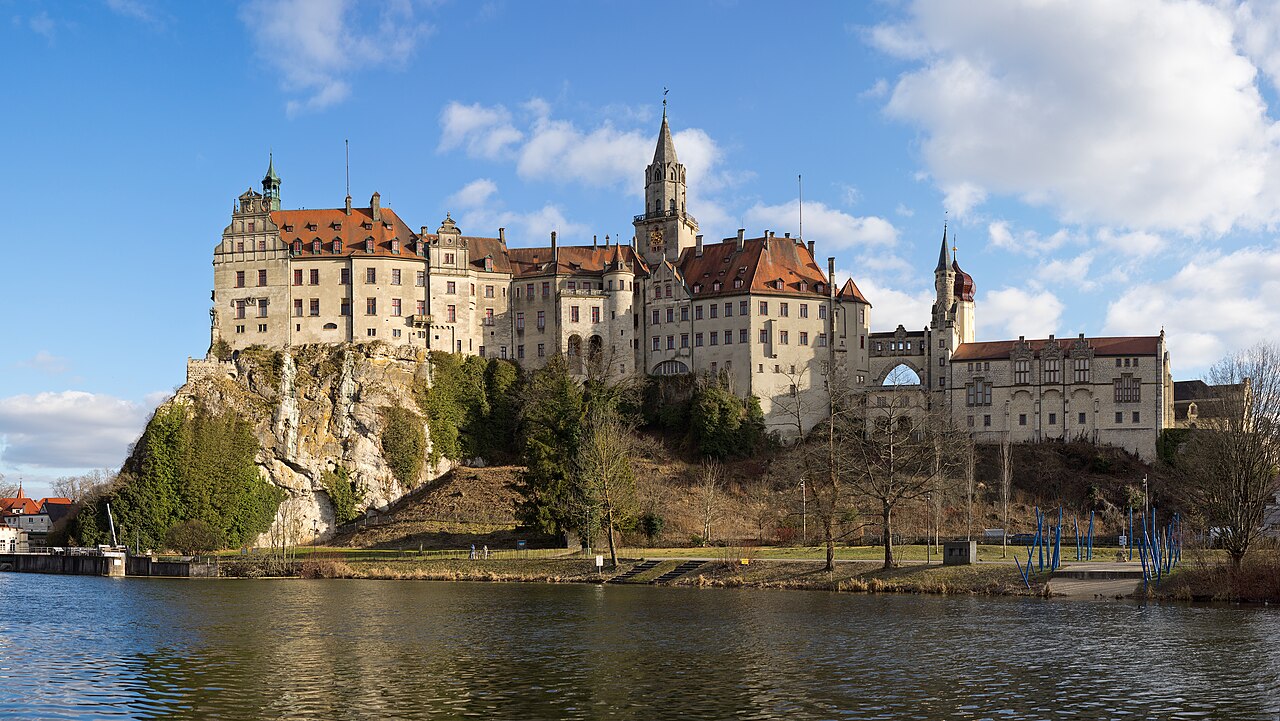
Ruine Hornstein
Ruine Hornstein is a historic hill castle located near the village of Hornstein within the municipality of Bingen, Germany. This castle holds significant historical importance as the ancestral seat of the noble von Hornstein family, a lineage of imperial knights documented in the region since at least the 11th century. The earliest recorded mention of the castle itself dates back to 1244, establishing it firmly within the high medieval period.
The medieval origins and strategic importance
Perched on a rocky ridge approximately 630 meters above sea level, overlooking the Lauchert River valley, Ruine Hornstein was originally constructed as a fortified residence and stronghold. Its elevated position provided a natural defensive advantage and commanding views of the surrounding landscape, typical of hill castles designed for both protection and control of nearby territories. The castle's initial architecture reflected the military needs of the time, with robust defensive walls and multi-level structures to withstand sieges and attacks.
Architectural evolution and Baroque transformation
Over the centuries, Ruine Hornstein underwent several phases of construction and adaptation. Around the year 1700, the medieval fortress was significantly transformed into a larger Baroque-style palace. This architectural shift marked a departure from purely military functions to more comfortable and representational noble residences, reflecting broader trends in castle modernization during the post-medieval period. The Baroque renovation included the addition of elegant living quarters and a richly decorated castle chapel, which became a centerpiece of the estate.
The castle chapel and artistic features
The surviving Baroque chapel is renowned for its intricate artistic embellishments. Inside, visitors can find detailed wood carvings by the craftsman Franz Magnus Hops, showcasing refined decorative work typical of the era. The chapel's altar is particularly notable for its stucco marble design and an impressive alabaster crucifix measuring approximately 132 centimeters tall. This crucifix was created by the celebrated sculptor Joseph Anton Feuchtmayer in the 18th century, exemplifying the high artistic standards of Baroque ecclesiastical art.
Ownership changes and institutional use
In 1787, the von Hornstein family sold the property to the Princes of Hohenzollern-Sigmaringen, a prominent ruling dynasty. Under their ownership, the castle's function shifted dramatically. By 1818, the complex was converted into a correctional and reformatory institution. This facility was notable for its progressive regulations, which allowed for the care and admission of mentally ill individuals alongside other inmates. Following the integration of the Hohenzollern principalities into Prussia in 1850, the state assumed control of the institution, reorganizing it in 1859 as a penal and correctional center for men. Female prisoners were relocated at this time. The institution operated until its closure in 1869.
Decline, demolition, and preservation efforts
The castle's decline accelerated after its sale for demolition in 1873. Most of the buildings were dismantled, leaving primarily ruins. Despite this extensive destruction, the castle chapel remained intact, preserving a key element of the site's historical and artistic heritage. In the aftermath of World War II, part of the site was repurposed as an open-air theater venue from 1947 to 1962, highlighting the cultural reuse of the ruins.
Modern restoration and public access
Since 1988, dedicated restoration efforts have stabilized and preserved the remaining structures. A significant restoration project completed in 2003 made the tower room above the chapel accessible via a newly installed spiral staircase, allowing visitors to appreciate the castle's multi-level defensive design. Additional modern facilities such as workshops, offices, sanitary facilities, and storage rooms have been developed with support from the LEADER program, which promotes rural development. These additions support cultural activities and visitor engagement while respecting the site's historical integrity.
Architectural and historical significance today
Today, Ruine Hornstein stands as a remarkable example of a hill castle that evolved through the high medieval and baroque periods. Its combination of medieval defensive features and later Baroque artistic enhancements offers valuable insight into the changing functions and aesthetics of noble residences over several centuries. The preserved chapel with its exquisite altar and crucifix remains a highlight for visitors and scholars alike.
Ruine Hornstein's layered history—from a medieval fortress to a noble palace, then a correctional institution, and finally a cultural heritage site—reflects broader historical trends in German castle architecture and social history. Its ongoing preservation ensures that this heritage continues to be accessible and appreciated by the public.
Frequently asked questions (FAQ)
- When was Ruine Hornstein originally built?
- Ruine Hornstein was first mentioned in historical records in 1244, with the von Hornstein family established in the area since the 11th century.
- What architectural styles are visible at Ruine Hornstein?
- The castle features medieval defensive structures from its original construction and significant Baroque modifications, especially in the chapel.
- Can visitors access the tower room at Ruine Hornstein?
- Yes, the tower room above the chapel was restored and made accessible in 2003 via a spiral staircase, offering views of the castle's layout.
- What is unique about the castle chapel?
- The chapel contains intricate wood carvings by Franz Magnus Hops and an alabaster crucifix by Joseph Anton Feuchtmayer, notable examples of Baroque ecclesiastical art.
- What happened to Ruine Hornstein after it ceased being a noble residence?
- After being sold to the Princes of Hohenzollern-Sigmaringen, it was converted into a correctional institution in 1818 and operated until 1869 before falling into ruin.
Information
Website
Visit websiteSources & official resources
Verify the information above using these authoritative references.
Loading map...
Visitor reviews
No reviews yet. Been here? Write the first review and help other travelers!
Write the first reviewVisited this castle? Share your experience
Your review helps other travelers and adds first-hand knowledge to our encyclopedia.