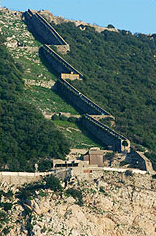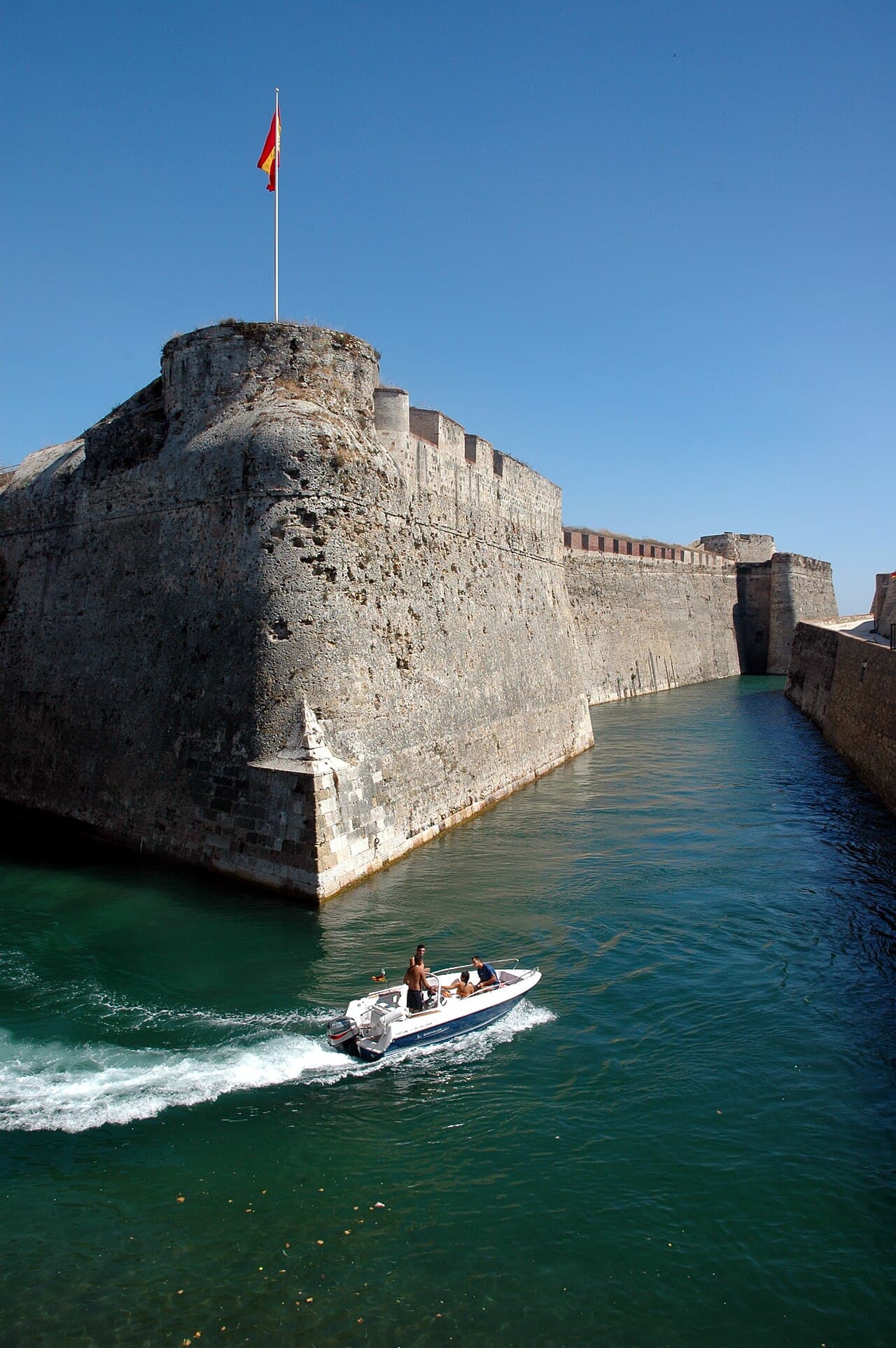
The Royal Walls of Ceuta (Spanish: Murallas Reales de Ceuta) represent a significant example of a bastioned fortress complex located in the autonomous Spanish city of Ceuta, situated on the northern coast of Africa. These fortifications have a long history of construction and adaptation, with the earliest sections dating back to the 10th century, specifically around the year 962. Over the centuries, the walls were expanded and modernized, notably in the 18th century, reflecting evolving military architectural styles and defensive needs.
The walls were originally built to protect the city of Ceuta, a strategic port on the Strait of Gibraltar, controlling access between the Atlantic Ocean and the Mediterranean Sea. This location made the fortifications crucial for defense against both land and sea attacks, and they played a vital role in the military history of the region. The fortress complex includes massive bastions, curtain walls, and moats, designed to withstand artillery fire and sieges.
Historical context and strategic importance
Ceuta's position on the African coast opposite the Iberian Peninsula has made it a contested site throughout history, from the Early Medieval period through to modern times. The Royal Walls were initially constructed under the influence of Muslim rulers during the Caliphate of Córdoba era, serving as a defense against Christian reconquest attempts. Following the Portuguese conquest of Ceuta in 1415, the fortress underwent significant modifications to adapt to the introduction of gunpowder artillery.
In the 16th and 17th centuries, the walls were reinforced and expanded to counter threats from Ottoman forces and Barbary pirates. The 18th-century renovations introduced modern bastioned fortifications, characteristic of the trace italienne style, which emphasized angular bastions designed to cover each other with cannon fire and eliminate blind spots.
Architectural features and construction
Early medieval foundations
The oldest parts of the Royal Walls date to the 10th century, featuring thick stone masonry walls typical of Early Medieval military architecture. These sections were primarily built for defense against infantry and siege engines, with high walls and narrow battlements.
Bastioned fortifications
The most prominent architectural feature of the complex is its extensive bastioned fortress design, which was implemented during the 18th century modernization. The bastions are angular and robust, constructed to deflect cannonballs and provide overlapping fields of fire. The curtain walls connecting the bastions are thick and reinforced with stone and brick, incorporating embrasures for artillery placement.
Additional defensive structures
The fortress also includes moats and outworks that extend the defensive perimeter. Although some outworks have been lost or degraded over time, the main walls remain largely intact. Gatehouses and towers are positioned strategically to control access and enhance surveillance.
Preservation and cultural significance
The Royal Walls of Ceuta are among the best-preserved examples of bastioned fortifications in the region. Their continuous use and maintenance over centuries have contributed to their excellent state of preservation, despite the loss of some peripheral structures. The walls are officially listed as a Spanish Property of Cultural Interest, recognizing their historical, architectural, and cultural value.
Today, the walls serve as a prominent historical monument and tourist attraction in Ceuta. They provide insight into the military engineering techniques spanning from the Early Medieval period through the 18th century and illustrate the strategic importance of Ceuta as a military and trading hub on the Mediterranean coast.
Visitor information
Visitors to the Royal Walls can explore the extensive ramparts and bastions, enjoying panoramic views of the city and the Strait of Gibraltar. The site offers a tangible connection to centuries of military history and architectural evolution. Guided tours and informational displays help contextualize the fortress within the broader history of Ceuta and its role in Mediterranean geopolitics.
Frequently asked questions (FAQ)
- When were the Royal Walls of Ceuta originally built?
- The earliest parts of the Royal Walls date back to the 10th century, specifically around the year 962.
- What architectural style characterizes the Royal Walls?
- The walls feature a bastioned fortress design, with early medieval masonry foundations and 18th-century bastioned fortifications typical of the trace italienne style.
- Can visitors explore the Royal Walls today?
- Yes, the walls are well preserved and open to visitors who can walk along the ramparts and learn about the fortress's history through guided tours.
- Why were the Royal Walls of Ceuta built?
- They were constructed to defend the strategic port city of Ceuta, controlling access between the Atlantic Ocean and the Mediterranean Sea, and to protect against land and sea attacks.
- Are the Royal Walls of Ceuta recognized for their cultural significance?
- Yes, they are listed as a Spanish Property of Cultural Interest, highlighting their importance in military architecture and regional history.
Photo gallery

Information
Current owner
Spanish government
Loading map...
Visitor reviews
No reviews yet. Been here? Write the first review and help other travelers!
Write the first reviewVisited this castle? Share your experience
Your review helps other travelers and adds first-hand knowledge to our encyclopedia.