Round Tower (Mardakan)
Historical background and construction
The castle's foundation dates back to the 13th century, specifically to the year 1232, as indicated by an inscription (kitabe) on the fortress's donjon. This inscription credits the construction to the Iranian architect Abdulmajid ibn Masud, commissioned by the Shirvanshah Fariburz III, a ruler of the Shirvan region during the High Medieval period. The fortress was part of a network of defensive structures intended to protect the region from coastal and inland threats.
Architectural design and features
Structural layout
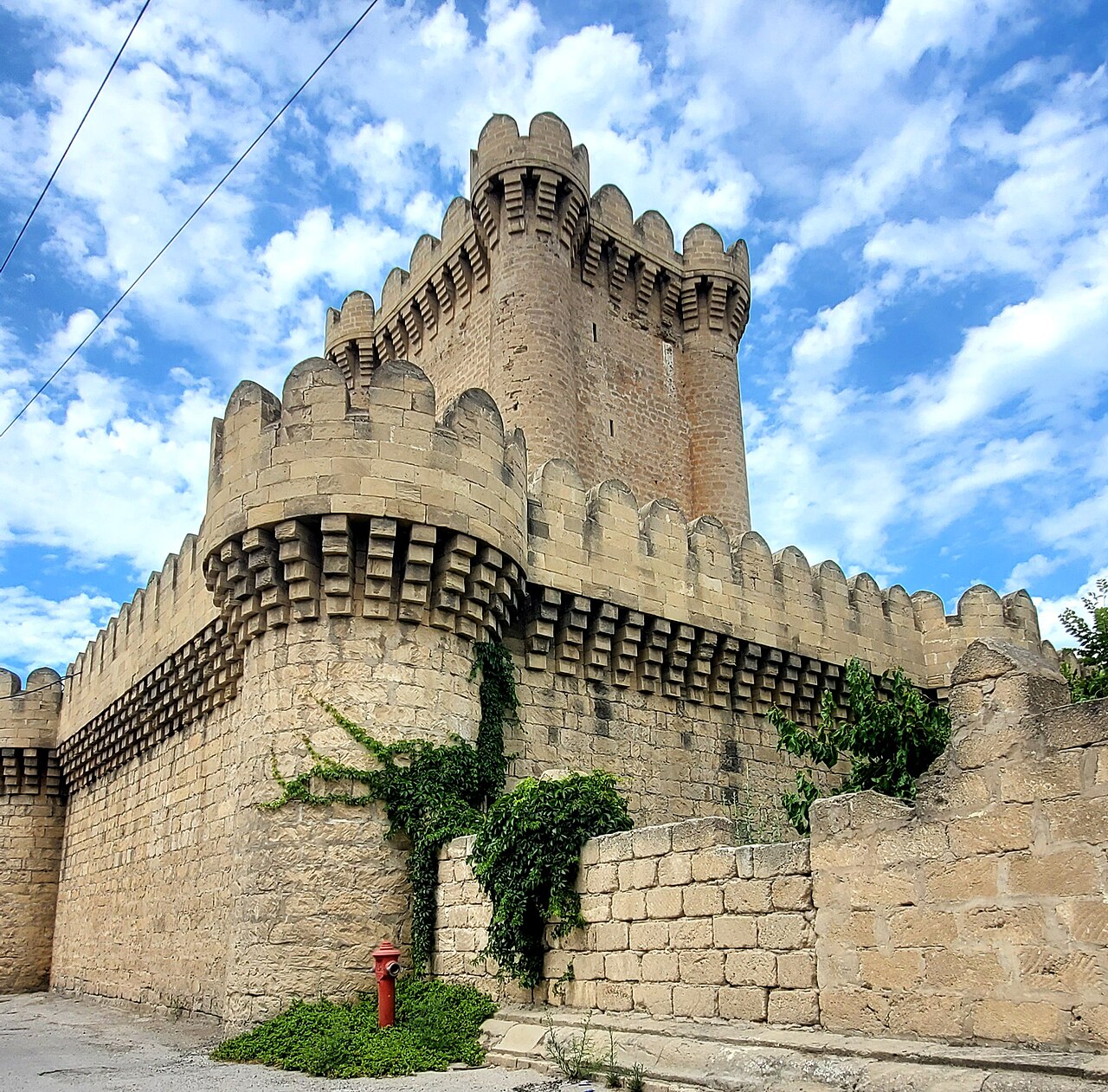
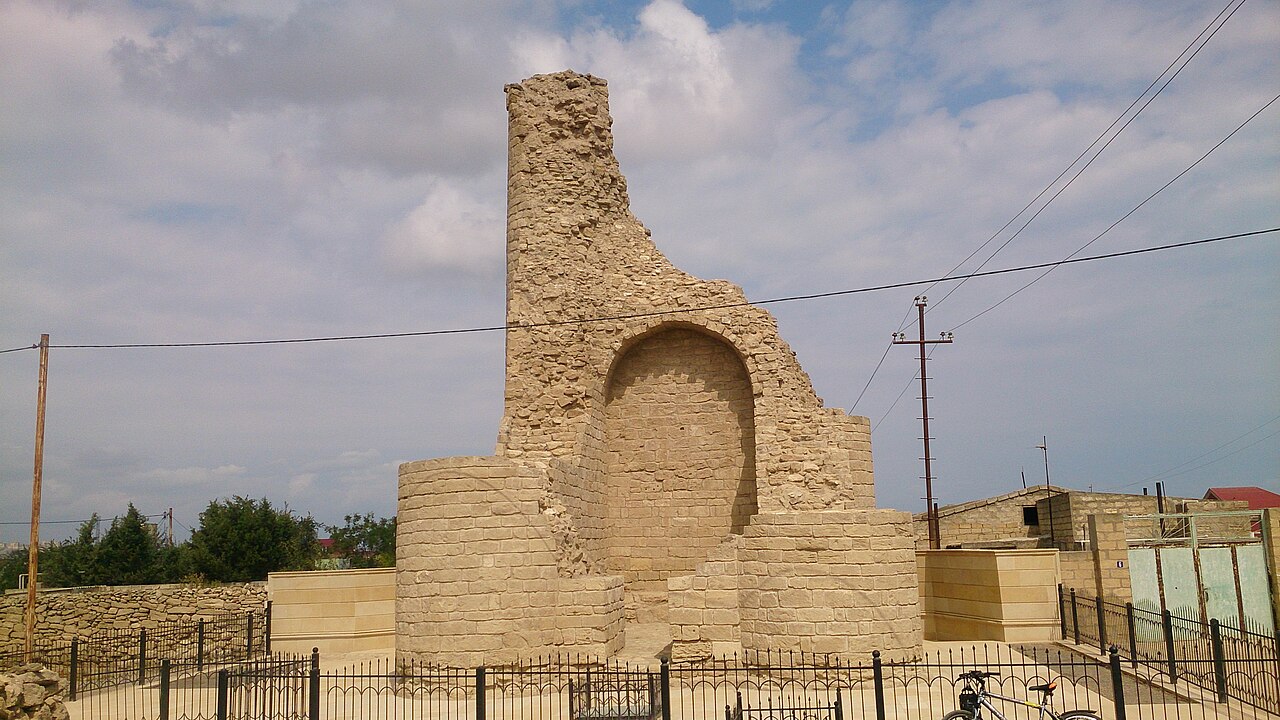
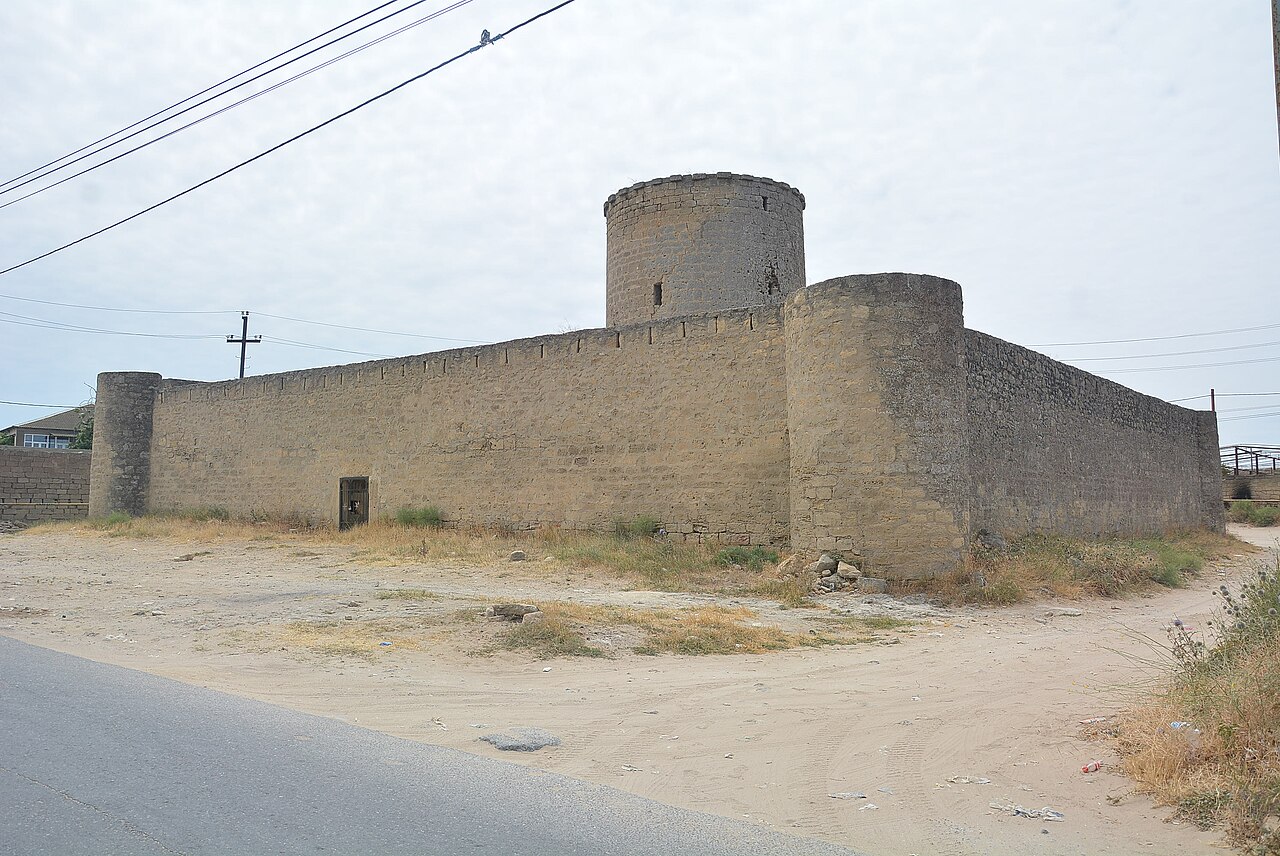
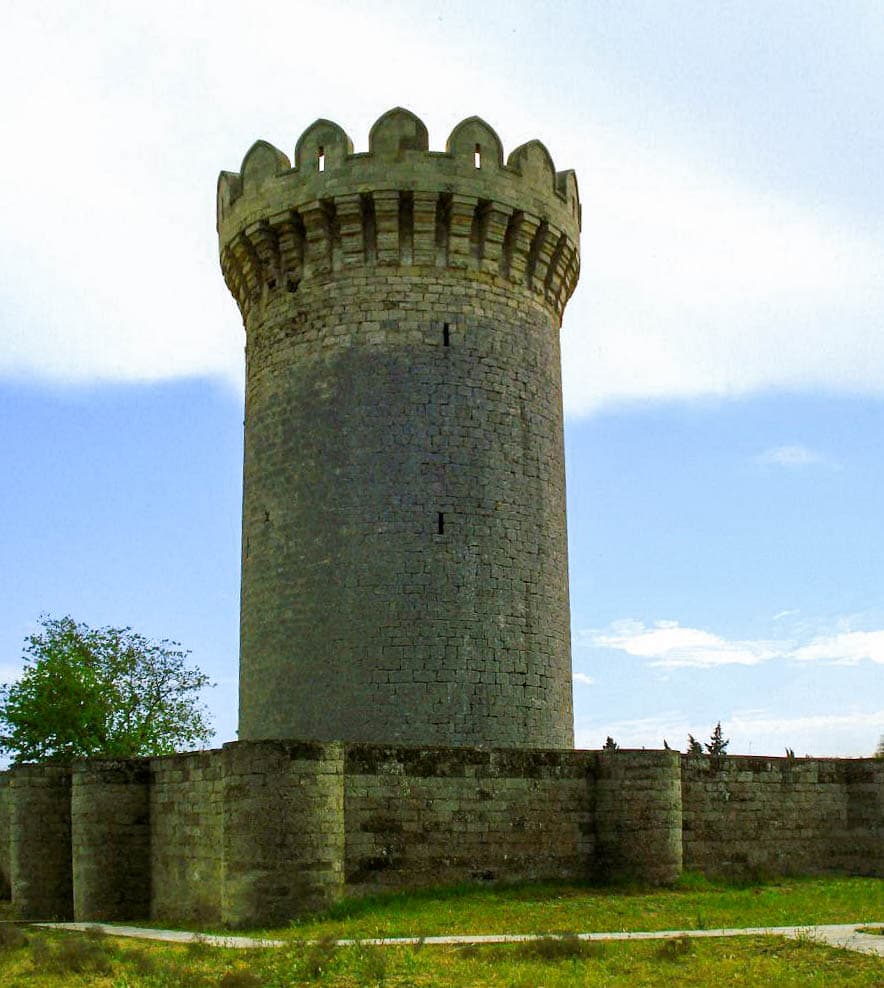
The Round Mardakan Castle is classified as a hill castle, strategically positioned to oversee the surrounding landscape. The fortress's most striking feature is its circular central tower (donjon), which has a diameter of approximately 7.6 meters. This central tower is surrounded by powerful defensive walls that rise to about 7 meters in height. These walls are reinforced by blind towers at intervals, enhancing the fortress's defensive capabilities.
Construction materials and techniques
The construction utilized local limestone and lime mortar, materials typical of the region and period, providing both durability and resilience. The walls of the tower are notably thick, measuring about 2 meters at the base, which contributed to the fortress's ability to withstand sieges and attacks.
Interior design
Inside the tower, the space is divided into three tiers, each covered with stone flat domes. This tiered design not only supported structural stability but also allowed for the organization of different functional spaces within the tower. A noteworthy architectural detail is the presence of a sanitary niche with a drainage system integrated into the thickness of the third-floor wall, demonstrating advanced medieval engineering.
Military and strategic importance
The fortress served as a critical defensive point along the Caspian Sea coast, protecting the Shirvanshah's territories from maritime incursions and raids. Its elevated location and robust construction made it a formidable obstacle for any attacking force. The combination of a circular donjon and surrounding walls with blind towers reflects the military architectural trends of the High Medieval period in the Caucasus region.
Preservation and cultural significance
Today, the Round Mardakan Fortress remains well-preserved and accessible to visitors, offering valuable insights into medieval Azerbaijani fortification techniques and regional history. Its inclusion in the UNESCO list highlights its cultural heritage significance and the importance of preserving such monuments for future generations. The castle is a prominent example of the architectural ingenuity and strategic military planning of the Shirvanshahs era.
Visiting the fortress
Visitors to the fortress can explore the central tower and the surrounding defensive walls, observing the detailed masonry and the fortress's layout. The site provides panoramic views of the surrounding landscape, emphasizing its strategic vantage point. Interpretive signage and guided tours often accompany visits, enriching the visitor experience with historical context and architectural details.
Frequently asked questions (FAQ)
- When was the Round Mardakan Fortress built?
- The Round Mardakan Fortress was constructed in 1232 during the High Medieval period under the commission of Shirvanshah Fariburz III.
- What materials were used in building the fortress?
- The fortress was built using local limestone and lime mortar, which provided durability and strength to its walls and towers.
- What is unique about the castle's architectural design?
- Its circular central tower with thick walls, three-tier interior with stone domes, and an integrated sanitary niche with drainage are unique medieval architectural features.
- Is the Round Mardakan Fortress open to visitors?
- Yes, the fortress is well-preserved and open to visitors who can explore its towers, walls, and enjoy panoramic views of the surrounding area.
- Why is the fortress included in the UNESCO World Heritage Reserve List?
- It is part of the Caspian Sea coastal defense system and represents significant medieval military architecture, recognized for its cultural and historical importance.
Photo gallery

Photo by Эмин Мамедов. Original uploader was Xlodvig at ru.wikipedia•Public domain
Information
Loading map...
Visitor reviews
No reviews yet. Been here? Write the first review and help other travelers!
Write the first reviewVisited this castle? Share your experience
Your review helps other travelers and adds first-hand knowledge to our encyclopedia.