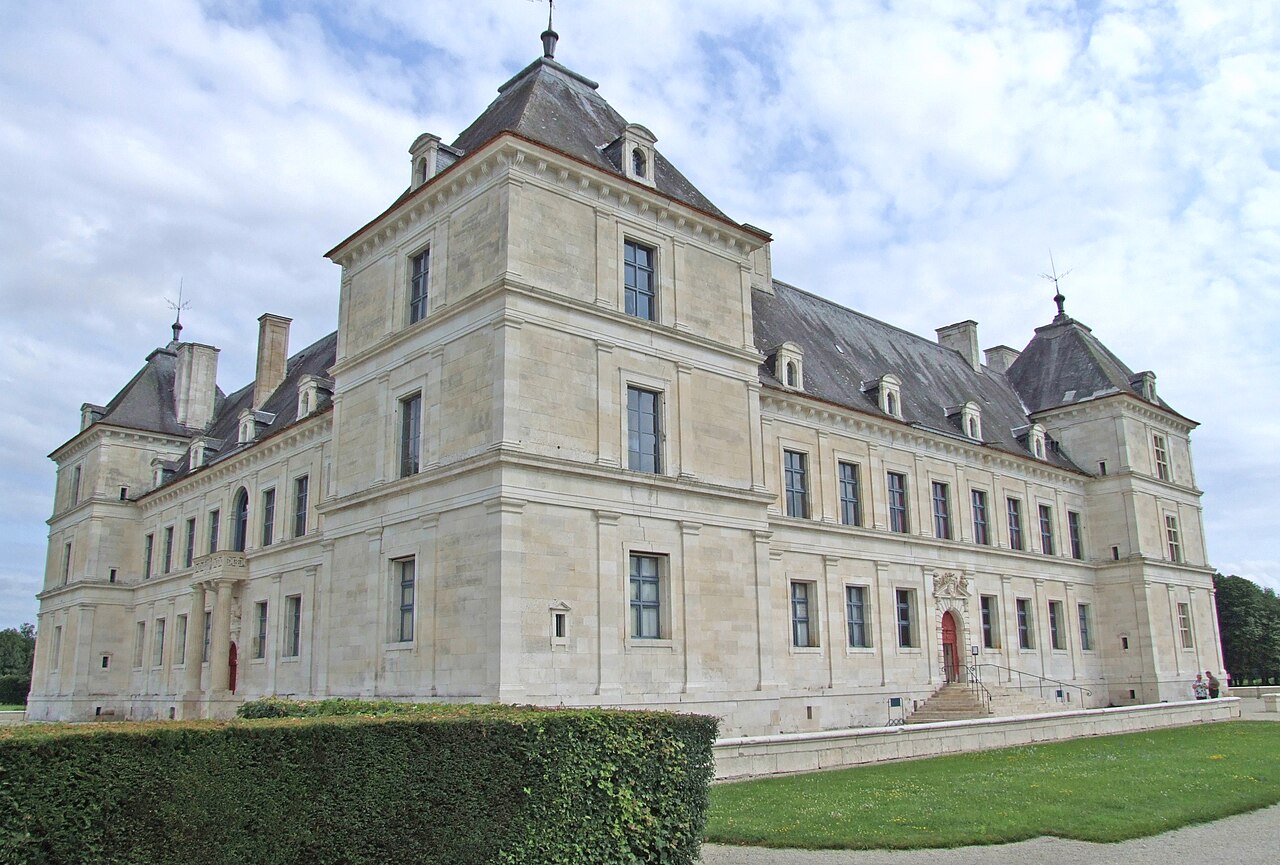
Rougemont Castle
Rougemont Castle, also known locally as Château de Rougemont and sometimes referred to as Château des Tours (castle of towers), is a historic feudal fortress located south of the village of Rougemont in the Côte-d'Or department of France. This castle stands as a relic of medieval fortification, notable for its solitary surviving wall of a feudal keep characterized by its distinctive curved corners. The castle is strategically positioned on a small motte, a raised earthwork typical of early medieval defensive structures, which likely supported two towers in its original configuration, explaining the alternative name referencing towers.
Early history and feudal significance
First documented between 1076 and 1100, Rougemont Castle is among the early medieval fortifications in the region. Historical records mention a local lord, Geraldus de Turri, active between 1090 and 1096, indicating the castle's role as a seat of feudal power during the high medieval period. The castle's mention in documents from 1205 and 1298 underscores its continued importance through the 12th and 13th centuries. Eventually, ownership transferred to the Counts of Tonnerre, a noble family influential in Burgundy's medieval politics.
Architectural features and defensive design
The surviving structure of Rougemont Castle is primarily a single wall of the original feudal keep. The keep's walls feature curved corners, a design element that would have provided enhanced strength and resistance to siege engines. The castle's location atop a motte is characteristic of motte-and-bailey castles, which were common in the early medieval period as rapid defensive constructions. Although much of the original complex has not survived, the presence of the motte and the keep wall offers insight into the castle's defensive strategy, combining elevation with robust masonry.
Siege and destruction in the early 15th century
Rougemont Castle played a role in the Armagnac-Burgundian Civil War, a conflict that ravaged parts of France in the early 15th century. In 1411, the castle was garrisoned by Armagnac forces. It was subjected to a six-day siege by a considerably larger Burgundian army, numbering approximately 1700 troops and equipped with artillery, which was a relatively advanced siege technology at the time. The castle was ultimately destroyed during this assault, marking the end of its military significance.
Current state and visitor experience
Today, Rougemont Castle exists as a ruined site that is freely accessible to visitors. The ruins are heavily overgrown, which obscures many architectural details but also creates a tranquil atmosphere suitable for quiet visits and picnics. The site offers a tangible connection to the medieval history of Burgundy and serves as a peaceful historical landmark in the French countryside.
Cultural and historical importance
Despite its ruined condition, Rougemont Castle remains an important example of early medieval military architecture in the region. Its association with notable historical events such as the Armagnac-Burgundian Civil War adds depth to its heritage value. The castle illustrates the evolution of feudal fortifications and the turbulent political landscape of medieval France.
Preservation challenges
The overgrowth and limited remaining structures present challenges for preservation and detailed study. Efforts to maintain the site focus on preventing further deterioration while allowing public access, balancing conservation with educational and recreational use.
Frequently asked questions (FAQ)
- How do I get to Rougemont Castle?
- Rougemont Castle is conveniently located in Rougemont, France, easily accessible by car and public transportation. The nearest train station is just a short distance away, and local buses frequently connect the station to the castle. Visitors can also enjoy scenic walks from nearby towns.
- What is the historical significance of Rougemont Castle?
- Rougemont Castle dates back to the 12th century and played a crucial role in the defense of the region during medieval times. It is an excellent example of medieval architecture and has witnessed numerous historical events, reflecting the rich history of the area. Today, it stands as a testament to the architectural and cultural heritage of France.
- When was Rougemont Castle built?
- Rougemont Castle was originally constructed in the 12th century, with significant renovations and expansions occurring over the centuries. The castle's strategic location on a hilltop provided a strong defensive position during its early years. Many of its architectural features still reflect the original medieval design, making it a fascinating site for history enthusiasts.
- Can I take guided tours of Rougemont Castle?
- Yes, guided tours are available at Rougemont Castle, providing visitors with in-depth knowledge of its history and architecture. These tours are led by knowledgeable guides who can share fascinating stories and insights about the castle. It's recommended to book in advance, especially during peak tourist seasons.
- Why is Rougemont Castle considered an architectural marvel?
- Rougemont Castle is considered an architectural marvel due to its sturdy stone construction, impressive towers, and intricate details that reflect medieval design. The castle's layout showcases advanced defensive features, including thick walls and narrow windows. Its restoration efforts have preserved these unique characteristics, making it a must-see for architecture lovers.
- Is it possible to visit Rougemont Castle year-round?
- Yes, Rougemont Castle is open to visitors year-round, although hours may vary by season. It's advisable to check the official website or contact the castle for the most current opening hours and any seasonal closures. Visiting during the off-peak season can provide a quieter experience with fewer crowds.
- What are the ticket prices for Rougemont Castle?
- Ticket prices for Rougemont Castle are quite reasonable and vary based on age and group discounts. Children, students, and seniors often receive reduced rates, while family passes may also be available. It's best to check the castle's official website for the latest pricing information and any special promotions.
- What is the best time to visit Rougemont Castle?
- The best time to visit Rougemont Castle is during the spring and early fall when the weather is mild and the surrounding landscape is particularly beautiful. These seasons often have fewer tourists, allowing for a more enjoyable experience. Summer can be busy, but it offers vibrant events and activities.
- Are there any nearby attractions to Rougemont Castle?
- Yes, there are several nearby attractions worth exploring, including picturesque villages, local vineyards, and hiking trails that showcase the stunning French countryside. Additionally, visitors can enjoy local cuisine at nearby restaurants or explore historical sites within a short drive. Make sure to plan your visit to take advantage of these nearby experiences.
Information
Address
Off the Chemin de Vauchais, Rougemont, Côte-d'Or, France
Loading map...
Visitor reviews
No reviews yet. Been here? Write the first review and help other travelers!
Write the first reviewVisited this castle? Share your experience
Your review helps other travelers and adds first-hand knowledge to our encyclopedia.