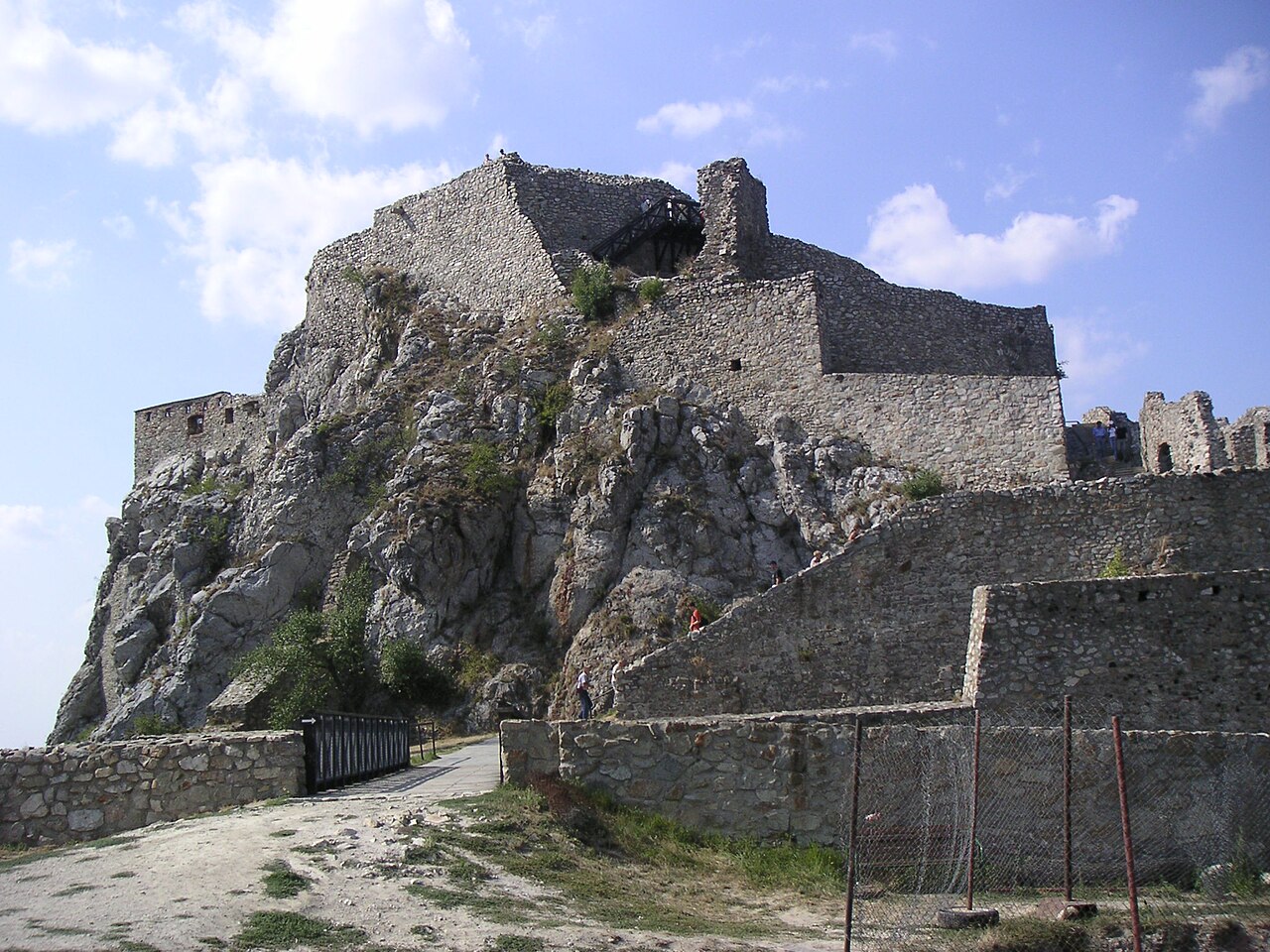
Röthelstein Castle
Röthelstein Castle, also known locally as Burg Röthelstein, is a historic castle ruin situated north of the town of Hainburg an der Donau in the province of Lower Austria, Austria. Perched on a high rock overlooking the Danube River, the castle occupies a strategic position that once controlled river traffic and local land routes. Although now a modest ruin, Röthelstein's history reflects the turbulent dynamics of the late medieval period in this region.
Early history and strategic location
The castle was first mentioned in historical records in 1180, indicating its establishment during the High to Late Medieval period. Its location on a rocky outcrop beside the Danube provided a natural defensive advantage and control over the river passage. This position was critical for monitoring and taxing river traffic, a common practice that contributed to the castle's significance in the region.
Ownership and medieval conflicts
In 1411, the fief of Rotenstein, as the castle was then known, was granted to Wilhelm von Enzersdorf by Albert V, Duke of Austria. Wilhelm's ownership extended beyond the castle to the surrounding village and the nearby river passage. However, his tenure was marked by frequent disputes with the neighboring town of Hainburg, particularly over hunting and fishing rights. These conflicts illustrate the economic and territorial tensions common among medieval lords and towns in the region.
Robber baron era and imperial intervention
During the mid-15th century, Röthelstein Castle became infamous as the stronghold of Wenko von Ruckenau, better known as the robber baron Ledvenko. From this fortress, Ledvenko and his band of robbers exerted control over the surrounding area, including the installation of a barrier on the Danube River to extract unauthorized tolls from passing ships. This illegal activity disrupted trade and provoked the ire of regional authorities.
In 1458, Albert VI, Archduke of Austria, led a siege against Röthelstein Castle to end Ledvenko's reign of terror. The castle was captured, the river barrier destroyed, and Ledvenko was forced to flee. The following year, in 1459, the castle was visited by Frederick III, Holy Roman Emperor, underscoring its continued political importance despite recent turmoil.
Decline and later history
Following the siege, Röthelstein Castle changed hands multiple times and was often leased out due to the financial difficulties of its owners. By 1511, the castle was already in decline and was presented to the town of Hainburg. After this point, historical records become sparse, with only a 1694 protest against its demolition noted, indicating the castle's deteriorating condition and diminished strategic relevance.
Architectural features and current condition
Today, Röthelstein Castle exists as a small castle ruin that reveals limited architectural detail due to its state of preservation. Its original structures likely included defensive walls, a gatehouse, and residential quarters typical of late medieval fortifications. The castle's rocky promontory and proximity to the Danube remain its most striking features, offering scenic views and a tangible connection to its historical role controlling river traffic.
Visitors can reach the site after a 10-minute walk through the woods from the nearest road. The castle is freely accessible, making it a worthwhile destination for those interested in medieval history and the natural beauty of the Danube valley. Nearby, Hainburg Castle provides additional historical context and attractions.
Röthelstein Castle in the context of regional history
The castle's story reflects the broader patterns of medieval Austrian history, including feudal disputes, the impact of robber barons, and the shifting control of strategic sites along the Danube. Its capture by Archduke Albert VI and visit by Emperor Frederick III highlight its importance within the Habsburg domains during the 15th century.
Despite its ruinous state, Röthelstein Castle remains a symbol of the complex interplay between local power holders, economic interests, and imperial authority in late medieval Austria. Its preservation as a ruin allows modern visitors to engage directly with this layered history.
Frequently asked questions (FAQ)
- How do I reach Röthelstein Castle from Hainburg an der Donau?
- Röthelstein Castle is accessible via a 10-minute walk through the woods from the nearest road near Braunbergstrasse. Visitors should wear suitable footwear for the forest path.
- What is the historical significance of Röthelstein Castle?
- Röthelstein Castle played a key role in controlling river traffic on the Danube and was involved in feudal disputes and robber baron activities in the 15th century. It was besieged and taken by Archduke Albert VI and visited by Emperor Frederick III.
- Is there an entrance fee to visit Röthelstein Castle?
- Visiting Röthelstein Castle is free of charge. The site is an open ruin with no ticketed entry.
- What remains of Röthelstein Castle can visitors see today?
- Visitors can see the small ruins of Röthelstein Castle, including remnants of its defensive walls and foundations. The castle's rocky location and views of the Danube are notable features.
- Can I visit other castles near Röthelstein Castle?
- Yes, Hainburg Castle is located nearby and offers additional historical and architectural interest for visitors exploring the area.
Information
Address
Near Braunbergstrasse, Hainburg an der Donau, Austria
Loading map...
Visitor reviews
No reviews yet. Been here? Write the first review and help other travelers!
Write the first reviewVisited this castle? Share your experience
Your review helps other travelers and adds first-hand knowledge to our encyclopedia.