Rostov kremlin
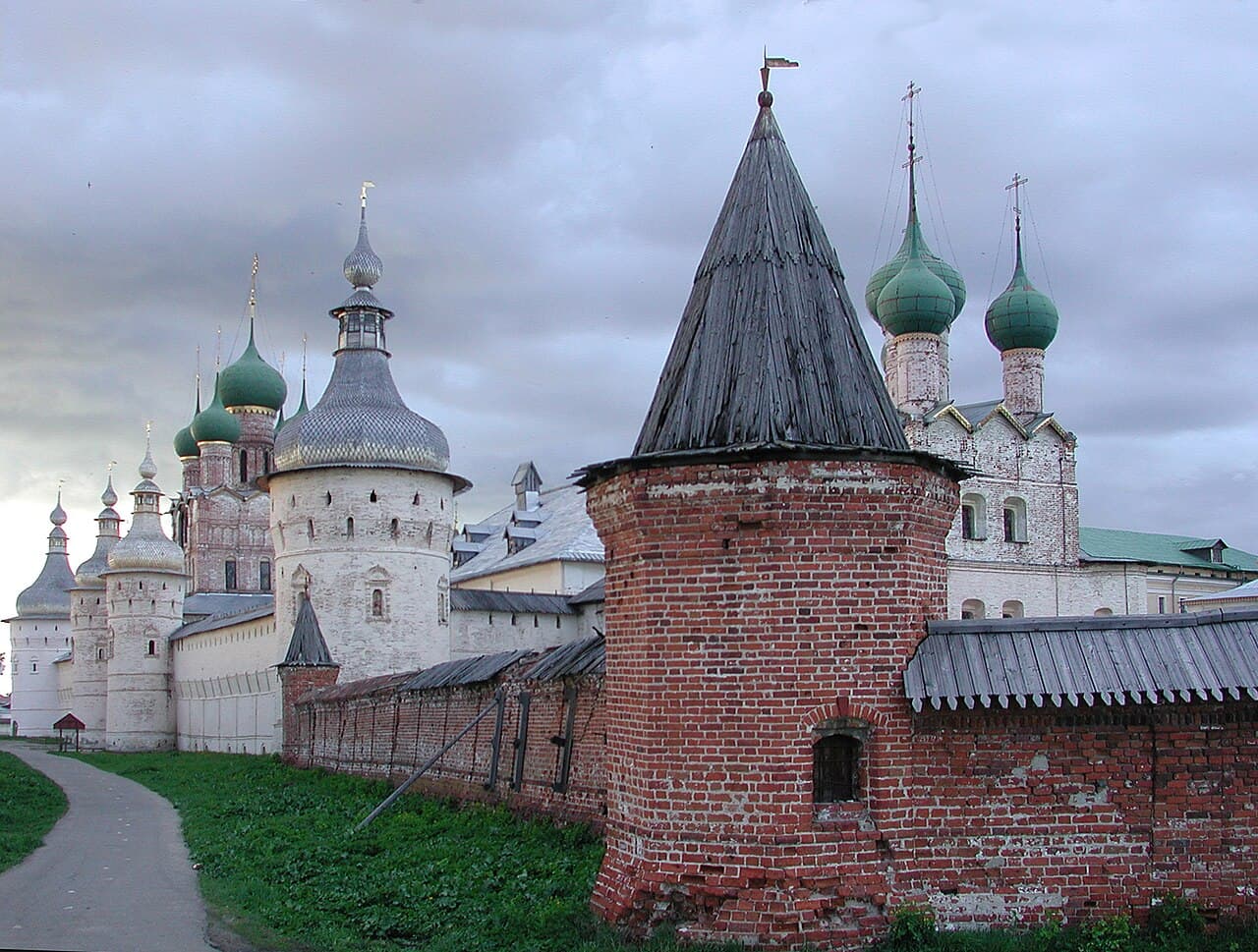
The Rostov Kremlin (Russian: Ростовский кремль) stands as a remarkable architectural ensemble in the historic town of Rostov, located in the Yaroslavl Oblast of the Russian Federation. Constructed primarily during the 16th and 17th centuries, this complex served as the residence of the Metropolitans—the leading bishops of the Rostov diocese. The Kremlin is a prime example of a bastioned fortress that blends defensive military architecture with ecclesiastical and residential functions, reflecting the dual nature of its purpose as both a religious center and a stronghold.
Situated in the heart of Rostov, the Kremlin's layout is distinguished by its unified architectural plan, a rare feature in Russian fortifications of the period. This plan encompasses four main complexes: the Metropolitan's Court, the Cathedral Court, the Metropolitan Garden, and the Stable Yard. Together, these form a cohesive architectural and artistic whole that showcases the evolution of Russian fortress and ecclesiastical architecture during the Renaissance era.
Historical background and significance
The construction of the Rostov Kremlin began in the early 16th century, with the Rostov Assumption Cathedral (1508–1512) being the oldest and most significant building within the complex. This cathedral set the architectural tone for the other churches in the Kremlin, influencing their design and decoration. The majority of the Kremlin's buildings, however, were erected in the latter half of the 17th century, a period marked by increased architectural sophistication and artistic expression in Russia.
The Rostov Kremlin was not originally built as a military fortress in the traditional sense but rather as a fortified residence for the Metropolitan bishop. Its fortifications, including thick walls and defensive towers, were designed to protect the religious leadership and the valuable ecclesiastical treasures housed within. The ensemble's construction reflects the Renaissance architectural influences that were permeating Russia at the time, combined with traditional Russian styles.
Architectural features and layout
The Kremlin walls and towers
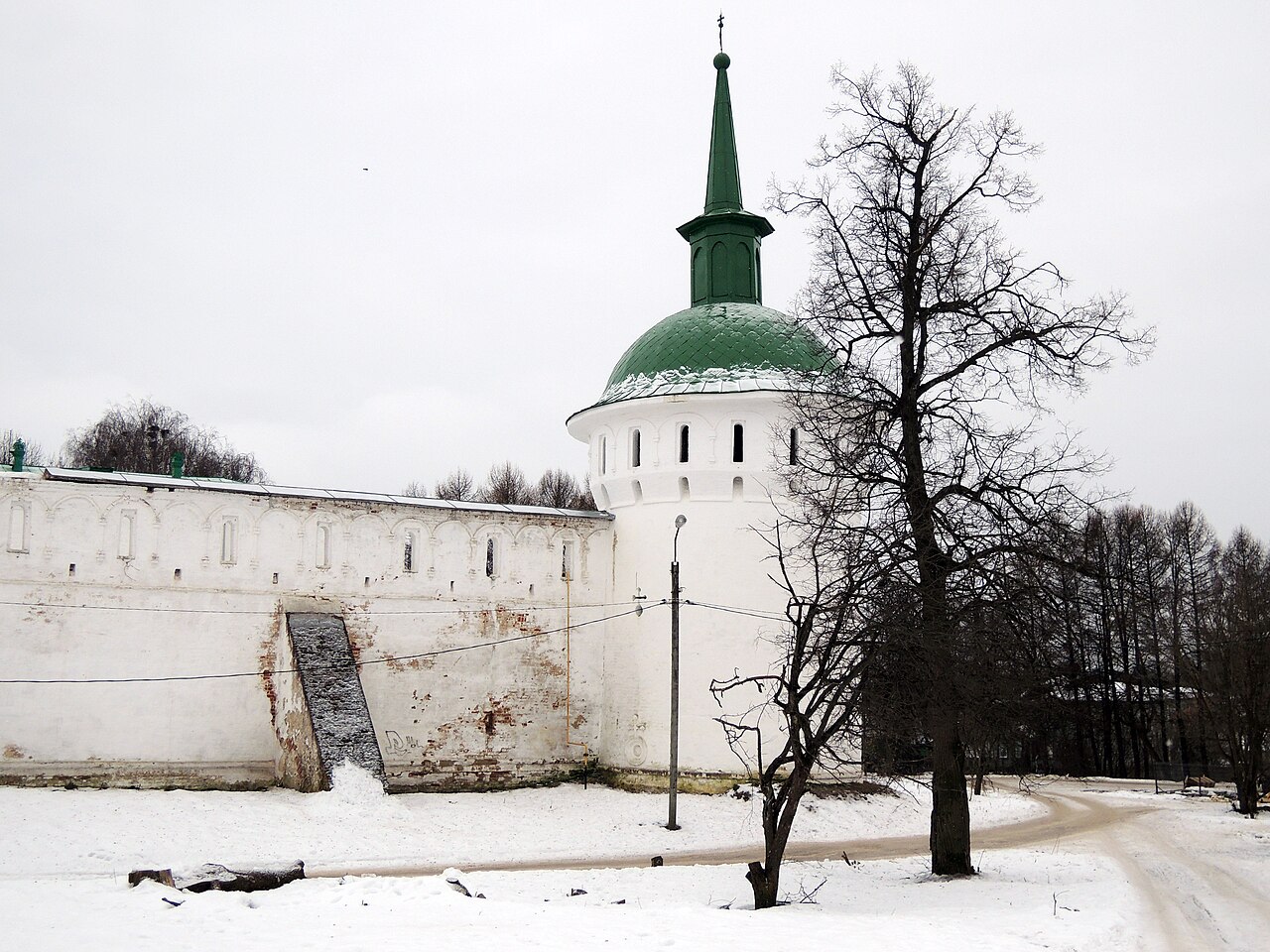
The Kremlin is enclosed by massive bastioned walls that provide a formidable defense. These walls are punctuated by several towers, each serving both defensive and symbolic purposes. The towers vary in design, with some featuring onion domes typical of Russian ecclesiastical architecture, while others have more utilitarian battlements. The walls and towers are constructed of brick and white stone, materials commonly used in Russian fortifications of the period.
The Metropolitan's Court and residential quarters
The Metropolitan's Court served as the living quarters and administrative center for the Metropolitan bishop. This complex includes residential chambers, ceremonial halls, and service buildings. The architecture here balances functionality with ornate decoration, featuring intricate brickwork and frescoes that highlight the status and importance of the occupant.
The cathedral and religious buildings
The Cathedral Court centers around the Rostov Assumption Cathedral, a masterpiece of early 16th-century Russian architecture. The cathedral is notable for its five-domed structure, frescoed interiors, and iconostasis. Surrounding the cathedral are several smaller churches and chapels, all adhering to the stylistic principles established by the Assumption Cathedral.
Gardens and auxiliary structures
The Metropolitan Garden and the Stable Yard add to the Kremlin's complexity, providing green space and facilities for horses and carriages. These areas were essential for the daily life and operations of the Metropolitan's residence, blending practicality with aesthetic considerations.
Artistic and cultural importance
One of the Kremlin's most valuable aspects is its preservation of 17th-century Russian monumental painting. The frescoes and decorative elements inside many buildings offer insight into the religious art and iconography of the period. The Kremlin's artistic heritage has been carefully maintained by museum specialists, allowing visitors to experience authentic examples of Russian ecclesiastical art.
Since 1998, the Rostov Kremlin has been included in the tentative list of UNESCO World Heritage sites, recognizing its outstanding cultural and historical significance. It remains a symbol of Russian religious authority and architectural achievement, attracting scholars and tourists alike.
Visiting the Rostov Kremlin
Today, the Rostov Kremlin functions as a museum complex, open to visitors interested in Russian history, architecture, and art. Its well-preserved structures and scenic location on the shores of Lake Nero make it a popular destination. Visitors can explore the fortress walls, the cathedral interiors, and the various courts and gardens, gaining a comprehensive understanding of the site's historical context and architectural evolution.
The Kremlin's status as a bastioned fortress with ecclesiastical functions offers a unique glimpse into the multifaceted nature of Russian fortifications, where defense, residence, and religious worship intertwined. This combination of features makes the Rostov Kremlin a distinctive monument in the panorama of Russian heritage sites.
Frequently asked questions (FAQ)
- When was the Rostov Kremlin built?
- The Rostov Kremlin was constructed primarily during the 16th and 17th centuries, with the oldest building, the Assumption Cathedral, dating from 1508 to 1512.
- What architectural style characterizes the Rostov Kremlin?
- The Kremlin features a blend of Renaissance architectural influences combined with traditional Russian ecclesiastical styles, evident in its bastioned walls and ornate churches.
- Is the Rostov Kremlin open to visitors?
- Yes, the Rostov Kremlin operates as a museum complex and is open to visitors interested in exploring its historical and architectural significance.
- What are the main complexes within the Rostov Kremlin?
- The Kremlin consists of four main complexes: the Metropolitan's Court, the Cathedral Court, the Metropolitan Garden, and the Stable Yard.
- Why is the Rostov Kremlin significant?
- It is one of Russia's most original architectural monuments, notable for its unified plan, preservation of 17th-century monumental painting, and its role as the residence of the Metropolitan bishop.
Photo gallery

Information
Current owner
State museum
Loading map...
Visitor reviews
No reviews yet. Been here? Write the first review and help other travelers!
Write the first reviewVisited this castle? Share your experience
Your review helps other travelers and adds first-hand knowledge to our encyclopedia.