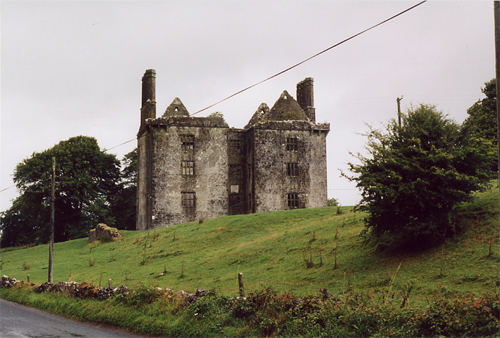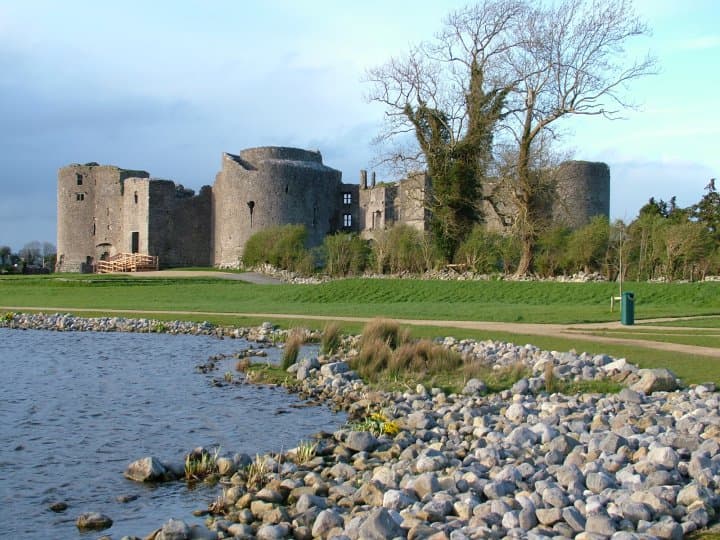
Roscommon Castle — Ireland castle

Roscommon Castle

Roscommon Castle: a high medieval fortress in Ireland
High Medieval (11th–13th c.)
Ruins

Roscommon Castle is a significant high medieval fortress located in Ireland, dating back to the 13th century. Though now in a state of ruins, the castle remains an important archaeological site that reflects the military architecture and feudal history of medieval Ireland. Constructed primarily as a defensive stronghold, it exemplifies the typical features of high medieval castles built during this period across the British Isles.

Historical context and strategic importance

Built during the 13th century, Roscommon Castle was part of a wave of castle construction initiated by Norman invaders to consolidate control over Ireland. The castle's location was chosen for its strategic advantage, overseeing key routes and local settlements. This positioning allowed it to serve both as a military fortress and administrative center, controlling the surrounding lands and asserting Norman authority in the region.

Architectural features and layout

Roscommon Castle was originally constructed as a stone keep castle, a common design in the high medieval period. The castle's walls were thick and built to withstand sieges, incorporating defensive towers at the corners and a gatehouse designed to control access. Although much of the structure is now lost, the remaining ruins reveal the footprint of a rectangular keep with evidence of arrow slits and battlements used for defense.

The castle's layout included a central courtyard surrounded by living quarters, storage rooms, and possibly a chapel. The use of local stone materials contributed to the castle's durability, but centuries of weathering and historical conflicts have reduced it to its current ruined state.

Historical events and ownership

Throughout its history, Roscommon Castle was involved in various regional conflicts typical of medieval Ireland, including skirmishes between Norman settlers and native Irish clans. Its ownership changed hands several times, reflecting the turbulent political landscape of medieval Ireland. The castle was eventually abandoned and fell into ruin, but its remains continue to offer insights into the feudal systems and military strategies of the time.

Archaeological significance and preservation

Today, Roscommon Castle is classified as an archaeological ruins site. It attracts historians, archaeologists, and visitors interested in medieval architecture and Irish history. Preservation efforts focus on stabilizing the remaining structures to prevent further decay while allowing public access to experience the site. Interpretive signage and guided tours help contextualize the castle's role in Ireland's medieval past.

Visiting Roscommon Castle

Visitors to Roscommon Castle can explore the ruins and surrounding grounds, which offer a glimpse into the medieval era. While the castle is not fully restored, its atmospheric remains provide a tangible connection to Ireland's feudal history. The site is accessible year-round, though facilities may be limited due to its status as a ruin and archaeological site.

Frequently asked questions (FAQ)

How do I get to Roscommon Castle?
Roscommon Castle is located in the town of Roscommon, Ireland. You can easily reach it by car, with ample parking available nearby, or by taking a bus from major cities like Dublin or Galway. The castle is also within walking distance from the town center.
What is the historical significance of Roscommon Castle?
Roscommon Castle, built in the 13th century, played a crucial role in the defense of the region during the medieval period. It was a stronghold for the Gaelic nobility and witnessed many conflicts over the centuries. Today, it stands as a testament to Ireland's rich history and architectural heritage.
When was Roscommon Castle constructed?
Roscommon Castle was constructed in the early 13th century, around 1269, by the Anglo-Normans. It served as a strategic military stronghold and was expanded over the years, reflecting the changing architectural styles of the time.
Can I enter the castle grounds?
Yes, visitors are welcome to explore the grounds of Roscommon Castle. While the interior is not fully accessible, the outer walls and surrounding areas are open for public enjoyment, allowing guests to appreciate the castle's architecture and scenic views.
Why is Roscommon Castle a popular tourist attraction?
Roscommon Castle is popular due to its historical significance and well-preserved ruins, offering a glimpse into Ireland's medieval past. Visitors appreciate the opportunity to explore the castle's architecture and enjoy the picturesque surroundings, making it a great spot for photography and relaxation.
Is it possible to take guided tours of Roscommon Castle?
While there are no formal guided tours available, visitors can take advantage of informative signage around the castle grounds. Additionally, local tour operators may offer guided experiences that include Roscommon Castle as part of a broader historical tour.
What are the opening hours for Roscommon Castle?
Roscommon Castle is open to the public year-round, with opening hours typically from 9 AM to 5 PM. However, it's advisable to check for seasonal changes or special events that might affect these hours before planning your visit.
What is the best time to visit Roscommon Castle?
The best time to visit Roscommon Castle is during the spring and summer months, from April to September, when the weather is generally milder and more conducive to outdoor exploration. This period also offers a vibrant atmosphere with more events and activities in the area.
Are there any nearby attractions to visit?
Yes, there are several nearby attractions, including the Roscommon Museum, the historic town of Boyle, and the scenic Lough Key Forest Park. These sites complement a visit to Roscommon Castle and provide additional opportunities for exploration and enjoyment in the region.
What are the ticket prices for visiting Roscommon Castle?
Admission to Roscommon Castle is free, making it an accessible destination for all visitors. This allows everyone to enjoy the historical site without any financial barriers, encouraging exploration of Ireland's rich heritage.

Photo gallery

Roscommon Castle
Click to view

Photo by Irishrover1980•CC BY-SA 4.0

1 photo • Click any image to view in full screen

Information

Archaeological Site / Ruins

Loading map...

Visitor reviews

No reviews yet. Been here? Write the first review and help other travelers!

Write the first review

Visited this castle? Share your experience

Your review helps other travelers and adds first-hand knowledge to our encyclopedia.

Write a review

(5/5)

0/2000 characters

Your review will be visible after admin approval

Nearby castles

0 km

Roscommon Castle

Roscommon, United Kingdom

Roscommon Castle stands as a prominent example of Anglo-Norman military architecture in Ireland, located on a strategic hillside near the town of Roscommon. Constructed beginning in 1269 by Robert de Ufford, an Anglo-Norman nobleman, the castle was built on land formerly owned by an Augustinian monastery founded in the 5th century by Saint Coman mac Faelchon. This fortress played a key role in the turbulent history of medieval Ireland, witnessing multiple sieges, shifts in control, and architectural adaptations over several centuries. Historical context and construction The castle was established during the High Medieval period, a time when Anglo-Norman lords were consolidating their power in Ireland following the 12th century invasion. The choice of a hill castle location provided natural defensive advantages, overseeing the surrounding landscape and controlling important routes in the province of Connacht. Its initial construction reflected typical Anglo-Norman military design, focusing on strong defensive features to assert dominance in a contested region. Shortly after completion, Roscommon Castle became a focal point of conflict. In 1272, it was captured by Aodh Ó Conchobhair, the regional king of Connacht, representing native Irish resistance to Anglo-Norman rule. English forces regained the castle in 1280, undertaking repairs and expansions to reinforce its defenses. By the mid-14th century, the castle came under the control of the Irish O’Connor family, who held it for over two centuries, successfully defending it against English attempts to reclaim the site. Architectural features and modifications The castle occupies a rectangular site defined by four imposing D-shaped towers, each rising three stories high. Two of these towers serve as twin gatehouses, forming the main entrance. Notably, one entrance tower retains its vaulted stone roof, an architectural feature that highlights the castle's robust construction and defensive capabilities. The vaulted roofs consist of arched stone ceilings designed to support significant weight, enhancing the structure's durability. Originally, the castle was encircled by a tall curtain wall, connecting the towers and providing a formidable barrier against attackers. Surrounding the castle at some distance was a symmetrical ditch, a trench that functioned as an additional defensive obstacle, impeding enemy advances toward the walls. In 1578, under the ownership of Sir Nicholas Malbie, the castle underwent significant remodeling. This included enlarging window openings in both the towers and curtain walls, replacing earlier narrow arrow slits with large paired windows. These changes reflected evolving military technology and a shift toward increased comfort and light within the castle, although they somewhat reduced its defensive strength. Later history and decline The castle's strategic importance continued into the 16th and 17th centuries. In 1569, it was captured by Henry Sidney, the Lord Deputy appointed by the English crown, marking intensified efforts to consolidate English control over Ireland. Following this, the castle was granted to Sir Nicholas Malbie, who served as governor of Connacht under Queen Elizabeth I. The 17th century brought further turmoil, with the castle changing hands multiple times during the Irish Rebellion of 1641 and subsequent conflicts. It sustained damage from artillery during the siege led by Oliver Cromwell in 1652. The final blow came in 1690 when a destructive fire left the castle in ruins, leading to its abandonment. Cultural significance and preservation Roscommon Castle is frequently mentioned in medieval Irish annals, including the Annals of Inisfallen and the Annals of the Four Masters, underscoring its importance in Irish history. Today, the castle remains a ruined but visually striking monument, with many architectural features still visible. The surviving towers, sections of the curtain wall, and the vaulted roof of one entrance tower provide valuable insights into medieval fortification techniques and the complex history of Anglo-Norman Ireland. The castle's layout and remaining structures offer visitors a tangible connection to the past, illustrating the evolution of defensive architecture from the 13th century through the Renaissance period. Its location on a hillside enhances its commanding presence over the surrounding landscape, making it a significant heritage site in Northern Ireland. Architectural legacy Roscommon Castle exemplifies the Anglo-Norman hill castle typology, with its characteristic D-shaped towers designed to deflect projectiles and provide flanking fire along the curtain walls. The incorporation of vaulted stone roofs in the gatehouses reflects advanced medieval engineering aimed at enhancing the fortress's resilience. The 16th-century modifications, including the introduction of larger windows, mark a transition in castle architecture from purely military functions to more residential and administrative roles, reflecting broader changes in the political and social landscape of Ireland under English rule. Visiting roscommon castle Today, Roscommon Castle is accessible to the public as a historical ruin. Visitors can explore the remains of the towers and curtain walls, gaining insight into medieval defensive strategies and the castle's layered history. The site offers picturesque views of the surrounding countryside and serves as a cultural landmark celebrating Ireland's rich medieval heritage. Interpretive signage and guided tours may be available seasonally, providing additional context about the castle's architectural features and historical significance. Its location near the town of Roscommon makes it a convenient destination for those interested in Irish history and medieval architecture.

High Medieval (11th–13th c.)
Details
15.9 km
Glinsk Castle — Ireland castle

Glinsk Castle

, Ireland

Glinsk Castle is a significant 17th-century tower house located in County Galway, Ireland. Recognized as a National Monument, this castle exemplifies the architectural and historical characteristics of the Renaissance period in Ireland. Tower houses like Glinsk Castle were common defensive residences built by the Irish gentry during this era, combining both fortification and domestic purposes. Historical context and construction Constructed in the early to mid-17th century, Glinsk Castle was built during a time of social and political upheaval in Ireland, including the lead-up to the Irish Confederate Wars (1641–1653). The castle served as a fortified residence for a local noble family, reflecting the turbulent period when landowners required defensible homes against both local conflicts and wider military campaigns. The tower house design was a popular architectural choice in Ireland from the late medieval period into the Renaissance, and Glinsk Castle is a well-preserved example of this tradition. While primarily defensive, tower houses also incorporated comfortable living quarters, demonstrating a blend of military and domestic architecture. Architectural features Glinsk Castle is classified as a hill castle, situated strategically on elevated ground to oversee the surrounding landscape. This location provided natural defensive advantages and visibility against potential attackers. The castle's structure is typical of Irish tower houses, comprising a tall, rectangular stone tower with thick walls designed to withstand sieges. The building includes several floors, each serving different functions such as storage, living quarters, and defensive positions. Key architectural elements include narrow slit windows for archers, a crenellated parapet for defense, and a vaulted ground floor used for storage or as a secure refuge. The entrance is often protected by a strong door and may have included a murder hole or machicolations to defend against intruders. Inside, the castle would have featured a great hall for social gatherings and meals, private chambers, and possibly a fireplace for heating. The vertical layout maximized defense while accommodating the needs of the residents. Preservation and current status Today, Glinsk Castle remains a well-preservedRenaissance Irish tower house. Its status as a National Monument ensures protection and recognition of its cultural importance. The castle is accessible to visitors interested in Irish history and medieval architecture, although facilities may be limited due to its historic nature. Significance in Irish heritage Glinsk Castle represents a key period in Irish architectural history where defensive needs shaped residential construction. It reflects the lifestyle of the Irish gentry during the 17th century and provides insight into the social and military challenges of the time. The castle contributes to the broader understanding of Renaissance architecture in Ireland, blending traditional medieval defensive features with emerging Renaissance influences. Its preservation allows for continued study and appreciation of Ireland's rich historical landscape.

Renaissance (15th–17th c.)
Details
17.1 km

Castle in Lecarrow

Lecarrow, United Kingdom

Located on a tranquil peninsula extending into the River Shannon, Rindoon stands today as one of Ireland's most captivating deserted medieval towns. This abandoned settlement offers a rare glimpse into the medieval urban life of the region, preserved in ruins that evoke the town's once pivotal role in Irish history. Despite its current silence, Rindoon was once a bustling hub of military and commercial activity, strategically positioned as a fortified headland overseeing vital waterways. The name Rinn Dúin, meaning "fortified headland" in Gaelic, reflects the town's defensive significance. Long before the arrival of the Anglo-Normans in the late 12th century, the peninsula was inhabited due to its fertile pastures and commanding views over the Shannon. The natural harbor provided a safe anchorage, making it an attractive site for settlement and trade. Historical significance and strategic role Rindoon's history is deeply intertwined with the turbulent conflicts between the native Irish chieftains and the invading Norman forces. As a key military and trading frontier town situated between the provinces of Connacht and Leinster, it was a focal point of power struggles throughout the medieval period. The town changed hands multiple times due to its strategic importance, witnessing numerous battles, sieges, and executions. During its peak, Rindoon functioned as a fortified settlement with walls and defensive structures designed to repel attackers. The town's fortifications included a castle keep, curtain walls, and gatehouses that controlled access to the peninsula. These defenses underscore its role as a military stronghold and a symbol of Norman authority in the region. Architectural features and town layout Though now in ruins, Rindoon's layout reveals the typical characteristics of a medieval fortified town. The settlement was compact, enclosed within stone walls that followed the contours of the peninsula, maximizing natural defenses. Inside, the remains of residential buildings, workshops, and religious structures can still be discerned, indicating a self-sufficient community. The castle itself was the centerpiece of the town's defenses, featuring a rectangular keep constructed from local stone. The walls of the keep were thick, designed to withstand sieges and provide refuge for the garrison. Surrounding the keep, the town walls included towers and battlements that allowed defenders to monitor and repel attackers effectively. Archaeological excavations have uncovered remnants of a church within the town, highlighting the spiritual life of its inhabitants. The church likely served as a communal gathering place and a symbol of Norman ecclesiastical influence. Additionally, traces of streets and market areas suggest that Rindoon was not only a military outpost but also a thriving commercial center. Decline and abandonment Despite its early prominence, Rindoon's fortunes declined in the late medieval period. The town was repeatedly attacked during the ongoing conflicts between Irish clans and English forces, leading to significant destruction. By the 14th century, Rindoon had been largely abandoned, its strategic importance diminished as political and military dynamics shifted elsewhere. Today, the site remains remarkably well-preserved as a ruin, offering visitors a poignant window into Ireland's medieval past. The absence of modern development has allowed the castle walls, town defenses, and building foundations to survive in situ, making Rindoon a valuable archaeological and cultural heritage site. Visitor experience and cultural heritage Visitors to Rindoon can explore the atmospheric ruins surrounded by the natural beauty of the Shannon estuary. The remote location contributes to a sense of stepping back in time, with panoramic views over the water and the surrounding landscape. Walking the perimeter of the town walls and entering the remains of the castle keep provides a tangible connection to the medieval world. Rindoon is recognized for its historical and archaeological significance, protected as a national monument. It serves as an educational resource, illustrating the complexities of Norman colonization and medieval urban development in Ireland. The site is accessible to the public, though facilities are limited, preserving its untouched character. Preservation challenges and ongoing research As an exposed ruin, Rindoon faces challenges from weathering and natural decay. Conservation efforts focus on stabilizing the remaining structures to prevent further deterioration. Archaeologists continue to study the site, uncovering new insights into the town's layout, economy, and daily life during the medieval period. Rindoon's story is emblematic of many medieval towns that flourished briefly before fading into history, leaving behind ruins that inspire curiosity and scholarly interest alike.

High Medieval (11th–13th c.)
Details