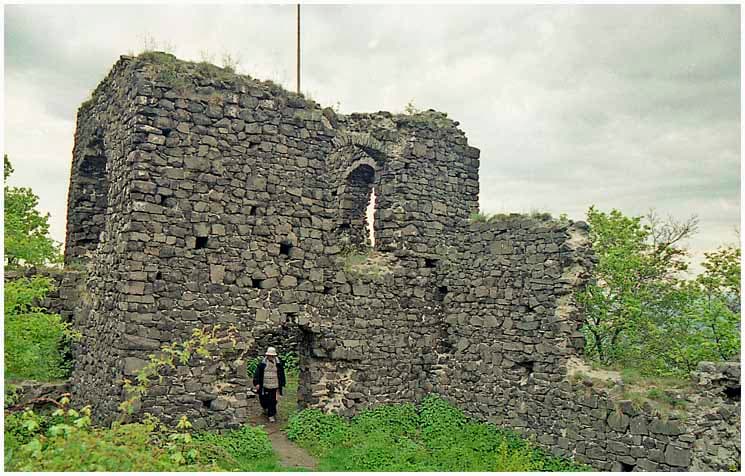
Ronov Castle — Czech Republic castle

Ronov Castle

Ronov Castle: late medieval castle ruins in Czechia
Late Medieval (14th–15th c.)
Ruins

Ronov Castle (Czech: hrad Ronov) stands as a notable example of a late medieval fortress located in the Liberec Region of the Czech Republic, northeast of Blíževedly in the Česká Lípa District. This 14th-century castle ruin is recognized as a cultural monument and offers valuable insight into the defensive architecture and noble residences of the period.

Historical background and ownership

The earliest direct records of Ronov Castle date back to the 15th century, although the castle's construction is attributed to the 14th century. By 1438, the castle was under the ownership of Vilém of Ilburk, a nobleman who undertook significant rebuilding efforts to strengthen and possibly modernize the fortress. These renovations likely reflected the evolving military and residential needs of the period, as well as the status of its owners.

Following the mid-16th century, specifically after 1538, the castle was abandoned. Over time, it fell into disrepair and gradually transformed into the ruins that remain today. The abandonment might have been influenced by changes in military technology, shifting political circumstances, or the relocation of noble residences to more comfortable or strategically advantageous sites.

Architectural features and layout

Although much of Ronov Castle lies in ruins, archaeological studies and remaining structures reveal key aspects of its original design. The castle was strategically positioned on elevated terrain, characteristic of hill castles of the late medieval period, to maximize defensive capabilities and surveillance of the surrounding landscape.

The castle complex likely included fortified walls, a main gate, and possibly a keep or donjon serving as a last line of defense and residence for the lord. The presence of courtyards and service buildings would have supported the daily life of its inhabitants and garrison. The architectural style reflected the functional Gothic influences common in the region during the late medieval period, emphasizing robust stone construction and defensive features.

Defensive structures

Key defensive elements probably included battlements and towers positioned to cover the approaches to the castle. The elevated position itself was a natural defense, augmented by man-made fortifications. Although detailed plans are scarce due to the ruinous state, traces of curtain walls and foundation outlines provide clues to the castle's once formidable defenses.

Cultural significance and preservation

Today, Ronov Castle is protected as a cultural monument of the Czech Republic. Its ruins serve as an important archaeological site that offers historians and visitors a glimpse into the region's medieval past. Preservation efforts focus on maintaining the existing remains and preventing further deterioration while allowing public access for educational and tourism purposes.

The castle's location in the picturesque landscape of northern Bohemia adds to its appeal, attracting visitors interested in history, architecture, and hiking. Interpretive signage and guided tours help contextualize the site within the broader narrative of Czech medieval fortifications and noble estates.

Visiting ronov castle

Visitors to Ronov Castle can explore the ruins and enjoy panoramic views of the surrounding countryside. The site is accessible by hiking trails from nearby villages, making it a popular destination for outdoor enthusiasts and history buffs alike. While the castle is in a ruined condition, the remains provide a tangible connection to the late medieval period and the lifestyle of the regional nobility.

There are no extensive facilities on-site, so visitors are advised to prepare accordingly. The best time to visit is during the warmer months when trails are clear and the weather is favorable for outdoor exploration.

Frequently asked questions (FAQ)

How do I get to Ronov Castle?
Ronov Castle is located in the picturesque region of Czechia, easily accessible by car or public transport. If you are traveling by train, the nearest station is in the town of Ronov, from where you can take a short taxi ride to the castle.
What is the historical significance of Ronov Castle?
Ronov Castle dates back to the 13th century and has played a crucial role in the history of the region. It served as a defensive fortress and residence for noble families, reflecting the architectural styles and strategic importance of its time.
When was Ronov Castle built?
The construction of Ronov Castle began in the early 1200s, making it one of the oldest castles in the area. Over the centuries, it has undergone various renovations and restorations, particularly during the Renaissance and Baroque periods.
Can I take a guided tour of Ronov Castle?
Yes, guided tours are available at Ronov Castle, providing visitors with an in-depth understanding of its history and architecture. Tours typically last about an hour and are conducted in both Czech and English.
Why is Ronov Castle a popular tourist destination?
Ronov Castle attracts visitors due to its rich history, stunning architecture, and beautiful surrounding landscape. Additionally, the castle often hosts cultural events and exhibitions, making it a vibrant place to explore.
Is it possible to visit Ronov Castle year-round?
Yes, Ronov Castle is open to visitors year-round, although opening hours may vary seasonally. It's advisable to check the official website for the latest information on hours and accessibility before your visit.
What are the ticket prices for Ronov Castle?
Ticket prices for Ronov Castle are quite reasonable, with discounts available for students and seniors. Children under a certain age may enter for free, so it's best to check the official site for current rates and any special offers.
When is the best time to visit Ronov Castle?
The best time to visit Ronov Castle is during the spring and early autumn when the weather is mild and the surrounding countryside is particularly beautiful. Additionally, visiting during these seasons allows you to enjoy various outdoor events and festivals held near the castle.
What nearby attractions can I visit while at Ronov Castle?
While at Ronov Castle, you can explore the charming town of Ronov and enjoy local cafes and shops. Additionally, several hiking trails and natural parks are located nearby, perfect for a day of outdoor exploration.

Photo gallery

Ronov Castle
Click to view

Photo by Original uploader was Zp at cs.wikipedia•Public domain

1 photo • Click any image to view in full screen

Information

Archaeological Site / Ruins

Loading map...

Visitor reviews

No reviews yet. Been here? Write the first review and help other travelers!

Write the first review

Visited this castle? Share your experience

Your review helps other travelers and adds first-hand knowledge to our encyclopedia.

Write a review

(5/5)

0/2000 characters

Your review will be visible after admin approval

Nearby castles

2.1 km

Hřídelík

Blíževedly, Czech Republic

Hřídelík castle stands as a compelling example of a medieval rock castle in the Czech Republic, perched near the village of Blíževedly. Its strategic location atop a steep sandstone rock at approximately 362 meters above sea level highlights the medieval practice of adapting fortifications to natural terrain. Constructed in the late 13th century, Hřídelík reflects the territorial ambitions and administrative reach of the Prague bishopric during the High Medieval period, serving as a fortified administrative center and prison within the ecclesiastical domain. Historical context and ecclesiastical role The origins of Hřídelík trace back to the late 1200s, with archaeological evidence indicating settlement and fortification efforts before 1300. The earliest known figure associated with the castle is Martin of Hřídelík, documented in 1292 as the burgrave responsible for overseeing the nearby village of Blíževedly. The castle itself appears in written records by 1334, confirming its role within the church's territorial administration. During this era, Hřídelík was primarily used as an administrative center and a prison managed by the Prague archdiocese. Notably, in 1395, it held clerics convicted by church courts, underscoring its function in enforcing ecclesiastical law. The castle's significance waned following the acquisition of the nearby Helfenburk castle by the church in 1375. This shift diminished Hřídelík's strategic importance, a decline that became more pronounced during the Hussite Wars in the early 15th century. These religious conflicts led to widespread devastation across Bohemia, and Hřídelík suffered damage during this turbulent period. Subsequently, the castle was abandoned and fell into ruin, eventually becoming known locally as the "Old House" (Starý dům), a testament to its faded prominence. Architectural features and layout Hřídelík is classified as a hill castle and a rock castle due to its integration with the natural sandstone formation. The castle's compact layout is adapted to the rocky terrain, with a small upper plateau serving as the core defensive and residential area. This plateau is enclosed by a surviving ring wall, which, although now only about half a meter high, once provided a formidable barrier. Within the enclosure, remnants of walls reveal the footprint of a rectangular palace, indicating a well-organized internal structure despite the castle's modest size. Access to this palace was secured by a unique 18-meter-long underground corridor carved directly into the rock, featuring a Gothic arch profile. This bent passage served defensive purposes by controlling entry and providing protection from direct assault. The southeastern part of the rock includes partially hewn galleries and natural overhangs, which likely functioned as covered spaces for storage or shelter. These features demonstrate the adaptive use of the natural environment in the castle's design, maximizing the defensive and utilitarian potential of the sandstone outcrop. Originally, the castle was further protected by a moat encircling the site. Although now overgrown with old fruit trees, the moat's outline remains visible in the landscape, marking the former defensive perimeter. Only limited fragments of the exterior walls survive today, emphasizing the ruinous state of the castle after centuries of neglect and conflict. Later history and transformations In the early 19th century, Bishop Augustin Hille sought to repurpose the site by constructing a small brick summer house, or letohrádek, atop the castle ruins. This structure represented a shift from the castle's original military and administrative functions to leisure use. However, the summer house was short-lived and fell into disrepair by around 1850. The 20th century brought further changes when innkeeper Franz Josef Pietzsch cleared the site in 1906 with the intention of operating a summer tavern. This commercial venture was similarly short-lived. Prior to World War I, the rock caves at Hřídelík were adapted for practical uses such as drying spaces, while the surrounding slopes were cultivated with hop gardens. These adaptations reflect a transition from defensive and administrative roles to agricultural and local economic activities. Preservation and cultural significance Today, Hřídelík is recognized as a protected cultural monument of the Czech Republic. Despite its ruinous condition, the site offers valuable insights into medieval ecclesiastical fortifications and the integration of natural rock formations into defensive architecture. Its location near the Kokořínsko – Máchův kraj Protected Landscape Area situates it within a region of notable natural beauty, although the castle itself lies outside the conservation zone. Visitors to Hřídelík can explore the remains of the ring wall, the underground corridor, and the rock galleries, gaining an appreciation for the castle's historical role and architectural ingenuity. The site exemplifies the medieval balance between natural landscape and constructed defense, reflecting broader themes in Central European castle development during the High Medieval period.

High Medieval (11th–13th c.)
Details
2.4 km

Hvězda Castle

Blíževedly, Czech Republic

Hvězda Castle is a medieval hill castle located near the village of Hvězda within the municipality of Blíževedly in the Czech Republic. Constructed in the early 13th century, it stands as a remarkable example of early medieval fortifications integrated with natural sandstone formations. The castle's strategic position atop a sandstone outcrop provided natural defenses, while its architectural features reflect the ingenuity of medieval builders in adapting to challenging terrain. Historical background and ownership The establishment of Hvězda Castle likely dates to the first half of the 13th century, a period marked by the expansion of noble estates and fortifications in the region. Archaeological and historical evidence suggest the castle remained occupied until the 1320s. Although direct documentation is scarce, the castle is commonly associated with the Ronov noble family, a prominent lineage in northern Bohemia. This connection is strengthened by the proximity and contemporaneity of their other stronghold, Frýdlant Castle, first recorded in 1257. Unlike many castles of its time, Hvězda does not appear in records of major military engagements, administrative functions, or ecclesiastical affiliations. Its relatively brief period of habitation and subsequent abandonment in the early 14th century suggest it served primarily as a local defensive residence rather than a center of regional power or religious activity. The later local toponyms such as “Hrad” (castle) and “Loupežný zámek” (robber’s castle) reflect folklore and myths that emerged long after the castle was deserted. Architectural features and construction The castle is uniquely situated on a sandstone outcrop naturally divided into two sections, which shaped its overall footprint. The central architectural element was likely a residential tower with a distinctive hexagonal base, an uncommon form in medieval architecture. This tower was constructed from stone, anchored directly into the sandstone bedrock. Deep grooves carved into the sandstone, measuring between 40 and 80 centimeters wide and up to 60 centimeters deep, served as sockets for the tower’s stone walls, demonstrating sophisticated construction techniques that integrated natural rock formations. On the southwestern side of the rock formation, remains of a stone-built ground floor of a one-story building are visible. A carved foundation groove approximately 1.5 meters wide, hewn from the sandstone, indicates where this adjoining structure once stood. This building likely served residential or utility functions supporting the castle’s occupants. The northeastern section preserves traces of fortifications, including defensive walls and possibly ramparts, which would have protected the castle’s vulnerable approaches. These fortifications highlight the dual role of the site as both a residence and a guarded stronghold. Integration with natural landscape The castle’s builders skillfully utilized the natural sandstone outcrop as part of the defensive system. The rock formations provided natural barriers and foundations, reducing the need for extensive artificial fortifications. This integration of architecture and geology is a distinctive feature of Hvězda Castle, illustrating medieval adaptation to local topography. Archaeological significance and current condition Today, the remains of Hvězda Castle consist primarily of carved features and foundational traces hewn directly from the sandstone bedrock. These physical remnants offer valuable insights into medieval construction methods and the castle’s layout. The survival of the hexagonal tower base and foundation grooves is particularly significant for understanding the architectural innovations of the period. While the castle is now a ruin, it continues to attract historians, archaeologists, and visitors interested in early medieval fortifications and the history of northern Bohemia. The site’s evocative landscape and the enduring presence of carved stone features contribute to its cultural heritage value. Local legends and cultural impact The castle’s later association with names like “robber’s castle” reflects its place in regional folklore. These legends, though not supported by historical evidence, have enriched the cultural narrative surrounding the site and contributed to its mystique. The castle remains an important symbol of medieval history and architecture in the Czech Republic. Visiting information and accessibility Hvězda Castle is accessible to visitors interested in exploring medieval ruins and natural sandstone landscapes. Due to its ruinous state and rugged terrain, visitors should be prepared for uneven paths and limited facilities. The site offers a unique opportunity to observe medieval construction techniques and enjoy panoramic views of the surrounding countryside. While there are no formal visitor centers or extensive amenities, the castle’s location near Blíževedly makes it a worthwhile destination for history enthusiasts and hikers exploring the region.

High Medieval (11th–13th c.)
Details
4.3 km

Milčany Castle

Holany, Czech Republic

Milčany Castle, historically known as Kickelsburg and sometimes confused with Vítkovec, is a Gothic hill castle located near the market town of Holany in the Czech Republic. This fortress, built by local medieval nobility in the late 14th century, exemplifies the defensive architecture typical of the Bohemian Gothic period. Its strategic placement on a rocky promontory overlooking the western edge of Holany pond utilized natural water defenses, a common practice in castle construction of the era. Origins and early history The site of Milčany Castle has origins tracing back to an earlier stronghold, believed to have been situated on an island within a nearby pond. This predecessor fortress, likely also called Milčany, disappeared around the turn of the 14th to 15th century. Archaeological investigations date the construction of the current castle to between 1391 and 1402, marking a transition from the original fortified site to a more permanent stone castle. By 1402, the castle was under the ownership of Jindřich of Dubá, a member of a prominent Bohemian noble family, embedding the castle within the complex feudal landscape of medieval Bohemia. Ownership and historical events In 1437, the castle passed to Zikmund Děčínský of Vartenberk, a significant noble figure who also founded the nearby Rybnov Castle. This connection linked Milčany to a wider network of noble estates in the region. Historical records indicate that Milčany suffered damage during the 1444 invasion by the Lusatian Six Towns, a military coalition from Lusatia. Despite this assault, the castle remained in use and was part of the dowry of Anežka of Šternberk, Zikmund's second wife, demonstrating its continued importance in noble alliances. Milčany remained within the holdings of the Rybnov estate until at least 1460. However, by the mid-16th century, between 1543 and 1622, documents describe the castle as deserted. This decline reflects a broader trend of many medieval fortresses losing strategic relevance and falling into ruin during the Renaissance period. Architectural features and layout The castle was constructed as a single-part fortress on a rocky outcrop, taking full advantage of the natural landscape for defense. The surrounding pond and water-filled ditches formed integral parts of its defensive system, supplemented by an embankment and a shallow moat on the northwest side. These features created multiple layers of protection against attackers. Today, the ruins reveal significant remnants of the castle's fortifications. The most prominent surviving structure is a masonry fragment at the southern corner, showing evidence of multiple construction phases. The presence of beam holes in the upper wall section indicates where scaffolding was attached during building or repair works, offering insight into medieval construction techniques. The eastern wall of the palas or main residential hall stands approximately seven meters tall, showcasing the robust stone masonry typical of the Gothic style. The southern wall remains to a height of about three meters. Unfortunately, later quarrying activities removed large parts of the castle's sandstone, lowering the ground level by three to four meters and significantly altering the site's original appearance. Later history and cultural significance For a time, the ruins of Milčany were mistakenly identified with the Renaissance fortress of Vítkovec. This confusion was clarified by researchers František Gabriel and Jaroslav Panáček, who correctly distinguished the two sites. Milčany’s remains have since been recognized for their cultural and historical value, illustrating the evolution of medieval fortifications in the Bohemian region. In modern times, the castle ruins served as a filming location for the fairy tale film "O princezně Jasněnce a létajícím ševci", highlighting the site's atmospheric qualities and its place in Czech cultural heritage. Archaeological research and preservation Archaeological studies at Milčany have helped reconstruct the castle's layout and chronology. Excavations confirmed the castle's construction date and provided evidence of its earlier predecessor. The site’s preservation is challenged by the loss of material due to quarrying, but surviving masonry and fortifications remain valuable for understanding Gothic military architecture in the region. Today, Milčany Castle stands as a partially preserved hill castle, offering visitors and scholars a tangible connection to the medieval past of Czechia. Its ruins provide a window into the defensive strategies employed by Bohemian nobility and the architectural styles of the late 14th and early 15th centuries.

Late Medieval (14th–15th c.)
Details
