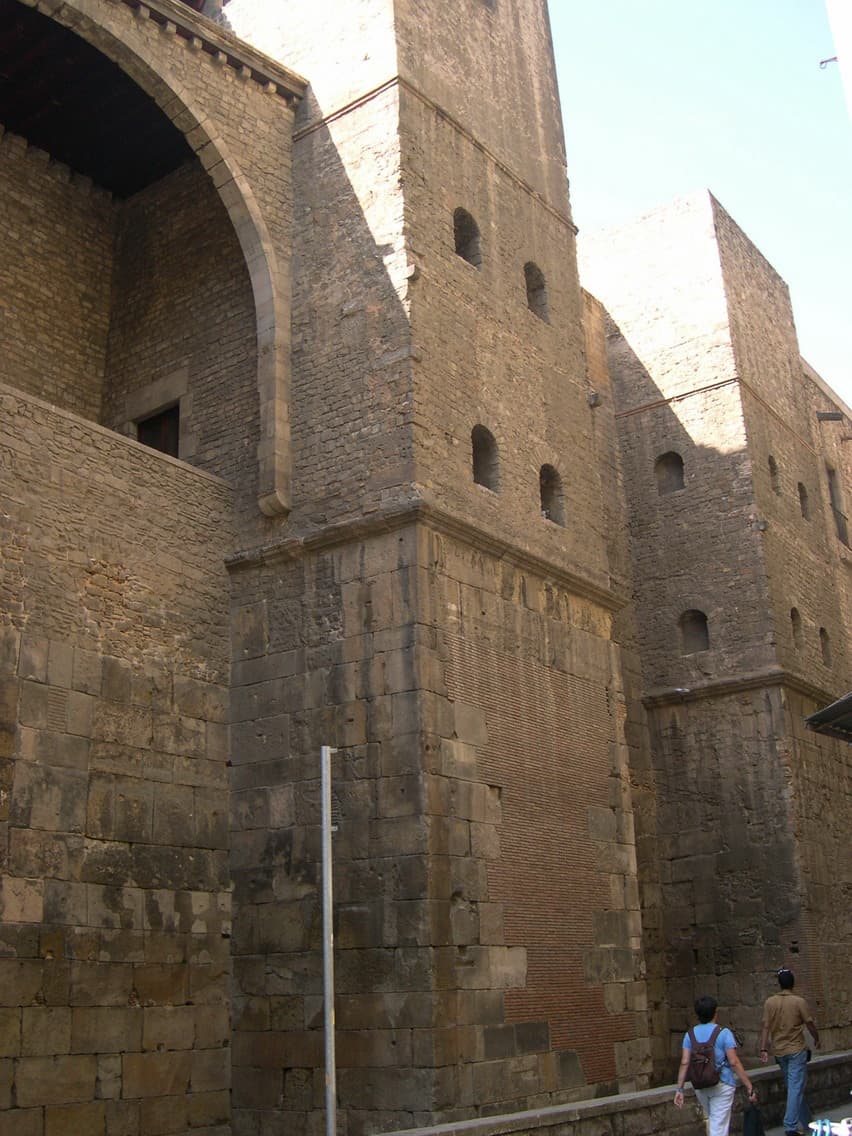
The Roman walls of Barcelona are a significant archaeological monument representing the ancient fortifications of Barcino, the Roman precursor to modern-day Barcelona. These walls were constructed over several centuries, beginning in the 1st century BC and continuing through to the 4th century AD. They served as a defensive barrier protecting the city from external threats during the height of the Roman Empire.
Located in the heart of the Gothic Quarter within the Ciutat Vella district of Barcelona, these archaeological ruins provide a tangible link to the city's Roman past. The walls originally enclosed an area of approximately 10 hectares, featuring robust construction techniques typical of Roman military architecture, including thick stone masonry and strategic placement to maximize defensive capabilities.
Historical context and construction phases
The initial phase of the walls' construction began in the late 1st century BC, coinciding with the establishment of Barcino as a Roman colony. Over the following centuries, the walls were expanded and reinforced, particularly during the 3rd and 4th centuries AD, in response to increasing threats from barbarian invasions and internal instability within the Roman Empire.
The walls were built using local stone and Roman concrete, with a core of rubble and mortar faced with carefully cut stone blocks. The structure included defensive towers at regular intervals, gates for controlled access, and a walkway along the top for patrolling soldiers. The walls were approximately 4 to 6 meters high and up to 3 meters thick in some sections.
Architectural features and urban integration
The Roman walls of Barcelona exemplify Roman military engineering adapted to the local topography. The fortification followed the natural contours of the land, enclosing the settlement on the Mont Tàber hill. The walls incorporated several gates, including the well-known Porta Praetoria, which served as the main entrance to the city.
The walls also delineated the urban space of Barcino, separating the civilian areas from the surrounding countryside. Inside the walls, the Roman city was laid out in a grid pattern typical of Roman urban planning, with streets intersecting at right angles and public buildings such as forums and temples.
Preservation and cultural significance
Today, the remains of the Roman walls are a protected cultural heritage site, listed in both the Catalan government's Bé Cultural d'Interès Nacional and the Spanish heritage register as a Bien de Interés Cultural. Despite being in a state of ruin, significant portions of the walls remain visible and accessible to the public, integrated into the medieval and modern fabric of the Gothic Quarter.
These ruins serve as an important educational resource and tourist attraction, illustrating the city's long history from its Roman origins through to the present day. Archaeological excavations continue to reveal new insights into the construction techniques and urban development of ancient Barcino.
Visiting the Roman walls today
Visitors to Barcelona can explore the Roman walls through various points in the Gothic Quarter, where sections of the walls are incorporated into buildings or displayed in open-air exhibits. Informational plaques and guided tours provide context about the walls' history and significance.
The site is accessible year-round, with no entrance fee for viewing the walls in public spaces. Nearby attractions include the Barcelona Cathedral and the Museu d'Història de Barcelona, which houses artifacts related to the Roman period.
Frequently asked questions (FAQ)
- What is the historical significance of the Roman walls of Barcelona?
- The Roman walls of Barcelona are a remarkable remnant of the city's ancient past, originally constructed in the 1st century BC. They served as a defensive structure for the Roman settlement of Barcino and are a testament to the city's historical evolution from a Roman colony to a vibrant modern metropolis.
- When was the Roman walls of Barcelona built?
- The construction of the Roman walls began around 15 BC and continued into the early centuries AD. Over the years, the walls underwent various modifications and expansions, reflecting the changing needs of the city as it grew and evolved.
- Can I walk along the Roman walls of Barcelona?
- Yes, visitors can walk along certain sections of the Roman walls, allowing for a unique perspective of both the ancient architecture and the modern city. There are designated pathways and viewing areas that enhance the experience of exploring this historic site.
- What are the opening hours for the Roman walls of Barcelona?
- The Roman walls are accessible to the public year-round, typically from 10 AM to 8 PM. However, it is recommended to check the official website for any changes in hours or special events that may affect access.
- Is it possible to take guided tours of the Roman walls?
- Yes, guided tours are available and provide in-depth insights into the history and architecture of the Roman walls. These tours are led by knowledgeable guides who can enhance your understanding of the significance of this ancient site.
- What is the best time to visit the Roman walls of Barcelona?
- The best time to visit the Roman walls is during the spring and fall when the weather is mild and pleasant. Additionally, visiting early in the morning or later in the afternoon can help you avoid the larger crowds typical during peak tourist hours.
- Are there nearby attractions to visit after exploring the Roman walls?
- Absolutely! After visiting the Roman walls, you can explore nearby attractions such as the Gothic Quarter, Barcelona Cathedral, and the Museu d'Historia de Barcelona. These sites complement the historical experience and offer a deeper dive into the city's rich heritage.
- What are the ticket prices for visiting the Roman walls of Barcelona?
- Access to the Roman walls is generally free, as many sections are open to the public. However, if you opt for a guided tour or special exhibitions, there may be associated costs, so it's advisable to check in advance.
- Is the Roman walls of Barcelona accessible for visitors with disabilities?
- While some sections of the Roman walls are accessible, certain areas may pose challenges due to uneven terrain and steps. It is recommended to contact local authorities or tour providers for specific accessibility options and assistance during your visit.
Photo gallery

Information
Address
Gothic Quarter, Ciutat Vella, Barcelona, Spain
Loading map...
Visitor reviews
No reviews yet. Been here? Write the first review and help other travelers!
Write the first reviewVisited this castle? Share your experience
Your review helps other travelers and adds first-hand knowledge to our encyclopedia.