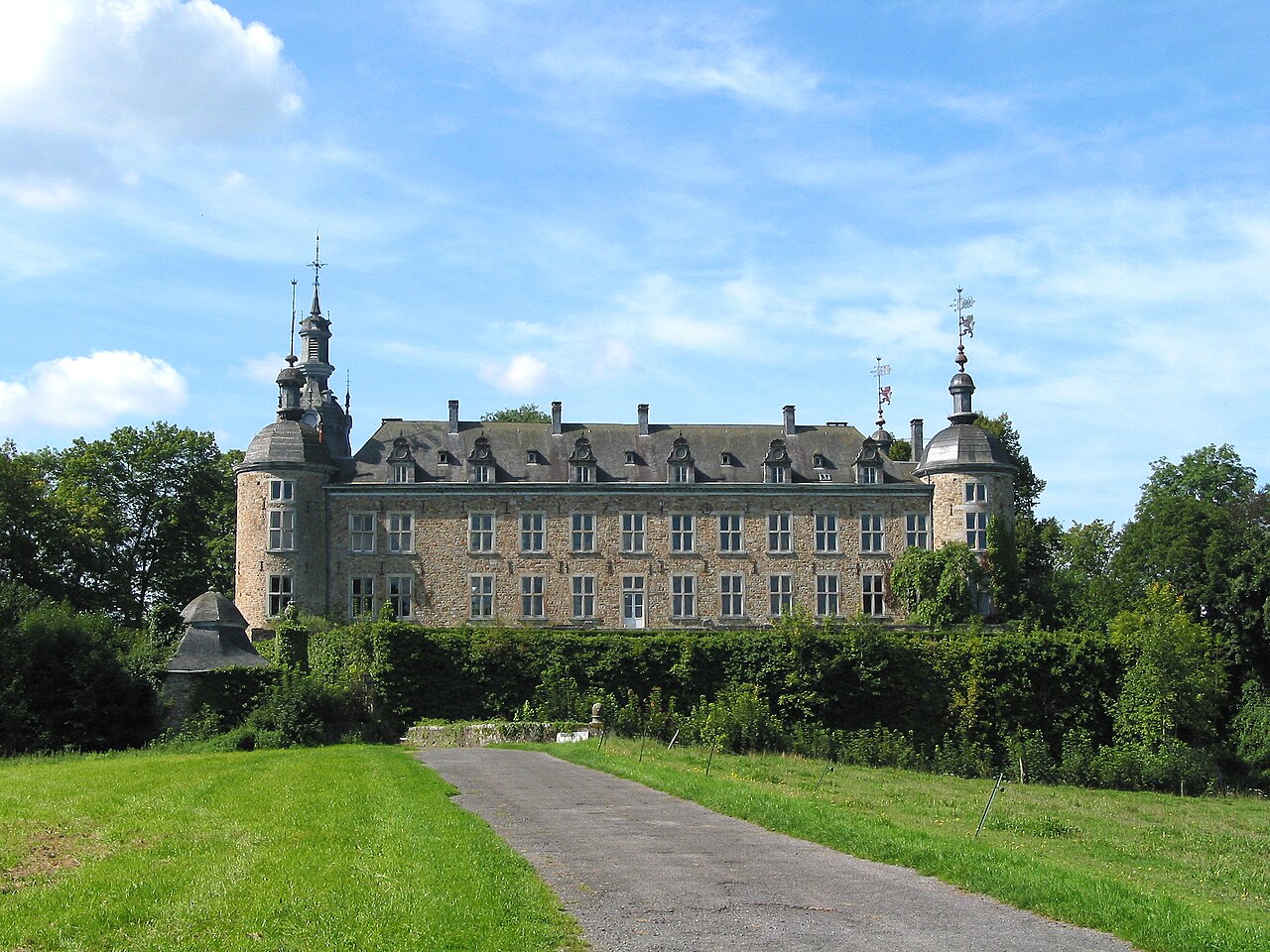
Rolley Castle
Rolley Castle, also known as Château de Rolley, is located in the hamlet of Rolley, north of Bastogne, in the province of Luxembourg, within Belgium's Wallonia region. This medieval fortress has a history that traces back to the 11th century, making it one of the older castles in the region, although its first recorded mention dates from the 13th century.
Early origins and medieval ownership
The castle was initially constructed likely in the 11th century as a fortified residence for the Lords of Boulland (also spelled Bollands), a noble family prominent in the area. The structure originally served defensive and residential purposes typical of high medieval castles, designed to assert control over local lands and protect against rival factions.
Rolley Castle's first documented reference appears in the 13th century, confirming its existence and importance during the high medieval period. The castle remained in the hands of the Boulland family until 1578, after which it passed through various noble families, often by inheritance through the female line. This chain of ownership reflects the common medieval practice of property transfer through marriage alliances.
Architectural evolution and 18th-century rebuilding
By the early 18th century, Rolley Castle underwent significant rebuilding around 1733. This reconstruction likely introduced elements of the architectural styles prevalent at the time, possibly incorporating baroque influences, although the core medieval structure remained integral to the castle's form. The rebuilding would have modernized the castle's living quarters and defensive features to suit contemporary needs.
In 1752, the castle passed to a family unrelated to the original Boulland lineage, marking a new chapter in its ownership history. The castle's architectural fabric from this period reflects the transition from a purely defensive stronghold to a more comfortable noble residence.
20th-century history and world war ii significance
In the early 1900s, the Maus family acquired Rolley Castle, and they remain its owners to this day. During World War II, the castle played a remarkable role in the resistance and Allied efforts. The occupants of Rolley Castle sheltered British and American airmen, helping them evade capture and return safely across Allied lines.
In 1944, Rolley Castle served as the headquarters of the American Army during the Battle of the Bulge. Several senior US Army officers, including General George S. Patton, convened at the castle in December 1944, underscoring its strategic importance during this critical phase of the war.
Current use and visitor experience
Today, Rolley Castle is preserved as a well-maintained historic site and has been adapted for modern use as holiday apartments. Visitors can experience the castle's unique blend of medieval and later architectural features while staying on the premises. This adaptive reuse allows guests to appreciate the castle's historical ambiance firsthand.
The castle's location in the scenic Luxembourg province offers visitors access to the rich cultural heritage and natural beauty of the Wallonia region. Rolley Castle stands as a testament to centuries of European history, from medieval nobility to pivotal moments in 20th-century warfare.
Frequently asked questions (FAQ)
- When was Rolley Castle originally built?
- Rolley Castle was likely first constructed in the 11th century, although it was first mentioned in historical records in the 13th century.
- What role did Rolley Castle play during World War II?
- During World War II, Rolley Castle sheltered British and American airmen and served as the American Army headquarters in 1944, hosting senior officers including General Patton.
- Who owns Rolley Castle today?
- The Maus family acquired Rolley Castle in the early 1900s and remain its current owners.
- Can visitors stay overnight at Rolley Castle?
- Yes, Rolley Castle has been converted into holiday apartments, allowing guests to stay and experience the castle's historic atmosphere.
- What architectural changes occurred at Rolley Castle in the 18th century?
- Around 1733, Rolley Castle was largely rebuilt, likely incorporating contemporary architectural styles to modernize the medieval structure.
Information
Current owner
Maus family
Loading map...
Visitor reviews
No reviews yet. Been here? Write the first review and help other travelers!
Write the first reviewVisited this castle? Share your experience
Your review helps other travelers and adds first-hand knowledge to our encyclopedia.