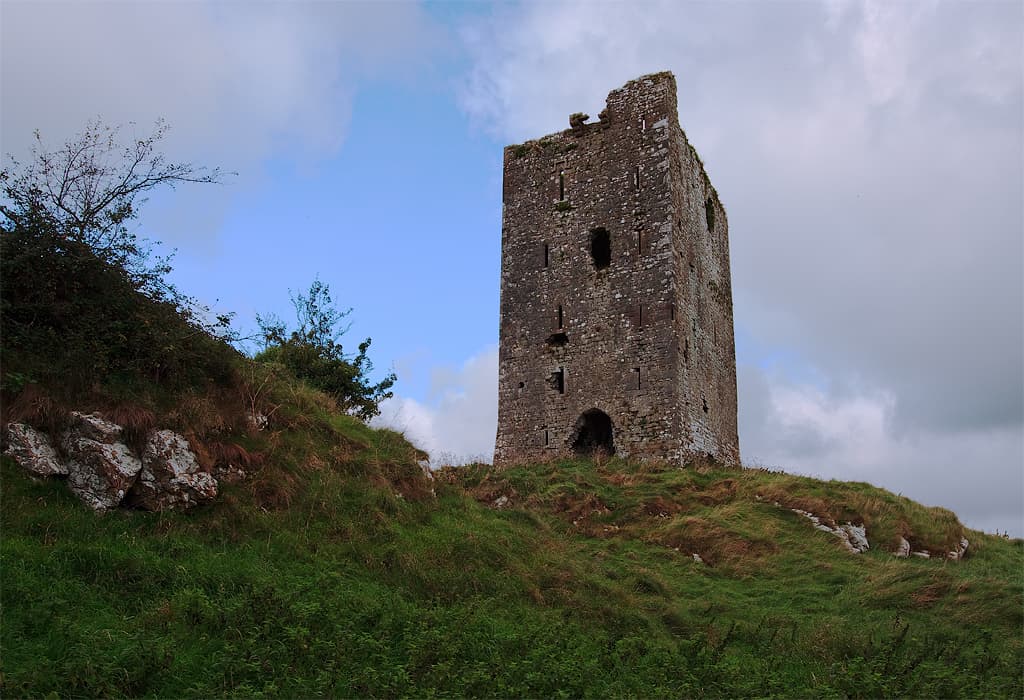
Rockstown Castle — Ireland castle

Rockstown Castle

Rockstown Castle, medieval tower house in County Limerick
Ballyneety, Ireland
Late Medieval (14th–15th c.)
Ruins

Rockstown Castle (Irish: Caisleán Bhaile na Carraige) is a medieval tower house ruin located near the village of Ballyneety, approximately 7 miles (11 km) from the city of Limerick in County Limerick, Ireland. This castle represents a typical example of the many fortified residences constructed by the Irish gentry during the late medieval period, roughly spanning the 15th and early 16th centuries.

Historical context and significance

The construction of tower houses like Rockstown Castle was widespread in Ireland during the late medieval era, reflecting both the need for defense and the assertion of local power by the landed classes. These structures were primarily built by Gaelic Irish chieftains and Anglo-Norman settlers to serve as fortified homes rather than large military fortresses. Rockstown Castle's strategic location near Ballyneety would have offered control over surrounding lands and routes, vital for both defense and administration.

The castle's name, Bhaile na Carraige, translates to "town of the rock," which likely references the rocky terrain on which the castle was built, a common choice for defensive advantage.

Architectural features of Rockstown Castle

Rockstown Castle is classified as a tower house, a vertical stone structure typically rising several stories high. These castles were designed with a focus on verticality, narrow footprints, and defensive features suitable for the turbulent times of late medieval Ireland.

Structure and layout

The castle originally featured a rectangular plan with thick stone walls constructed from locally sourced limestone, characteristic of the region. The surviving ruins indicate multiple floors connected by a spiral staircase, a common feature in tower houses that provided both access and defense. The ground floor likely served as storage or a kitchen area, while the upper floors contained the main living quarters, including a great hall and private chambers.

Defensive elements

Typical defensive features of tower houses, which Rockstown Castle would have possessed, include narrow slit windows or arrow loops for archery defense, battlements or crenellations atop the walls, and a machicolation or murder hole above the entrance to deter attackers. The castle's elevated position on rocky ground enhanced its defensive capability by making direct assault more difficult.

Current condition and preservation

Today, Rockstown Castle stands as ruins, with much of its upper structure lost to time and weathering. The remaining walls and partial towers provide valuable insight into the construction techniques and living conditions of the period. The site is considered an archaeological ruin, attracting interest from historians and visitors keen to explore Ireland's medieval heritage.

Preservation efforts have focused on stabilizing the existing masonry to prevent further deterioration, though the castle remains largely unrestored, retaining its authentic ruined character.

Visiting Rockstown Castle

The castle is accessible to the public, located near Ballyneety village, which is reachable by road from Limerick city. Visitors should prepare for uneven terrain and limited facilities on site. The surrounding countryside offers scenic views and a glimpse into rural Irish history.

Nearby attractions

While visiting Rockstown Castle, travelers can explore other historical sites in County Limerick, including King John's Castle in Limerick city, a well-preserved medieval fortress, and the nearby Adare Manor, known for its elegant architecture and gardens.

Frequently asked questions (FAQ)

What is the historical significance of Rockstown Castle?
Rockstown Castle is an important historical site in Ballyneety, Ireland, dating back to the 15th century. It played a crucial role in the region's defense during the turbulent times of the medieval period and showcases the architectural styles of that era.
When was Rockstown Castle built?
Rockstown Castle was constructed in the late 15th century, specifically around 1480. It has stood the test of time and is a testament to the rich history and heritage of Ireland.
What are the opening hours for visiting Rockstown Castle?
Rockstown Castle is open to visitors from 10 AM to 5 PM daily. However, it is advisable to check for any seasonal changes in hours or special closures before planning your visit.
Can I take guided tours of Rockstown Castle?
Yes, guided tours are available at Rockstown Castle, providing visitors with in-depth knowledge of its history and architecture. These tours are led by knowledgeable guides who enhance the experience with fascinating stories and insights.
Is Rockstown Castle accessible for individuals with mobility challenges?
Rockstown Castle has made efforts to improve accessibility for all visitors. However, due to its historical nature, some areas may present challenges, so it's recommended to contact the castle administration for specific accessibility information.
What is the best time to visit Rockstown Castle?
The best time to visit Rockstown Castle is during the late spring and early autumn months when the weather is mild and the surrounding landscape is at its most beautiful. Additionally, these periods tend to be less crowded, allowing for a more enjoyable experience.
Are there any nearby attractions to visit when at Rockstown Castle?
Yes, there are several nearby attractions, including Ballyneety Golf Club and the scenic Limerick Greenway. These sites offer additional recreational opportunities and enhance your visit to the area.
How much are the ticket prices for Rockstown Castle?
Ticket prices for Rockstown Castle are quite reasonable, typically around €10 for adults and reduced rates for children and seniors. Family tickets are also available, providing great value for those visiting with children.

Photo gallery

Rockstown Castle
Click to view

Photo by Mike Searle•CC BY-SA 2.0

1 photo • Click any image to view in full screen

Information

Tower House

Loading map...

Visitor reviews

No reviews yet. Been here? Write the first review and help other travelers!

Write the first review

Visited this castle? Share your experience

Your review helps other travelers and adds first-hand knowledge to our encyclopedia.
Write a review

(5/5)

0/2000 characters

Your review will be visible after admin approval

Nearby castles

12.3 km
King John's Castle (Limerick) — Ireland castle

King John's Castle (Limerick)

Limerick, Ireland

King John's Castle (Irish: Caisleán Luimnigh), prominently situated on King's Island in Limerick, Ireland, is a notable example of a 13th-century hill castle with a rich history intertwined with medieval warfare and Viking heritage. The castle overlooks the River Shannon, a strategic location that has shaped its military and cultural significance since its construction. Medieval origins and viking heritage The site of King John's Castle has a history that predates the castle itself, with archaeological evidence revealing a Viking settlement dating back to 922. This early Norse presence on King's Island highlights the area's importance as a defensive and trading hub long before the medieval castle was constructed. The castle was commissioned by King John of England around 1200 as part of a broader effort to consolidate English control over Ireland during the High Medieval period. Its construction utilized robust defensive features common in Norman military architecture, including thick stone walls and multiple towers designed to withstand sieges. Architectural features and fortifications King John's Castle is characterized by its massive curtain walls, which form a roughly rectangular enclosure fortified with several imposing towers. Notable among these are the King's Gate and the Queen's Gate, which served as primary entrances and were heavily fortified to repel attackers. The castle's walls are punctuated by battlements and arrow slits, enabling defenders to launch projectiles while remaining protected. The site also includes remnants of a moat and other defensive earthworks that enhanced its security. The castle's interior housed various functional spaces such as great halls, chambers, and storerooms, reflecting its role as both a military fortress and an administrative center. The layout and construction techniques demonstrate the adaptation of Norman defensive architecture to the Irish context. Sieges and military history Throughout its history, King John's Castle was the focal point of several significant military engagements, particularly during the turbulent 17th century. The castle endured five sieges in this century alone, underscoring its strategic importance. One of the most notable sieges occurred in 1642 during the Irish Confederate Wars, when the castle was held by Protestant forces fleeing the Irish Rebellion of 1641. The siege, led by the Irish Confederate commander Garret Barry, resulted in severe damage to the castle's walls and fortifications. These conflicts reflect the castle's role as a contested stronghold amidst the religious and political upheavals of early modern Ireland. Archaeological discoveries and preservation Archaeological excavations conducted in the early 20th century, particularly around 1900, uncovered substantial remains of the earlier Viking settlement beneath the castle grounds. These findings have contributed to a deeper understanding of the site's long-term occupation and its layered historical significance. Today, King John's Castle is well preserved and serves as a major tourist attraction. The castle's preservation allows visitors to explore its medieval architecture and learn about its historical context through onsite displays and guided tours. Modern redevelopment and visitor experience Between 2011 and 2013, King John's Castle underwent a comprehensive €5.7 million redevelopment aimed at enhancing visitor facilities and interpretive resources. This redevelopment included the construction of a modern visitor centre, the installation of interactive exhibitions featuring computer-generated animations, and the addition of a café to improve the overall visitor experience. The redevelopment has made the castle more accessible and engaging, allowing visitors to immerse themselves in the historical narrative of the site and appreciate its architectural features in a contemporary context. Location and cultural significance Located on King's Island, in the heart of Limerick city, the castle remains a prominent landmark visible from the River Shannon and surrounding areas. Its position not only provided strategic military advantages but also established it as a symbol of authority and governance in medieval Ireland. King John's Castle continues to be an important cultural heritage site, reflecting the complex history of Norman influence, Irish resistance, and urban development in Limerick.

High Medieval (11th–13th c.)
Details
12.3 km

King John’s Castle, Limerick

Limerick, United Kingdom

King John's Castle stands as a monumental testament to the rich and turbulent history of Limerick, Ireland. Located on King's Island beside the River Shannon, this 13th-century Anglo-Norman fortress occupies a site with origins tracing back to a Viking stronghold established in 922 by the Viking leader Thormodr Helgason, also known as Tomrair mac Ailchi. This early fortification served as a strategic base for Viking raids along the river, marking the beginning of the site's long-standing military significance. By the 10th century, the Viking presence waned as local Irish clans asserted control over the area. In 1195, the Anglo-Normans, led by John, Lord of Ireland (later King John of England), captured Limerick. Around 1200, John commissioned the construction of the current castle, completed by approximately 1210. The fortress was strategically positioned to guard the frontier between the Gaelic kingdoms to the west and Norman-controlled territories to the east and south. This location underscored the castle's role as a military bulwark and administrative center during the High medieval period. Under Norman rule, Limerick prospered as a vital port and commercial hub. Notably, the castle's north-east tower housed a mint authorized by King John, producing coins that survive today in local museums. Architectural design and features King John's Castle is distinctive for its five-sided layout, defined by robust curtain walls enclosing a rectangular courtyard. The walls' lower sections curve outward, a defensive design intended to deflect projectiles and resist siege engines. Large round towers reinforce both the gatehouse and the curtain walls, extending beyond the wall line to enable defenders to fire along the perimeter, creating overlapping fields of defense. This design exemplifies the military architectural innovations of the High medieval Anglo-Norman period. Unlike many contemporaneous castles, King John's Castle notably lacks a central keep or donjon. Instead, it relies on its imposing high curtain walls, originally taller than they are today, engineered to withstand attacks from siege engines such as trebuchets and battering rams. The main entrance was once protected by a drawbridge spanning a now dry moat, connected to a barbican—a fortified gateway outpost providing an additional layer of defense. Within the courtyard, the castle originally contained several essential buildings, including a great hall used for banquets and administrative functions, kitchens, military tents, and stables. While many of these structures have not survived intact, the remains of the great hall are still visible, offering insights into the castle's domestic and ceremonial life. Historical significance and sieges The castle and the city of Limerick endured a series of significant sieges, particularly during the 17th century. In 1642, during the Irish Confederate Wars, the castle served as a refuge for Protestant forces fleeing the Irish Rebellion of 1641. These defenders were besieged by Irish Confederate troops under Garret Barry, who employed mining techniques to undermine the castle walls, causing substantial damage. This siege left visible scars on the fortress's walls, necessitating later restoration. Subsequent sieges occurred during the Cromwellian conquest of Ireland in 1650-51 and the Williamite War in Ireland from 1690-91. The latter conflict ended with the signing of the Treaty of Limerick, a pivotal moment in Irish history. These repeated military engagements underscore the castle's strategic importance across centuries of conflict. Later use and archaeological discoveries From 1791, King John's Castle was repurposed as a British military barracks, housing over 400 soldiers. During this period, the castle's towers were modified to accommodate modern artillery, reflecting evolving military technology. In the 20th century, the castle courtyard saw the construction of 22 houses between 1935 and 1989, which were later removed to restore the site's historical integrity. Archaeological excavations in 1900 and 1990 revealed significant findings, including remains of the earlier Viking settlement, evidence of a pre-Norman village, and artifacts related to the 1642 siege, such as mines and counter-mines used in the attempts to breach the walls. These discoveries have enriched understanding of the site's layered history and its continuous occupation and adaptation over more than a millennium. Modern restoration and visitor experience Between 2011 and 2013, the castle underwent a major redevelopment that included the construction of a modern visitor center featuring interactive exhibits and amenities. This center is built above the archaeological remains, offering visitors panoramic views over the courtyard and the River Shannon. The restoration and conservation efforts have preserved the castle's historic fabric while enhancing public engagement with its rich heritage. Today, King John's Castle stands as a well-preserved example of High medieval Anglo-Norman military architecture, embodying centuries of Irish history from Viking origins through medieval conquest, sieges, and modern restoration. Its strategic location, distinctive architectural features, and layered historical significance make it a premier cultural and heritage site in Limerick and Ireland as a whole.

High Medieval (11th–13th c.)
Details
12.3 km

Croom Castle

Croom, United Kingdom

Croom Castle is located in the town of Croom, County Limerick, Ireland, near a bend in the River Maigue. The site originally hosted a wooden fortification built in the late 12th century by Dermot O'Donovan. This early fort was soon replaced by a more durable stone castle constructed around 1200 by Gerald FitzMaurice, an Anglo-Norman knight who had recently acquired the manor. The castle served as a strategic stronghold for the FitzMaurice family and their descendants, the Earls of Kildare. Medieval origins and early history The transition from a wooden fort to a stone castle marked the establishment of a significant defensive structure in the region during the high medieval period. The stone castle was designed as a tower house surrounded by a circular defensive wall, forming an inner castle. This inner castle was further protected by a bawn, a fortified enclosure, which extended towards the riverbank, enhancing the castle's defensive capabilities. The castle underwent repairs in 1334 under the supervision of John Darcy, reflecting its ongoing military and residential importance. However, much of the surviving structure likely dates from the 15th century, a period when the FitzMaurices, as Earls of Kildare, maintained control of the castle. The family's tenure was interrupted following the Kildare Rebellion of 1534, after which the castle changed hands but was later restored. Role in the nine years' war and subsequent conflicts Croom Castle played a notable role during the Nine Years' War (1594–1603), a major Irish resistance against English rule. In 1601, the Countess of Kildare hosted Red Hugh O'Donnell and his forces at the castle after their arduous night crossing of the frozen Slieve Felim marshes. This journey was part of their campaign to join Spanish allies arriving in Kinsale, marking a crucial moment in the war. Following the war, the castle was restored to the FitzGerald family by James I. However, the family's ownership was permanently lost during the Irish Confederate Wars of 1641. Later, in 1678, Charles II granted the castle to the Duke of Richmond, who held it during the turbulent years of the late 17th century. The castle was further fortified by Jacobite forces during the Williamite War in Ireland (1689–1691) to resist Williamite troops. Decline and architectural remains By 1721, Croom Castle had fallen into significant disrepair and was sold to John Croker. The Croker family repurposed the castle ruins as a quarry to construct a new two-storey house built against the inner face of the bawn walls. This 18th-century house and associated buildings now serve as private residences within the castle grounds. The original medieval castle layout comprised the inner castle with its tower house, surrounded by the circular defensive wall, and the bawn extending towards the river. Today, the inner castle walls have largely collapsed, leaving an overgrown mound of rubble that is difficult to discern from outside the property. The bawn walls and the later 18th-century structures remain intact and are occupied as residences. Current status and visitor information Currently, Croom Castle is a private property and is not open to public visitation. The medieval ruins are preserved as a garden feature within the estate, but the inner castle remains are largely obscured by vegetation and the surrounding buildings. The castle's historical significance lies in its representation of Anglo-Norman military architecture and its role in Ireland's turbulent medieval and early modern history.

High Medieval (11th–13th c.)
Details

