King John's Castle (Limerick) — Ireland castle

King John's Castle (Limerick)

King John's Castle, Limerick
Limerick, Ireland
High Medieval (11th–13th c.)
Well Preserved

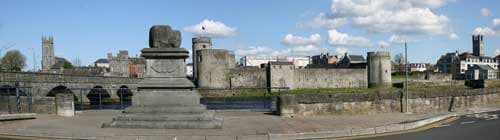
King John's Castle (Irish: Caisleán Luimnigh), prominently situated on King's Island in Limerick, Ireland, is a notable example of a 13th-century hill castle with a rich history intertwined with medieval warfare and Viking heritage. The castle overlooks the River Shannon, a strategic location that has shaped its military and cultural significance since its construction.

Medieval origins and viking heritage

The site of King John's Castle has a history that predates the castle itself, with archaeological evidence revealing a Viking settlement dating back to 922. This early Norse presence on King's Island highlights the area's importance as a defensive and trading hub long before the medieval castle was constructed. The castle was commissioned by King John of England around 1200 as part of a broader effort to consolidate English control over Ireland during the High Medieval period. Its construction utilized robust defensive features common in Norman military architecture, including thick stone walls and multiple towers designed to withstand sieges.

Architectural features and fortifications

King John's Castle is characterized by its massive curtain walls, which form a roughly rectangular enclosure fortified with several imposing towers. Notable among these are the King's Gate and the Queen's Gate, which served as primary entrances and were heavily fortified to repel attackers. The castle's walls are punctuated by battlements and arrow slits, enabling defenders to launch projectiles while remaining protected. The site also includes remnants of a moat and other defensive earthworks that enhanced its security.

The castle's interior housed various functional spaces such as great halls, chambers, and storerooms, reflecting its role as both a military fortress and an administrative center. The layout and construction techniques demonstrate the adaptation of Norman defensive architecture to the Irish context.

Sieges and military history

Throughout its history, King John's Castle was the focal point of several significant military engagements, particularly during the turbulent 17th century. The castle endured five sieges in this century alone, underscoring its strategic importance. One of the most notable sieges occurred in 1642 during the Irish Confederate Wars, when the castle was held by Protestant forces fleeing the Irish Rebellion of 1641. The siege, led by the Irish Confederate commander Garret Barry, resulted in severe damage to the castle's walls and fortifications.

These conflicts reflect the castle's role as a contested stronghold amidst the religious and political upheavals of early modern Ireland.

Archaeological discoveries and preservation

Archaeological excavations conducted in the early 20th century, particularly around 1900, uncovered substantial remains of the earlier Viking settlement beneath the castle grounds. These findings have contributed to a deeper understanding of the site's long-term occupation and its layered historical significance.

Today, King John's Castle is well preserved and serves as a major tourist attraction. The castle's preservation allows visitors to explore its medieval architecture and learn about its historical context through onsite displays and guided tours.

Modern redevelopment and visitor experience

Between 2011 and 2013, King John's Castle underwent a comprehensive €5.7 million redevelopment aimed at enhancing visitor facilities and interpretive resources. This redevelopment included the construction of a modern visitor centre, the installation of interactive exhibitions featuring computer-generated animations, and the addition of a café to improve the overall visitor experience.

The redevelopment has made the castle more accessible and engaging, allowing visitors to immerse themselves in the historical narrative of the site and appreciate its architectural features in a contemporary context.

Location and cultural significance

Located on King's Island, in the heart of Limerick city, the castle remains a prominent landmark visible from the River Shannon and surrounding areas. Its position not only provided strategic military advantages but also established it as a symbol of authority and governance in medieval Ireland.

King John's Castle continues to be an important cultural heritage site, reflecting the complex history of Norman influence, Irish resistance, and urban development in Limerick.

Frequently asked questions (FAQ)

What are the opening hours of King John's Castle?
King John's Castle is typically open to visitors daily from 10:00 to 17:00, with extended hours during peak tourist seasons. It is advisable to check the official website for any seasonal changes or special closures.
How do I get to King John's Castle in Limerick?
King John's Castle is located on King's Island in the center of Limerick city, easily accessible by foot, car, or public transport. The castle is well signposted and near other city attractions.
What can visitors expect to see at King John's Castle?
Visitors can explore the castle's medieval walls, towers, and gates, as well as interactive exhibitions that showcase the site's Viking origins and its role in Irish history. The visitor centre offers multimedia displays and guided tours.
Is King John's Castle wheelchair accessible?
The castle has made efforts to improve accessibility, including ramps and adapted facilities in the visitor centre. However, due to the historic nature of the site, some areas with uneven surfaces may be challenging for wheelchair users.
When was King John's Castle built?
King John's Castle was built in the early 13th century, around 1200, on the orders of King John of England as part of the Norman expansion into Ireland.

Photo gallery

King John's Castle (Limerick)
Click to view

Photo by Mike Shinners•CC BY-SA 2.0

1 photo • Click any image to view in full screen

Information

Hill Castle

Address

King's Island, Limerick, Ireland

Loading map...

Visitor reviews

No reviews yet. Been here? Write the first review and help other travelers!

Write the first review

Visited this castle? Share your experience

Your review helps other travelers and adds first-hand knowledge to our encyclopedia.

Write a review

(5/5)

0/2000 characters

Your review will be visible after admin approval

Nearby castles

0 km

King John’s Castle, Limerick

Limerick, United Kingdom

King John's Castle stands as a monumental testament to the rich and turbulent history of Limerick, Ireland. Located on King's Island beside the River Shannon, this 13th-century Anglo-Norman fortress occupies a site with origins tracing back to a Viking stronghold established in 922 by the Viking leader Thormodr Helgason, also known as Tomrair mac Ailchi. This early fortification served as a strategic base for Viking raids along the river, marking the beginning of the site's long-standing military significance. By the 10th century, the Viking presence waned as local Irish clans asserted control over the area. In 1195, the Anglo-Normans, led by John, Lord of Ireland (later King John of England), captured Limerick. Around 1200, John commissioned the construction of the current castle, completed by approximately 1210. The fortress was strategically positioned to guard the frontier between the Gaelic kingdoms to the west and Norman-controlled territories to the east and south. This location underscored the castle's role as a military bulwark and administrative center during the High medieval period. Under Norman rule, Limerick prospered as a vital port and commercial hub. Notably, the castle's north-east tower housed a mint authorized by King John, producing coins that survive today in local museums. Architectural design and features King John's Castle is distinctive for its five-sided layout, defined by robust curtain walls enclosing a rectangular courtyard. The walls' lower sections curve outward, a defensive design intended to deflect projectiles and resist siege engines. Large round towers reinforce both the gatehouse and the curtain walls, extending beyond the wall line to enable defenders to fire along the perimeter, creating overlapping fields of defense. This design exemplifies the military architectural innovations of the High medieval Anglo-Norman period. Unlike many contemporaneous castles, King John's Castle notably lacks a central keep or donjon. Instead, it relies on its imposing high curtain walls, originally taller than they are today, engineered to withstand attacks from siege engines such as trebuchets and battering rams. The main entrance was once protected by a drawbridge spanning a now dry moat, connected to a barbican—a fortified gateway outpost providing an additional layer of defense. Within the courtyard, the castle originally contained several essential buildings, including a great hall used for banquets and administrative functions, kitchens, military tents, and stables. While many of these structures have not survived intact, the remains of the great hall are still visible, offering insights into the castle's domestic and ceremonial life. Historical significance and sieges The castle and the city of Limerick endured a series of significant sieges, particularly during the 17th century. In 1642, during the Irish Confederate Wars, the castle served as a refuge for Protestant forces fleeing the Irish Rebellion of 1641. These defenders were besieged by Irish Confederate troops under Garret Barry, who employed mining techniques to undermine the castle walls, causing substantial damage. This siege left visible scars on the fortress's walls, necessitating later restoration. Subsequent sieges occurred during the Cromwellian conquest of Ireland in 1650-51 and the Williamite War in Ireland from 1690-91. The latter conflict ended with the signing of the Treaty of Limerick, a pivotal moment in Irish history. These repeated military engagements underscore the castle's strategic importance across centuries of conflict. Later use and archaeological discoveries From 1791, King John's Castle was repurposed as a British military barracks, housing over 400 soldiers. During this period, the castle's towers were modified to accommodate modern artillery, reflecting evolving military technology. In the 20th century, the castle courtyard saw the construction of 22 houses between 1935 and 1989, which were later removed to restore the site's historical integrity. Archaeological excavations in 1900 and 1990 revealed significant findings, including remains of the earlier Viking settlement, evidence of a pre-Norman village, and artifacts related to the 1642 siege, such as mines and counter-mines used in the attempts to breach the walls. These discoveries have enriched understanding of the site's layered history and its continuous occupation and adaptation over more than a millennium. Modern restoration and visitor experience Between 2011 and 2013, the castle underwent a major redevelopment that included the construction of a modern visitor center featuring interactive exhibits and amenities. This center is built above the archaeological remains, offering visitors panoramic views over the courtyard and the River Shannon. The restoration and conservation efforts have preserved the castle's historic fabric while enhancing public engagement with its rich heritage. Today, King John's Castle stands as a well-preserved example of High medieval Anglo-Norman military architecture, embodying centuries of Irish history from Viking origins through medieval conquest, sieges, and modern restoration. Its strategic location, distinctive architectural features, and layered historical significance make it a premier cultural and heritage site in Limerick and Ireland as a whole.

High Medieval (11th–13th c.)
Details
8.3 km

Carrigogunnell Castle

, United Kingdom

Carrigogunnell Castle stands as a remarkable example of a medieval hill castle strategically perched on a volcanic rock outcrop near Clarina village in Ballybrown, Ireland. Its commanding position overlooking the River Shannon afforded it significant defensive advantages and a sweeping view of the surrounding landscape. The castle’s origins date back to at least the early 13th century, with the first historical mention in 1209 when King John of England acknowledged it as part of the lands held by Donnchad Cairbreach O’Brien, the King of Thomond. This early association with the powerful O’Brien dynasty highlights the castle’s importance as a regional stronghold during the High medieval period. The castle’s initial construction likely involved Gaelic Irish builders under O’Brien influence, combining native defensive techniques with emerging medieval fortification concepts. Over the centuries, Carrigogunnell evolved architecturally and politically, reflecting the turbulent history of Ireland through the late medieval and early modern eras. Significant building phases occurred around the mid-15th century and again during the 16th century, coinciding with the castle’s transition through various noble families, including the O’Connells and the Fitzgeralds. Historical context and ownership transitions Carrigogunnell Castle played a notable role in the shifting power dynamics of medieval Ireland. Initially under the control of the O’Brien family, it symbolized Gaelic authority in the region. The castle’s strategic location made it a coveted asset during the Tudor conquest of Ireland. In 1536, it was captured by Leonard Grey, the Lord Deputy of Ireland, during a campaign to assert English dominance. This seizure was marked by a brutal massacre of the garrison and local inhabitants, a grim event documented in contemporary accounts sent to London. During the mid-17th century, the castle saw relative quietude amid the Wars of the Three Kingdoms (1640–1651). It was controlled by a soldier named Captain Wilson, who implemented some modifications before selling it to Michael Boyle, later Archbishop of Dublin. The castle’s military significance resurfaced during the Williamite War in Ireland. In 1691, it was garrisoned by forces loyal to King James II during the second siege of Limerick but was captured by troops under Dutch General Godert de Ginckell. Subsequently, the castle was deliberately damaged to prevent further military use. Architectural features and layout Outer ward and defensive structures The castle’s layout is characterized by a roughly harp-shaped outer ward covering about one acre (0.40 hectares). This area includes a tower in the southwest corner and a large two-story building in the northeast corner, possibly a chapel, though its exact function remains uncertain. The outer walls, constructed from finely cut local limestone, demonstrate skilled masonry and contrast with the volcanic rock of the hill itself. The main southern gateway, serving as the primary entrance, is accessed via a gentle slope. It was modestly fortified, lacking flanking towers and featuring walls less than 1.5 meters thick. A smaller sally port on the western side provided quick access to the steep crags below. Defensive towers were strategically placed at wall junctions, though the overall fortifications suggest the castle was designed more as a fortified residence than a purely military fortress. Inner ward and keep The inner or upper ward is situated in the northwest corner of the site and contains a two-story range of buildings approximately 30 meters long along the west wall. These structures exhibit at least two phases of construction, indicating ongoing development over centuries. The most prominent feature is the five-story keep at the northwestmost point, rising over 15 meters tall. This keep includes a spiral staircase providing vertical access between floors and dates architecturally to the 14th or 15th century. By the early 20th century, only the outer walls and parts of the southern wall of the keep remained intact, reflecting considerable deterioration. Adjacent to the keep is a three-story residential building likely constructed in the 16th century, evidencing continuous habitation and adaptation of the castle complex over time. Cultural significance and local legends Carrigogunnell Castle is enveloped in local folklore, adding a rich mythic dimension to its historical narrative. The castle’s name, meaning "rock of the candle," is linked to a legend about a supernatural hag named Grana who is said to have lit an enchanted candle on the rock before the castle’s construction, casting a fatal spell over the site. This tale underscores the castle’s deep-rooted presence in the cultural imagination of the region. Beyond legend, the castle remains a powerful symbol of the medieval Gaelic aristocracy and the complex history of Ireland’s interactions with English rule. Its ruins continue to attract interest for their historical, architectural, and cultural value. Preservation and current condition Today, Carrigogunnell Castle stands as a partially preserved ruin. The volcanic rock outcrop and remaining structures provide a dramatic silhouette against the landscape. While some walls have collapsed, substantial portions of the outer ward, inner ward, and keep remain visible. The use of finely cut limestone in construction highlights the quality craftsmanship of its builders. The castle’s irregular internal layout reflects its dual role as a fortified residence rather than a fortress built solely for defense. This characteristic, combined with its historical significance and scenic location, makes Carrigogunnell a fascinating site for visitors and scholars interested in medieval Irish castles.

High Medieval (11th–13th c.)
Details
12.3 km
Rockstown Castle — Ireland castle

Rockstown Castle

Ballyneety, Ireland

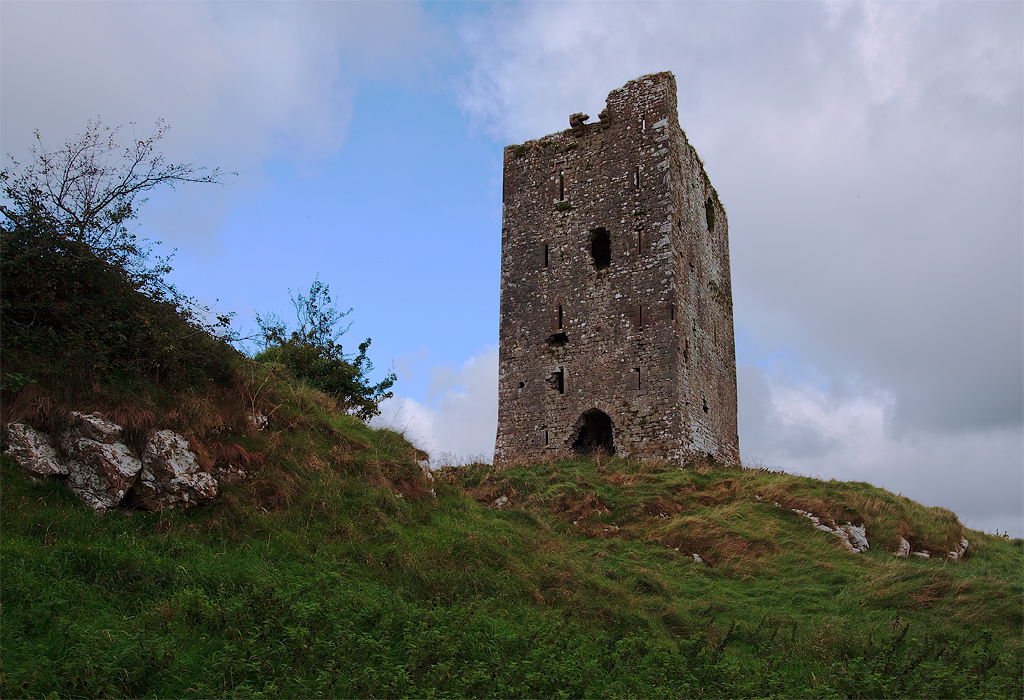
Rockstown Castle (Irish: Caisleán Bhaile na Carraige) is a medieval tower house ruin located near the village of Ballyneety, approximately 7 miles (11 km) from the city of Limerick in County Limerick, Ireland. This castle represents a typical example of the many fortified residences constructed by the Irish gentry during the late medieval period, roughly spanning the 15th and early 16th centuries. Historical context and significance The construction of tower houses like Rockstown Castle was widespread in Ireland during the late medieval era, reflecting both the need for defense and the assertion of local power by the landed classes. These structures were primarily built by Gaelic Irish chieftains and Anglo-Norman settlers to serve as fortified homes rather than large military fortresses. Rockstown Castle's strategic location near Ballyneety would have offered control over surrounding lands and routes, vital for both defense and administration. The castle's name, Bhaile na Carraige, translates to "town of the rock," which likely references the rocky terrain on which the castle was built, a common choice for defensive advantage. Architectural features of Rockstown Castle Rockstown Castle is classified as a tower house, a vertical stone structure typically rising several stories high. These castles were designed with a focus on verticality, narrow footprints, and defensive features suitable for the turbulent times of late medieval Ireland. Structure and layout The castle originally featured a rectangular plan with thick stone walls constructed from locally sourced limestone, characteristic of the region. The surviving ruins indicate multiple floors connected by a spiral staircase, a common feature in tower houses that provided both access and defense. The ground floor likely served as storage or a kitchen area, while the upper floors contained the main living quarters, including a great hall and private chambers. Defensive elements Typical defensive features of tower houses, which Rockstown Castle would have possessed, include narrow slit windows or arrow loops for archery defense, battlements or crenellations atop the walls, and a machicolation or murder hole above the entrance to deter attackers. The castle's elevated position on rocky ground enhanced its defensive capability by making direct assault more difficult. Current condition and preservation Today, Rockstown Castle stands as ruins, with much of its upper structure lost to time and weathering. The remaining walls and partial towers provide valuable insight into the construction techniques and living conditions of the period. The site is considered an archaeological ruin, attracting interest from historians and visitors keen to explore Ireland's medieval heritage. Preservation efforts have focused on stabilizing the existing masonry to prevent further deterioration, though the castle remains largely unrestored, retaining its authentic ruined character. Visiting Rockstown Castle The castle is accessible to the public, located near Ballyneety village, which is reachable by road from Limerick city. Visitors should prepare for uneven terrain and limited facilities on site. The surrounding countryside offers scenic views and a glimpse into rural Irish history. Nearby attractions While visiting Rockstown Castle, travelers can explore other historical sites in County Limerick, including King John's Castle in Limerick city, a well-preserved medieval fortress, and the nearby Adare Manor, known for its elegant architecture and gardens.

Late Medieval (14th–15th c.)
Details