Rock Pia - Tivoli

Rocca Pia castle in Tivoli
Tivoli, Lazio, Italy
Renaissance (15th–17th c.)
Well Preserved

Rocca Pia stands as a historic symbol of Tivoli, Italy, located just steps from the modern Piazza Garibaldi and the renowned sculpture of Arnoldo Pomodoro. This imposing hill castle was constructed in the mid-15th century to assert papal control over the city and prevent local uprisings, reflecting the turbulent political landscape of central Italy during the Renaissance.

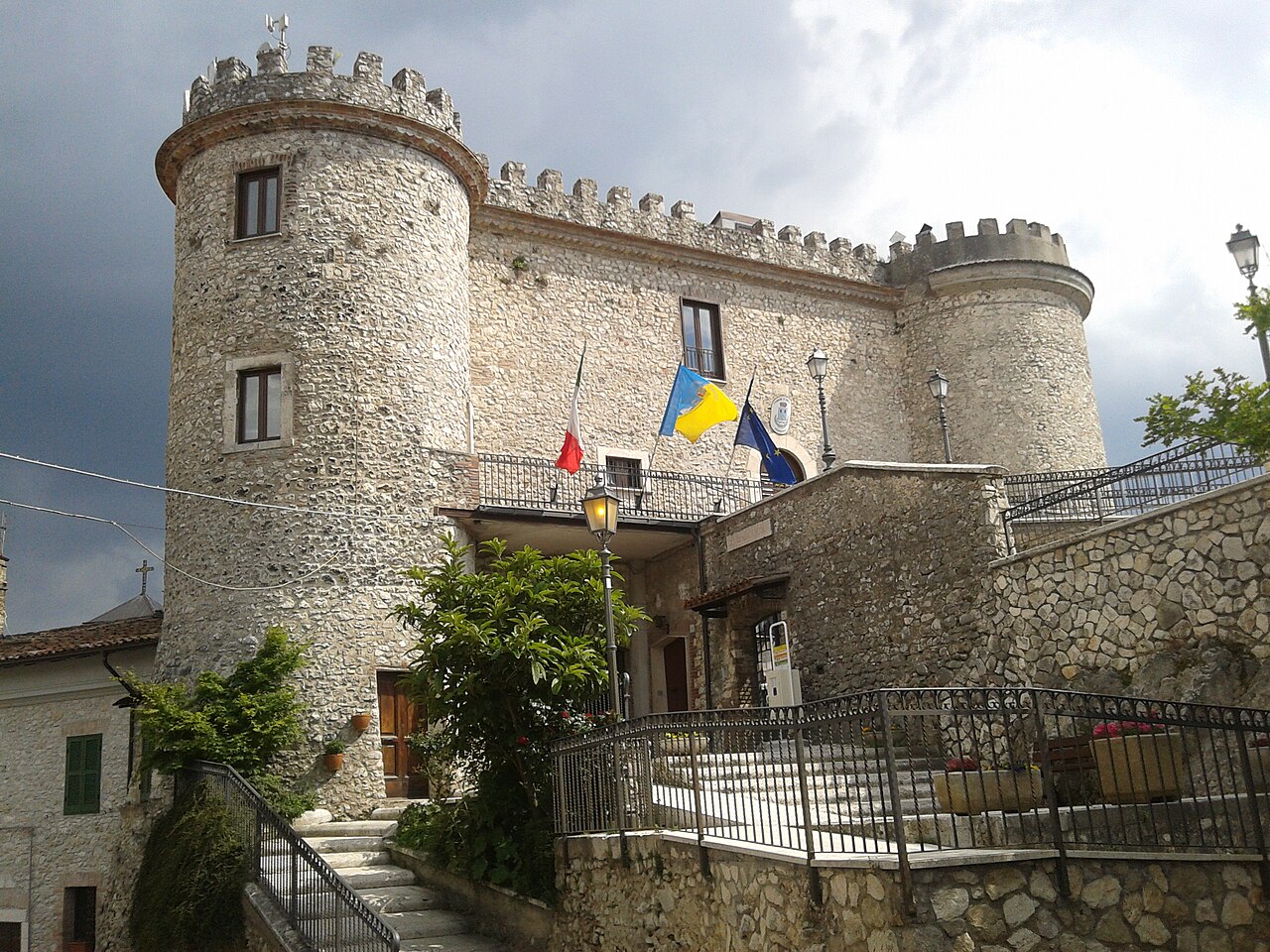
Commissioned by Pope Pius II Piccolomini around 1461, the fortress occupies a strategic position atop a small hill, offering commanding views over Tivoli and the surrounding region. Its quadrangular layout is reinforced by four circular towers of varying heights, with the tallest reaching an impressive 36.5 meters. The castle’s foundation was laid upon the remains of the ancient Roman Amphitheatrum Bleso, a 2nd-century amphitheater that was dismantled to provide building materials and to eliminate any potential military use by enemies.

Historical context and construction

The construction of Rocca Pia began in 1458 and was completed by 1461, under the directive of Pope Pius II, born Enea Silvio Piccolomini. This period was marked by intense factional conflicts involving the powerful Colonna and Orsini families, as well as the Guelf and Ghibelline factions vying for control in the region. Tivoli had enjoyed a degree of communal independence, but the papacy sought to solidify its authority by erecting a fortress that could dominate the city and suppress dissent.

The architects believed to have designed Rocca Pia were Niccolò and Varrone, Florentine pupils of the celebrated architect Filarete. The construction was overseen by Giovanni Stefano da Landriano, with master builder Manfredino directing the building efforts. Fra Giacomo da Gaeta managed the financial aspects of the project, ensuring the fortress was completed efficiently.

Architectural design and military innovation

Rocca Pia exemplifies military architecture adapted to the advent of gunpowder weaponry in the late medieval period. Built primarily from local volcanic tuff, a material chosen for its resilience against cannon fire, the fortress features thick walls and robust defensive elements.

The fortress’s quadrangular plan is enclosed by tall curtain walls connecting four circular towers. The largest tower, facing outward from the city, measures 13.2 meters in diameter and contains six stacked rooms behind walls up to 3.9 meters thick. The second largest tower stands 25.5 meters tall with five floors and walls approximately 2.9 to 3 meters thick. Two smaller towers, added about fifty years later under the papacy of Pope Alexander VI Borgia, each rise to 18 meters and face inward toward the courtyard, contributing to the fortress’s layered defense.

The tops of the towers retain their original Guelph-style crenellations, characterized by distinctive notched battlements. While the curtain walls have lost their original merlons, they are crowned with deep corbelled arches that enhance defensive capabilities. The fortress is built on a steeply sloping base known as a base a scarpa, designed to deflect and absorb attacks.

Multiple embrasures for firearms are integrated into the walls, highlighting the fortress’s adaptation to the evolving nature of warfare during the Renaissance. The main entrance on the northern side is fortified with a foregate flanked by two square towers, and access was originally granted via a drawbridge on the eastern side, now sealed. Above the entrance, visitors can still see the Piccolomini family coat of arms alongside a Latin inscription commemorating Pope Pius II’s foundation of the fortress.

Political significance and later history

Rocca Pia played a crucial role in the papal consolidation of power in Tivoli and the surrounding Lazio region. In 1522, Pope Adrian VI abolished the municipal government of Tivoli, effectively ending local self-rule for nearly four centuries. The fortress served as a garrison for papal troops, symbolizing the dominance of the Papal States.

Notably, in 1539, Pope Paul III hosted a significant event at Rocca Pia when he received from Ignatius of Loyola the first officially approved text founding the Society of Jesus (Jesuits). This moment underscores the fortress’s importance beyond military functions, linking it to major religious and cultural developments of the era.

Throughout the late 18th century, Rocca Pia witnessed occupations by French and Austrian forces amid the broader European conflicts of the time. During the Napoleonic era, the fortress was repurposed as military barracks and later converted into a prison, a role it maintained until 1960. This extended use as a prison reflects the fortress’s durable construction and strategic location.

Restoration and current status

After decades of neglect following its closure as a prison, Rocca Pia underwent significant restoration beginning in the early 2000s. The local government of Tivoli took over management, and the fortress was reopened to the public in December 2018. Today, it stands as a well-preserved example of Renaissance military architecture and a cultural landmark in the Lazio region.

Visitors to Rocca Pia can explore its spacious courtyard, ascend the towers for panoramic views, and appreciate the fortress’s robust defensive features. The site offers insights into the complex political history of central Italy during the Renaissance, the evolution of military architecture in response to gunpowder, and the enduring legacy of papal authority.

Architectural features and layout

  • Four circular towers with varying heights and wall thicknesses, designed for layered defense.
  • Thick curtain walls built from volcanic tuff, featuring embrasures for firearms.
  • Base a scarpa foundation to strengthen walls against siege attacks.
  • Drawbridge and fortified main gate with foregate and square flanking towers.
  • Guelph-style crenellations atop the towers, preserving medieval defensive aesthetics.
  • Central courtyard providing space for garrison activities and internal movement.
  • Piccolomini coat of arms and Latin inscription marking the fortress’s papal origins.

Cultural and historical importance

Rocca Pia is not only a military structure but also a symbol of papal power and Renaissance political strategy. Its construction marked the end of Tivoli’s communal independence and the beginning of nearly four centuries of direct papal governance. The fortress’s association with significant historical figures such as Pope Pius II, Pope Paul III, and Ignatius of Loyola enhances its cultural significance.

The fortress’s adaptation to gunpowder warfare illustrates the transitional period in military architecture during the late medieval and early Renaissance eras. Its preservation and restoration allow modern visitors to engage with this pivotal moment in history.

Visitor information and accessibility

Rocca Pia is managed by Tivoli’s local government and is open to the public for tours. Visitors can access the fortress to learn about its history, architecture, and role in the region’s political development. The site’s location near central Tivoli makes it easily accessible by foot from major landmarks and transportation hubs.

While the fortress retains much of its original structure, some areas may have restricted access for safety reasons. Guided tours and informational materials are often available to enhance the visitor experience.

Frequently asked questions (FAQ)

How do I get to Rock Pia in Tivoli?
You can reach Rock Pia by taking a train or bus from Rome to Tivoli. Once in Tivoli, the castle is within walking distance from the town center, and local signage will guide you to the entrance.
What is the historical significance of Rock Pia?
Rock Pia, also known as the Fortress of Tivoli, was built in the 15th century to protect the town from invasions. It played a crucial role during the conflicts between the Papal States and various noble families in the region.
When was Rock Pia constructed?
Construction of Rock Pia began in 1461 under the direction of Cardinal Giovanni Battista Savelli. The fortress was completed in the late 15th century and has since been a symbol of Tivoli's rich history.
Can I take guided tours of Rock Pia?
Yes, guided tours are available for visitors who wish to learn more about the history and architecture of Rock Pia. These tours often include access to areas not typically open to the public and are led by knowledgeable local guides.
Why is Rock Pia considered an architectural marvel?
Rock Pia is renowned for its impressive defensive structure and Renaissance architecture, featuring thick walls, towers, and a strategic location atop a rocky hill. Its design reflects the military needs of the period while also showcasing artistic elements typical of the Renaissance.
Is it possible to access Rock Pia with mobility aids?
While there are some accessible routes, parts of Rock Pia may be challenging for individuals with mobility aids due to its historical layout and terrain. It is advisable to contact the castle in advance to inquire about accessibility options.
What are the opening hours for Rock Pia?
Rock Pia is typically open to visitors from 9 AM to 7 PM during the peak season, but hours may vary in the off-season. Always check the official website or contact them directly for the most current information regarding opening hours.
What are the ticket prices for visiting Rock Pia?
Ticket prices for Rock Pia generally range from €8 to €10 for adults, with reduced prices for students and seniors. Children under a certain age may enter for free, making it an affordable option for families.
When is the best time to visit Rock Pia?
The best time to visit Rock Pia is during the spring and early fall when the weather is mild, and tourist crowds are smaller. This allows for a more enjoyable experience as you explore the castle and its surroundings.
Are there any nearby attractions to visit after Rock Pia?
Yes, after visiting Rock Pia, you can explore the stunning Villa d'Este, known for its beautiful gardens and fountains, or the ancient ruins of Hadrian's Villa. Both sites are within a short distance and offer a rich cultural experience in Tivoli.

Information

Hill Castle

Loading map...

Visitor reviews

No reviews yet. Been here? Write the first review and help other travelers!

Write the first review

Visited this castle? Share your experience

Your review helps other travelers and adds first-hand knowledge to our encyclopedia.

Write a review

(5/5)

0/2000 characters

Your review will be visible after admin approval

Nearby castles

12.1 km

Castello Savelli Torlonia

Palombara Sabina, Italy

Castello Savelli Torlonia is a significant medieval fortress perched atop the highest hill in Palombara Sabina, Italy. Its commanding position offers strategic views over the surrounding landscape and access to ancient Roman roads such as the Via Salaria and Via Tiburtina. Originally constructed by the Ottaviani family, a branch of the noble Crescenzi lineage, the castle's earliest documented mention appears in the 1064 Sublacense register. This situates the castle firmly within the medieval period as a defensive stronghold amid ongoing territorial conflicts between Roman noble families. Medieval origins and strategic importance The castle's initial role was primarily military, designed to control the hilltop and defend local interests. Its prominence increased in the late twelfth century when it became historically notable as the site of the arrest of Antipope Innocent III in 1180. This event underscores the castle's involvement in the complex interplay between secular and ecclesiastical powers during the Middle Ages. By the mid-thirteenth century, ownership transferred to Luca Savelli, nephew of Pope Honorius III, which led to the castle adopting the Savelli name. The Savelli family was influential in the region, and their stewardship marked a period of significant architectural development. Architectural expansions and military enhancements Between the 13th and 14th centuries, the castle underwent major expansions to adapt to evolving military technologies and needs. A prominent feature from this period is the large medieval masonry watchtower topped with battlements featuring caditoie—narrow openings for defensive archery and later firearms. The castle's defensive perimeter was further reinforced in the late fifteenth century with modifications to the Muro del Soccorso, a fortified walkway that enhanced the castle's ability to repel attackers. Judicial and cultural roles in the late medieval period In 1310, the castle served as the site for the trial of the Knights Templar, highlighting its function beyond military defense as an administrative and judicial center. This dual role reflects the castle's importance in regional governance and law enforcement during the medieval era. Renaissance transformation under troilo savelli The 16th century brought a significant transformation under the direction of Troilo Savelli. He initiated a comprehensive reconstruction that strengthened the fortress structurally and introduced rich Renaissance frescoes to the interior spaces, including the chapel and several reception rooms. These artworks were commissioned from notable artists, including attributions to Baldassarre Peruzzi, a prominent Renaissance painter and architect. The frescoes depict a variety of themes, from portraits of Roman heroes such as Attilio Regolo to allegorical representations of the classical liberal arts—astronomy, music, rhetoric, arithmetic, geometry, and dialectic—reflecting the intellectual aspirations of the castle’s noble patrons. Artistic features and iconography The castle’s study rooms are particularly notable for their decorative ceilings. One features grotesque frescoes where putti—cherubic figures—transform into acanthus leaves, a motif symbolizing eternal life and regeneration. Another smaller study contains painted allegories that celebrate knowledge and learning, demonstrating the cultural sophistication embraced by the Savelli family during the Renaissance. Castle layout and structural details Spanning approximately 10,000 square meters and containing 132 rooms, Castello Savelli Torlonia is likely the largest castle in the Lazio region. Its sprawling complex retains a distinctly medieval character, with consistent use of traditional building materials and techniques across its many expansions. The buildings cluster around the dominant masonry watchtower, creating a fortified stronghold that commands the hilltop. Defensive architecture The castle’s battlements with caditoie allowed defenders to launch arrows or firearms while remaining protected. The Muro del Soccorso fortified walkway provided an additional defensive line, enabling troops to move safely along the walls during sieges. The castle’s elevated position and thick stone walls made it a formidable obstacle in any military confrontation. Modern history and current use After centuries of noble ownership and various changes in possession, the castle was acquired by the Municipality of Palombara in 1971. Since then, it has been preserved and repurposed as a cultural venue. Today, the castle houses a library and a natural history museum, making it an important site for both heritage tourism and local education. Preservation and public access The castle is well preserved, with many original architectural elements intact, allowing visitors to experience its layered history firsthand. Its extensive size and rich artistic decoration provide a unique glimpse into both the military and cultural history of the Lazio region. The castle’s location on a hilltop overlooking Palombara Sabina also offers scenic views that complement its historical significance.

High Medieval (11th–13th c.)
Details
22.2 km
Ponte Nomentano — Italy castle

Ponte Nomentano

Rome, Italy

Ponte Nomentano is an ancient Roman bridge located near Rome, Italy, spanning the Aniene River (ancient Anio). Originally constructed in the 2nd century BC, this bridge was a crucial part of the Via Nomentana, an important Roman road connecting Rome to the northern territories. The bridge's strategic position outside the city walls made it a vital access point for trade and military movements into Rome. Roman origins and architectural features The bridge's core structure dates back to the Roman Republic era, showcasing typical Roman engineering with robust stone arches designed to withstand the river's flow and seasonal floods. The original Roman construction featured semicircular arches made from stone and concrete, materials characteristic of Roman bridge-building techniques. Despite centuries of wear, the bridge retains much of its original Roman masonry, particularly in the foundational piers and lower arches. Design and construction details The Ponte Nomentano was built as a hill castle type bridge, positioned on elevated terrain that allowed control over the river crossing. Its design combined functionality with defensive features, anticipating the need for protection against invaders. The bridge's arches are supported by sturdy piers with cutwaters—triangular projections that reduce water resistance and protect the structure from debris. Medieval modifications and fortifications During the Early Medieval period, the bridge acquired its most distinctive feature: a fortified tower. Known in the Middle Ages as Pons Lamentanus, the bridge was fortified to secure the northern approach to Rome. The medieval bridge tower was constructed directly on the bridge, serving both as a defensive stronghold and a toll station controlling passage along the Via Nomentana. The bridge tower's role and architecture The tower is a robust stone structure with narrow windows and battlements, typical of medieval military architecture. It provided a vantage point for guards to monitor traffic and defend against potential attackers. The tower's presence transformed the bridge from a mere crossing point into a fortified checkpoint, reflecting the turbulent political and military climate of medieval Rome. Historical significance and preservation The Ponte Nomentano has witnessed numerous historical events due to its strategic location. It was a key defensive position during various sieges and conflicts throughout the Middle Ages. Its survival into the modern era is a testament to the durability of Roman engineering and the importance of the site. Today, the bridge is well preserved and remains a notable example of Roman and medieval military architecture combined. It is a protected cultural heritage site, attracting visitors interested in ancient engineering, medieval fortifications, and Roman history. The surrounding area offers scenic views of the Aniene River and the Roman countryside. Access and visitor information The Ponte Nomentano is accessible to visitors year-round. While it no longer serves as a primary transportation route, it can be reached via local roads from Rome. Visitors can explore the bridge and its tower, appreciating the blend of Roman engineering and medieval military architecture. Interpretive signage provides historical context and highlights key architectural features.

Early Medieval (5th–10th c.)
Details
22.3 km
Castello di Oricola — Italy castle

Castello di Oricola

Oricola, Italy

Castello di Oricola, located in the Province of L'Aquila in the Abruzzo region of Italy, is a notable example of a medieval hill castle dating back to the 9th century. This early medieval fortress was constructed primarily for defensive purposes, taking advantage of its elevated position to oversee and control the surrounding landscape. Historical context and significance The castle's origins trace back to the turbulent period of the Early Middle Ages, a time marked by frequent conflicts and territorial disputes in central Italy. Built during the 9th century, Castello di Oricola served as a military stronghold designed to protect the local population and assert control over the strategic routes in the region. Its position in Abruzzo, a region characterized by rugged terrain and important trade paths, made it a crucial point for defense against invasions and raids. Throughout its history, the castle witnessed various phases of occupation and modification, reflecting the changing political and military needs of the area. While originally constructed in the early medieval period, some later adaptations may have been introduced, although the core structure retains its early medieval character. Architectural features and layout Castello di Oricola exemplifies the typical characteristics of a hill castle with a focus on fortification and surveillance. The castle is strategically perched on a hilltop, providing extensive views of the surrounding valleys and mountains, which was essential for early warning and defense. The castle's defensive structures include thick stone walls built to withstand assaults, and remnants of towers that would have served as lookout points and strongholds for defenders. The layout likely included a central courtyard, surrounded by living quarters, storage facilities, and defensive battlements. Although much of the castle is now in a state of partial ruin, the surviving elements reveal the robust construction techniques typical of the early medieval period. Defensive elements The castle's elevation and natural rocky outcrops were integrated into its defenses, reducing the need for extensive artificial fortifications on certain sides. The main entrance was probably fortified with a gatehouse and possibly a drawbridge or portcullis to control access. Battlements and arrow slits would have enabled defenders to repel attackers effectively. Current condition and preservation Today, Castello di Oricola stands as a partially preserved medieval structure. While some sections have deteriorated over centuries of exposure to the elements and human activity, significant portions of the walls and towers remain visible. The site offers valuable insights into early medieval military architecture and the historical landscape of Abruzzo. Efforts have been made to stabilize and protect the ruins, allowing visitors to explore the castle grounds and appreciate its historical significance. The castle's location and remains attract historians, archaeologists, and tourists interested in medieval fortifications and Italian heritage. Visiting information and cultural importance Castello di Oricola is accessible to the public, providing an opportunity to experience a piece of Italy's medieval past firsthand. Visitors can explore the ruins, enjoy panoramic views of the Abruzzo countryside, and learn about the castle's role in regional history. The castle is part of the cultural heritage of the Province of L'Aquila and contributes to the understanding of medieval defensive strategies in central Italy. Its preservation supports educational and touristic activities that highlight the historical development of the region.

Early Medieval (5th–10th c.)
Details