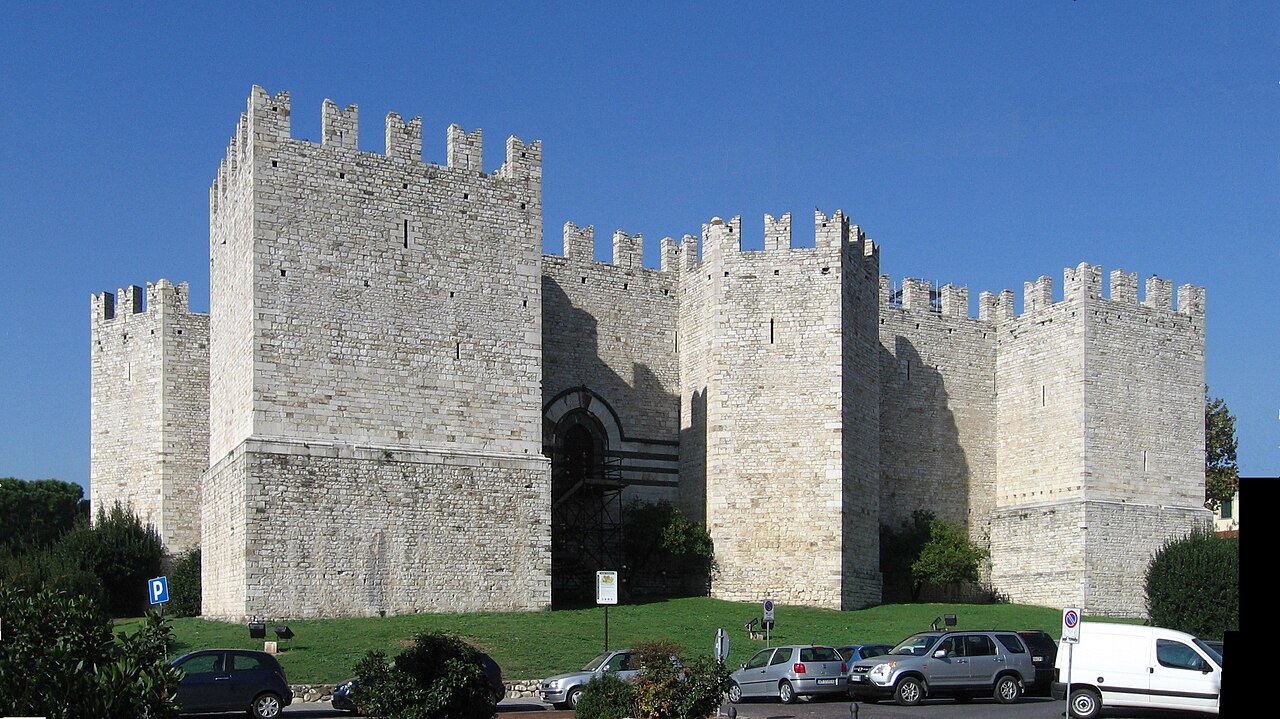
Rocca Nuova stands as a formidable hill castle in Serravalle Pistoiese, Italy, embodying the turbulent history of medieval Tuscany during the early 14th century. Constructed by the forces of the Republic of Lucca, the fortress was a strategic response to the intense territorial conflicts among the rival city-states of Lucca, Florence, and Pistoia. Its establishment marks a significant chapter in the military and political landscape of the region.
Historical context and origins
The origins of Rocca Nuova are deeply intertwined with the early 1300s military strife that engulfed Tuscany. During this period, Lucca allied with Florence to challenge the control of Serravalle Pistoiese held by Pistoia. The conflict culminated in a prolonged siege lasting approximately three months, where around 300 defenders utilized trebuchets and palisades in a determined defense. Ultimately, the Pistoian forces surrendered, leading to Lucca's seizure of the fortress and the assertion of its dominance over the area.
Following this conquest, the Republic of Lucca anticipated potential uprisings from the local population once their troops withdrew. To consolidate their hold, they initiated the construction of a new fortress named Rocca Nuova or Rocca di Castruccio around 1302. This new stronghold was deliberately built alongside but distinctly separated from the older castle, known as Rocca Vecchia. The older structure incorporated preexisting elements such as a Lombard tower and the bell tower of the church of Santo Stefano, reflecting the layered history of fortifications on the site.
Architectural features and military design
The design of Rocca Nuova showcases typical early 14th-century military architecture characterized by robust limestone walls sourced from the surrounding territories of Lucca. These thick walls, punctuated by observation posts, formed a defensive perimeter that provided multiple vantage points for surveillance and protection against attackers.
One of the most prominent surviving features is a large rectangular tower located at the southwest corner of the fortress. This tower was integral to the fortress's defensive network and remains a substantial relic of the original construction. On the northwest corner, a distinctive suspended turret projects outward, serving as a lookout post to monitor approaches from specific directions.
The fortress is further defended by a curtain wall featuring a clearly defined chemin de ronde—a raised walkway along the top of the wall that allowed defenders to patrol and repel attackers effectively. This curtain wall leads to a hexagonal tower overseeing the side facing the Valdinievole valley. This tower also houses the main gate, serving as the principal access point into the fortress complex.
Within the enclosure, a large cistern beneath the tallest tower was engineered to collect and store rainwater, a crucial feature during sieges to ensure a steady water supply. Additionally, an interior well remains visible in the courtyard, highlighting the fortress’s capacity for self-sufficiency during periods of isolation.
Historical figures and military significance
The fortress is closely associated with notable historical figures such as Castruccio Castracani, a prominent lord of Lucca who played a critical role in the completion and reinforcement of Rocca Nuova. Prior to Castracani’s involvement, early construction and strengthening efforts were undertaken by Uguccione della Faggiola, another key military leader. Castracani’s leadership ensured that the fortress maintained a well-prepared garrison, underscoring its strategic importance in the ongoing regional conflicts.
Throughout its history, Rocca Nuova served not only as a military base but also as a potent symbol of Luccan authority. It guarded against potential rebellions from Pistoia and asserted Lucca’s power amidst the rivalries with Florence and Pistoia. The complex relationship with the adjacent Rocca Vecchia, linked by a single gate but divided by a thick defensive wall, illustrates the adaptive reuse of existing fortifications to meet evolving political and military needs.
The older rocca vecchia and adaptive reuse
Rocca Vecchia, adjoining Rocca Nuova yet separated by a thick dividing wall, preserves elements from earlier periods. The Lombard tower is a notable surviving structure that dates back to an earlier era and has been incorporated into later fortifications. Additionally, one tower from the original castle was repurposed as the bell tower for the church of Santo Stefano, demonstrating an early example of adaptive reuse within the complex.
Although much of the original fortified enclosure of Rocca Vecchia no longer exists, significant portions of its walls and towers remain either in situ or have been restored. These remnants provide valuable insight into the layered military architecture and historical development of the site.
Preservation and current condition
Today, Rocca Nuova remains a partially preserved fortress, with key elements such as walls, towers, and defensive structures still visible. The large rectangular tower, suspended turret, curtain walls with chemin de ronde, and hexagonal tower stand as testaments to the fortress’s original military design and strategic purpose.
Visitors to the site can observe the architectural ingenuity of early 14th-century fortifications and appreciate the historical significance of this stronghold in the context of medieval Tuscany’s political and military struggles.
Frequently asked questions (FAQ)
- How do I get to Rocca Nuova?
- Rocca Nuova is conveniently located in the heart of Italy, easily accessible by train and bus services from major cities like Rome and Florence. If driving, you can reach the castle via the A1 motorway, with ample parking available nearby.
- What is the historical significance of Rocca Nuova?
- Rocca Nuova dates back to the 12th century and was built as a defensive fortress during the medieval period. It played a crucial role in the region's history, serving as a military stronghold and a symbol of local power.
- When was Rocca Nuova constructed?
- Construction of Rocca Nuova began in the early 12th century, with various renovations and expansions occurring over the centuries. This rich history is reflected in the castle's architecture, showcasing different styles from various periods.
- Can I take a guided tour of Rocca Nuova?
- Yes, guided tours are available for visitors who wish to learn more about the castle's history and architecture. Tours typically last about an hour and provide fascinating insights into the castle's past.
- Why is the architecture of Rocca Nuova important?
- The architecture of Rocca Nuova is significant as it combines elements of medieval military design with later Renaissance influences. This unique blend showcases the evolution of castle construction techniques and styles over time.
- Is it possible to visit Rocca Nuova with children?
- Absolutely! Rocca Nuova is family-friendly and offers engaging exhibits that can captivate visitors of all ages. Children will enjoy exploring the castle's towers and learning about its storied past.
- What are the opening hours for Rocca Nuova?
- Rocca Nuova is open to visitors from 9 AM to 6 PM daily, with extended hours during the summer months. It's advisable to check the official website for any seasonal variations in opening times.
- What are the ticket prices for Rocca Nuova?
- Tickets for Rocca Nuova are reasonably priced, making it accessible for all visitors. Discounts are often available for students, seniors, and groups, so be sure to inquire at the ticket office.
- What are some nearby attractions to Rocca Nuova?
- Visitors to Rocca Nuova can also explore nearby attractions such as the beautiful town of Assisi and the historic sites of Spoleto. These locations provide a rich cultural experience and complement your visit to the castle.
Information
Loading map...
Visitor reviews
No reviews yet. Been here? Write the first review and help other travelers!
Write the first reviewVisited this castle? Share your experience
Your review helps other travelers and adds first-hand knowledge to our encyclopedia.