Rocca di Novellara
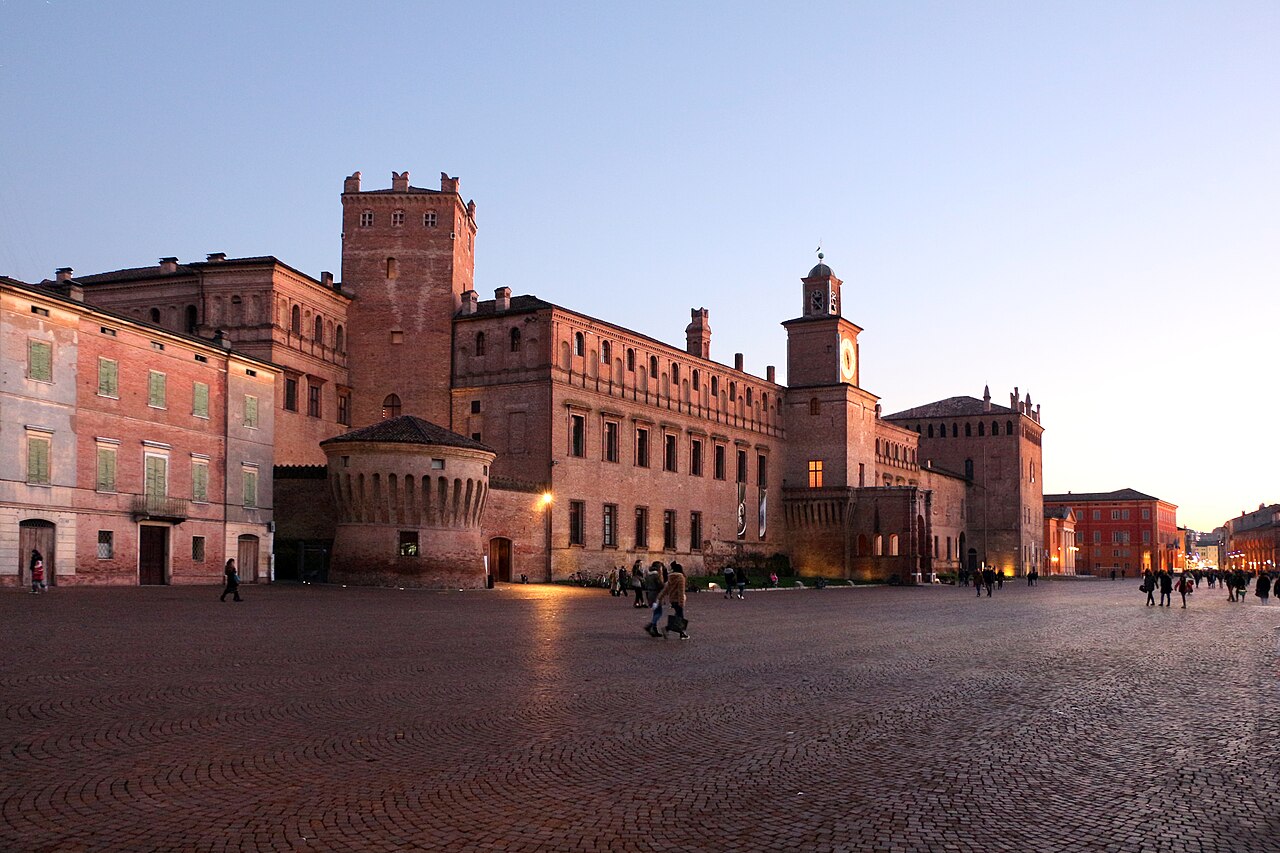
The Rocca di Novellara stands as a remarkable example of a hill castle in northern Italy, embodying centuries of architectural evolution and historical significance. Originally established by the Lombards, a Germanic people who dominated parts of Italy during the early Middle Ages, the castle's site was first fortified by the Lombard lord Gherardaccio Malapresa with a defensive tower. This initial structure underscored the strategic importance of Novellara's location, which would continue to shape its role through successive eras.
Throughout its history, the Rocca di Novellara has witnessed political upheaval, military conflict, and cultural transformation. The castle's defensive features and noble residential functions reflect the shifting priorities of its owners, especially the influential Gonzaga family, who played a central role in the region's medieval and Renaissance history. Today, the Rocca remains a vital cultural landmark, housing museums and municipal offices that celebrate its rich heritage.
Early history and lombard origins
The earliest known fortification at Novellara was a tower erected by Gherardaccio Malapresa, a Lombard lord whose construction marked the beginning of the site's military significance. The Lombards, who ruled parts of Italy from the 6th to the 8th centuries, established this stronghold to control the surrounding territory. The tower served as a lookout and defensive position, laying the groundwork for the later expansive fortress.
Medieval conflicts and gonzaga ascendancy
Political turmoil in the 14th century
The late 14th century was a turbulent period for Novellara and its rulers. On May 17, 1371, Feltrino Gonzaga, leader of a league opposing the powerful Visconti family, suffered a decisive defeat. Forced to sell Reggio and its territories to Bernabò Visconti for a substantial sum of gold florins, the Gonzaga family's influence waned significantly. This loss compelled them to retreat to a smaller fiefdom between Reggio and the Marquis of Mantua's lands. Feltrino did not reside in this domain and died in poverty in Padua in 1374.
Fortification under guido gonzaga
Feltrino's son, Guido Gonzaga, assumed control of the diminished estate and initiated extensive fortification efforts. He constructed the Rocca di Novellara as a fortified castle, featuring four corner towers that provided robust defensive coverage. Two drawbridges controlled access to the fortress, enhancing security against potential attackers. Additionally, a ravelin, a triangular outwork positioned before the main gate, was built to delay and disrupt enemy advances. These features reflect contemporary military architectural strategies aimed at maximizing defense.
Renaissance transformation and artistic patronage
Conversion into a noble residence
In the early 16th century, the Rocca underwent a significant transformation from a purely military fortress to a noble residence. Costanza da Correggio, widow of Alessandro I Gonzaga, the first Count of Novellara, spearheaded this change by adding an additional story to the castle. This expansion enhanced the Rocca's residential capacity and comfort, signaling a shift towards a more prestigious and habitable structure.
Interior decoration by lelio orsi
Later in the 16th century, Alfonso I Gonzaga, then Count of Novellara, commissioned the renowned artist Lelio Orsi to embellish the castle's interiors. Orsi's work included intricate paintings and elaborately carved wooden coffered ceilings, which exemplify Renaissance artistic trends. These decorative elements elevated the Rocca's status as a noble residence, combining military strength with cultural refinement.
Architectural features and structural evolution
Defensive elements
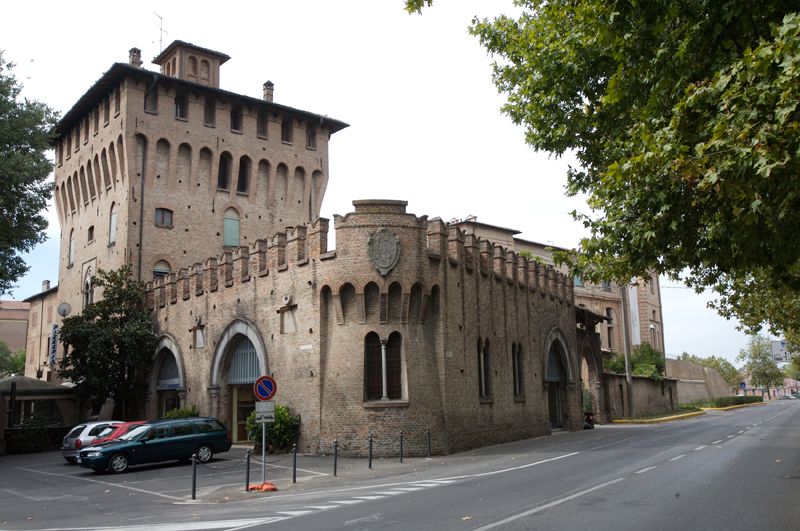
The Rocca di Novellara's original design prioritized defense, evident in its fortified walls and four corner towers that offered comprehensive surveillance and protection. The two drawbridges controlling entry points allowed inhabitants to regulate access securely. The ravelin before the main gate served as an additional barrier, a detached triangular fortification designed to absorb and deflect attacks.
Residential modifications
The addition of an extra floor in the early 1500s transformed the fortress into a more comfortable noble dwelling. The interior spaces were enhanced with artistic decorations, including the notable coffered ceilings by Lelio Orsi. The castle also features porticos and staircases that connect various sections, demonstrating thoughtful planning for both defense and habitation. An internal courtyard provides an open area likely used for gatherings and daily activities, blending functionality with social space.
The main tower: del campanone
At the end of the 17th century, the castle's main tower, known as the del Campanone, was heightened and outfitted with bells and a clock. These additions served practical purposes, such as marking time for the town, and symbolic roles, representing the castle's prominence in local governance and community life.
Later history and current use
Following the death of Filippo Alfonso Gonzaga in 1728, the last heir of the Novellara Gonzaga line, control of the county and the Rocca passed to Rinaldo d’Este. Over time, the castle's military role diminished, and it evolved into a center for civic administration and cultural activities.
Today, the Rocca di Novellara serves multiple public functions. It houses the Gonzaga Museum and the Museum of Peasant Civilization, both dedicated to preserving and showcasing the region's history and cultural heritage. Additionally, a theater built in the 19th century within the castle complex highlights its ongoing role as a cultural hub. The castle's well-preserved architectural elements continue to attract visitors interested in medieval and Renaissance history, military architecture, and art.
The Rocca di Novellara exemplifies a layered historical narrative, from its origins as a Lombard stronghold through its development under the Gonzaga family to its present-day status as a municipal and cultural landmark. Its combination of defensive features, noble residential adaptations, and artistic embellishments make it a significant site for understanding the region's medieval and Renaissance heritage.
Frequently asked questions (FAQ)
- How do I visit Rocca di Novellara?
- Rocca di Novellara is open to visitors during regular museum hours. It houses the Gonzaga Museum and the Museum of Peasant Civilization, along with a 19th-century theater. Check local tourist information for current opening times and any guided tour availability.
- What is the historical significance of Rocca di Novellara?
- The castle reflects the military and noble history of the Novellara region, originally built by the Lombards and later fortified and transformed by the Gonzaga family. It illustrates medieval defensive architecture and Renaissance residential adaptations.
- Can I see Renaissance art inside the Rocca di Novellara?
- Yes, the interiors feature Renaissance decorations commissioned by Alfonso I Gonzaga, including paintings and wooden coffered ceilings by artist Lelio Orsi, showcasing the artistic heritage of the period.
- Is Rocca di Novellara accessible for visitors with mobility issues?
- The castle has some areas with stairs and uneven surfaces typical of historic buildings. Accessibility may be limited in certain sections, so it is advisable to contact the site in advance for specific accommodations.
- When is the best time to visit the Rocca di Novellara?
- The best time to visit is during the spring and fall when the weather is mild, and cultural events are often held. Summer can be busy, so planning ahead is recommended for a more comfortable experience.
Information
Loading map...
Visitor reviews
No reviews yet. Been here? Write the first review and help other travelers!
Write the first reviewVisited this castle? Share your experience
Your review helps other travelers and adds first-hand knowledge to our encyclopedia.