Rocca a Mare
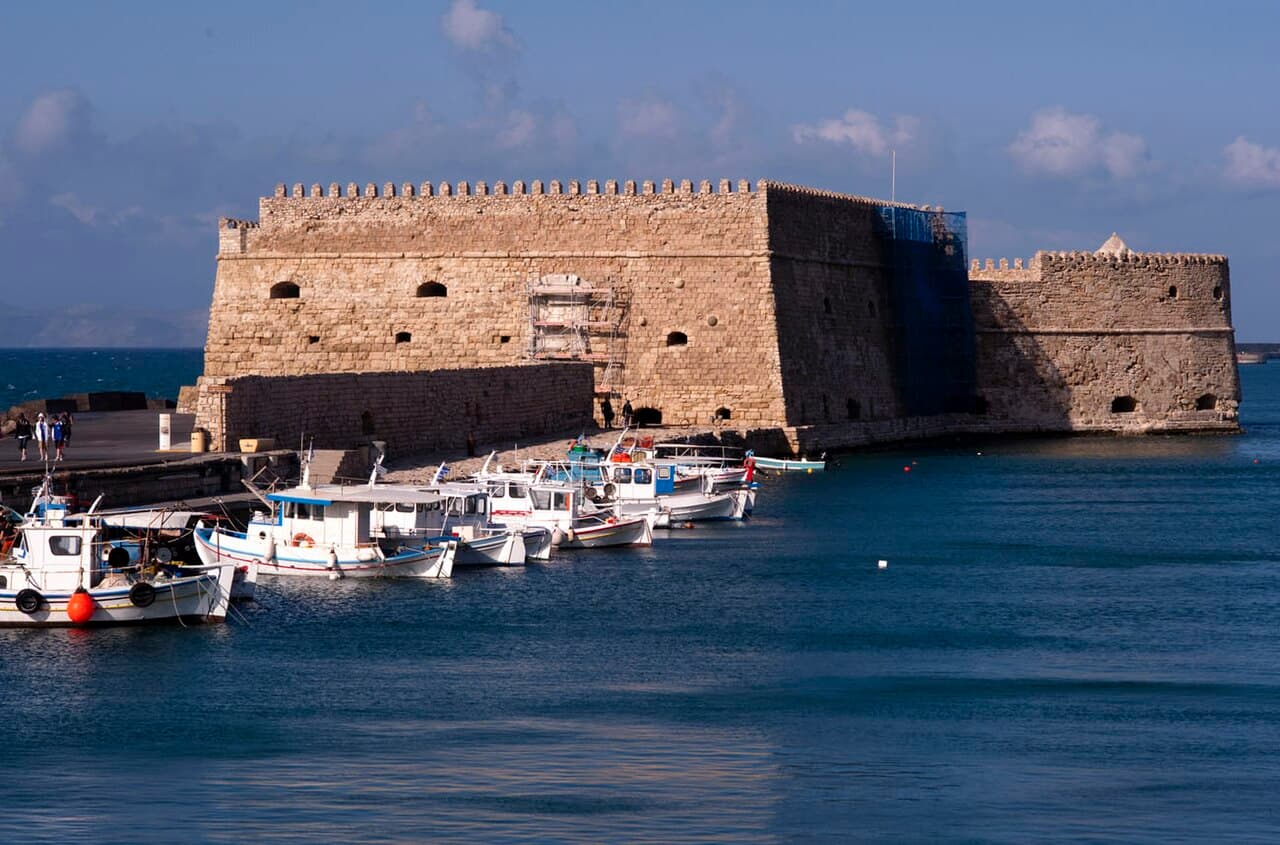
Rocca a Mare, also known as the Koules fortress or Castello a Mare ("Fort on the Sea" in Italian), is a prominent bastioned fortress situated at the entrance of the old port of Heraklion, on the island of Crete, Greece. Constructed in the early 16th century by the Republic of Venice, this fortress served as a crucial maritime defense structure during the Venetian rule of Crete, which lasted from 1204 until 1669.
The strategic importance of Rocca a Mare
The fortress was designed to protect the harbor of Heraklion, then known as Candia, from naval attacks and pirate raids. Its location at the harbor's entrance allowed control over all maritime traffic, making it a vital element in the defense system of Venetian Crete. The Venetians invested heavily in fortifying their overseas possessions to secure their trade routes and maintain dominance in the eastern Mediterranean.
Architectural features and design
Rocca a Mare is an excellent example of Renaissance military architecture adapted to the challenges of artillery warfare. The fortress features thick, sloped bastioned walls constructed from local stone, designed to withstand cannon fire. The bastions provided platforms for heavy artillery, enabling defenders to cover the approaches to the harbor effectively.
The fortress has a roughly rectangular plan with rounded bastions at the corners, which was typical of Venetian fortifications of the period. The walls rise directly from the sea on the seaward side, and a moat separated it from the city on the landward side. The entrance is protected by a fortified gatehouse, which was accessible via a drawbridge over the moat.
Interior layout
Inside the fortress, there are various chambers and storage rooms that were used for ammunition, supplies, and housing the garrison. The fortress also includes a cistern for collecting rainwater, ensuring a water supply during sieges. The interior courtyard served as a muster point and allowed movement between defensive positions.
Historical context and Venetian rule
The construction of Rocca a Mare began in 1523 and was completed in 1540, during a period when the Venetian Republic was reinforcing its maritime defenses against the growing threat of the Ottoman Empire. The fortress played a significant role during the lengthy Siege of Candia (1648–1669), one of the longest sieges in history, when the Ottomans sought to capture Crete from Venetian control.
Despite its strong defenses, the fortress eventually fell to the Ottomans in 1669 along with the rest of Crete. Under Ottoman rule, the fortress continued to serve as a military installation, although modifications were made to suit Ottoman military needs.
Preservation and current status
Rocca a Mare remains well preserved and is one of the most recognizable landmarks of Heraklion. It has undergone restoration efforts to maintain its structural integrity and is accessible to the public as a historical monument. Visitors can explore the battlements, interior chambers, and enjoy panoramic views of the harbor and the city.
The fortress is a testament to the military engineering skills of the Renaissance period and the Venetian influence on Crete's cultural heritage. It also serves as a reminder of the island's turbulent history and strategic importance in the Mediterranean.
Visiting Rocca a Mare
The fortress is open to visitors year-round with varying hours depending on the season. It offers an educational experience with informative displays about its history and architecture. The site is easily accessible from the city center, making it a popular destination for tourists interested in history and architecture.
Frequently asked questions (FAQ)
- What is Rocca a Mare?
- Rocca a Mare is a historic fortress located in Heraklion, Greece. Built by the Venetians in the 16th century, it served as a strategic defense point against invasions and is an excellent example of Venetian military architecture.
- When was Rocca a Mare built?
- Construction of Rocca a Mare began in 1540 and was completed in 1560. It was designed to protect the harbor of Heraklion and stands as a testament to the architectural ingenuity of the time.
- Can I visit Rocca a Mare?
- Yes, Rocca a Mare is open to visitors year-round. You can explore its impressive walls, towers, and the scenic views of the surrounding area.
- What are the opening hours of Rocca a Mare?
- Rocca a Mare typically opens daily from 8:00 AM to 8:00 PM during the summer months and has reduced hours in the winter. It's advisable to check the official website for any updates on seasonal hours.
- Is it possible to buy tickets online for Rocca a Mare?
- Yes, visitors can purchase tickets online through the official heritage sites website or at the entrance. Online booking may help you avoid long queues, especially during peak tourist seasons.
- What is the best time to visit Rocca a Mare?
- The best time to visit Rocca a Mare is during the spring (April to June) and fall (September to October) when the weather is pleasant and the crowds are thinner. Visiting in these seasons allows for a more enjoyable experience while exploring the castle.
- Are there any nearby attractions to Rocca a Mare?
- Yes, Rocca a Mare is located near several other attractions, including the Heraklion Archaeological Museum and the historic Venetian harbor. These sites can easily be included in your itinerary for a comprehensive exploration of Heraklion's rich history.
- Is Rocca a Mare accessible for visitors with disabilities?
- Rocca a Mare has made efforts to improve accessibility for all visitors. However, due to its historical nature and terrain, some areas may be challenging for those with mobility impairments, so it's best to check in advance for specific accessibility options.
- What is the ticket price for Rocca a Mare?
- The entrance fee for Rocca a Mare is typically around €6 for adults, with discounted rates available for students and seniors. Children under a certain age may enter free of charge, but it's recommended to verify current pricing before your visit.
Photo gallery

Information
Loading map...
Visitor reviews
No reviews yet. Been here? Write the first review and help other travelers!
Write the first reviewVisited this castle? Share your experience
Your review helps other travelers and adds first-hand knowledge to our encyclopedia.