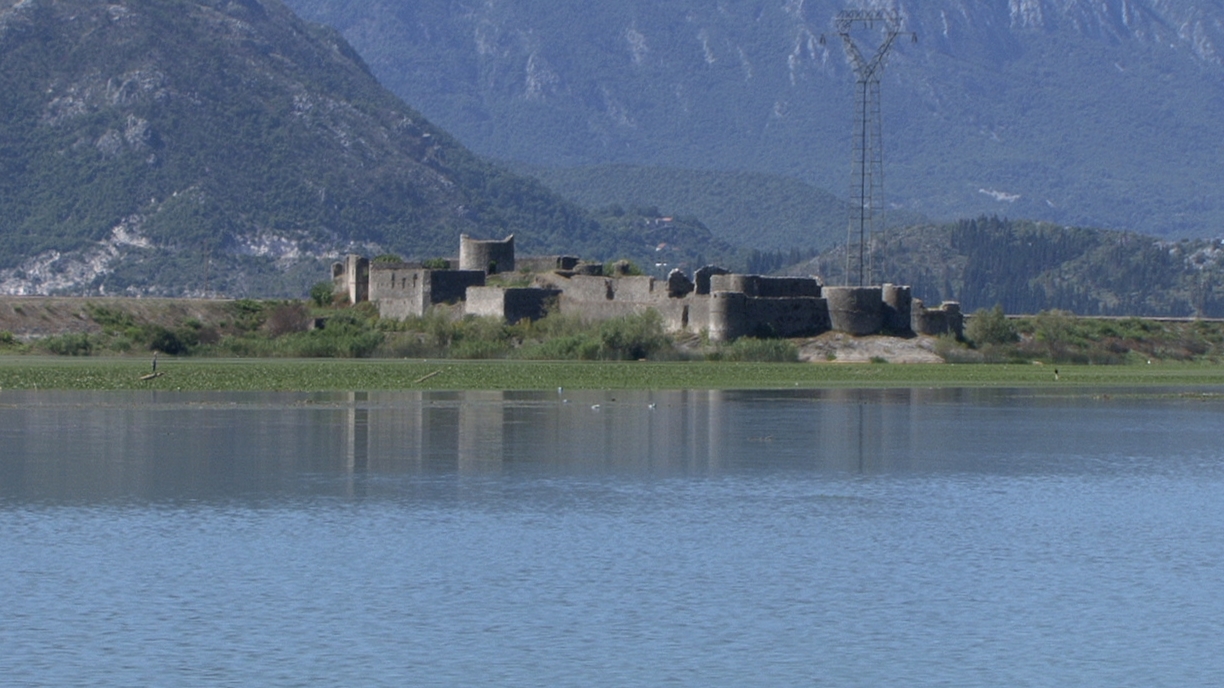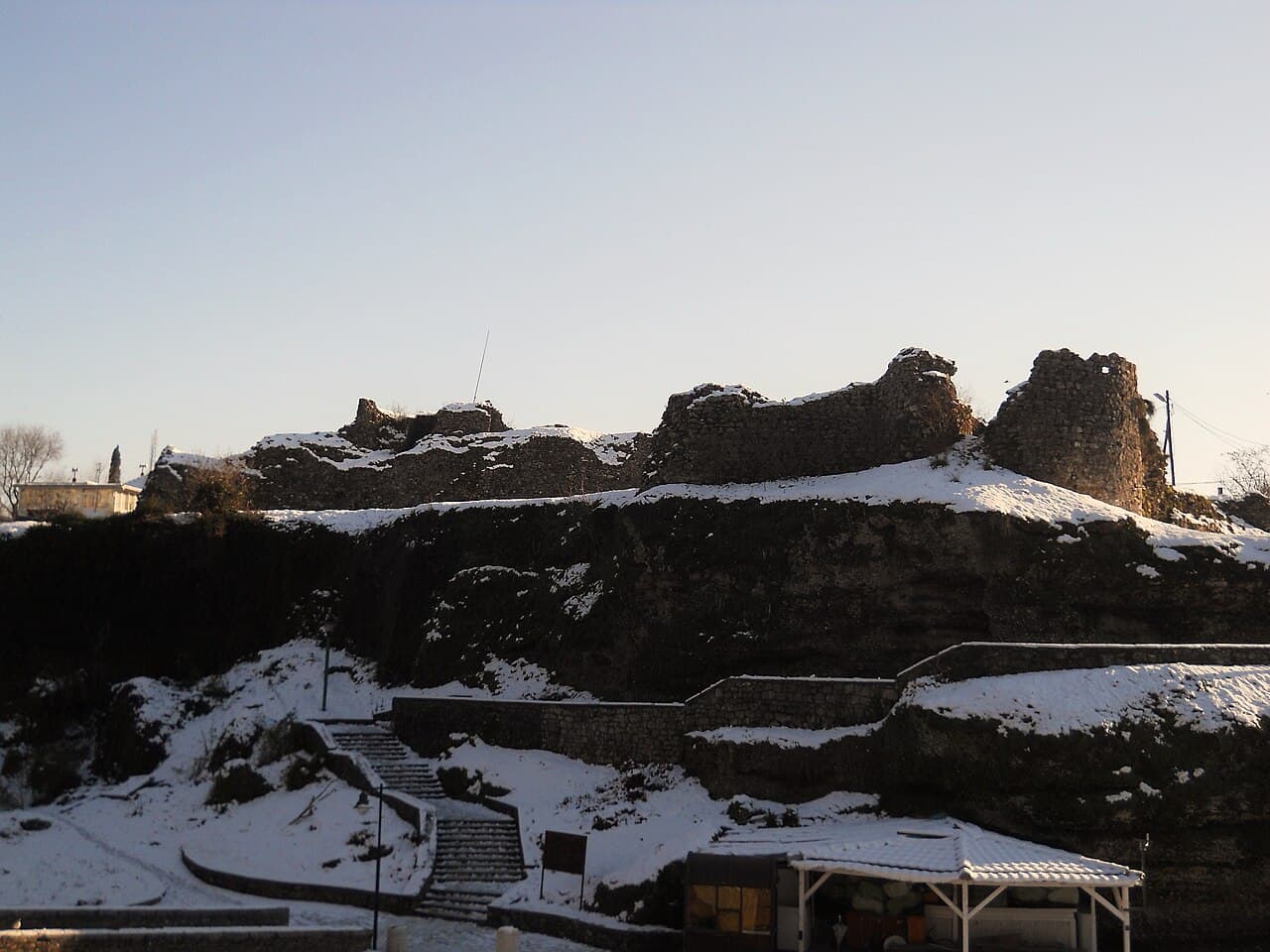
Ribnica Fortress — Montenegro castle

Ribnica Fortress

Ribnica fortress in Podgorica: Ottoman bastioned fortress with medieval roots
Podgorica, Podgorica, Montenegro
Late Medieval (14th–15th c.)
Partially Preserved

Ribnica fortress stands as a significant Ottoman bastioned fortress in the historic Stara Varoš neighborhood of Podgorica, the capital city of Montenegro. Constructed in the late 15th century, around 1477, during the period of Ottoman rule, this fortress was strategically positioned above the confluence of the Ribnica and Morača rivers. It formed part of a defensive system that included another fortress protecting the old town area, known as Stara Varoš.

Historical context and construction

The fortress was built as a bastioned fortress, a style characterized by projecting bastions designed to provide overlapping fields of fire, reflecting the military architectural advances of the late medieval period. The Ottomans constructed Ribnica fortress to consolidate their control over this strategic location, which was important for controlling the river crossings and the surrounding region.

The fortress's design incorporates thick defensive walls and bastions that allowed defenders to repel attackers effectively. Its location at the meeting point of two rivers not only provided a natural defensive advantage but also access to water resources essential during sieges.

Architectural features and layout

Ribnica fortress exhibits typical features of Ottoman military architecture from the late medieval era. The fortress includes defensive walls with bastions at key points, designed to cover all approaches with artillery and small arms fire. The walls were constructed using local stone and mortar, built to withstand artillery bombardment.

Inside the fortress, there were various functional structures, including ammunition warehouses, living quarters, and storage rooms. One notable structure within the fortress was the Depedogen, which served as an ammunition storage facility for a significant period.

Damage and restoration history

In 1878, Ribnica fortress suffered severe damage when a lightning strike caused an explosion in the ammunition warehouse, devastating large parts of both the interior and exterior structures. This event marked a turning point in the fortress's military use, leading to its decline as a defensive stronghold.

Despite this damage, the fortress remains partially preserved and continues to be an important cultural and historical monument in Podgorica. Restoration efforts have been made to stabilize and preserve the remaining structures, allowing visitors to appreciate its architectural and historical significance.

Legendary associations and cultural significance

Local tradition and the Serbian Orthodox Church attribute a much older origin to the fortress, suggesting it dates back to the 12th century. According to legend, Ribnica fortress is the birthplace of Stefan Nemanja, the founder of the Nemanjić dynasty, a ruling family that played a crucial role in medieval Serbian history.

Due to this association, the fortress is often referred to as Nemanjin Grad or Nemanjića Grad (Nemanja's Town). This connection has made the site a place of religious and cultural importance, with Orthodox ceremonies regularly held there, reinforcing its status as a symbol of heritage and identity.

Visiting Ribnica fortress today

Today, Ribnica fortress is a key historical attraction in Podgorica, drawing visitors interested in Ottoman military architecture and medieval Balkan history. The fortress's location in the old town neighborhood makes it accessible for tourists exploring the city's heritage sites.

Visitors can explore the fortress ruins, observe the surviving bastions and walls, and learn about its role in the region's history through informational displays and guided tours. The site also offers picturesque views of the Ribnica and Morača rivers, enhancing its appeal as a cultural landmark.

Nearby attractions

Close to Ribnica fortress, visitors can also explore the Stara Varoš neighborhood, known for its Ottoman-era architecture and narrow streets. The area provides a glimpse into the city's past and complements the historical experience of the fortress visit.

Architectural legacy

Ribnica fortress exemplifies the transition in military architecture during the late medieval period in the Balkans, reflecting the Ottoman Empire's adaptation to new artillery technologies. Its bastioned design influenced subsequent fortress constructions in the region, marking an important chapter in the evolution of defensive structures.

Frequently asked questions (FAQ)

How do I get to Ribnica Fortress?
Ribnica Fortress is located in Podgorica, Montenegro, easily accessible by public transportation or car. If you're traveling by bus, several lines connect to the city center, and the fortress is within walking distance from there.
What is the historical significance of Ribnica Fortress?
Ribnica Fortress dates back to the 15th century and played a crucial role in the defense against foreign invasions. It is a key landmark that showcases the rich history of Montenegro and its strategic importance in the region.
When was Ribnica Fortress built?
Ribnica Fortress was constructed in the late 15th century, specifically around 1474. Its design reflects the military architecture of the time, aimed at fortifying the city against invasions.
Can I visit Ribnica Fortress year-round?
Yes, Ribnica Fortress is open to visitors throughout the year, allowing you to explore its historical significance at any time. However, it is advisable to check local weather conditions and any potential seasonal events that may affect access.
Why is Ribnica Fortress a popular tourist attraction?
Ribnica Fortress attracts visitors due to its impressive architecture and panoramic views of the surrounding area. It is also a symbol of Montenegrin resilience and offers a glimpse into the country's storied past.
Is it possible to tour Ribnica Fortress with a guide?
Yes, guided tours are available at Ribnica Fortress, providing in-depth information about its history and architecture. This option enhances your visit, giving you a deeper understanding of its significance.
What are the opening hours of Ribnica Fortress?
Ribnica Fortress is typically open from 8 AM to 8 PM during the summer months and from 9 AM to 5 PM in the winter. It’s recommended to check the official website or local tourist information for any changes in hours.
Are there any nearby attractions to visit after Ribnica Fortress?
Yes, after visiting Ribnica Fortress, you can explore the nearby Old Ribnica Bridge and the scenic banks of the Ribnica River. Additionally, the city center of Podgorica offers various dining and shopping options.
What are the ticket prices for visiting Ribnica Fortress?
Entry to Ribnica Fortress is usually free, making it an accessible attraction for all visitors. However, if you choose a guided tour, there may be a small fee associated with that service.

Photo gallery

Ribnica Fortress
Click to view

Photo by Rasho992•CC BY-SA 3.0

1 photo • Click any image to view in full screen

Information

Bastioned Fortress

Loading map...

Visitor reviews

No reviews yet. Been here? Write the first review and help other travelers!

Write the first review

Visited this castle? Share your experience

Your review helps other travelers and adds first-hand knowledge to our encyclopedia.
Write a review

(5/5)

0/2000 characters

Your review will be visible after admin approval

Nearby castles

16 km
Zabljak Crnojevica Castle — Montenegro castle

Zabljak Crnojevica Castle

Lake Skadar, Montenegro

Žabljak Crnojevića is a significant medieval fortified town and castle situated at the confluence of the Morača river and Lake Skadar in Montenegro. This site, now an archaeological ruin, offers a glimpse into the region's complex history, marked by its strategic importance and the succession of ruling dynasties. Founded in the 10th century during the era of the Vojislavljević dynasty in the medieval principality of Dioclea, the fortress was first documented in written sources in the mid-15th century, highlighting its longstanding significance. Historical significance and political role Žabljak Crnojevića served as the capital of the medieval principality of Zeta under the Crnojević dynasty from 1466 to 1478. It was the seat of prominent rulers such as Stefan Crnojević and his son Ivan Crnojević. During this period, the fortress was a political and military center, reflecting the power and influence of the Crnojević family in the region. However, the fortress's strategic position also made it a target during the turbulent conflicts of the late medieval Balkans. The Ottoman siege and later rule In 1478, the fortress fell to the Ottoman Empire during the siege of Shkodra. This event forced Ivan Crnojević to relocate the capital, marking the beginning of nearly four centuries of Ottoman control over the fortress and surrounding area. Despite the Ottoman occupation, the fortress retained some of its medieval structures, although modifications were made, including the conversion of the Church of Saint George into a mosque. The fortress remained under Turkish rule until 1878, when the Berlin Congress returned the territory to Montenegrin administration. Architectural features and layout The fortress complex is characterized by its tall defensive walls reinforced with several towers and a single main gate, designed to control access and provide robust defense against invaders. Inside the walls, visitors can find the remains of Ivan Crnojević's court, which served as the administrative and residential center for the ruling family. The site also includes the remnants of the Church of Saint George, which was repurposed as a mosque during Ottoman rule, illustrating the layers of cultural and religious changes over the centuries. Additional structures within the fortress include various housing units, military facilities, a warehouse for clothes, and a water tank, all of which reflect the fortress's role as a self-sustaining defensive settlement. Many of these features are preserved as ruins, providing valuable insight into medieval fortification design and daily life within the fortress. Defensive design and strategic position Žabljak Crnojevića's location at the meeting point of a major river and a large lake was a strategic choice, enabling control over waterways and trade routes. The fortress's design incorporates natural defenses provided by the surrounding water, supplemented by man-made walls and towers. This combination made it a formidable stronghold in medieval Montenegro. Later history and current condition By the early 17th century, the fortress was firmly under Ottoman control, with the presence of only one resident official, the Dizdar Aga, a Turkish military governor responsible for the fortress's upkeep and defense. Over time, the fortress was abandoned and fell into ruin, preserving its medieval and Ottoman architectural layers as archaeological remains. Today, Žabljak Crnojevića stands as an important archaeological site and cultural monument, attracting historians, archaeologists, and tourists interested in Montenegro's medieval heritage. Its ruined walls and structures provide a tangible connection to the region's past, revealing the complex history of power struggles, cultural shifts, and architectural evolution. Exploring Žabljak Crnojevića today Visitors to the site can explore the extensive ruins, including the defensive walls, towers, and the remnants of the court and religious buildings. The fortress offers panoramic views of Lake Skadar and the surrounding landscape, enhancing its appeal as a historical and natural attraction. Interpretive signage and guided tours help contextualize the site's significance, providing insights into the lives of its medieval inhabitants and the broader historical events that shaped the region. Access to the site is typically on foot, and due to its status as an archaeological ruin, some areas may be uneven or challenging to navigate. Visitors are advised to wear appropriate footwear and prepare for outdoor conditions when planning their visit.

Early Medieval (5th–10th c.)
Details
21.9 km
Lesendro — Montenegro castle

Lesendro

, Montenegro

Lesendro fortress is a historic bastioned fortress situated on what was once an island in Skadar Lake, Montenegro, near the small town of Vranjina. Constructed in the 18th century during the post-Renaissance period, this fortress played a significant role in the military defense of the region. Originally, Lesendro was located on a true island, but the construction of the Belgrade–Bar railway later connected the island to the mainland, transforming it into a peninsula.Historical context and strategic importanceThe fortress was built in a period marked by frequent conflicts in the Balkans, particularly involving the Ottoman Empire and the Venetian Republic, among others. Its location on Skadar Lake—a large freshwater lake shared by Montenegro and Albania—was strategically chosen to control naval and land access routes in the region. Lesendro served as a defensive stronghold that helped secure control over the lake and surrounding territories.The 18th century saw the evolution of military architecture influenced by the development of artillery, which led to the construction of bastioned fortresses like Lesendro. These fortifications featured angled bastions designed to provide overlapping fields of fire and better resistance to cannon attacks, a significant advancement from medieval castle designs.Architectural featuresLesendro is classified as a bastioned fortress, a style that emerged prominently in the post-Renaissance era. The fortress exhibits the characteristic elements of bastioned fortifications, including thick defensive walls and angular bastions that project outward from the main enclosure. These bastions allowed defenders to cover adjacent walls with gunfire, eliminating blind spots and enhancing the fortress's defensive capabilities.The fortress's construction utilized local stone materials, typical for the region, contributing to its robust and enduring structure. Its position on the water's edge added a natural defensive barrier, further reinforced by the fortress's design. The layout was likely compact, optimized for a relatively small garrison to defend against larger forces.Connection to the mainlandOriginally, Lesendro was a true island fortress, accessible only by boat, which enhanced its defensibility. However, the construction of the Belgrade–Bar railway in the 20th century altered the landscape by connecting the island to the mainland, turning it into a peninsula. This change affected the fortress's strategic isolation but did not diminish its historical and architectural significance.Preservation and current conditionToday, Lesendro stands as a partially preserved fortress. While some sections of its walls and bastions remain intact, the structure has suffered from the passage of time and exposure to the elements. Restoration efforts have been limited, but the fortress remains an important cultural and historical landmark in Montenegro.Visitors to the site can explore the remains of the fortress and enjoy views of Skadar Lake, which is itself a protected national park and a site of ecological importance. The proximity to Vranjina provides access to local amenities and insights into the region's cultural heritage.Lesendro in regional heritageLesendro is part of the broader historical narrative of Montenegro and the Balkan Peninsula, reflecting the military and political struggles that shaped the area. Its bastioned design marks a period of transition in fortress architecture, adapting to new warfare technologies. The site contributes to understanding the defensive strategies employed in the region during the 18th century and offers a tangible link to Montenegro's past.

Post-Renaissance (17th–18th c.)
Details
33.2 km

Fort Kosmac

Budva, Montenegro

Fort Kosmač stands as a significant historical military structure located near the village of Brajići, on a strategic hilltop overseeing the vital road connecting Budva on the Adriatic coast to Cetinje, the historic capital of Montenegro. Constructed in the 1840s, this fortress marked the southernmost defense point of the Austro-Hungarian Empire, guarding the empire's border against Montenegro. Its position was critical for controlling movement and securing the empire's frontier in the turbulent Balkan region during the 19th century. Historical context and military significance The construction of Fort Kosmač took place during a period of heightened tensions and frequent conflicts in the Balkans. The fortress was part of a broader Austro-Hungarian strategy to consolidate and defend its borders against neighboring states, particularly Montenegro, which was asserting its independence and territorial ambitions. Fort Kosmač's role was primarily defensive, designed to monitor and control the main passage between the coast and the interior. In 1869, the fort was notably attacked during a rebellion, underscoring its military importance and the volatility of the region. Despite the attack, the fortress remained under Austro-Hungarian control and was continuously garrisoned by Austrian troops until the empire's dissolution in 1918 following World War I. After the fall of the Austro-Hungarian Empire, the fort came under the jurisdiction of the newly formed Kingdom of Yugoslavia. During the Second World War, it was occupied and garrisoned by Italian forces, reflecting its ongoing strategic value even in the 20th century. Architectural features and current condition Fort Kosmač was originally a three-storey fortress built with finely worked square blocks of grey limestone, which lined its outer walls. The use of limestone not only provided robust defensive capabilities but also gave the fortress a distinctive appearance. The architectural design included vaulted ceilings, a central staircase, and multiple floors to accommodate troops and artillery. Today, the fort is in a ruinous condition. The topmost storey has completely collapsed, leaving the structure roofless. Inside, the walls, floors, and central staircase have also deteriorated significantly. Although remnants of the main staircase remain visible, the steps themselves have vanished, making the upper levels inaccessible. The interior is cluttered with fallen masonry, obscuring the original floor layout and making it difficult to ascertain the precise interior arrangement. Significant damage to the vaulted ceilings is evident, with large holes compromising the structural integrity. The exterior has suffered from stone-robbing, where the finely worked limestone blocks have been removed for reuse elsewhere, further degrading the fortress's appearance and stability. Strategic location and landscape Situated on a hilltop near Brajići village, Fort Kosmač commands a panoramic view of the surrounding landscape, particularly the road linking Budva and Cetinje. This elevated position was chosen deliberately to maximize surveillance and defensive capabilities. The fort's location allowed it to control a critical route between the Adriatic coast and Montenegro's interior, making it a key asset in regional military logistics and border security. The surrounding terrain is rugged and mountainous, typical of Montenegro's geography, which enhanced the fortress's defensive advantages. The natural landscape worked in tandem with the man-made fortifications to create a formidable barrier against potential incursions. Legacy and cultural heritage Although Fort Kosmač no longer serves a military function and remains in ruins, it holds cultural and historical importance as a relic of Austro-Hungarian military architecture and Balkan history. The fortress reflects the complex geopolitical dynamics of the 19th and early 20th centuries in this part of Europe. Preservation efforts have been limited, and the fort's deteriorated state highlights the challenges of maintaining such remote military structures. Its ruins attract interest from historians, archaeologists, and visitors intrigued by the Austro-Hungarian Empire's legacy and Montenegro's border history. Fort Kosmač remains a poignant symbol of the region's turbulent past, embodying the military strategies, architectural styles, and historical conflicts that shaped the Balkans during a transformative era.

Details