Rhuddlan Castle
Rhuddlan Castle stands as a significant medieval fortress located in Denbighshire, Wales, constructed during the late 13th century by King Edward I of England. Built between 1277 and 1282, it was a crucial stronghold designed to consolidate English control over the North Welsh region following the First Welsh War. The castle’s strategic placement on the east bank of the River Clwyd and its innovative design reflect the military and administrative ambitions of Edward I’s reign.
The castle’s history is intertwined with the turbulent conflicts between the English crown and Welsh princes. It was constructed shortly after Edward I’s initial campaign in Wales and completed before the 1282 rebellion led by Llywelyn ap Gruffudd (Llywelyn the Last). Rhuddlan Castle not only served as a military bastion but also became a royal residence, famously being the birthplace of Edward’s daughter, Elizabeth of Rhuddlan, in 1282. The castle also gained political prominence as the site where the Statute of Rhuddlan was enacted in 1284, which formally integrated Welsh territories into English governance and law.
The early fortifications and historical context
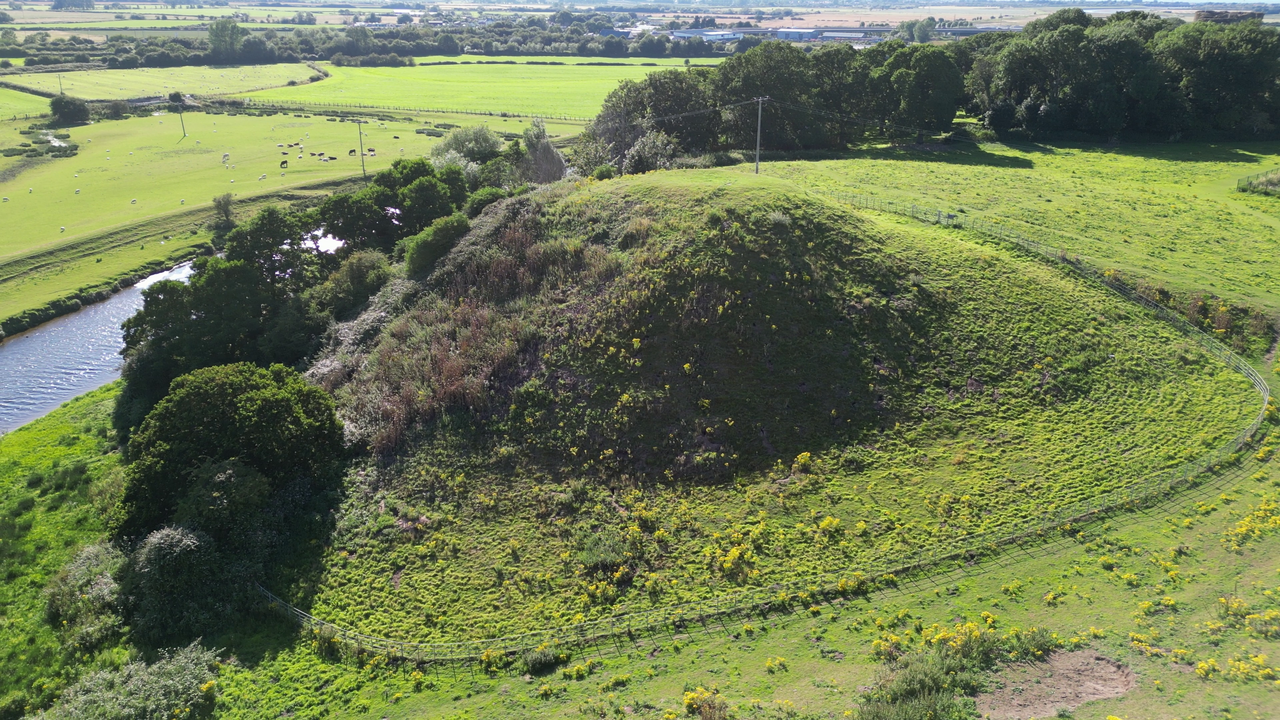
The site of Rhuddlan Castle has been militarily important since the early medieval period. Initially, a Saxon burh was established here in the early 10th century by King Edward the Elder to defend against Welsh incursions. Later, in 1073, the Norman lord Robert of Rhuddlan constructed a motte-and-bailey castle nearby, known as Twthill, which served as a precursor to the current stone fortress.
This earlier Norman fortification established Rhuddlan as a defensive and administrative center before the Edwardian castle was built. The transition from a timber motte-and-bailey to a stone concentric castle marks the evolution of military architecture and the increasing importance of Rhuddlan in the English campaign to subdue Wales.
Architectural design and features
Concentric design and diamond layout
Rhuddlan Castle is an exemplary model of an Edwardian concentric castle, a design that features multiple layers of defensive walls. Its layout is distinctive for its diamond-shaped plan, where the gatehouses are positioned at the corners of the square baileys rather than along the sides, a feature that sets it apart from other Edwardian castles such as Flint, Harlech, and Beaumaris.
The castle comprises an inner ward with strong defensive walls and twin-tower gatehouses, and an outer ward surrounded by a curtain wall equipped with smaller towers and turrets. This multi-layered defense was augmented by a three-sided moat, with the River Clwyd forming the natural defensive barrier on the fourth side. The river itself was redirected over several kilometers to facilitate the delivery of supplies by ship, enhancing the castle's logistical capabilities.
Towers and gatehouses
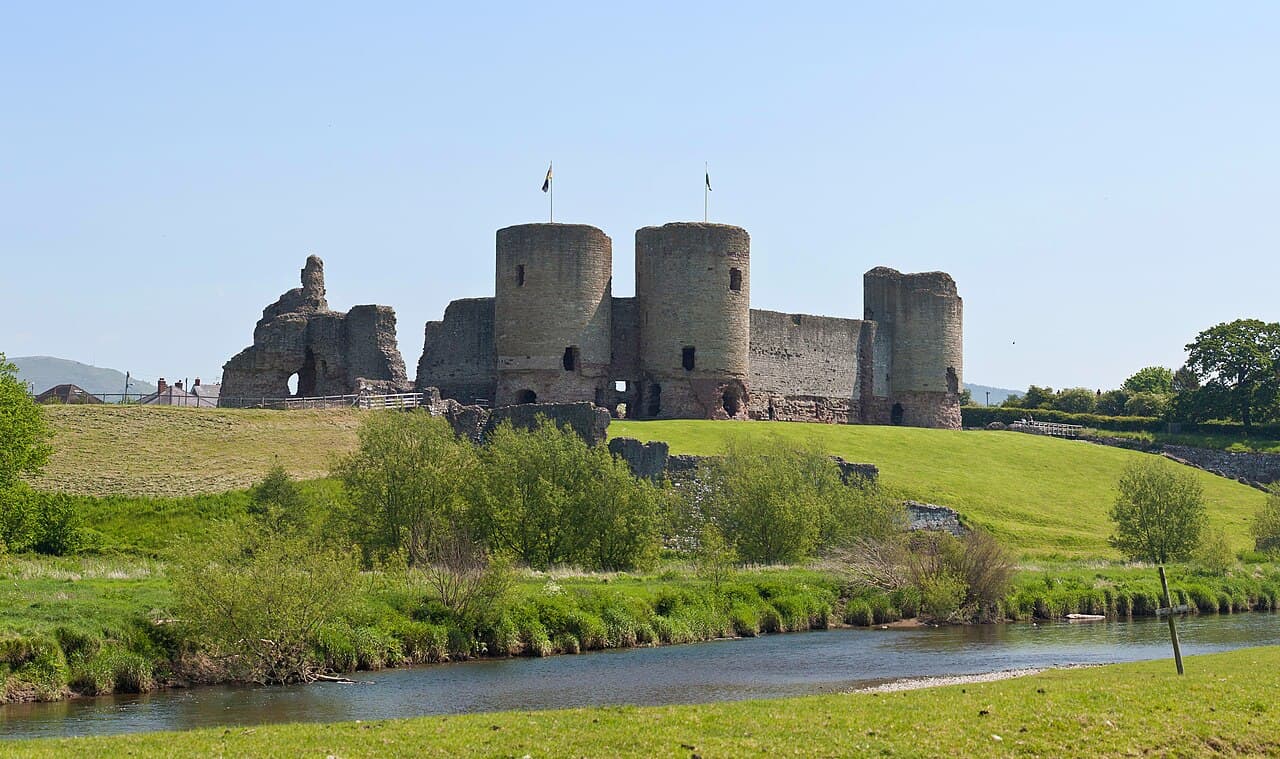
The inner ward contains four principal towers: two twin-towered gatehouses on the east and west sides, and single towers to the north and south. These towers rise four stories high, with the ground floors built in a rounded form and the upper floors shaped as octagons. The south tower and western gatehouse remain in relatively good condition, while the north tower and eastern gatehouse have suffered more extensive damage over time.
The outer curtain wall features four smaller towers along the northwest flank, which originally provided access to a dry moat. However, these entrances were sealed after being identified as vulnerabilities during the 1282 siege, illustrating the castle’s adaptive defensive strategies.
Domestic and economic buildings
Within the inner ward, the castle housed essential domestic and administrative structures including a great hall, kitchens, private chambers, and a chapel. These buildings were primarily timber-framed, and today only their foundations remain visible. The outer bailey contained economic facilities such as a granary, stables, a smithy, and workshops, underscoring the castle’s role as both a military fortress and a center of local governance and supply.
Military history and sieges
Rhuddlan Castle played a pivotal role in the English conquest and control of Wales. It withstood multiple sieges and attacks throughout its history, reflecting its strategic importance.
In 1282, during the Welsh rebellion led by Llywelyn the Last, the castle endured a significant siege but remained unconquered. Later, in 1294, it was attacked during another Welsh uprising but was not taken. The castle also resisted the forces of Owain Glyndŵr during his revolt beginning in 1400. Although the town of Rhuddlan suffered considerable damage, the castle itself held firm.
Following the decline of its military importance in the late 15th and early 16th centuries, the castle gradually fell into disrepair. However, it was reoccupied during the English Civil War as a Royalist stronghold. In 1646, Parliamentary forces under Thomas Mytton besieged and captured the castle. To prevent its future military use, Parliament ordered the partial demolition of Rhuddlan Castle in 1648, leaving it largely in ruins.
Preservation and current status
Today, Rhuddlan Castle remains a partially preserved ruin and is managed as a historic site open to the public. Its ruins offer valuable insight into Edwardian military architecture and the complex history of English-Welsh relations during the medieval period.
The castle’s stonework, including its towers and curtain walls, stands as a testament to the craftsmanship and strategic planning of its builders. Visitors can explore the layout and imagine the castle’s former role as a formidable fortress and administrative center.
Rhuddlan Castle is an important cultural landmark in Wales, reflecting centuries of conflict, governance, and architectural innovation. Its unique diamond-shaped concentric design remains a key study subject for historians and castle enthusiasts alike.
Frequently asked questions (FAQ)
- How do I get to Rhuddlan Castle?
- Rhuddlan Castle is located in Denbighshire, and it is easily accessible by car or public transport. If you are driving, there is parking available nearby. For public transport, you can take a train to Rhyl and then a short bus ride to the castle.
- What is the historical significance of Rhuddlan Castle?
- Rhuddlan Castle was built in the late 13th century by Edward I as part of his campaign to conquer Wales. It played a crucial role in the defense and administration of the region during the medieval period. The castle’s strategic location allowed it to control the surrounding area and is a significant symbol of the English conquest of Wales.
- When was Rhuddlan Castle built?
- Construction of Rhuddlan Castle began in 1277 and was completed in 1286. It was part of Edward I's extensive castle-building program following his invasion of Wales. The castle's design reflects the military architecture of the time, with its imposing stone walls and defensive features.
- Can I visit Rhuddlan Castle year-round?
- Yes, Rhuddlan Castle is open to visitors throughout the year, although opening hours may vary seasonally. It is advisable to check the official website for the most up-to-date information on visiting hours and any potential closures. Visiting during off-peak times can provide a more peaceful experience.
- Why is Rhuddlan Castle considered an architectural marvel?
- Rhuddlan Castle is renowned for its impressive concentric design, which includes two rings of walls and a well-preserved gatehouse. The castle's layout was innovative for its time, allowing for enhanced defense against attacks. Its robust structure and strategic design have made it a prime example of medieval military architecture in Wales.
- Is it possible to access all areas of Rhuddlan Castle?
- While many areas of Rhuddlan Castle are accessible, some sections may have restrictions due to safety regulations or preservation efforts. Visitors can explore the main grounds, towers, and walls, providing a comprehensive view of the castle's architecture and history. It is recommended to check for any accessibility guidelines on the official website before your visit.
- What are the ticket prices for Rhuddlan Castle?
- Ticket prices for Rhuddlan Castle are generally affordable, with discounts available for children, students, and seniors. Family tickets are also offered, providing a great value for groups. For the most current pricing information, it is best to visit the official site or inquire at the entrance upon arrival.
- What is the best time to visit Rhuddlan Castle?
- The best time to visit Rhuddlan Castle is during the spring and early autumn when the weather is pleasant and the gardens are in bloom. These seasons also tend to be less crowded than peak summer months. Visiting during weekdays can help you avoid large tourist crowds and enhance your experience.
- Are there any nearby attractions to Rhuddlan Castle?
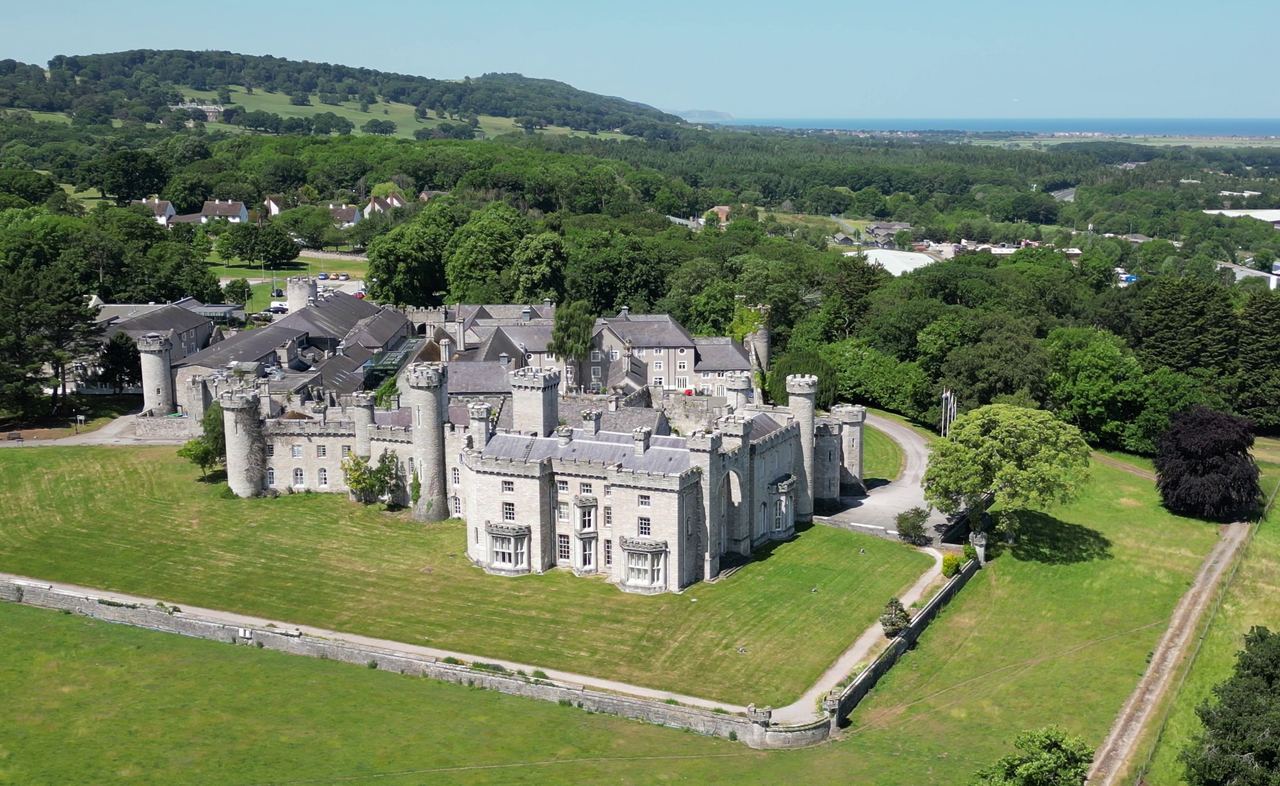
- Yes, there are several nearby attractions worth visiting, including the picturesque town of Rhuddlan itself and the beautiful River Clwyd. Additionally, the nearby Bodelwyddan Castle and the stunning beaches of Rhyl offer further opportunities for exploration. Combining your visit to Rhuddlan Castle with these attractions can make for a delightful day out.
Photo gallery

Information
Website
Visit websiteSources & official resources
Verify the information above using these authoritative references.
Loading map...
Visitor reviews
No reviews yet. Been here? Write the first review and help other travelers!
Write the first reviewVisited this castle? Share your experience
Your review helps other travelers and adds first-hand knowledge to our encyclopedia.