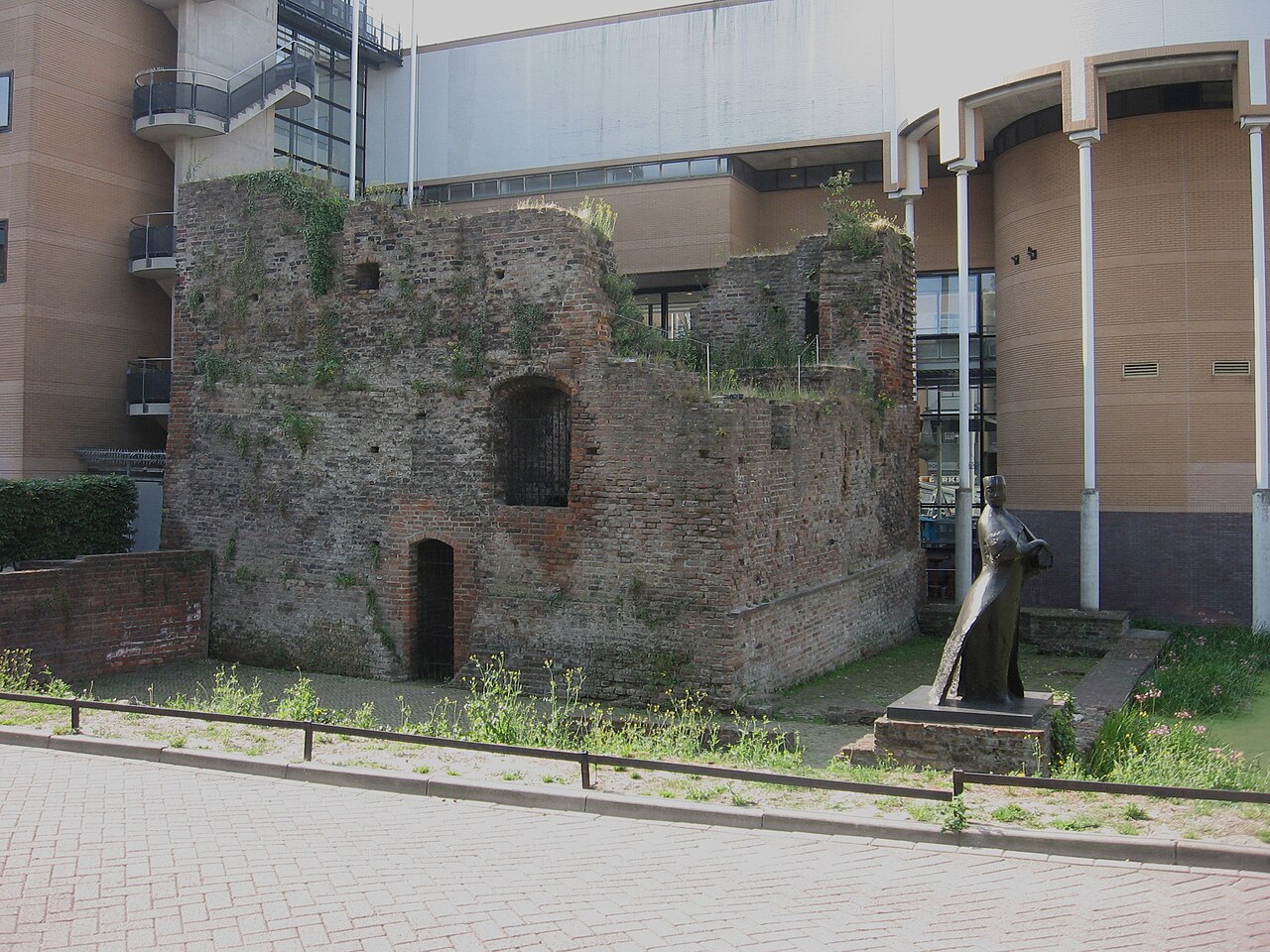
Rhoon Castle
Rhoon Castle, locally known as Kasteel van Rhoon, is a historic castle located in the village of Rhoon in the province of South Holland, Netherlands. This castle stands as a remarkable example of a Renaissance-era castle that has evolved through centuries of Dutch history, embodying both medieval origins and later architectural transformations.
The site of Rhoon Castle has been occupied since at least the 13th century. The original castle was likely founded by a man named Biggo van Duiveland, who purchased the land in 1199 from Dirk VII, Count of Holland. Although Biggo was not a knight or nobleman, as he required the Count's permission to build a castle, he was evidently a wealthy landowner. The precise appearance of the original castle is unknown, but it would have reflected the defensive needs of the medieval period.
Medieval origins and early history
The first castle at Rhoon was probably a fortified residence typical of the early medieval period, serving both as a stronghold and a symbol of local power. Over the centuries, the castle and its surrounding lands remained in the hands of Biggo's descendants, the lords of Duiveland, until 1683.
Throughout its history, Rhoon Castle endured numerous challenges, including devastating floods that frequently submerged the surrounding lands. In 1489, the castle and the village were attacked and ransacked by the Cods, a faction involved in regional conflicts during the late medieval period. Later, in 1572, the castle suffered a significant fire set by the Sea Beggars during the Dutch Revolt against Spanish rule.
Renaissance rebuilding and architectural transformation
The castle underwent multiple repairs and reconstructions following these events, but the most significant rebuilding occurred in 1598. This reconstruction marked a shift from a purely defensive fortress to a more comfortable and aesthetically pleasing residence, characteristic of the Renaissance architectural style. The defensive walls and fortifications were replaced or softened, giving the castle a more inviting and elegant appearance.
The castle as it stands today largely dates from this late 16th-century rebuilding. It reflects Renaissance ideals of symmetry, proportion, and the integration of functional living spaces with decorative elements. The transition from a militarized stronghold to a stately home is evident in the castle's design and layout.
Ownership and usage through the centuries
Following the Renaissance rebuilding, Rhoon Castle passed through the hands of numerous owners, ranging from wealthy aristocrats to less affluent proprietors. From 1683 onward, the castle ceased to have permanent residents and was used primarily as a seasonal residence or a venue for judicial functions.
By the early 20th century, the castle's fortunes declined. The death of its last private owner in 1913 led to the property being acquired by a trading firm. The castle's condition deteriorated until it was taken over by the Rhoon Castle Foundation in 1969.
Modern restoration and cultural significance
The foundation undertook a comprehensive restoration project, completed in 1975, which preserved the castle's historical character while adapting it for modern uses. Today, Rhoon Castle serves as a vibrant cultural center hosting exhibitions, music and poetry performances, weddings, and a renowned restaurant considered one of the most beautiful in the Netherlands.
One of the castle's notable interior features is the Catharina Theresia Room, where stained-glass windows display the coats of arms of the many distinguished families who have lived in the castle over the centuries, offering a tangible link to its noble past.
Architectural features and layout
Rhoon Castle exhibits typical Renaissance architectural elements such as symmetrical facades, large windows, and ornamental stonework. The castle complex includes the main building, outbuildings, and surrounding gardens, all contributing to its stately presence.
Originally designed with defensive intent, the castle's fortifications were softened during the Renaissance reconstruction, reflecting the relative peace and changing social functions of such estates. The castle's location on the Dorpsdijk places it within a picturesque village setting, enhancing its appeal as a cultural landmark.
Historical context in dutch castle heritage
Rhoon Castle is a significant example of Dutch castle heritage, illustrating the transition from medieval fortresses to Renaissance country estates. Its history reflects broader themes in the Netherlands, including feudal land ownership, the impact of regional conflicts such as the Cod wars, and the Dutch struggle for independence marked by the Sea Beggars' actions.
The castle's survival through floods, fires, and changing ownership underscores the resilience of such historic structures in the Dutch landscape. Its restoration and current use demonstrate a successful model of preserving cultural heritage while adapting to contemporary community needs.
Frequently asked questions (FAQ)
- When was Rhoon Castle originally built?
- Rhoon Castle was originally founded in the 13th century, with the present structure mainly dating from the 16th century Renaissance rebuilding.
- Can I visit Rhoon Castle and what are its current uses?
- Yes, Rhoon Castle is open to the public and serves as a cultural center hosting exhibitions, performances, weddings, and a restaurant.
- What architectural style characterizes Rhoon Castle?
- Rhoon Castle is primarily Renaissance in style, reflecting the late 16th-century rebuilding that transformed it from a defensive fortress to a stately residence.
- Who owns Rhoon Castle today?
- Since 1969, Rhoon Castle has been owned and maintained by the Rhoon Castle Foundation, which restored the building and manages its cultural activities.
- What historical events affected Rhoon Castle?
- Rhoon Castle was ransacked by the Cods in 1489 and damaged by fire set by the Sea Beggars in 1572 during the Dutch Revolt.
Information
Current owner
Rhoon Castle Foundation
Address
Dorpsdijk 63, Netherlands
Loading map...
Visitor reviews
No reviews yet. Been here? Write the first review and help other travelers!
Write the first reviewVisited this castle? Share your experience
Your review helps other travelers and adds first-hand knowledge to our encyclopedia.