Reuland Castle
Reuland Castle, known locally as Burg Reuland, is a striking medieval hilltop fortress located in the village of Burg-Reuland, in the province of Liège within Belgium's Wallonia region. This castle commands a strategic position near the border with Germany, overlooking the surrounding countryside from its elevated site. The castle's origins trace back to a fortified site used since Roman times, underscoring its long-standing military and administrative importance.
Archaeological evidence confirms that the site hosted a fortification as early as the 10th century, with the surviving castle remains primarily dating from the 12th century. The earliest documentary mention of Reuland Castle appears in records from 1128 or 1148, identifying it as the seat of the noble von Reuland family. This family played a notable role in medieval European affairs, with Theoderich von Reulant participating in Emperor Frederick I's crusade and dying near Acre in 1189.
Historical ownership and political significance
Following the extinction of the von Reuland line around 1313, the castle passed to the Lords of Blankenheim, who later sold it in 1322 to John the Blind, the King of Bohemia and Count of Luxembourg. This transfer marked the castle’s integration into the holdings of the House of Luxembourg, a powerful dynasty in Central Europe. In 1384, King Wenceslaus IV of Luxembourg granted the castle as a fief to Edmund von Engelsdorf, the treasurer of the Duchy of Luxembourg, cementing its administrative role within the duchy.
By the early 15th century, ownership shifted through marriage to the Van Pallandt family, who retained it until the mid-18th century. The Van Pallandts were responsible for significant architectural transformations, converting the castle from a purely defensive fortress into a more comfortable, lordly residence. This evolution reflects broader trends in castle architecture during the late medieval and Renaissance periods, where fortifications were adapted to changing military technologies and residential needs.
Architectural evolution and defensive adaptations
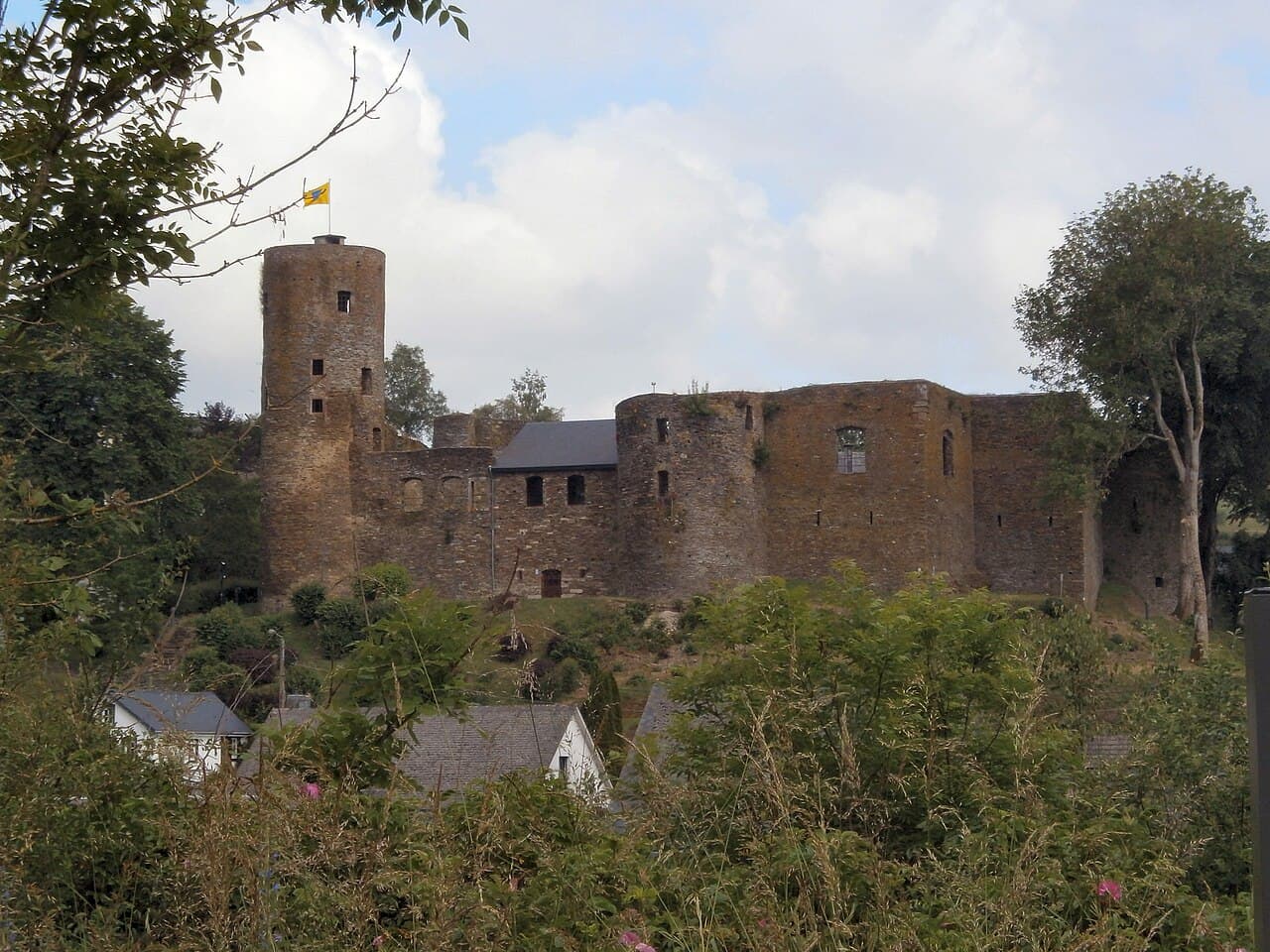
The castle’s original medieval design featured a robust enclosure wall fortified by five towers surrounding an inner courtyard approximately 60 by 55 meters in size. The walls were constructed primarily from sandstone with slate elements, materials typical of the region. The castle’s defensive layout was further enhanced in the 15th century when the Van Pallandt family added semi-circular artillery towers, adapting the fortress to withstand the increasing use of gunpowder and artillery in warfare.
A key architectural highlight is the bergfried, a large round keep located at the southwest corner of the site. This three-story tower, with walls about 1.25 meters thick, served as the castle’s main defensive stronghold and last refuge during sieges. Though the bergfried partially collapsed around 1616, it was partially rebuilt during early 20th-century restoration efforts. Inside the tower, traces of fireplaces reveal that it was also used for habitation, combining defense with residential functions.
Another notable feature is the bastion in the southeastern corner, which bears the coat of arms of the Pallandt-Myllendonck family along with the date 1604, indicating an important refurbishment phase. This bastion illustrates the castle’s continued strategic importance well into the early modern period.
Decline, destruction, and restoration efforts
The castle’s fortunes declined in the late 18th century. In 1794, during the turmoil of the French Revolutionary Wars, French troops destroyed Reuland Castle by fire, leaving it a ruin. After the death of the last Van Pallandt heirs in the 18th century, the castle was managed by stewards until its destruction. In 1830, the ruined site was sold for demolition but was acquired by the Mayeres family, who later donated it to the local municipality.
In the early 20th century, restoration efforts began under the auspices of the Prussian Rhine Province, which repaired parts of the structure in 1901 and 1902. The Belgian State purchased the grounds in 1923 to install air defense facilities during the interwar period, reflecting the site's continued military relevance. Full ownership of the castle was secured by the Belgian government in 1986, and since the 1980s, the castle has been a protected monument undergoing phased consolidations and restorations.
Today, the ruins of Reuland Castle are accessible to visitors during daylight hours. The site offers a unique glimpse into medieval military architecture and noble residence life. Visitors can climb the bergfried to enjoy panoramic views of the surrounding Ardennes countryside. A small castle shop on site provides souvenirs and information, enhancing the visitor experience.
Architectural remains and site layout
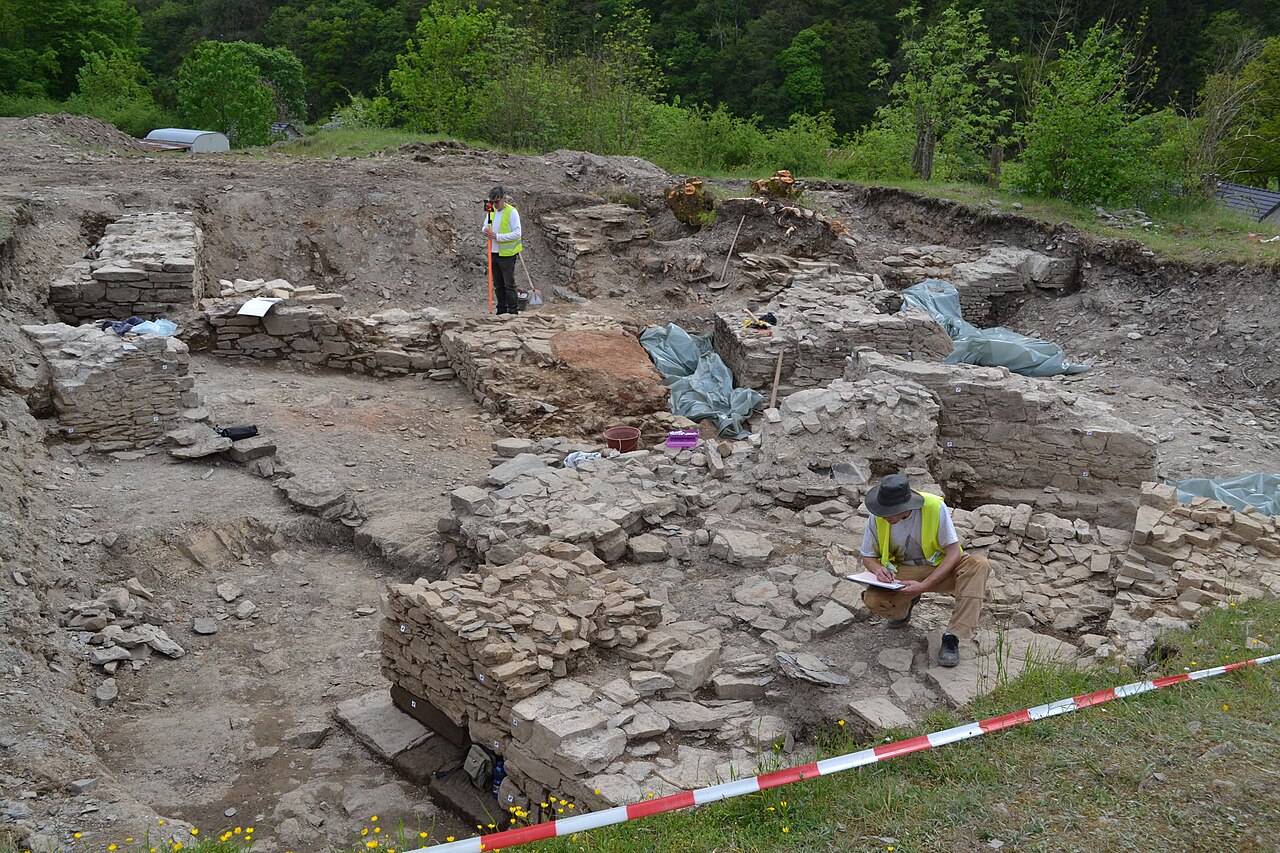
The current ruins represent only a fraction of the original fortress, but they preserve key elements of its medieval defensive system. The surviving curtain walls and towers outline the castle’s former perimeter, while the inner courtyard's spatial arrangement remains legible. The northern moat and outer bailey walls that once extended into the Ulft valley have not survived, but historical records and archaeological research provide insight into their former extent.
The castle chapel, documented until the late 18th century, has not been archaeologically identified, though it was an integral part of the castle complex. Nearby, a building that currently houses the village pharmacy originally served as the castle’s manor house, linking contemporary structures to the site’s historical functions.
Cultural significance and heritage preservation
Reuland Castle stands as a testament to the region’s turbulent medieval history and the evolution of castle architecture from fortified stronghold to noble residence. Its association with notable historical figures, such as John the Blind and the House of Luxembourg, enhances its cultural importance. The castle’s preservation and restoration efforts reflect a broader commitment to safeguarding Belgium’s medieval heritage.
Each year, a castle festival held on the second weekend of July celebrates the site’s history, attracting visitors and fostering local pride. The castle’s quiet village setting and well-preserved ruins offer a peaceful yet evocative experience for history enthusiasts, architecture admirers, and casual tourists alike.
Frequently asked questions (FAQ)
- What is the historical significance of Reuland Castle?
- Reuland Castle, located in Burg Reuland, Belgium, dates back to the 12th century and is a prime example of medieval architecture in the region. It played a crucial role in the defense against invasions and has been a witness to various historical events that shaped the area.
- When was Reuland Castle built?
- Reuland Castle was originally constructed in the 12th century, with various renovations and restorations occurring over the centuries. Its enduring structure reflects the architectural evolution from the medieval period through the Renaissance.
- Can I visit Reuland Castle?
- Yes, Reuland Castle is open to visitors, offering a glimpse into its rich history and stunning architecture. Guided tours are available, providing insights into the castle's past and its significance in Belgian history.
- What are the opening hours for Reuland Castle?
- Reuland Castle is typically open to the public from Tuesday to Sunday, with varying hours depending on the season. It is recommended to check the official website or contact the castle for the most current opening times before your visit.
- Is it possible to access Reuland Castle with mobility issues?
- The castle does have some accessibility features, but due to its historical nature, certain areas may be challenging for visitors with mobility issues. It is advisable to contact the castle staff in advance to inquire about specific accommodations.
- What is the best time to visit Reuland Castle?
- The best time to visit Reuland Castle is during the spring and early autumn months when the weather is pleasant and the surrounding landscape is particularly beautiful. Additionally, visiting during these times often means fewer crowds, allowing for a more enjoyable experience.
- Are there any nearby attractions to visit alongside Reuland Castle?
- Yes, visitors to Reuland Castle can also explore the picturesque village of Burg Reuland and its stunning natural surroundings. Other nearby attractions include hiking trails and local museums that showcase the region's culture and history.
- What are the ticket prices for Reuland Castle?
- Ticket prices for visiting Reuland Castle are generally affordable, with discounts available for children, seniors, and groups. It's best to check the official website for the latest pricing information and any special offers.
Photo gallery

Information
Website
Visit websiteSources & official resources
Verify the information above using these authoritative references.
Loading map...
Visitor reviews
No reviews yet. Been here? Write the first review and help other travelers!
Write the first reviewVisited this castle? Share your experience
Your review helps other travelers and adds first-hand knowledge to our encyclopedia.