Resko
Resko Castle stands as a significant historical monument in the town of Resko, located in the Pomeranian Voivodeship of Poland. Its origins trace back to the early medieval period, around the year 1190, when a wooden stronghold was established on a hill overlooking the Regą River. This strategic location was chosen to guard the important trade route connecting Kołobrzeg to Stargard, highlighting the castle’s early military and economic importance.
Early history and medieval foundation
The initial fortification at Resko was a wooden stronghold surrounded by an earthen rampart, situated on a hill rising about 3.5 meters above the adjacent meadows. By the 13th century, a market settlement developed north of the stronghold, divided between two noble families: the Borks in the south and the Vidants in the north. This division reflected the fragmented political landscape of medieval Pomerania.
In the latter half of the 13th century, the wooden fortification was replaced by a knightly residence, founded by Jan Borek, son of the castellan of Kołobrzeg, Borek II. This marked the transition from a simple defensive outpost to a more permanent noble seat, reflecting the growing power of the Bork family in the region.
Construction of the stone castle and urban fortifications
After 1365, the Bork family initiated the construction of a stone and brick castle on the site of the earlier wooden fortification. The castle’s curtain wall likely enclosed the entire hilltop, measuring approximately 40 by 40 meters. This substantial fortification was complemented by the construction of extensive city walls around Resko, stretching nearly 1300 meters in length. These walls were built simultaneously to protect the growing town and to reinforce the castle’s defensive position.
The castle was physically separated from the town by its own defensive wall and a water-filled moat, accessible through the castle gate (Brama Zamkowa). This separation underscored the castle’s role as a military stronghold distinct from the civilian urban area. In 1447, the Bork family consolidated their control by purchasing the part of the town previously owned by the Vidants, becoming the sole owners of Resko.
Architectural features and layout
While much of the original castle structure has not survived intact, historical records indicate that the castle featured typical medieval defensive elements such as curtain walls, gatehouses, and likely towers to oversee the surrounding landscape. The hilltop location provided a natural defensive advantage, and the moat enhanced its protection against siege warfare.
The castle’s layout was compact, with the main enclosure forming a roughly square area. The stone and brick construction represented a significant advancement from the earlier wooden fortifications, reflecting the evolution of military architecture in the high medieval period.
Later transformations and decline
By the late 18th century, the medieval castle had fallen into disrepair. In 1774, the Bork family demolished the remaining medieval structures and erected a half-timbered manor house on the site. This new building replaced the defensive fortress with a residence more suited to the period’s aesthetic and residential needs.
Unfortunately, the half-timbered manor was destroyed in 1826, and soon after, the city walls were dismantled around the turn of the 19th century. The area surrounding the former castle was transformed into a park, reflecting changing land use and urban development trends.
Current condition and archaeological significance
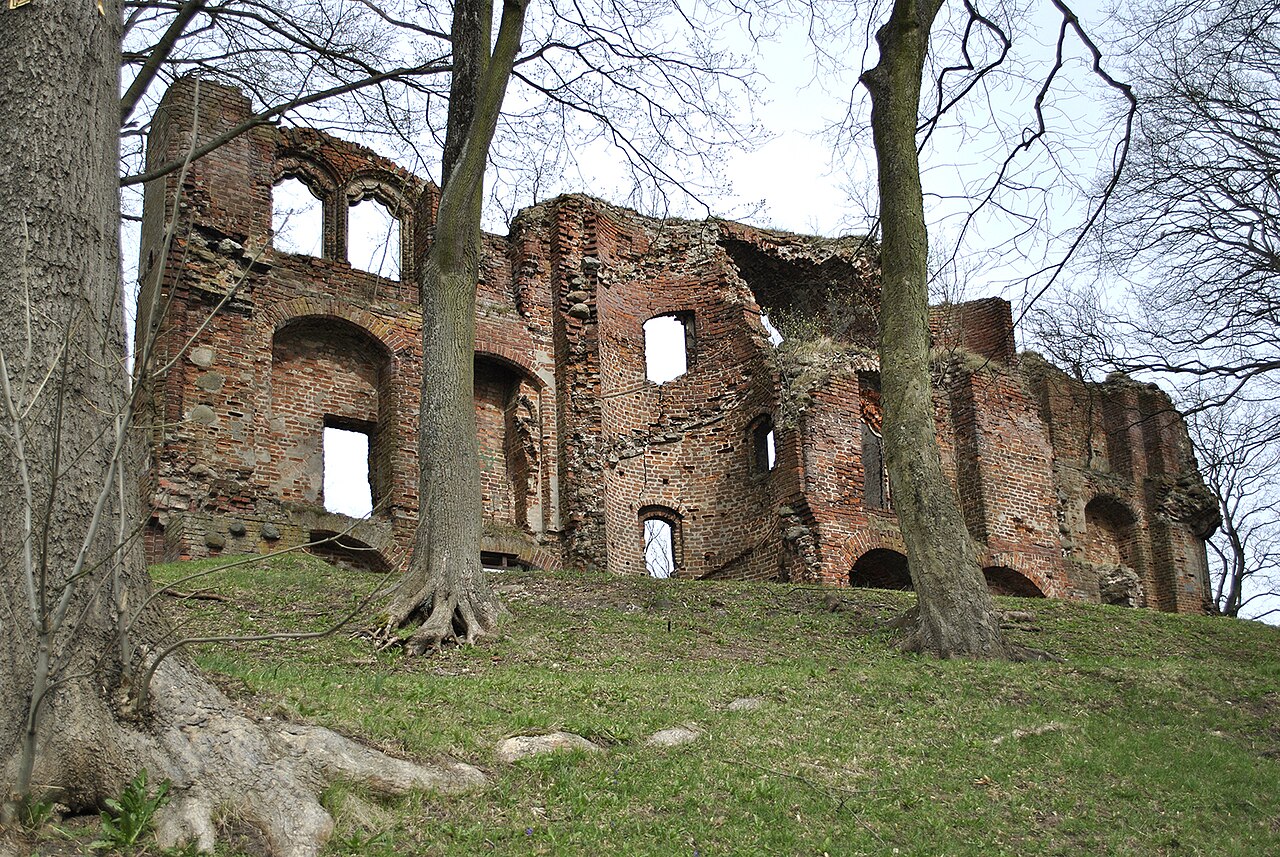
Today, Resko Castle exists primarily as archaeological remains. The foundations of the perimeter walls are still visible on the hill, offering valuable insights into the castle’s original footprint and construction techniques. Although the superstructures no longer stand, the site remains an important cultural heritage location, illustrating the medieval history of the region and the architectural transition from wooden fortifications to stone castles.
Visitors to Resko can explore the castle hill and appreciate the historical context of the site, which played a crucial role in the defense and administration of medieval Pomerania. The castle’s connection to the Bork family and its integration with the town’s fortifications highlight its significance in regional history.
Historical and cultural context
The castle’s history reflects the broader political and social dynamics of Pomerania during the high medieval period. The rivalry and cooperation between noble families like the Borks and Vidants shaped the development of Resko as a fortified settlement and market town. The castle’s construction and fortification efforts were part of a wider trend of castle building across Europe, driven by the need for defense, control of trade routes, and assertion of noble power.
Resko Castle’s evolution from a wooden stronghold to a stone fortress, and later to a manor house, mirrors the changing military technologies and social structures over several centuries. Its preservation as an archaeological site allows historians and visitors alike to trace these transformations and understand the region’s medieval heritage.
Visiting resko castle today
While the castle no longer stands in its original form, the site is accessible for visitors interested in medieval history and archaeology. The visible foundations and the surrounding landscape offer a glimpse into the castle’s past. The nearby town of Resko provides additional historical context and amenities for tourists.
Frequently asked questions about resko castle
- When was Resko Castle originally built? Resko Castle was originally established around 1190 as a wooden stronghold guarding a key trade route in medieval Pomerania.
- What remains of Resko Castle can be seen today? Visitors can see the foundations of the castle’s perimeter walls on the hilltop, which outline the original stone structure.
- Can I visit Resko Castle year-round? The site is open to the public year-round, although there are no formal visitor facilities or guided tours on site.
- What architectural style is Resko Castle? The castle was built in the high medieval style, featuring stone and brick construction typical of the period.
- Is there a museum or exhibition about Resko Castle? While there is no dedicated museum at the castle site, local museums in Resko and the Pomeranian region provide historical information about the castle and the area.
- How did Resko Castle relate to the town’s fortifications? The castle was separated from the town by its own defensive wall and moat, but it was also integrated with the city walls that protected Resko.
Frequently asked questions (FAQ)
- When was Resko Castle originally built?
- Resko Castle was originally established around 1190 as a wooden stronghold guarding a key trade route in medieval Pomerania.
- What remains of Resko Castle can be seen today?
- Visitors can see the foundations of the castle’s perimeter walls on the hilltop, which outline the original stone structure.
- Can I visit Resko Castle year-round?
- The site is open to the public year-round, although there are no formal visitor facilities or guided tours on site.
- What architectural style is Resko Castle?
- The castle was built in the high medieval style, featuring stone and brick construction typical of the period.
- Is there a museum or exhibition about Resko Castle?
- While there is no dedicated museum at the castle site, local museums in Resko and the Pomeranian region provide historical information about the castle and the area.
- How did Resko Castle relate to the town’s fortifications?
- The castle was separated from the town by its own defensive wall and moat, but it was also integrated with the city walls that protected Resko.
Information
Loading map...
Visitor reviews
No reviews yet. Been here? Write the first review and help other travelers!
Write the first reviewVisited this castle? Share your experience
Your review helps other travelers and adds first-hand knowledge to our encyclopedia.