Reginald's Tower
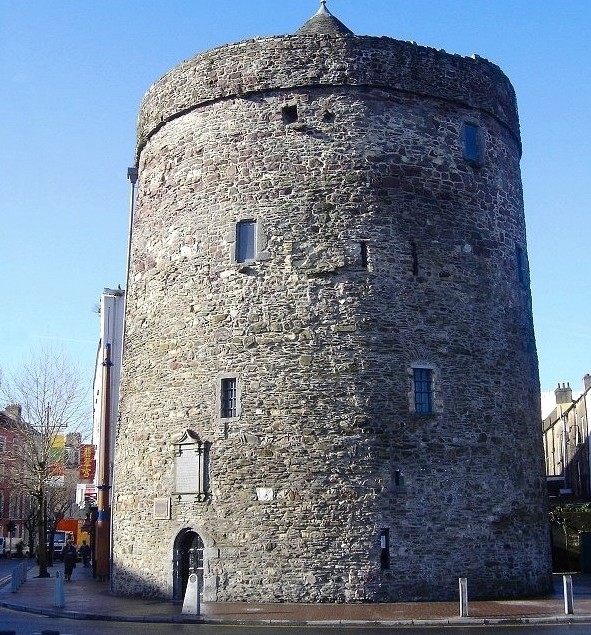
Reginald's Tower, located in the historic city of Waterford, Ireland, is one of the most significant surviving examples of medieval military architecture in the country. This iconic cylindrical stone tower stands prominently on The Mall, near the banks of the River Suir, and has played a central role in the city's turbulent history since its construction in the 12th century. Although the site has Viking origins dating back to the 9th or 10th century, the present tower was built by the Anglo-Normans after their conquest of Waterford, marking a key phase in the city's fortification development.
Historical context and origins
The city of Waterford itself was founded by Vikings during the Early Medieval period, around the 9th or 10th century. The original Viking settlement was fortified with a triangular-shaped walled town, strategically positioned at the confluence of the River Suir and a now-vanished stream. This location provided natural defenses and facilitated trade and maritime activities, establishing Waterford as an important port and trading center.
Following the Anglo-Norman invasion of Ireland in the late 12th century, the new rulers undertook extensive fortification projects to consolidate their control. Reginald's Tower was constructed at the apex of the city walls, serving as a key defensive stronghold. The tower's strategic position allowed it to guard the river approach and the main entrance to the city, making it a vital military asset.
Architectural features and design
Reginald's Tower is notable for its massive cylindrical shape, built primarily from local stone. Its walls are impressively thick, designed to withstand siege weaponry and cannon fire. The tower rises several stories high and features narrow slit windows that provided defenders with vantage points for archery and later, gunfire. The robust construction includes a battlemented parapet at the top, allowing defenders to repel attackers while remaining protected.
The tower's interior consists of multiple floors connected by stone staircases, with rooms that would have served various functions including storage for munitions, living quarters for soldiers, and administrative spaces. The tower's design reflects the transition from traditional medieval fortifications to adaptations accommodating artillery, evident in the cannon placements and embrasures added in later centuries.
Significant historical events
Reginald's Tower has witnessed numerous key historical events that shaped Waterford and Ireland. One of the most notable was the wedding in 1171 between Richard de Clare, 2nd Earl of Pembroke (Strongbow), and Aoife MacMurrough, daughter of the King of Leinster, Dermot MacMurrough. This union symbolized the Anglo-Norman consolidation of power in Ireland.
The tower also served as a royal castle on several occasions. King John visited in 1210, during which he ordered new coins to be minted there, highlighting the tower's importance as a center of governance and economic activity. Later, King Richard II used the tower in the late 14th century to store munitions during his campaigns in Ireland.
In 1495, the tower's cannons played a defensive role by successfully deterring the forces of Perkin Warbeck, a pretender to the English throne, demonstrating the tower's continued military relevance into the late medieval period.
The 17th century brought further conflict. During the Cromwellian conquest of Ireland, Waterford was besieged twice. The first siege in 1649 failed, but the subsequent siege in 1650 succeeded, leading to the city's capture. A cannonball from this siege remains embedded high in the tower's north wall, a tangible reminder of the violent struggle. Following the Battle of the Boyne in 1690, it is said that King James II climbed to the top of Reginald's Tower to take a final look at his lost kingdom before going into exile.
Later uses and preservation
Throughout the 17th and 18th centuries, the tower was primarily used for storing munitions, reflecting its ongoing military utility. In the early 19th century, it was repurposed as a prison, adapting its robust structure to new functions.
Today, Reginald's Tower is a well-preserved monument and a key part of Waterford's cultural heritage. It houses a museum showcasing the city's Viking and medieval history, including artifacts recovered from the area. The tower's museum offers visitors insight into the evolution of military architecture and the historical significance of Waterford as Ireland's oldest city.
Visiting Reginald's Tower
Visitors to Waterford can explore the tower and its museum, which provides an immersive experience into the city's past. The tower's location in the city center makes it easily accessible, and its commanding views over the River Suir and surrounding area offer a unique perspective on Waterford's strategic importance. While renovations may occasionally affect access, the tower remains a popular attraction for those interested in medieval history and architecture.
Frequently asked questions (FAQ)
- How do I get to Reginald's Tower?
- Reginald's Tower is located in the heart of Waterford, easily accessible by public transport and car. The nearest bus stop is just a short walk away, and there is parking available in nearby areas for those driving. Walking from the city center is also a pleasant option, allowing you to enjoy the scenic views along the way.
- What is the historical significance of Reginald's Tower?
- Reginald's Tower is one of the oldest structures in Waterford, dating back to the 12th century. It served as a defensive fortification and a key part of the city's medieval walls, making it a crucial site in Ireland's history. The tower is named after Reginald, a Viking leader, highlighting the city's rich Norse heritage.
- When was Reginald's Tower built?
- Reginald's Tower was constructed in the 12th century, making it one of the oldest surviving towers in Ireland. It has undergone various renovations and restorations over the centuries, maintaining its status as a historical landmark. The tower's enduring presence reflects the architectural styles and the tumultuous history of the region.
- Can I visit Reginald's Tower year-round?
- Yes, Reginald's Tower is open to visitors throughout the year, but opening hours may vary seasonally. It's best to check the official website for the most current information regarding hours of operation. Special events and guided tours may also be scheduled during peak tourist seasons.
- Why is Reginald's Tower considered an architectural marvel?
- Reginald's Tower is admired for its unique circular design and robust stone construction, indicative of medieval military architecture. Its strategic placement along the River Suir provides stunning views and served as a lookout point during its time. The blend of Viking and Norman influences in its design makes it a fascinating study for architecture enthusiasts.
- Is it possible to access Reginald's Tower for people with disabilities?
- Yes, efforts have been made to ensure that Reginald's Tower is accessible to all visitors. There are provisions in place for wheelchair access, and staff are available to assist if needed. However, it's advisable to contact the site in advance for specific accessibility arrangements.
- What are the ticket prices for visiting Reginald's Tower?
- Ticket prices for Reginald's Tower are generally affordable, with discounts available for children, students, and seniors. Family tickets may also be offered, making it a great value for groups. Check the official website for the latest pricing information and any special promotions.
- What is the best time to visit Reginald's Tower?
- The best time to visit Reginald's Tower is during the spring and summer months when the weather is typically mild and conducive for outdoor exploration. Early mornings or late afternoons can offer a quieter experience, allowing you to enjoy the tower and its surroundings without the crowds. Additionally, visiting during local festivals can provide a unique cultural experience.
- Are there any nearby attractions to visit after Reginald's Tower?
- Yes, there are several nearby attractions worth exploring after your visit to Reginald's Tower. The Waterford Crystal Visitor Centre and the Medieval Museum are both within walking distance and offer rich insights into the city's heritage. The scenic waterfront and charming streets of Waterford also provide a delightful atmosphere for a leisurely stroll.
Information
Address
The Mall, Waterford, Ireland
Loading map...
Visitor reviews
No reviews yet. Been here? Write the first review and help other travelers!
Write the first reviewVisited this castle? Share your experience
Your review helps other travelers and adds first-hand knowledge to our encyclopedia.