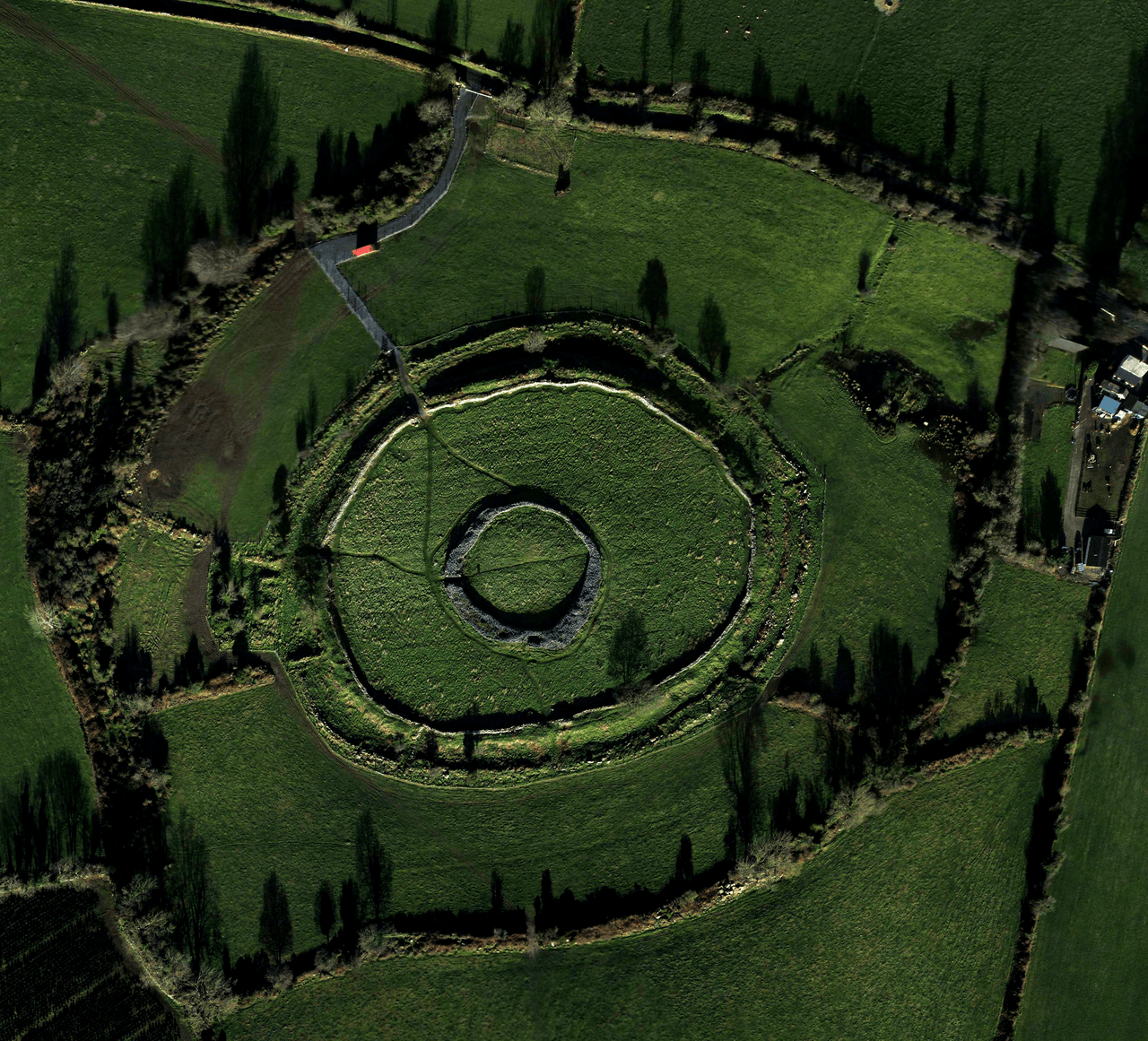
Rathgall hillfort, known in Irish as An Ráth Gheal or the Ring of the Rath, is a significant Bronze Age archaeological site located in County Wicklow, Ireland. This large multivallate hill fort is distinguished by its complex system of concentric stone ramparts and a later medieval masonry wall at its core. Positioned roughly 5 km east of Tullow, Rathgall represents one of the most important prehistoric fortifications in Ireland, reflecting centuries of occupation and evolving use from the Bronze Age through the Medieval period.
Architectural features and layout
The fort's defining characteristic is its three roughly concentric stone ramparts, which enclose a substantial area atop a hill, providing natural defensive advantages. These ramparts are separated by deep ditches, creating formidable barriers against potential attackers. Within the innermost enclosure lies a fourth wall constructed of masonry dating from the Medieval period, indicating the site's prolonged strategic importance and adaptation over time.
Excavations have revealed a large circular post-built structure within the inner ditch, measuring approximately 15 meters (48 feet) in diameter. This building likely served as a central communal or ritual space during the Bronze Age occupation. The presence of multiple enclosures suggests a hierarchical use of space, possibly separating areas for domestic life, livestock, and ritual activities.
Archaeological excavations and finds
Between 1969 and 1975, partial excavations led by archaeologist Barry Raftery uncovered a wealth of artefacts that shed light on the site's long history. The artefacts date primarily to the middle to late Bronze Age, but also include items from the early Iron Age and Medieval periods.
Noteworthy finds include numerous ceramic vessels and pot sherds, which provide insight into the domestic life of the inhabitants. The discovery of 96 glass beads alongside ornaments made of gold, jet, amber, and lignite points to the site's significance as a center for craftsmanship and trade. Metalworking evidence was found in the form of casts for tools and weapons, such as a sword blade, spearhead, and a socketed axe head, indicating advanced metallurgical skills.
Additionally, an early Iron Age iron smelting furnace was identified, marking Rathgall as a site of technological transition. The presence of burials and a burial site linked to later use suggests a ritual dimension to the fort beyond its agricultural and domestic functions.
Historical context and cultural significance
Rathgall's long occupation from the Bronze Age through the Medieval period highlights its enduring strategic and cultural importance. The layered construction phases reflect changing defensive needs and social structures over time. The medieval masonry wall within the fort's core demonstrates the site's continued use and adaptation well into the later historic period.
The site is also steeped in local folklore and legend. It is associated with tales of fairies and is traditionally considered a place of pilgrimage for childless couples seeking blessings, underscoring its spiritual resonance in the region.
Preservation and public access
Today, Rathgall is designated as a National Monument of Ireland and is under state care. While the site remains in a state of ruins, the visible stone ramparts and earthworks provide a tangible connection to Ireland's prehistoric past. Visitors can explore the hillfort's extensive remains and appreciate its archaeological and cultural significance within the landscape of County Wicklow.
Frequently asked questions (FAQ)
- How do I get to Rathgall hillfort?
- Rathgall hillfort is located about 5 km east of Tullow in County Wicklow, Ireland. Visitors can reach the site by car via local roads, with parking available nearby. It is advisable to check local visitor information for the best access routes.
- What is the historical significance of Rathgall hillfort?
- Rathgall hillfort is an important Bronze Age multivallate fort featuring multiple stone ramparts and a medieval wall. It provides valuable insights into prehistoric settlement, metalworking, and ritual practices in Ireland.
- Can I visit Rathgall hillfort year-round?
- The site is accessible year-round as an open archaeological ruin. However, visitors should prepare for uneven terrain and variable weather conditions typical of the Irish countryside.
- Are there guided tours available at Rathgall hillfort?
- There are no regular guided tours on site, but local heritage groups occasionally organize events. Visitors can explore the site independently with informational signage available.
- What artifacts have been found at Rathgall hillfort?
- Excavations uncovered Bronze Age ceramic vessels, glass beads, gold ornaments, metal tools, and weapons, as well as an early Iron Age iron smelting furnace and medieval coins and potshards.
Photo gallery

Information
Current owner
State
Loading map...
Visitor reviews
No reviews yet. Been here? Write the first review and help other travelers!
Write the first reviewVisited this castle? Share your experience
Your review helps other travelers and adds first-hand knowledge to our encyclopedia.