Humewood Castle — Ireland castle

Humewood Castle

Humewood Castle, Kiltegan, County Wicklow
Kiltegan, Ireland
Modern (19th–20th c.)
Well Preserved

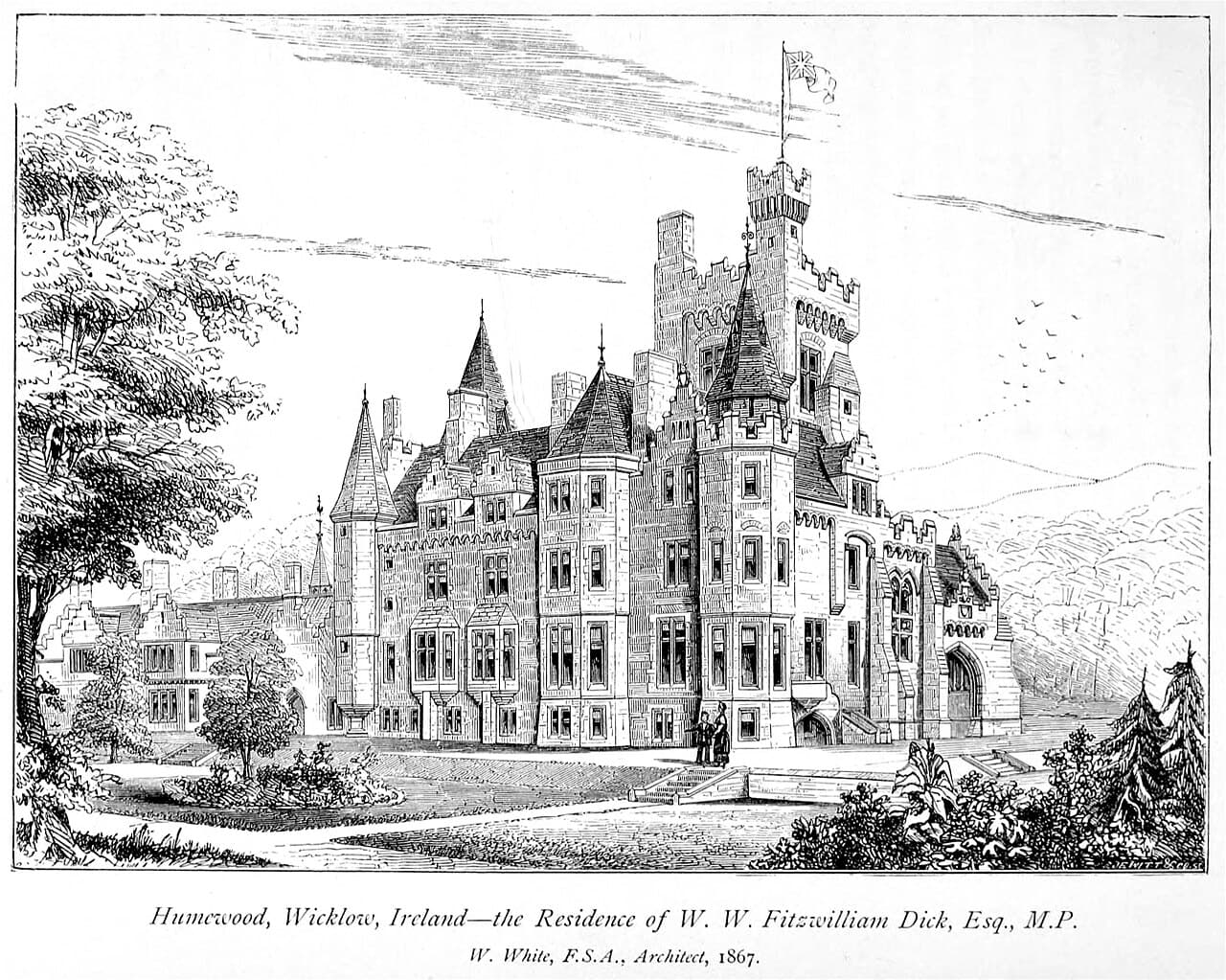
Humewood Castle is a striking example of a 19th-century Gothic-fantasy mansion located in Kiltegan, County Wicklow, Ireland. Covering an impressive 32,668 square feet (3,035.0 m2) within 427 acres of scenic parkland, the castle was constructed in 1870 as a private residence for the Hume family. This grand estate showcases the architectural vision of the English architect William White, who initially designed the mansion, with later extensions by James Brooks. As of 2024, the property is owned by American billionaire John C. Malone.

Architectural design and style

The castle is built predominantly of granite, lending it a robust and enduring presence. Its design is firmly rooted in the Gothic Revival architectural style, which was popular in the Victorian era and characterized by its romanticized medieval elements. The mansion rises three stories high, featuring a distinctive layout with a tall, round turreted tower at one end and a contrasting angular tower at the other. These towers contribute to the castle's fairy-tale silhouette and provide vertical emphasis typical of Gothic Revival aesthetics.

Exterior features

The castle's exterior is marked by pointed arch windows, steeply pitched roofs, and intricate stonework that reflect the Gothic Revival style's attention to medieval motifs. The granite walls give the structure a sense of permanence and strength, while the turrets add a picturesque quality that enhances its fantasy-like appearance. The surrounding parkland of over 400 acres offers a natural setting that complements the castle's architectural grandeur.

Interior layout and rooms

The interior of Humewood Castle is spacious and designed for both comfort and entertaining. The ground floor includes a series of formal rooms such as a drawing room, dining room, salon, and a ballroom banqueting hall. These rooms were intended for social gatherings and reflect the lifestyle of the Victorian upper class. The lower ground floor houses more private and recreational spaces, including a billiard room, smoking room, and a wine cellar, providing leisure amenities for the residents and their guests.

On the upper floors, there are 12 bedrooms, arranged to accommodate family members and visitors. The bedrooms are likely to feature the period's typical decorative elements, such as ornate woodwork, high ceilings, and large windows to maximize natural light.

Historical context and ownership

Humewood Castle was commissioned by the Hume family, a landed family with English roots who established their residence in Ireland during the Victorian period. The choice of the Gothic Revival style was in line with the era's fascination with medieval architecture and the romantic ideals it represented. The castle's construction in the late 19th century places it in the context of a period when many wealthy families built grand country houses that combined luxury with historicist architectural styles.

William White, the original architect, was notable for his work in the Gothic Revival style, and his involvement lends the castle architectural significance. James Brooks, who extended the mansion, was also a prominent architect of the time, known for his ecclesiastical and residential designs.

In recent years, the castle has attracted attention due to its ownership by John C. Malone, an American billionaire known for acquiring historic properties. This ownership has ensured the castle's preservation and continued prominence as a significant architectural landmark in County Wicklow.

Setting and landscape

Situated in the lush Irish countryside, Humewood Castle is surrounded by extensive parkland spanning 427 acres. The natural landscape features mature trees, rolling hills, and possibly formal gardens, typical of Victorian estate planning. This setting enhances the castle's aesthetic appeal and provides a tranquil environment that complements its grandeur.

Preservation and current condition

Humewood Castle remains well preserved as a private residence. Its granite construction and careful maintenance have helped it retain much of its original architectural character. The castle continues to be an important example of Gothic Revival architecture in Ireland, illustrating the 19th-century trend of romanticized medieval design in country houses.

Visiting and cultural significance

While Humewood Castle is privately owned and not generally open to the public, its architectural and historical importance is recognized among scholars and enthusiasts of Victorian Gothic Revival architecture. The castle contributes to Ireland's rich heritage of country houses and castles, offering insights into the social history and architectural tastes of the late 19th century.

Its location in County Wicklow places it within a region known for scenic beauty and numerous historic sites, making the area a destination for those interested in Ireland's cultural landscape.

Frequently asked questions (FAQ)

How do I get to Humewood Castle?
Humewood Castle is located in Kiltegan, Ireland, and can be accessed by car via the N81 road. Public transport options are limited, so it is recommended to drive or arrange for a taxi from nearby towns.
What is the historical significance of Humewood Castle?
Humewood Castle was built in the 19th century and is known for its unique architectural style that combines elements of Gothic Revival. The castle has a rich history, having been a private residence and a significant landmark in the Kiltegan area.
When was Humewood Castle constructed?
Humewood Castle was constructed in 1860 and was designed by the architect William Morris. It reflects the artistic and architectural movements of the time, making it an important piece of Ireland's architectural heritage.
Can I visit Humewood Castle?
Yes, Humewood Castle is open to visitors, but it's advisable to check for any scheduled tours or events. Guided tours are often available, providing insights into the castle's history and architecture.
Why is Humewood Castle considered an architectural gem?
Humewood Castle is considered an architectural gem due to its striking Gothic Revival features and beautiful landscaping. The intricate stonework and unique design elements make it a fascinating site for architecture enthusiasts.
Is it possible to host events at Humewood Castle?
Yes, Humewood Castle offers event spaces for private functions, weddings, and corporate events. The stunning backdrop of the castle and its grounds creates a memorable setting for any occasion.
What are the opening hours for Humewood Castle?
Humewood Castle typically opens from 10 AM to 5 PM, but hours may vary seasonally or during special events. It is best to check their official website or contact them directly for the most current information.
What are the nearby attractions to Humewood Castle?
Nearby attractions include the picturesque Wicklow Mountains and the charming villages of Kiltegan and Baltinglass. Visitors can also explore local hiking trails and historical sites, making it a great addition to your trip.
What are the ticket prices for visiting Humewood Castle?
Ticket prices for Humewood Castle vary depending on the type of tour or event. It is recommended to check the official website for the latest pricing information and any available discounts for groups or families.

Photo gallery

Humewood Castle
Click to view

Photo by Book authored by Charles Eastlake - the engraver is not attributed•Public domain

1 photo • Click any image to view in full screen

Information

Hill Castle

Loading map...

Visitor reviews

No reviews yet. Been here? Write the first review and help other travelers!

Write the first review

Visited this castle? Share your experience

Your review helps other travelers and adds first-hand knowledge to our encyclopedia.
Write a review

(5/5)

0/2000 characters

Your review will be visible after admin approval

Nearby castles

12.5 km
Rathgall Hillfort — Ireland castle

Rathgall Hillfort

, Ireland

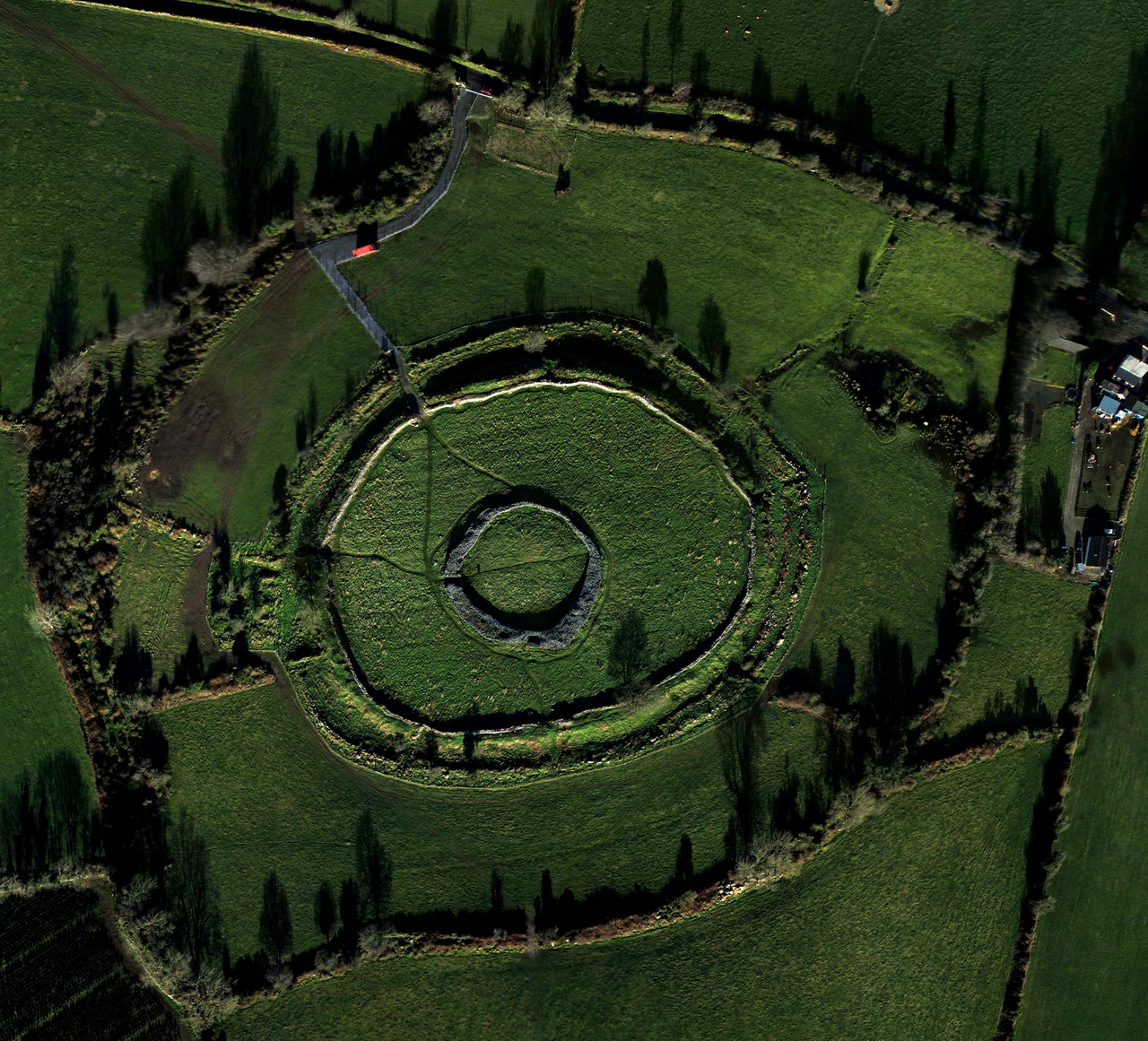
Rathgall hillfort, known in Irish as An Ráth Gheal or the Ring of the Rath, is a significant Bronze Age archaeological site located in County Wicklow, Ireland. This large multivallate hill fort is distinguished by its complex system of concentric stone ramparts and a later medieval masonry wall at its core. Positioned roughly 5 km east of Tullow, Rathgall represents one of the most important prehistoric fortifications in Ireland, reflecting centuries of occupation and evolving use from the Bronze Age through the Medieval period. Architectural features and layout The fort's defining characteristic is its three roughly concentric stone ramparts, which enclose a substantial area atop a hill, providing natural defensive advantages. These ramparts are separated by deep ditches, creating formidable barriers against potential attackers. Within the innermost enclosure lies a fourth wall constructed of masonry dating from the Medieval period, indicating the site's prolonged strategic importance and adaptation over time. Excavations have revealed a large circular post-built structure within the inner ditch, measuring approximately 15 meters (48 feet) in diameter. This building likely served as a central communal or ritual space during the Bronze Age occupation. The presence of multiple enclosures suggests a hierarchical use of space, possibly separating areas for domestic life, livestock, and ritual activities. Archaeological excavations and finds Between 1969 and 1975, partial excavations led by archaeologist Barry Raftery uncovered a wealth of artefacts that shed light on the site's long history. The artefacts date primarily to the middle to late Bronze Age, but also include items from the early Iron Age and Medieval periods. Noteworthy finds include numerous ceramic vessels and pot sherds, which provide insight into the domestic life of the inhabitants. The discovery of 96 glass beads alongside ornaments made of gold, jet, amber, and lignite points to the site's significance as a center for craftsmanship and trade. Metalworking evidence was found in the form of casts for tools and weapons, such as a sword blade, spearhead, and a socketed axe head, indicating advanced metallurgical skills. Additionally, an early Iron Age iron smelting furnace was identified, marking Rathgall as a site of technological transition. The presence of burials and a burial site linked to later use suggests a ritual dimension to the fort beyond its agricultural and domestic functions. Historical context and cultural significance Rathgall's long occupation from the Bronze Age through the Medieval period highlights its enduring strategic and cultural importance. The layered construction phases reflect changing defensive needs and social structures over time. The medieval masonry wall within the fort's core demonstrates the site's continued use and adaptation well into the later historic period. The site is also steeped in local folklore and legend. It is associated with tales of fairies and is traditionally considered a place of pilgrimage for childless couples seeking blessings, underscoring its spiritual resonance in the region. Preservation and public access Today, Rathgall is designated as a National Monument of Ireland and is under state care. While the site remains in a state of ruins, the visible stone ramparts and earthworks provide a tangible connection to Ireland's prehistoric past. Visitors can explore the hillfort's extensive remains and appreciate its archaeological and cultural significance within the landscape of County Wicklow.

Details
13.6 km
Ballyloughan Castle — Ireland castle

Ballyloughan Castle

Bagenalstown, Ireland

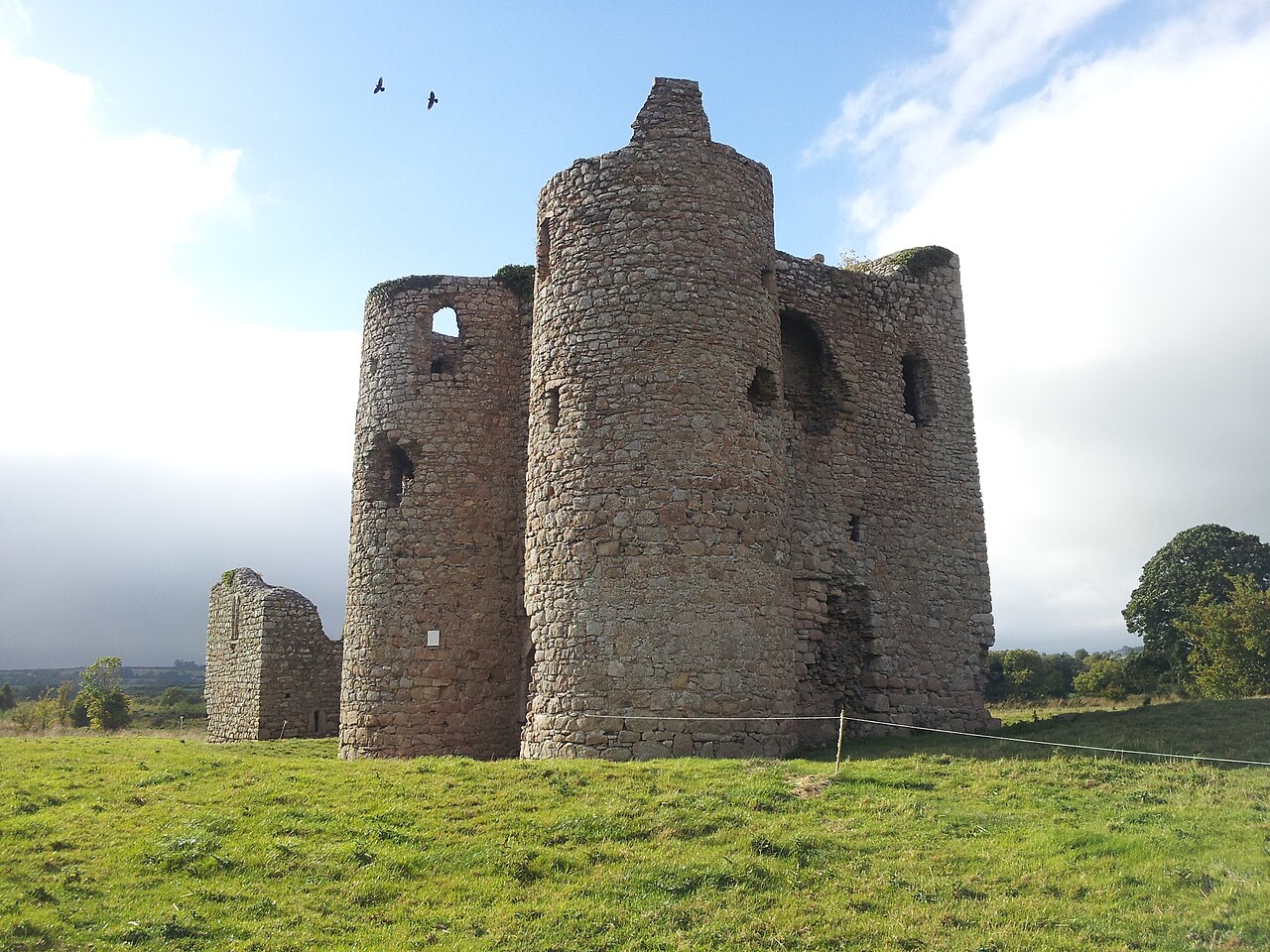
Ballyloughan Castle is a ruined medieval fortress located near Bagenalstown in County Carlow, Ireland. This site is recognized as a National Monument due to its historical and architectural significance. The castle dates back to the 13th century, placing it firmly within the High Medieval period, a time when castle-building in Ireland was influenced by Norman military architecture. Historical context and significance The castle was constructed around the year 1300, during a period marked by the consolidation of Norman control in Ireland. Ballyloughan Castle served as a fortified residence and defensive stronghold, reflecting the strategic needs of the era. Its location near Bagenalstown, a town in the fertile lands of County Carlow, suggests it played a role in overseeing local territories and protecting important routes. Architectural features and layout Today, Ballyloughan Castle survives primarily as archaeological ruins. The most prominent remaining structure is the twin-towered gatehouse, a distinctive feature in medieval castle design that provided both defense and controlled access to the inner ward. This gatehouse would have been equipped with defensive elements such as murder holes and arrow slits to repel attackers. In addition to the gatehouse, the hall remains partially intact, offering insight into the domestic arrangements within the castle walls. The foundations of one of the corner towers are also visible, indicating the castle's original fortified perimeter. These towers would have been key defensive points, allowing guards to monitor the surrounding landscape. Construction materials and techniques The castle was built using locally sourced stone, typical of Norman castles in Ireland. The masonry work reflects the High Medieval style, with thick walls designed to withstand siege weaponry of the period. The use of twin towers flanking the gatehouse was a common architectural strategy to enhance the castle's defensibility. Current condition and preservation Ballyloughan Castle is classified as ruins and an archaeological site. Although much of the original structure has been lost to time, the surviving elements provide valuable information for historians and archaeologists studying medieval fortifications in Ireland. Preservation efforts focus on maintaining the stability of the remaining walls and gatehouse to prevent further decay. Visiting Ballyloughan Castle The castle is accessible to the public, offering visitors a chance to explore the remains of a 13th-century Norman stronghold. Its location near Bagenalstown makes it a suitable destination for those interested in medieval history and Irish heritage. Visitors can observe the architectural features up close and imagine the castle's role in the turbulent history of medieval Ireland. Nearby attractions County Carlow offers several other historical sites and natural attractions, making Ballyloughan Castle part of a broader cultural itinerary. The proximity to Bagenalstown allows for convenient access to local amenities and additional exploration of Ireland's medieval past.

High Medieval (11th–13th c.)
Details
15.5 km
Castlemore Moat — Ireland castle

Castlemore Moat

, Ireland

Castlemore Moat is a significant 12th-century motte-and-bailey castle located in County Carlow, Ireland. It stands as an important National Monument and offers valuable insight into the High Medieval period fortifications typical of Norman military architecture in Ireland. The site comprises a raised earthwork mound or motte accompanied by an enclosed courtyard or bailey, which would have been surrounded by wooden palisades and a ditch, characteristic of early medieval defensive structures. Historical context and significance The construction of Castlemore Moat dates back to the 12th century, a time when the Normans were expanding their control over Ireland following the initial invasion in 1169. Motte-and-bailey castles like Castlemore were rapidly erected across the country as a means to establish and maintain Norman authority. These castles served both as military strongholds and administrative centers. The strategic placement of Castlemore Moat in County Carlow would have allowed control over local routes and lands, providing a defensive advantage and a symbol of Norman dominance. The castle's remains today offer a tangible connection to this transformative period of Irish history. Architectural features of the motte-and-bailey The defining feature of Castlemore Moat is its motte, a large, artificial earthen mound, which would have supported a wooden or stone keep at its summit. This elevated position provided defenders with a commanding view of the surrounding landscape and a strong defensive advantage. Adjacent to the motte is the bailey, an enclosed courtyard that would have contained living quarters, stables, workshops, and storage buildings. The bailey was typically surrounded by a protective ditch and a wooden palisade, which enhanced the castle's defense. While the original wooden structures have long since decayed, the earthworks remain well-preserved, allowing visitors to appreciate the scale and layout of this early medieval fortification. Defensive elements The castle's defensive system likely included a deep ditch or moat encircling the motte and bailey, designed to deter attackers and prevent easy access to the walls. The steep sides of the motte added to the difficulty of assaulting the keep. These features reflect the typical Norman approach to castle construction during the High Medieval period, emphasizing rapid construction and effective defense. Current condition and archaeological importance Today, Castlemore Moat exists as an archaeological ruin, with the earthworks prominently visible but no standing stone structures remaining. The site is protected as a National Monument, recognizing its cultural and historical importance. Archaeological investigations have provided insights into the construction techniques and layout of motte-and-bailey castles in Ireland, with Castlemore serving as a valuable case study. The preservation of the earthworks allows for ongoing research and public education about Norman military architecture and medieval Irish history. Visiting Castlemore Moat While there are no extensive visitor facilities at Castlemore Moat, the site is accessible to the public. Visitors can explore the visible earthworks and gain an appreciation for the scale and design of this early Norman fortification. The surrounding landscape of County Carlow offers additional historical and natural attractions, making Castlemore Moat a noteworthy stop for those interested in medieval history and archaeology. Nearby attractions Browneshill Dolmen – a prehistoric portal tomb nearby. County Carlow Museum – featuring exhibits on local history and archaeology. Altamont Gardens – a historic garden estate in the region. Architectural legacy and influence Castlemore Moat exemplifies the early Norman fortification style brought to Ireland in the 12th century. Its motte-and-bailey design influenced subsequent castle construction across Ireland and Britain, marking a transition from wooden forts to more permanent stone castles in later centuries. The site helps historians and architects understand the evolution of medieval military architecture and the adaptation of Norman designs to the Irish landscape and political context.

High Medieval (11th–13th c.)
Details