Raglan Castle
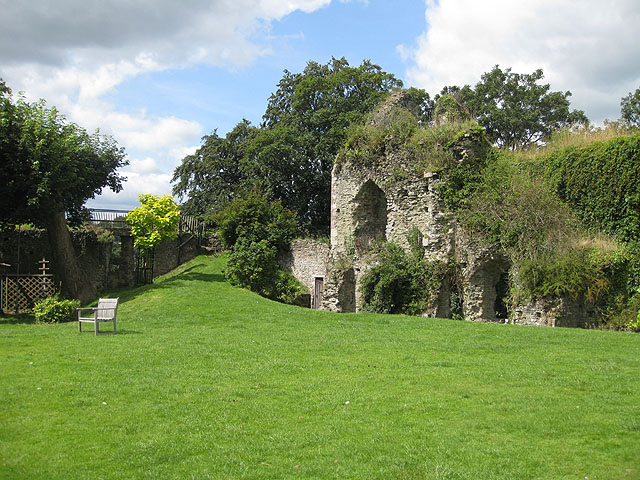
Raglan Castle stands as one of the most magnificent examples of a late medieval fortress in Britain, located near the village of Raglan in Monmouthshire, Wales. Constructed primarily in the 15th century, it represents the culmination of castle-palace architecture in Wales during the Middle Ages. The castle's design reflects a blend of defensive military architecture and the luxurious residential aspirations of the Welsh and English nobility who inhabited it. Surrounded by extensive parkland and water gardens, Raglan Castle was not only a stronghold but also a statement of wealth, power, and social prestige.
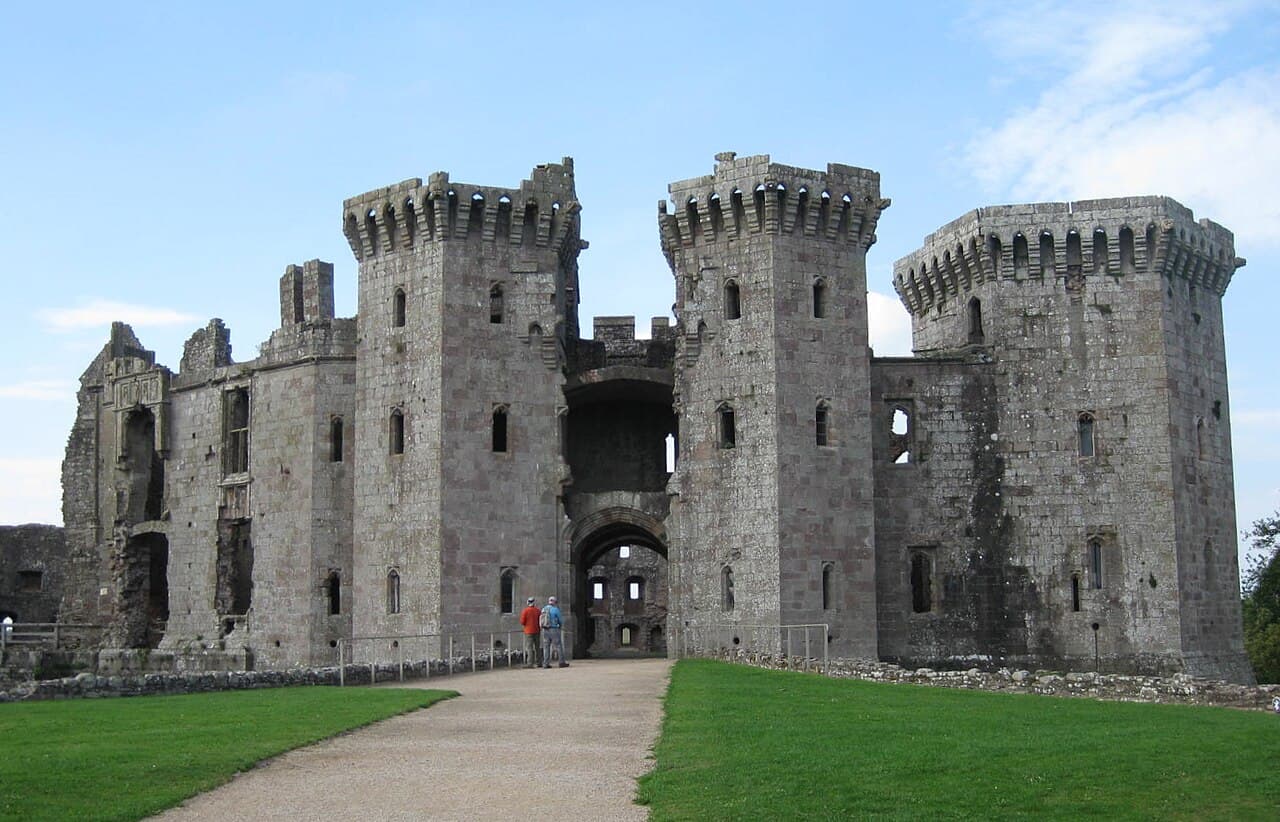
The castle's origins likely trace back to an earlier Norman motte-and-bailey structure on the site. The present stone castle began under Sir William ap Thomas after he acquired the manor in 1432. He initiated the construction of the imposing Great Tower, also known as the Yellow Tower of Gwent, a large hexagonal keep that dominates the castle's silhouette. His son, William Herbert, the first Earl of Pembroke, expanded and embellished the castle in the 1460s, adding the Great Gatehouse and richly decorated palace apartments that underscored the family's elevated status.
Historical development and ownership
Early history and medieval origins
The site of Raglan Castle has a history that predates the current stone structures. Following the Norman conquest of Wales, the manor was granted to William FitzOsbern, Earl of Hereford, in the 12th century. It is believed that a motte-and-bailey castle existed here, serving as an early defensive work. The manor passed through the Bloet family from the late 12th to the late 14th century, during which a manor house surrounded by parkland was established, laying the foundation for the later castle complex.
The ap thomas and herbert families
In 1432, Sir William ap Thomas purchased the manor of Raglan and began transforming the site into a formidable stone castle. His construction of the Great Tower marked a significant architectural achievement, combining strong defensive features with residential comfort. His son, William Herbert, who became the first Welsh Earl, continued this legacy by enlarging the castle and adding ornate elements influenced by Welsh heritage and possibly inspired by Caernarfon Castle. Herbert’s enhancements included the construction of the Great Gatehouse, an architectural masterpiece combining military defense and ceremonial grandeur.
The somerset family and renaissance influences
Through marriage in 1492, the castle passed to the Somerset family, who further developed the estate. William and Edward Somerset introduced Renaissance architectural elements, expanded the gardens, and enhanced the castle’s residential quarters in the late 16th century. Their work included the creation of the Fountain Court, luxurious apartments with bay windows, and elaborately decorated interiors. The chapel and the Long Gallery were richly adorned, reflecting the Renaissance taste for art and comfort.
Architecture and layout
The great tower and defensive structures
The Great Tower is the focal point of Raglan Castle. This large hexagonal keep, surrounded by a moat, was designed as a self-sufficient fortress with provisions for water and food storage. Its three stories included large windows on the upper floor for light and views. The tower is encircled by an apron wall with six small turrets, added during the 1460s, enhancing both defense and aesthetic appeal. The moat was modified to include a walkway with seventeenth-century niches likely intended for classical statues, blending military function with ornamental design.
Gatehouse and entrance defenses
The castle’s main entrance is a three-story gatehouse built in the 1460s, notable for its combination of military and ceremonial features. It includes machicolations for dropping projectiles and gunloops for firearms, reflecting advancements in military technology. Originally equipped with two portcullises and a drawbridge, the gatehouse also contained chambers for the constable, indicating its administrative role. Adjacent to it is the Closet Tower, which may have served as a treasury or munitions magazine during the Civil War.
Courtyards and residential quarters
The castle is organized around several courtyards that balance defense with domestic needs. The Pitched Stone Court housed essential service areas such as large kitchens with fireplaces, storage cellars, and buttery rooms. The great hall, once soaring 42 feet high with an oak roof and central cupola, featured ornate wooden paneling, a minstrel’s gallery, and a large oriel window, emphasizing the castle’s role as a center of social and political life.
The Fountain Court was the most luxurious residential area, designed to accommodate multiple visitor groups. Its centerpiece was a marble fountain topped with a white horse on black marble, symbolizing the Somerset family’s status. The adjacent chapel was richly decorated with bright yellow tiles and precious vestments, while the now-ruined Long Gallery was once adorned with tapestries and paintings, showcasing Renaissance artistic influences.
Gardens and parkland
Raglan Castle’s gardens and parklands were integral to its design, reflecting the Renaissance ideal of harmony between architecture and nature. The gardens, mainly from the 16th and 17th centuries, featured terraces, knot gardens, Italianate sculptures, and carved stone balustrades. Water gardens and drainage ditches remain visible, though some original features have been lost. The bowling green on a terrace beyond the South Gate survives as a reminder of the castle’s recreational spaces. The surrounding parkland, once extensive, returned to agricultural use by the 19th century but remains protected for its historical significance.
The civil war siege and aftermath
During the First English Civil War, Raglan Castle was a Royalist stronghold under Henry Somerset, first Marquess of Worcester, and his son Edward. The castle endured one of the longest sieges of the war by Parliamentarian forces, culminating in its surrender in 1646. The defenders employed artillery, including the famous large mortar known as "Roaring Meg". Following its capture, the castle was deliberately slighted to prevent further military use, a fate common to many fortresses of the period.
Despite the damage, much of the castle’s structure survived. However, the valuable library containing important Welsh literature was lost or stolen during the turmoil. After the Restoration in 1660, the Somerset family regained their estates but chose not to restore Raglan Castle, leading to its gradual decline and use as a source of building materials.
Modern preservation and visitor experience
Interest in Raglan Castle’s historical and architectural significance grew during the late 18th century, leading to preservation efforts. Notable restorations included work on the Grand Staircase in 1830 and temporary roofing of the Great Hall in the 1820s. The castle came under government care in 1938 and is now a protected Grade I listed building and Scheduled Monument.
Between 2003 and 2007, archaeological excavations helped deepen understanding of the castle’s history, informing the development of a new environmentally friendly visitor center. This center is designed to blend with the historic setting and includes a well-stocked gift shop. A pilot project using Bluetooth technology to deliver audio guides to visitors' mobile phones has been introduced, enhancing the educational experience. Managed by Cadw, the historic environment service of the Welsh Government, Raglan Castle remains a popular tourist attraction, offering insights into medieval architecture, noble life, and the turbulent history of Wales.
Today, visitors to Raglan Castle can explore its impressive ruins, including the Great Tower, gatehouse, courtyards, and gardens, gaining a vivid sense of the castle’s former grandeur and strategic importance. The site’s blend of military innovation, Renaissance elegance, and historical resonance makes it a unique destination for those interested in British medieval history and architecture.
Frequently asked questions (FAQ)
- When was Raglan Castle built and by whom?
- Raglan Castle was begun in 1432 by Sir William ap Thomas, with significant expansions by his son William Herbert in the 1460s.
- What is the significance of the Great Tower at Raglan Castle?
- The Great Tower, also known as the Yellow Tower of Gwent, is a large hexagonal keep that served as a self-sufficient fortress and symbol of power.
- Can visitors explore the gardens and parkland of Raglan Castle?
- Yes, visitors can explore the castle's historic gardens and terraces, which feature remnants of Renaissance-era water gardens and a bowling green.
- How was Raglan Castle affected during the English Civil War?
- Raglan Castle endured a lengthy siege during the Civil War and was captured by Parliamentarian forces in 1646. It was then deliberately damaged to prevent further military use.
- Is there a visitor center at Raglan Castle?
- Yes, Raglan Castle has a modern environmentally friendly visitor center with a gift shop and audio guides available via Bluetooth technology.
- Who manages Raglan Castle today?
- The castle is managed by Cadw, the historic environment service of the Welsh Government.
Photo gallery

Information
Sources & official resources
Verify the information above using these authoritative references.
Loading map...
Visitor reviews
No reviews yet. Been here? Write the first review and help other travelers!
Write the first reviewVisited this castle? Share your experience
Your review helps other travelers and adds first-hand knowledge to our encyclopedia.