Radziki Duże Castle
Radziki Duże Castle stands as a notable example of a late medieval hill castle in Poland, situated in the municipality of Radziki Duże. Constructed primarily during the late 14th century, this fortress reflects the architectural and feudal traditions of the Polish nobility during a turbulent historical period. The castle not only served as a defensive stronghold but also as a noble residence, embodying the social and military functions typical of such structures in medieval Poland.
Historical background and ownership lineage
The origins of Radziki Duże Castle trace back to approximately 1380-1384, when it was likely commissioned by Andrzej Ogończyk, the castellan of Dobrzyń. The Ogończyk family, later known as the Radzikowski lineage, maintained control of the estate into the early 16th century. Some historical accounts suggest the castle's construction or significant development may have occurred slightly later, possibly after 1405 or following 1413, coinciding with the inheritance of the estate by Jakusz Ogończyk. This ambiguity reflects the complexities of medieval record-keeping and property transitions.
In 1510, the castle underwent major rebuilding efforts under Mikołaj Radzikowski, indicating continued investment and adaptation of the fortress to contemporary needs. Following the death of his son Jan, ownership passed to Jan’s sister Małgorzata, who married into the Plecki family in 1513. This marriage united the castle with the Plecki lineage, bearers of the Doliwa coat of arms. Subsequently, the estate transferred through marriage and inheritance to the Kuczyński and Rolicz-Tarnowski families, illustrating the castle's role as a hereditary noble seat and its integration within the broader network of Polish aristocracy.
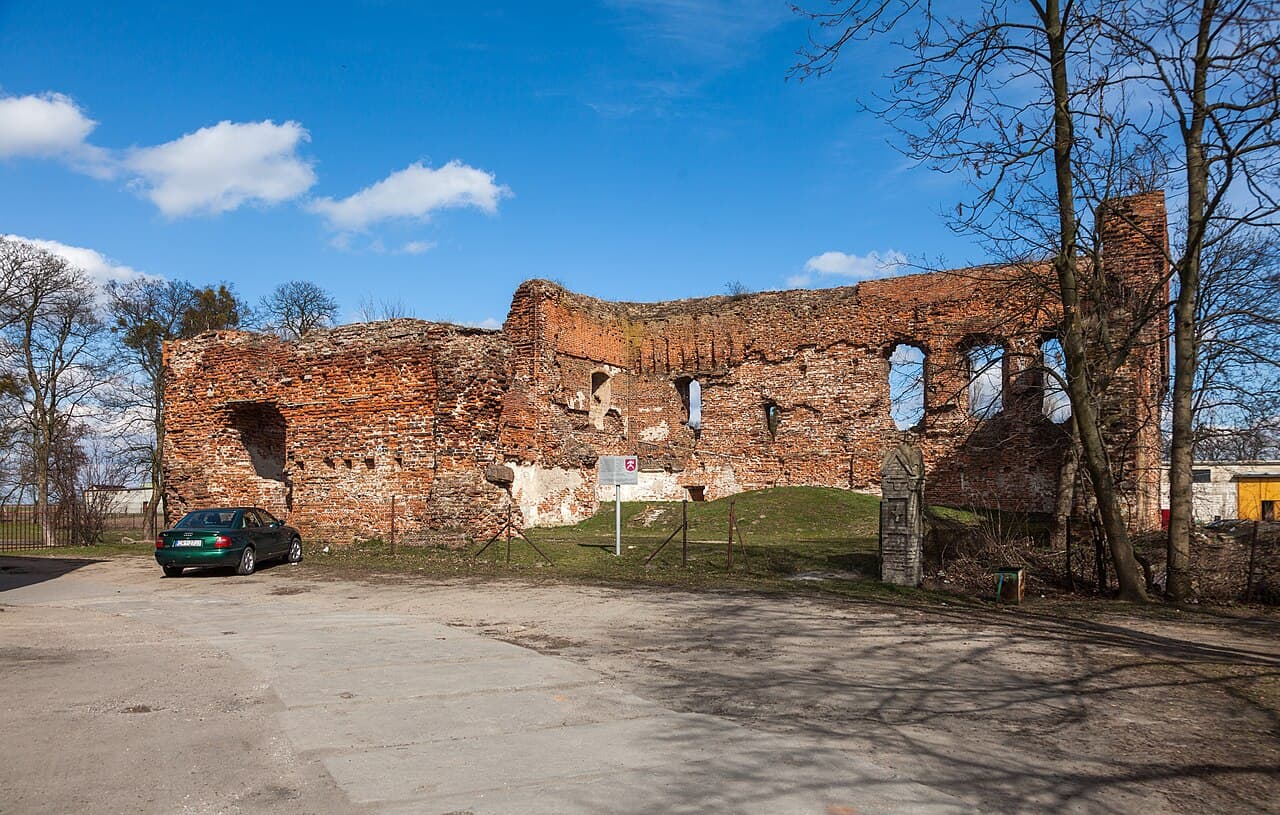
The castle's fortunes declined during the mid-17th century Swedish wars, a period marked by widespread destruction across Poland. Radziki Duże Castle suffered damage and was eventually abandoned around 1770. Since then, it has remained in a ruined state, a silent witness to the region’s shifting political and military landscape.
Architectural layout and defensive features
The castle's design followed a compact square plan, with each side measuring approximately 29 meters. This layout enclosed a central courtyard, a common feature in medieval fortifications, providing a protected open space within the defensive walls. The north-eastern wall housed a residential building, which was the main living quarters. This structure consisted of a single story above a basement and was divided into three rooms of roughly equal size. Today, this residential block is the best-preserved section of the ruins, offering valuable insight into the domestic arrangements of a medieval noble household.
On the north-western side, the castle featured a gatehouse that projected beyond the main defensive wall, marking the principal entrance. The gatehouse was a critical element for both access control and defense. Near this entrance, embedded in the north-western wall, were two niches at ground level equipped with embrasures—narrow openings designed for firearms. These embrasures were later sealed in the 16th century, reflecting evolving military technology and defensive strategies.
Construction materials and decorative elements
The castle’s construction utilized a combination of brick and fieldstone, materials typical of the region and period. Notably, fragments of decorative brickwork remain, employing a pattern known as zendrówka, where bricks are arranged in diamond shapes to create ornamental effects. This decorative technique is characteristic of Gothic architecture in Poland and adds aesthetic value to the fortress’s otherwise utilitarian design.
Archaeological investigations and preservation
The ruins of Radziki Duże Castle have been the subject of archaeological research, helping to document and interpret the site’s historical and architectural significance. A detailed report by Marian Arszyński in 1956 laid the groundwork for understanding the castle’s layout and construction phases. Subsequent studies by scholars such as Leszek Kajzer have further enriched knowledge about the site.
Despite its ruined condition, the castle remains an important cultural heritage site, illustrating the architectural styles and noble life of medieval Poland. Preservation efforts focus on stabilizing the remaining structures and protecting the site from further decay, allowing visitors and researchers to explore this tangible link to Poland’s feudal past.
The castle in the context of polish medieval fortifications
Radziki Duże Castle exemplifies the characteristics of hill castles in Poland, strategically located to oversee and control surrounding lands. Its relatively modest size and square layout reflect the typical design principles of noble residences that balanced defense with domestic needs. The castle’s evolution through multiple noble families and its adaptation to changing military technologies highlight the dynamic nature of medieval fortifications in the region.
The incorporation of embrasures for firearms in the 16th century indicates the castle’s response to the advent of gunpowder weaponry, a significant shift in castle architecture across Europe. The sealing of these embrasures later suggests a decline in the castle’s military importance or a change in defensive tactics.
Architectural style and influences
The castle’s architectural style is predominantly Gothic, as evidenced by the brickwork patterns and structural elements. The use of zendrówka brickwork is a distinctive feature of Gothic architecture in Poland, combining functionality with decorative artistry. The fortress’s robust walls, gatehouse, and embrasures are typical of medieval military architecture designed to withstand sieges and assaults.
Visiting radziki duże castle today
Today, Radziki Duże Castle remains in a ruined state, accessible to visitors interested in medieval history and architecture. The site offers a glimpse into the life of Polish nobility and the defensive strategies employed during the late medieval period. Visitors can explore the remnants of the residential building, the gatehouse, and the defensive walls, appreciating the craftsmanship and historical layers preserved in the ruins.
While the castle lacks extensive visitor facilities, its archaeological significance and picturesque setting make it a valuable destination for those interested in Poland’s feudal heritage. Preservation efforts continue to ensure the site remains stable and accessible for future generations.
Frequently asked questions (FAQ)
- When was Radziki Duże Castle built?
- Radziki Duże Castle was likely constructed between 1380 and 1384, with some sources suggesting later development after 1405 or 1413.
- What architectural style characterizes Radziki Duże Castle?
- The castle is predominantly Gothic, featuring decorative zendrówka brickwork and typical medieval defensive structures such as embrasures and a gatehouse.
- What caused the castle to fall into ruin?
- The castle suffered damage during the mid-17th century Swedish wars and was eventually abandoned around 1770, leading to its current ruined state.
- Can visitors explore the castle ruins today?
- Yes, visitors can explore the ruins of Radziki Duże Castle, including the residential building and gatehouse, although visitor facilities are limited.
- What is the layout of Radziki Duże Castle?
- The castle follows a square plan with sides about 29 meters long, enclosing a courtyard with a residential building and a gatehouse.

Information
Website
Visit websiteSources & official resources
Verify the information above using these authoritative references.
Loading map...
Visitor reviews
No reviews yet. Been here? Write the first review and help other travelers!
Write the first reviewVisited this castle? Share your experience
Your review helps other travelers and adds first-hand knowledge to our encyclopedia.