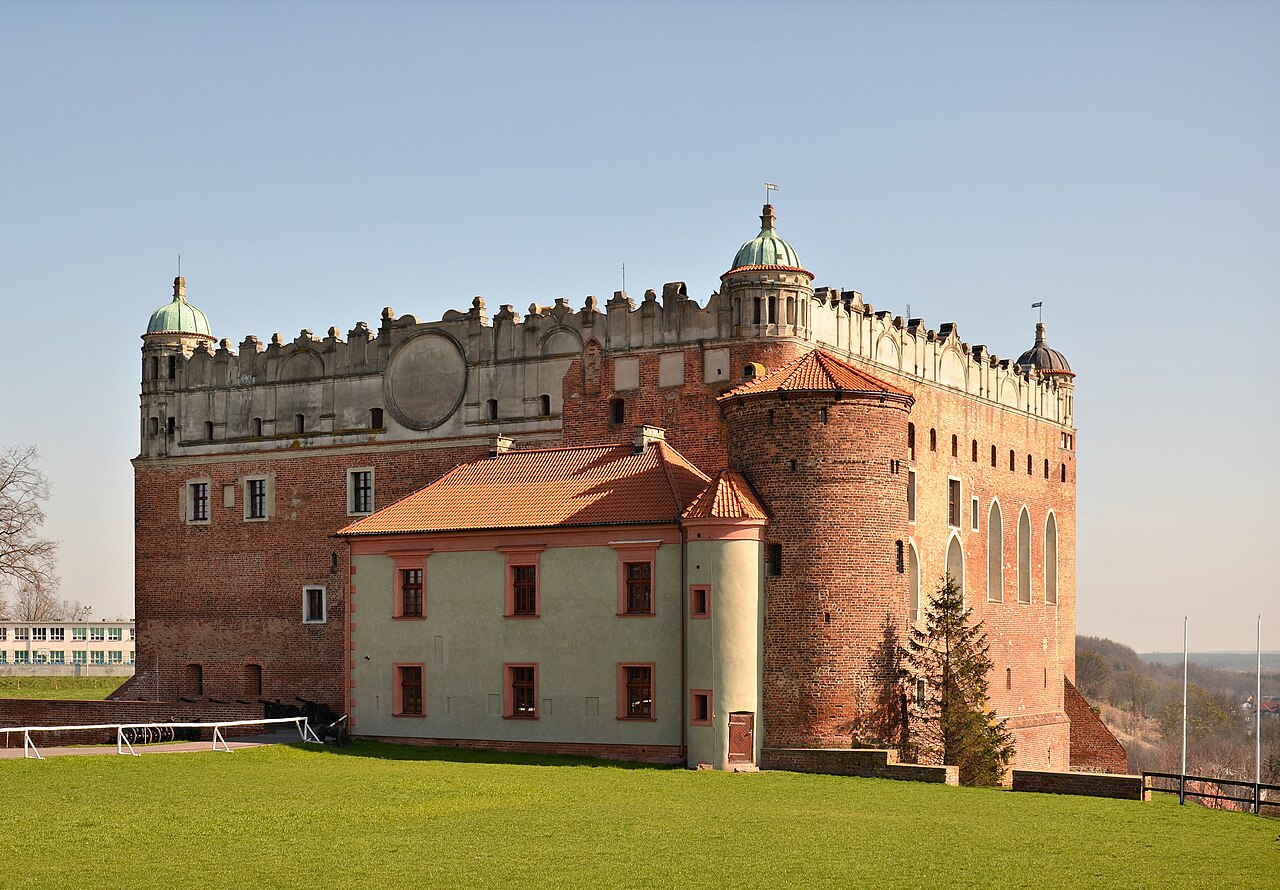
Kowalewo Pomorskie
Kowalewo Pomorskie Castle stands as a significant relic of medieval fortification in northern Poland, located in the town of Kowalewo Pomorskie. The castle's origins trace back to the early 13th century, with the first documented mention in 1222 when Prince Konrad Mazowiecki granted the settlement of Kowalewo to the missionary bishop Christian in the Chełmno land. This early record marks the beginning of the site's strategic importance in the region.
In 1231, the Teutonic Knights captured Kowalewo and established a military presence by constructing a wooden and earth fortification to defend the border along the Drwęca River against frequent incursions by Prussian and Lithuanian tribes. This initial fortification was a typical hill castle of the High Medieval period, designed primarily for defense and control of the surrounding territory.
The evolution from wooden fort to stone castle
By around 1280, the Teutonic Order began replacing the wooden fortifications with a more durable stone structure, initiating the construction of a conventual castle that would serve as the seat of the local komturei (commander). This castle was built on a regular quadrilateral plan featuring four wings arranged around a small internal courtyard with cloisters. The castle's design reflected the typical Gothic military architecture of the Teutonic Order, emphasizing solid defensive walls and functional spaces for administration and residence.
The main castle was surrounded on three sides by an outer defensive wall creating a wide bailey or interior ward. The entrance to the courtyard was protected by a gate tower facing the outer bailey. Two additional outer baileys, or outer wards, enclosed by their own walls and reinforced with bastions and a moat, extended the castle's defensive perimeter. This layered defense system was designed to withstand prolonged sieges and raids typical of the turbulent borderlands of medieval Prussia.
Castle layout and key architectural features
While the exact layout and functions of individual rooms within the castle remain partially unclear, surviving elements provide clues. A preserved dansker (a type of latrine tower) on the northern wing suggests that this section housed living quarters. The southern wing contained a chapel, as documented in an 18th-century survey, indicating the castle's religious as well as military role. The castle's curtain walls, gate towers, and battlements exemplify the defensive priorities of the Teutonic Order's fortifications.
Historical military engagements
Kowalewo Pomorskie Castle witnessed several significant military events during its active use. In 1330, the castle was besieged by Polish forces under King Władysław Łokietek. Despite repeated assaults, the lack of heavy siege equipment prevented the attackers from breaching the strong defenses, and after four days, the siege was lifted.
In 1410, during the Polish-Lithuanian-Teutonic War, Polish forces successfully captured the castle. However, it was soon retaken by the Teutonic Knights with reinforcements from Livonia led by Land Marshal Bern von Hevelmann. The castle again faced siege in 1422 during the so-called Golub War, when forces of King Jogaila managed to seize one of the outer baileys but failed to capture the entire fortress due to reinforced defenses.
The castle in the thirteenth and fourteenth centuries
The castle's strategic importance continued through the Thirteen Years' War (1454–1466) between Poland and the Teutonic Order. During this period, the castle was mostly abandoned and fell into the hands of the Prussian Confederation, a coalition opposing the Teutonic Knights. The 1466 Second Peace of Toruń resulted in Kowalewo and the entire Chełmno Land being incorporated into the Kingdom of Poland.
Post-medieval decline and ruin
Following its incorporation into Poland, Kowalewo Castle became the seat of a local starostwo grodowe (district administrative office), with Oldrzych Czerwonka, a commander of mercenary troops, appointed as the first starosta. However, the castle's military significance waned over time.
The 17th century brought devastation during the Polish-Swedish wars, particularly the Swedish Deluge (1655–1660), which caused severe damage to the castle. After these conflicts, the fortress fell into disuse and ruin. By the early 18th century, the castle was largely dismantled, with its building materials repurposed for local construction, including the erection of an Evangelical church on the site of the outer bailey.
Surviving remains and archaeological significance
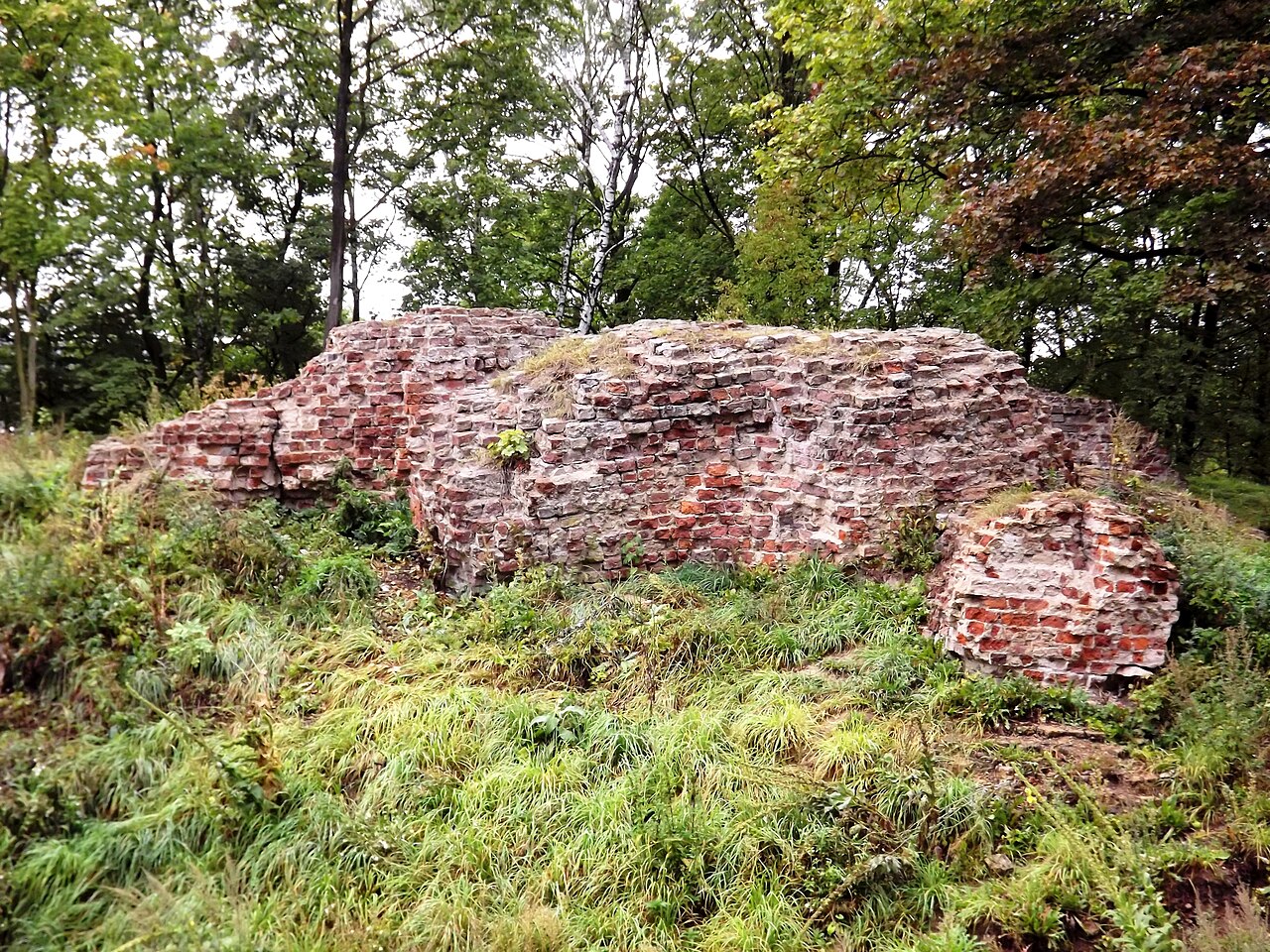
Today, only fragments of the castle survive. These include remnants of the outer bailey walls, parts of the forewalls of the main castle, and a solitary pillar from the gdanisko arcade. These ruins provide valuable insight into the military architecture of the Teutonic Knights and the turbulent history of the Chełmno region.
The town of kowalewo pomorskie and its historical context
Alongside the castle, the town of Kowalewo Pomorskie developed as a regional center. After the Teutonic Knights granted city rights in 1275, the settlement grew in importance. However, it suffered destruction by the Tatars in 1286, leading to a relocation and rebuilding under the Chełmno Law. The town's defensive walls were constructed in the 14th century to protect against ongoing threats from neighboring tribes.
Throughout the 15th and 16th centuries, Kowalewo Pomorskie was a hub for local governance, hosting the Magistrate Courts and Sejmik (regional assembly) of the Chełmno Land. It also became a center for trade and crafts, although its fortunes declined during the 17th and 18th centuries due to repeated invasions and wars, including occupations by Swedish and Russian forces.
Cultural and heritage importance
Despite its ruined state, Kowalewo Pomorskie Castle remains an important cultural landmark. It reflects the complex history of the Teutonic Order's expansion, the Polish-Teutonic conflicts, and the shifting political landscape of medieval and early modern Poland. Preservation efforts and archaeological studies continue to enhance understanding of its architecture and historical role.
Frequently asked questions (FAQ)
- How do I get to Kowalewo Pomorskie Castle?
- Kowalewo Pomorskie Castle is located in the town of Kowalewo Pomorskie in the Kuyavian-Pomeranian Voivodeship of Poland. It is accessible by local roads and public transportation from nearby cities such as Toruń and Bydgoszcz.
- What is the historical significance of Kowalewo Pomorskie Castle?
- The castle was a key Teutonic Knights fortress guarding the Drwęca River border in the 13th and 14th centuries. It played a crucial role in regional conflicts, including sieges by Polish kings and the Thirteen Years' War.
- Can visitors explore the ruins of Kowalewo Pomorskie Castle?
- Yes, the castle ruins are open to the public. Visitors can see the remains of the outer walls, the forewalls of the main castle, and the distinctive gdanisko arcade pillar, providing a glimpse into medieval military architecture.
- When was Kowalewo Pomorskie Castle built?
- The castle was originally established in 1222, with major stone construction beginning around 1280 under the Teutonic Knights.
- What architectural style characterizes Kowalewo Pomorskie Castle?
- The castle features Gothic military architecture typical of the Teutonic Order's conventual castles, with quadrilateral layouts, defensive walls, and functional residential and religious spaces.
Information
Current owner
Municipality
Loading map...
Visitor reviews
No reviews yet. Been here? Write the first review and help other travelers!
Write the first reviewVisited this castle? Share your experience
Your review helps other travelers and adds first-hand knowledge to our encyclopedia.